
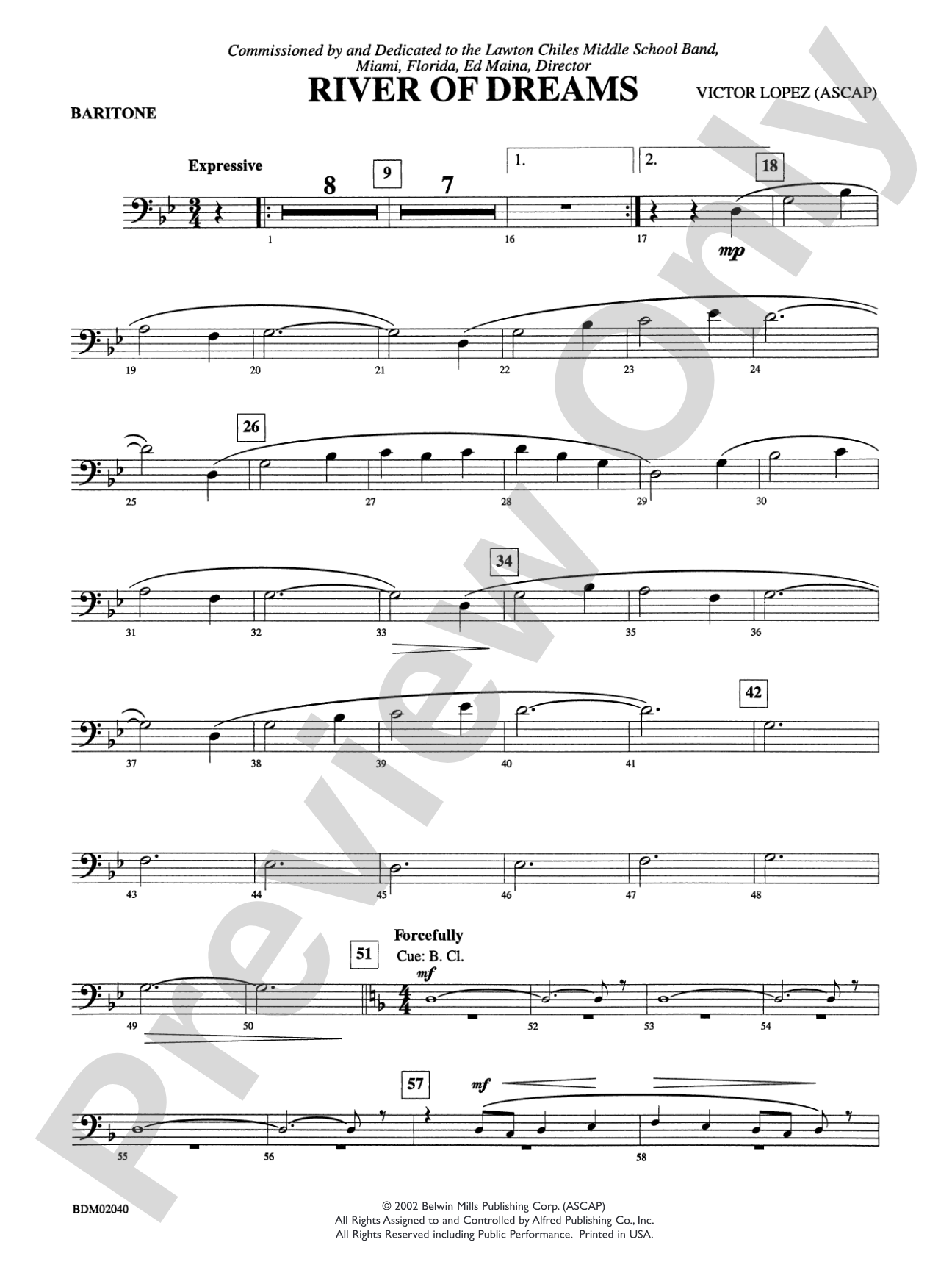

River of Dreams: Baritone B.C.
By Victor López
Grade: 2 (Easy)
Item: 00-PC-0002171_BBC1
$3.00
Pickup currently not available
Description
The initial eerie flute solo is joined by other members of the woodwind family, then the full ensemble, and the piece takes off! The energetic section builds to a frenzy interrupted with bright bursts of sound. The beautiful melody returns again in the trumpet, then low brass, building to a dynamic close. Real music for your young band. This one is certain to be a winner. (4:36) This title is available in MakeMusic Cloud.


Don't just read it, hear it, play along with it, and watch your students grow with it. In MakeMusic Cloud, River of Dreams: Baritone B.C. comes alive with professional accompaniment, adjustable tempo, and built-in practice tools that turn solo practice into real progress.
Open in the Player
Jump straight in and assign it today.
Start Your Free Trial
Open this title and explore the full library in minutes.
Sample Audio
1
Audio File
--:--
0:00
0:00
Sample Video
No sample videos found.
Additional Details
Series:
Belwin Young Band
Publisher:
Alfred Music
Page Count:
340
SKU:
00-PC-0002171_BBC1
More about this title
About the Composer: Victor Lopez
Victor Lopez is a prolific composer and arranger whose catalog spans educational wind band music, choral works, and orchestral arrangements. His writing for young ensembles demonstrates a keen understanding of student musicians' developing technical abilities while refusing to compromise musical quality or dramatic impact. Lopez's scores are known for their clear orchestration, memorable melodic writing, and judicious use of ensemble resources.
Why we love this
This piece delivers genuine musical drama without demanding virtuosity. Lopez builds the arrangement with intelligent restraint, introducing colors gradually so the woodwind section feels genuinely featured rather than overwhelmed, while the return of melody in trumpet and low brass gives brass players meaningful solo moments. For young bands hungry to play something that sounds substantial in a concert setting, this one consistently earns applause.
What to expect
The piece opens with quiet unease as a single flute voice floats over shifting harmonies, then gradually awakens as more colors join in. A surge of energy and excitement takes over, driving forward with momentum and light, before settling back into the original melody's introspective character, now enriched by everything that came before. It closes with confident resolution and power.
Who it's for
Grade 2 bands with reliable woodwind section balance and brass players ready for featured melodic passages. This works especially well for ensembles at the intermediate stage where students have enough fundamental control to handle layered textures and dynamic contrast without constant hand-holding.
How to get the most out of it
- Shape the opening flute solo with clear phrasing and dynamic shape; it sets the atmospheric foundation that the rest of the ensemble builds upon. Resist the urge to rush into the tutti texture.
- Balance the woodwind layering carefully during the buildup sections. Each voice (flute, clarinet, alto sax) needs to remain distinct even as dynamics increase, or the texture becomes muddled rather than exciting.
- The bright bursts of sound interrupt the intensity deliberately. Bring them off with precision and clean attacks so the contrast lands effectively and the energy shifts clearly.
- Lock the harmonic foundation in your low brass and woodwind bass parts; this grounds the trumpet melody statement and allows the upper voices to sing freely during the lyrical return.
How to use it
Program this as a concert opener or mid-program feature to reset audience energy and showcase your band's ensemble balance. The 4:36 duration and strong dramatic arc make it a natural fit alongside shorter works in a developing band concert, or pair it with contrasting tempos to give your program shape. Its contest-festival designation also makes it a solid choice for spring competition programming.
Skills your students will build
- Listening and balancing ensemble sonority across woodwind and brass sections
- Executing dynamic contrast and terraced crescendos effectively
- Maintaining phrase shape during sustained melodic passages in trumpet and trombone
- Reading and performing layered, independent parts in a complex texture
- Responding to clear dramatic arcs and formal structure in concert music