River of Dreams: 2nd Violin Sheet Music Preview

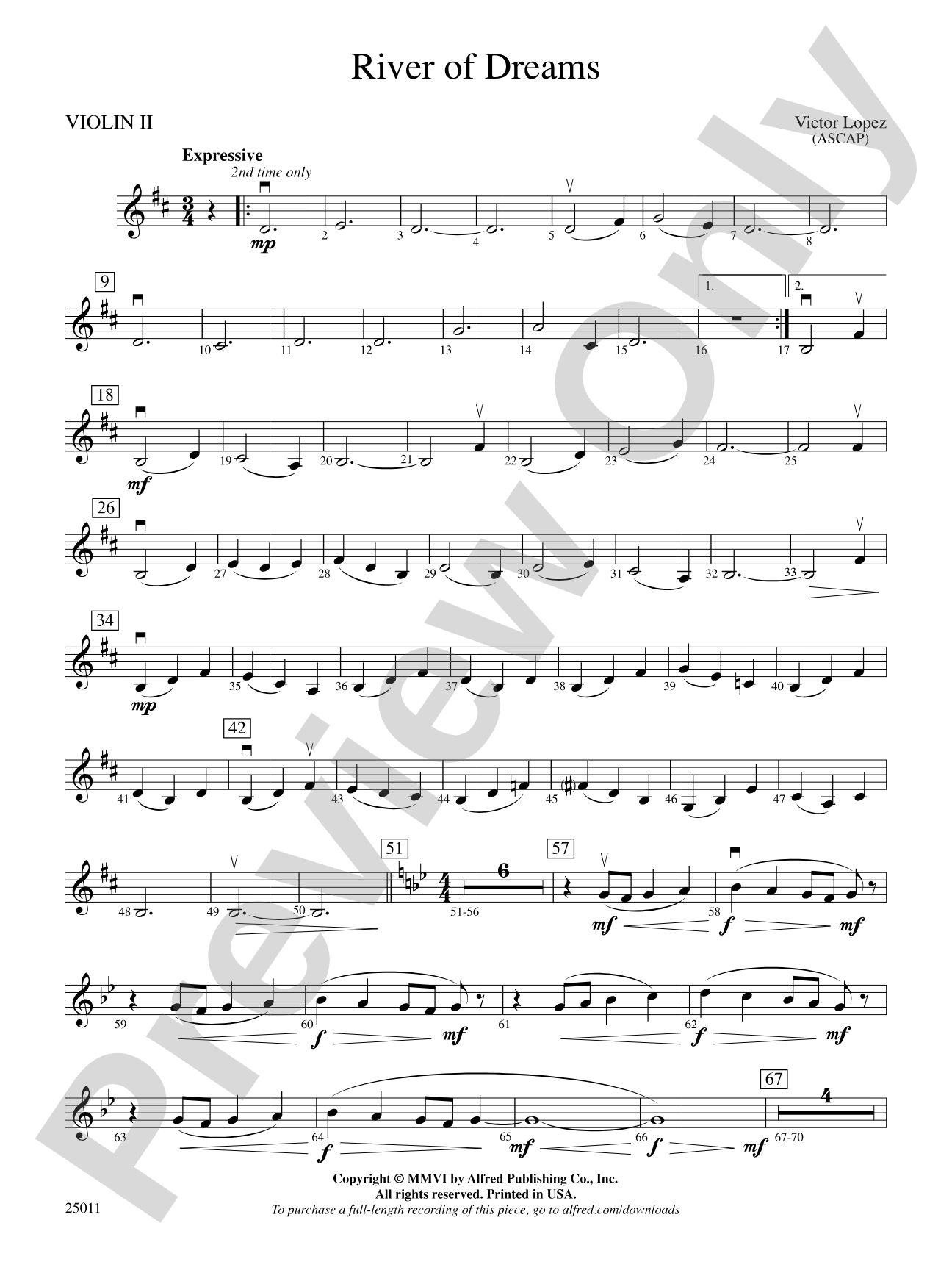
River of Dreams: 2nd Violin

By Victor López

Grade: 2.5

Item: 00-PC-0000990_VN2

Digital Download
$5.99
Description
"River of Dreams," written for string orchestra by Victor López, will be one of your students' favorite. The solo violin at the beginning introduces a flowing melody surrounded by lush harmonies followed by energetic thematic material that will keep the intensity of this evocative overture throughout. The flowing opening gives way to a more forceful, turbulent section that lives up to the title. In addition, the piano part adds interesting tonal colors to the work. At the beginning and in measure 89, the ballad section is intended to enhance the musicianship of your students while promoting independent playing.

Don't just read it, hear it, play along with it, and watch your students grow with it. In MakeMusic Cloud, River of Dreams: 2nd Violin comes alive with professional accompaniment, adjustable tempo, and built-in practice tools that turn solo practice into real progress.

Sample Audio
0:00
0:00
Sample Video
Additional Details
Series: Belwin Intermediate String Orchestra
Publisher: Alfred Music
Page Count: 148
SKU: 00-PC-0000990_VN2

More about this title

About the Composer: Victor Lopez

Victor López is a prolific composer whose orchestral works are staples in school music programs across the country. His facility for writing accessible yet musically substantial pieces has made him a trusted voice in music education, with an exceptional ability to balance student engagement with genuine artistic merit.

Why we love this

López gives you a piece that works on two levels: the opening violin solo and flowing harmonies draw students in immediately, while the turbulent middle section and independent ballad passages challenge them musically. The addition of piano adds textural sophistication that elevates the entire ensemble sound without overwhelming young players.

What to expect

The piece opens with gentle introspection before building into something restless and powerful, capturing the energy implied by its title. The interplay between solo and ensemble voices creates intimacy within a larger orchestral context, while the piano colors add warmth and complexity to the traditional string sound.

Who it's for

This piece suits intermediate string orchestras ready to handle contrasting sections and independent part writing while remaining grounded in accessible material. Students benefit from the range of musical characters and the chance to develop both lyrical sensitivity and dramatic expression.

How to get the most out of it

  • Shape the opening solo violin line with gentle rubato; the flowing quality depends on the soloist breathing naturally within the phrases rather than adhering rigidly to the beat.
  • Balance the lush harmonies in the early measures by having inner voices play with presence but never overpowering the melody; this teaches students to listen across the ensemble.
  • Prepare the transition into the turbulent section deliberately in rehearsal; mark a clear tempo shift and allow the intensity to build gradually rather than switching character abruptly.
  • Use the ballad sections at the beginning and measure 89 as focused listening opportunities; ask students to identify who is carrying the melody and discuss how the orchestration creates independence in their individual parts.

How to use it

Program this as a concert opener or centerpiece for a showcase that celebrates your string program's versatility; its narrative arc from calm to turbulent works well as a standalone feature or paired with contrasting repertoire. The approachable opening also makes it effective for audience engagement at family concerts.

Skills your students will build

  • Balancing solo and ensemble textures within the same section
  • Executing dynamic contrasts across a full range from lyrical to forceful
  • Reading and responding to sectional independence in the ballad passages
  • Sustaining longer phrases with consistent tone and phrasing awareness
  • Responding to tempo and character changes within a single movement

You May Also Like