
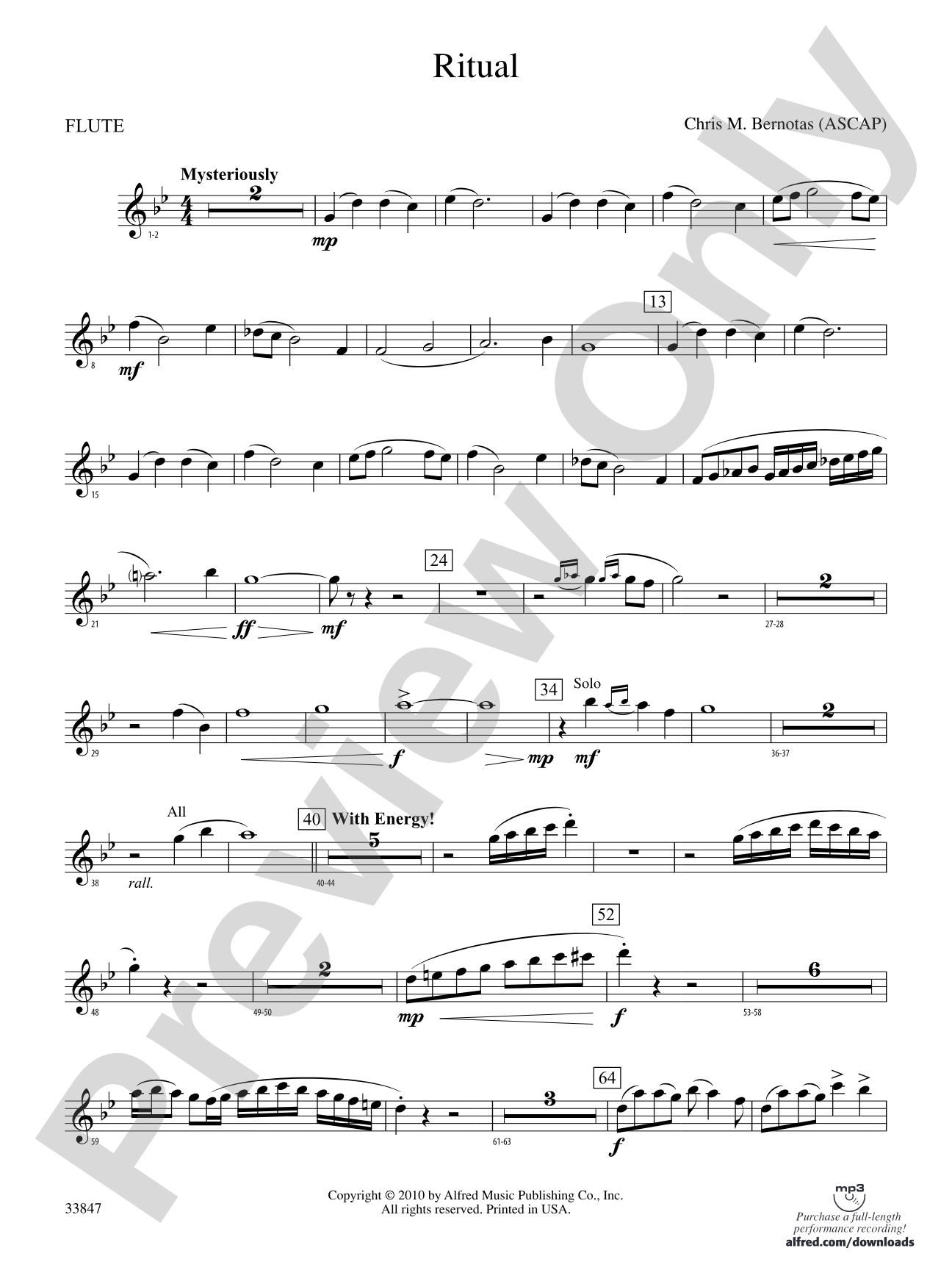

Ritual: Flute
By Chris M. Bernotas
Grade: 2.5 (Medium Easy)
Item: 00-PC-0014578_F1
$3.00
Pickup currently not available
Description
The dark sound of the timpani and the ominous flute melody create the mysterious atmosphere for this powerful piece. The intense drone and strong thematic material eventually give way to the excitement of a rhythmic groove which takes us on an adventure. We revisit the mystery of Ritual through a lyrical section that contains ample solo opportunities to feature your students. After a restatement of the original theme, we escape and run to the end. The performers and audience will use their imaginations to create their own thrilling storyline to accompany this dramatic piece!


Don't just read it, hear it, play along with it, and watch your students grow with it. In MakeMusic Cloud, Ritual: Flute comes alive with professional accompaniment, adjustable tempo, and built-in practice tools that turn solo practice into real progress.
Open in the Player
Jump straight in and assign it today.
Start Your Free Trial
Open this title and explore the full library in minutes.
Sample Audio
1
Audio File
--:--
0:00
0:00
Sample Video
No sample videos found.
Additional Details
Series:
Young Symphonic
Publisher:
Alfred Music
Page Count:
258
SKU:
00-PC-0014578_F1
More about this title
About the Composer: Chris M. Bernotas

Chris M. Bernotas brings over 25 years of music education experience to his work as a composer and conductor. As Director of Instrumental Publications for Alfred Music, he has shaped band and orchestra curricula used by programs worldwide, combining his deep understanding of classroom realities with his compositional voice.
Bernotas writes with a clear sense of what students need at each developmental stage. His works balance musicality and accessibility, making them equally rewarding for young ensembles and advanced groups. Beyond the page, he remains active as a guest conductor and clinician, sharing approaches to rehearsal and interpretation with directors and their ensembles. He has co-authored several influential educational resources, including Sound Innovations Ensemble Development and Sound Artistry, further cementing his commitment to supporting music teachers in their work.
Why we love this
Bernotas crafts a complete dramatic arc in this Grade 2.5 piece, giving you genuine narrative content to work with rather than a simple suite of contrasts. The instrumentation and thematic design make it equally effective for concert performance and festival adjudication, and the solo opportunities he writes are genuinely musical rather than tacked-on, allowing students to develop phrasing and expression within a meaningful context.
What to expect
Dark, imaginative, and cinematic. The piece invites listeners to construct their own visual journey through shifts in color and intensity, from mysterious shadows to pulsing energy to reflective lyricism. Performers feel the weight of dramatic storytelling rather than executing a sequence of technical exercises.
Who it's for
Band directors programming for concert or festival who need a Grade 2.5 piece with real dramatic substance and soloistic writing that challenges students without overwhelming them. This works well for ensembles with solid fundamentals but still building independence in the middle and lower voices.
How to get the most out of it
- Shape the opening timpani and flute melody as a single dramatic gesture; the mystery lands only when performers understand they're building atmosphere together, not playing isolated parts.
- Let the rhythmic groove section breathe and settle into its pocket. Students who have been focused on atmospheric colors now shift into time-feel work; mark where that transition happens in your score so the ensemble recognizes the shift with you.
- Highlight the lyrical section's solo moments in sectional rehearsals before full ensemble work. These passages need confidence and tone, and individual attention prevents them from sounding tentative in context.
- Return to the original theme with the same dramatic weight as the opening; this restatement should feel inevitable, not rushed. The final escape to the ending relies on that recognition.
How to use it
Open a concert with Ritual to set a distinct mood and signal that this program has narrative intent, or use it as a festival entry where adjudicators see both technical execution and interpretive thinking at a young band level. The programmatic nature also makes it a strong choice for a concert theme exploring imagination or adventure in music.
Skills your students will build
- Ensemble balance across shifting timbral colors (timpani and woodwind blend, dense harmonic textures in the lyrical section)
- Phrasing and expressive control in melodic solo passages
- Rhythmic independence and time-feel in a grooved section
- Reading and responding to dramatic dynamic and textural contrasts within a single continuous form