
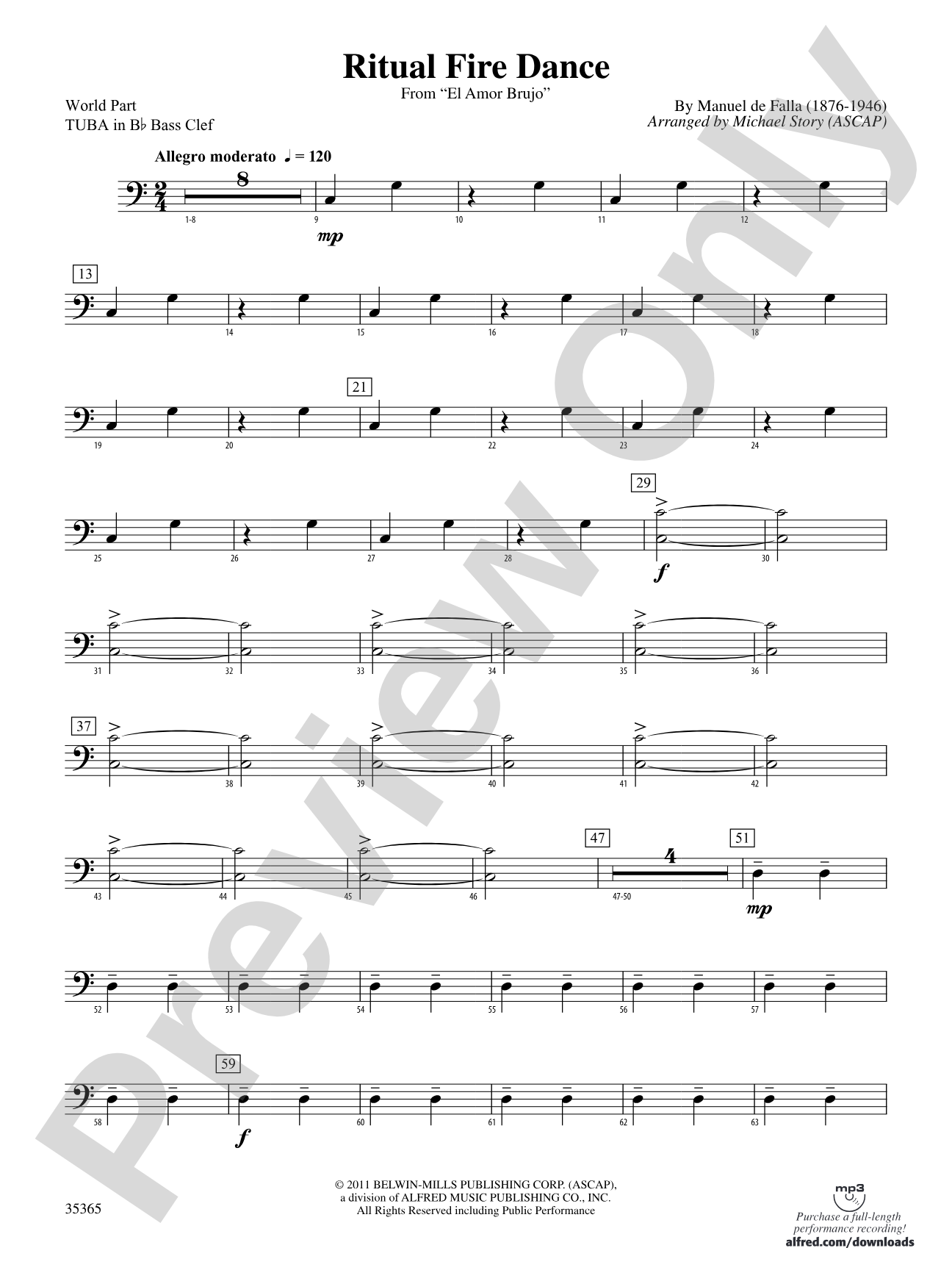
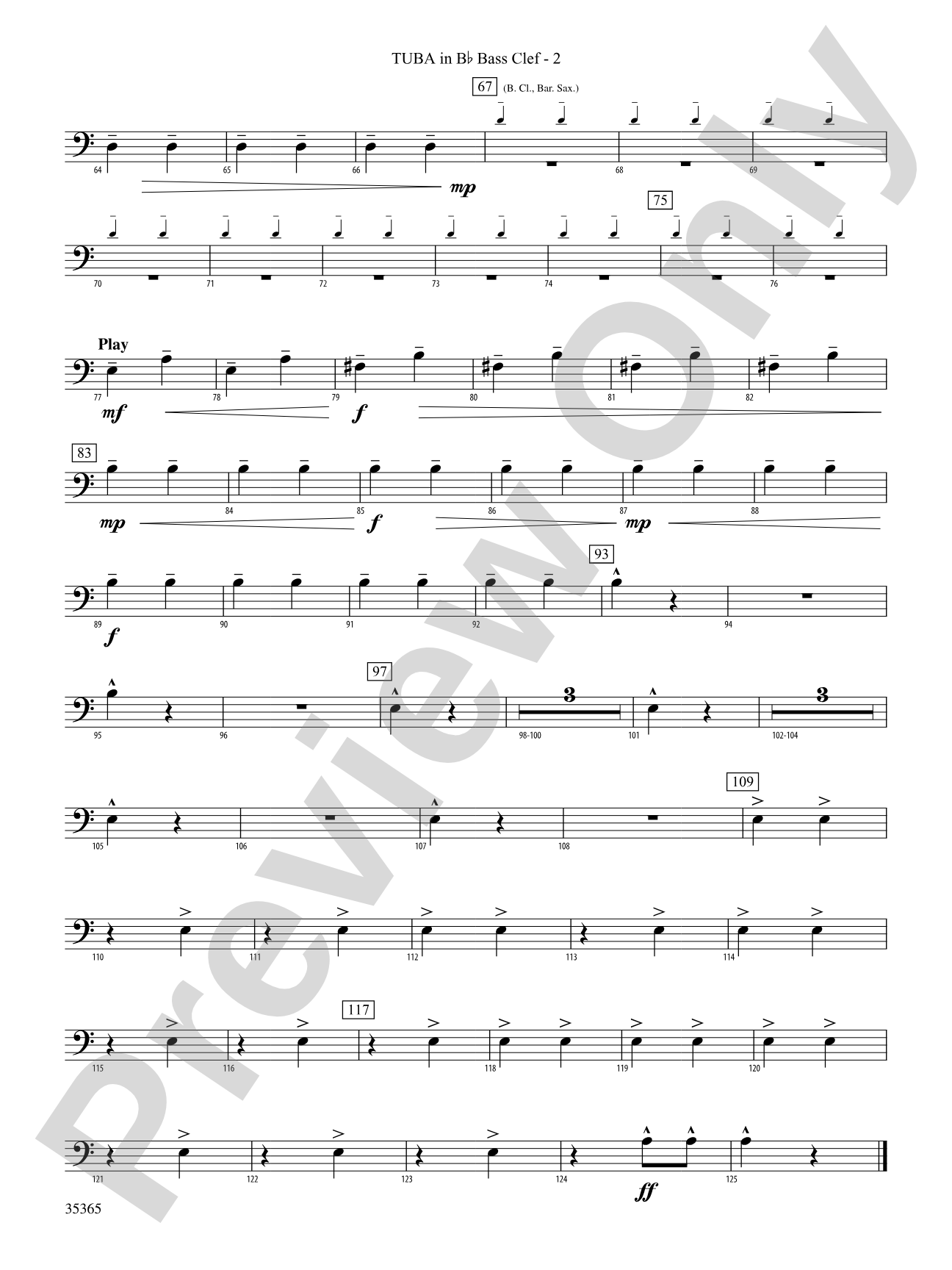

Ritual Fire Dance (From El Amor Brujo): (wp) B-flat Tuba B.C.
By Manuel de Falla / arr. Michael Story
Grade: 2 (Easy)
Item: 00-PC-0014917_wpTBBBC
$3.00
Pickup currently not available
Description
From de Falla's ballet El Amor Brujo the very familiar "Ritual Fire Dance" is scored especially for your young band from the pen of Michael Story. Beginning with the haunting sound of low trilling clarinets, the melody is initially stated by the alto voices. The dance in the opera takes place before a campfire and increases in energy and speed to a frenzied climax. A big sounding setting for your developing band! This title is available in MakeMusic Cloud.


Don't just read it, hear it, play along with it, and watch your students grow with it. In MakeMusic Cloud, Ritual Fire Dance (From El Amor Brujo): (wp) B-flat Tuba B.C. comes alive with professional accompaniment, adjustable tempo, and built-in practice tools that turn solo practice into real progress.
Open in the Player
Jump straight in and assign it today.
Start Your Free Trial
Open this title and explore the full library in minutes.
Sample Audio
1
Audio File
--:--
0:00
0:00
Sample Video
No sample videos found.
Additional Details
Series:
Belwin Young Band
Publisher:
Alfred Music
Page Count:
154
SKU:
00-PC-0014917_wpTBBBC
More about this title
About the Composer: Manuel de Falla
Manuel de Falla (1876-1946) was a Spanish composer whose orchestral works remain central to the concert repertoire. His ballet scores, particularly El Amor Brujo and El Sombrero de Tres Picos, showcase his gift for evoking Spanish character and atmosphere through innovative orchestration and memorable melodic writing.
For young musicians, de Falla's music teaches the power of orchestral color and how melody can be shaped through instrumental texture. The "Ritual Fire Dance" demonstrates his mastery of building energy and drama, making it an ideal gateway to understanding early twentieth-century Spanish compositional technique.
Why we love this
Michael Story's arrangement preserves the hypnotic drama of de Falla's original while staying true to the Grade 2 band instrumentation. The opening low clarinet trill immediately captures attention and sets a distinctive mood that Grade 2 students rarely encounter, making this feel like a "real" concert piece rather than a study work. The graduated build to climax teaches your band how to sustain energy across a longer form.
What to expect
The piece begins with shadows and whispers, then pulls you into an increasingly urgent ritual. The energy builds from mysterious to fevered, creating a journey that feels both ancient and immediate. By the final measures, your band becomes the heartbeat of the dance itself.
Who it's for
Developing concert bands at the Grade 2 level who are ready to tackle a piece with real dramatic arc and orchestral sophistication. This works equally well for groups working toward festival performances or Halloween-themed concerts, though its musical substance extends far beyond seasonal programming.
How to get the most out of it
- Balance the opening clarinet trill so it sounds eerie rather than thin. This atmospheric foundation deserves careful dynamic control from your entire low reed section.
- Shape the alto saxophone melody with a slightly detached articulation and lean tone to let the line breathe over the accompaniment beneath it.
- Resist the urge to rush during the accelerating sections. A steady, deliberate tempo increase from the ensemble translates as controlled excitement rather than panic.
- Treat the final climax as a unified fortress of sound. Blend dynamics across all sections so no single instrument dominates the frenzied conclusion.
How to use it
This arrangement fits naturally into fall concerts or festival programs where you want to showcase your band's growing musicianship without overreaching technically. Pair it with a contrasting upbeat march or fanfare to frame its darker character, or program it as a strong closer that leaves audiences remembering the intensity of the finale.
Skills your students will build
- Sustained trilling and tremolo technique on clarinets and other reeds
- Balancing a featured melodic line (alto saxophones) against underlying harmonic movement
- Executing gradual tempo changes and accelerations with ensemble precision
- Controlling dynamics across a full range of intensity to build dramatic tension
- Maintaining rhythmic clarity during complex polyrhythmic sections