

Ritorni al Nostro Cor (from Salustia): 3-Part Mixed Choral Octavo
From Salustia
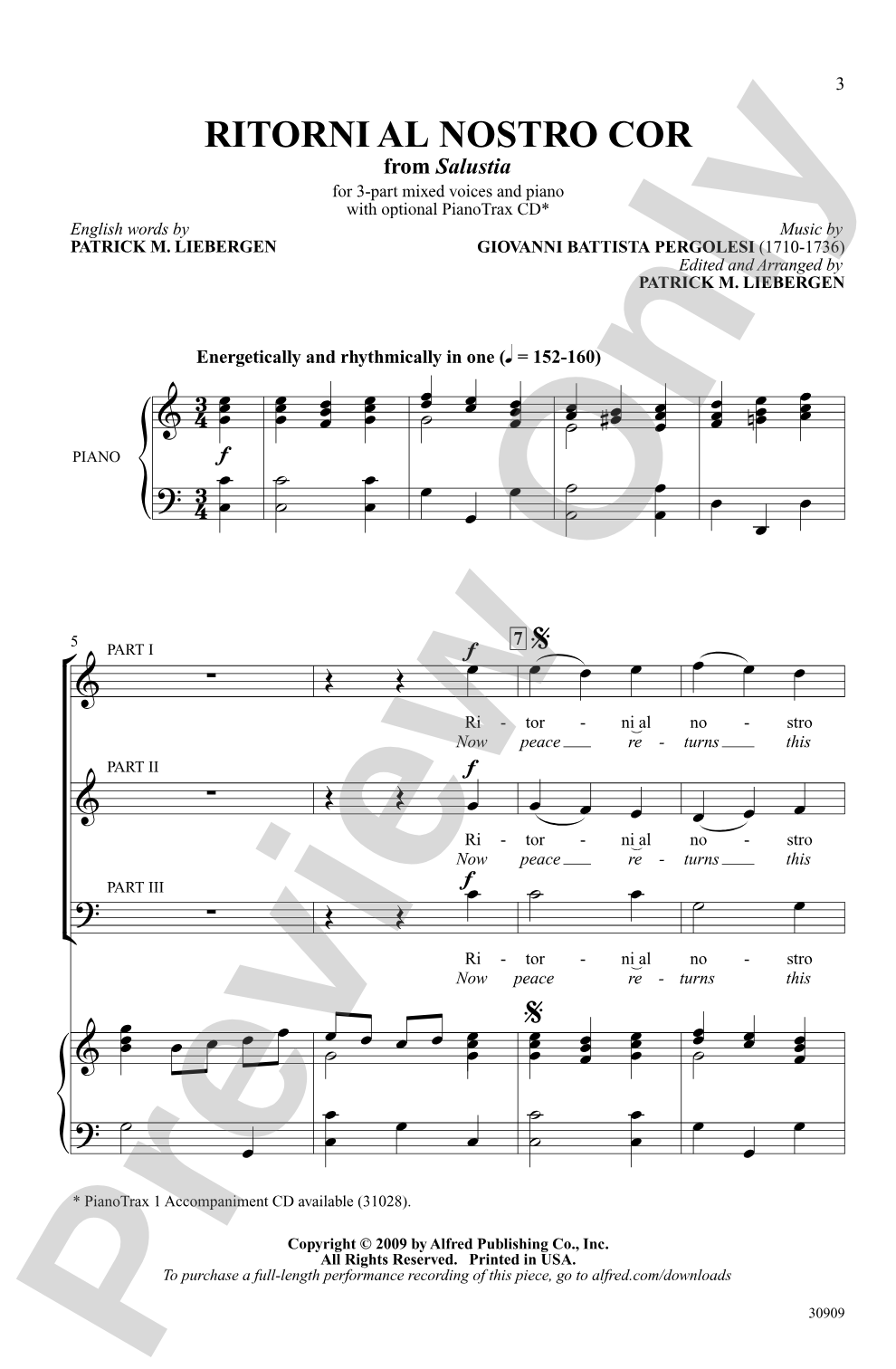
Music by Giovanni Battista Pergolesi / ed. and arr. with English words by Patrick M. Liebergen
Item: 00-PO-0000705
$1.75
Minimum order quantity: 20 copies
Pickup currently not available
Description
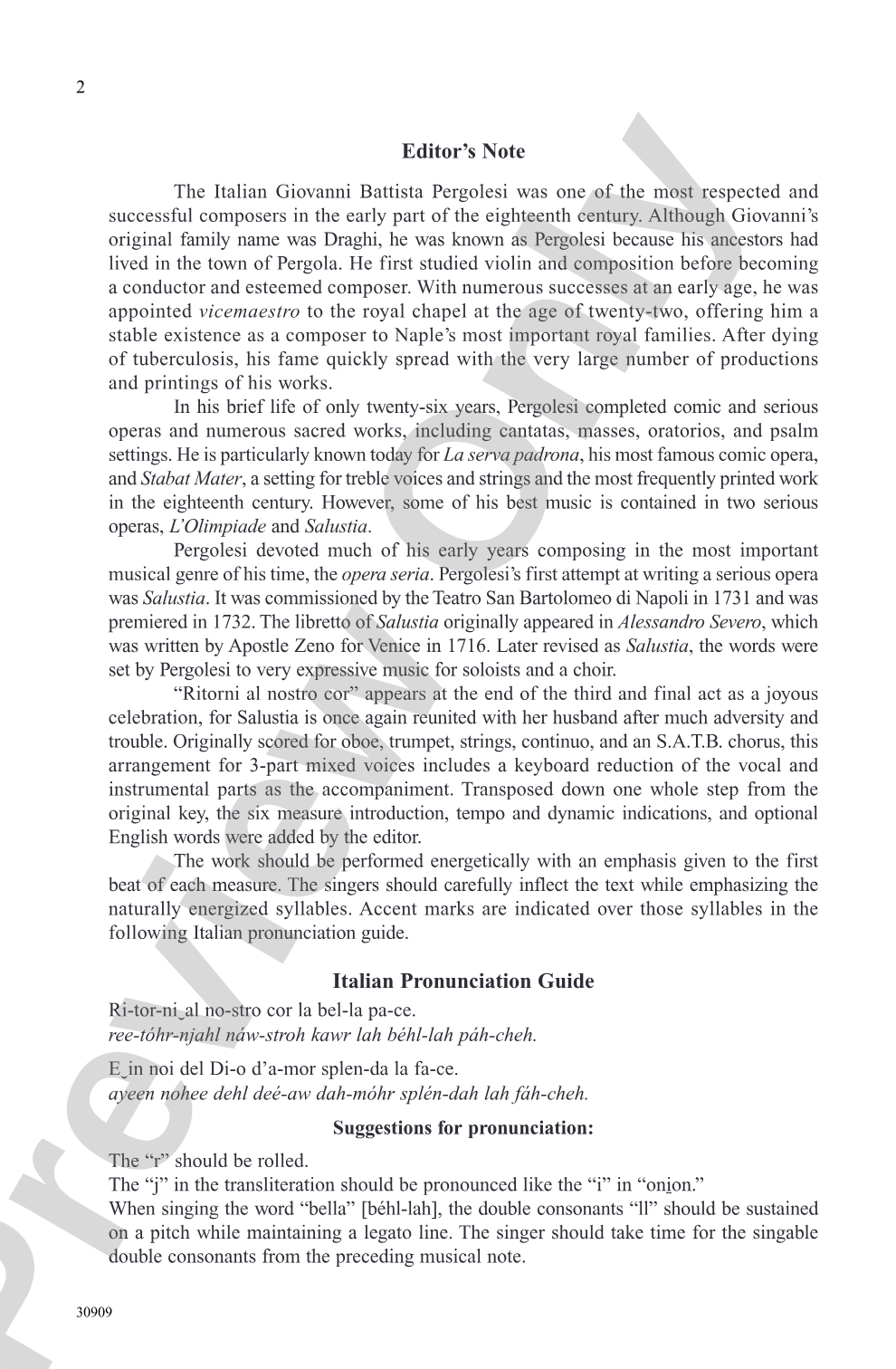
3-part mixed choirs will impress with this 18th century masterwork. Whether sung in English or the original Italian, this glorious selection is just right for festivals and adjudications. Accompaniment included on PianoTrax 1 CD (00-31028).


Ritorni al Nostro Cor (from Salustia): 3-Part Mixed Choral Octavo isn't in MakeMusic Cloud just yet...but it could be. Let us know you'd like to see it, and you'll help shape what comes next. In the meantime, start a free trial and dive into thousands of interactive titles your students can play along with today.
Request This Title
Tell us you want it.
Start Your Free Trial
Explore everything that's ready to play right now.
Sample Audio
1
Audio File
--:--
0:00
0:00
Sample Video
No sample videos found.
Additional Details
Series:
Alfred Choral Designs
Publisher:
Alfred Music
Page Count:
12
SKU:
00-PO-0000705
More about this title
About the Composer: Giovanni Battista Pergolesi
Giovanni Battista Pergolesi (1710-1736) was an Italian composer whose brief life produced an outsized influence on 18th-century music. Active during the transitional years between Baroque and Classical styles, Pergolesi excelled in both sacred and secular vocal music, creating works of remarkable melodic beauty and emotional directness. His operas and vocal compositions circulated widely across Europe and inspired countless imitations and arrangements long after his death at twenty-six.
Pergolesi's gift for crafting singable, memorable melodies made his music immediately appealing to performers and audiences alike. For choral directors, his vocal writing remains remarkably practical: transparent textures, logical voice leading, and an innate sense of phrasing that feels natural to singers at all levels.
Why we love this
This arrangement captures the elegance of 18th-century vocal writing without requiring advanced musicianship from your singers. The three-part texture sits comfortably for developing mixed choirs, and the melody is instantly expressive; your students will connect with the musical line immediately rather than wrestling with technical demands.
What to expect
The music unfolds with the unhurried grace of 18th-century salon music, warmly harmonic and melodically generous. Singers will discover clear phrase architecture and harmonic movement that feels inevitable, creating the satisfying sensation of navigating something genuinely composed rather than simply learning notes.
Who it's for
Three-part mixed choirs with basic to intermediate sight-reading skills will find this piece accessible and rewarding. It works particularly well for upper-level middle school choirs, community choirs, or high school ensembles looking for classical repertoire that sounds sophisticated without requiring extended technical range or dramatic interpretive maturity.
How to get the most out of it
- Balance the top line gently against the inner voices so the melody sings forward without overwhelming the harmonic support beneath it.
- Shape phrases with the text, allowing the natural speech rhythm of Italian (or your English translation) to guide tempo fluctuations and breathing.
- Reserve the full dynamic range for moments of harmonic arrival or text emphasis; the piece rewards intimacy over loudness.
- Consider sectional rehearsal focused on part independence before blending; SAB writing at this level benefits from clarity in each voice before the full ensemble sound takes shape.
How to use it
Program this as an adjudication or festival selection where elegance and stylistic clarity matter as much as technical difficulty. It pairs naturally with other Baroque or Classical vocal literature in a concert focused on the long melodic line, or anchor a set of secular vocal pieces that show your choir's range across eras and textures.
Skills your students will build
- Baroque and Classical voice leading conventions
- Singing sustained legit lines in three-part texture
- Text-driven phrasing and interpretation in Italian
- Balance and blend in SAB scoring
- Recognition of harmonic function and cadential motion