
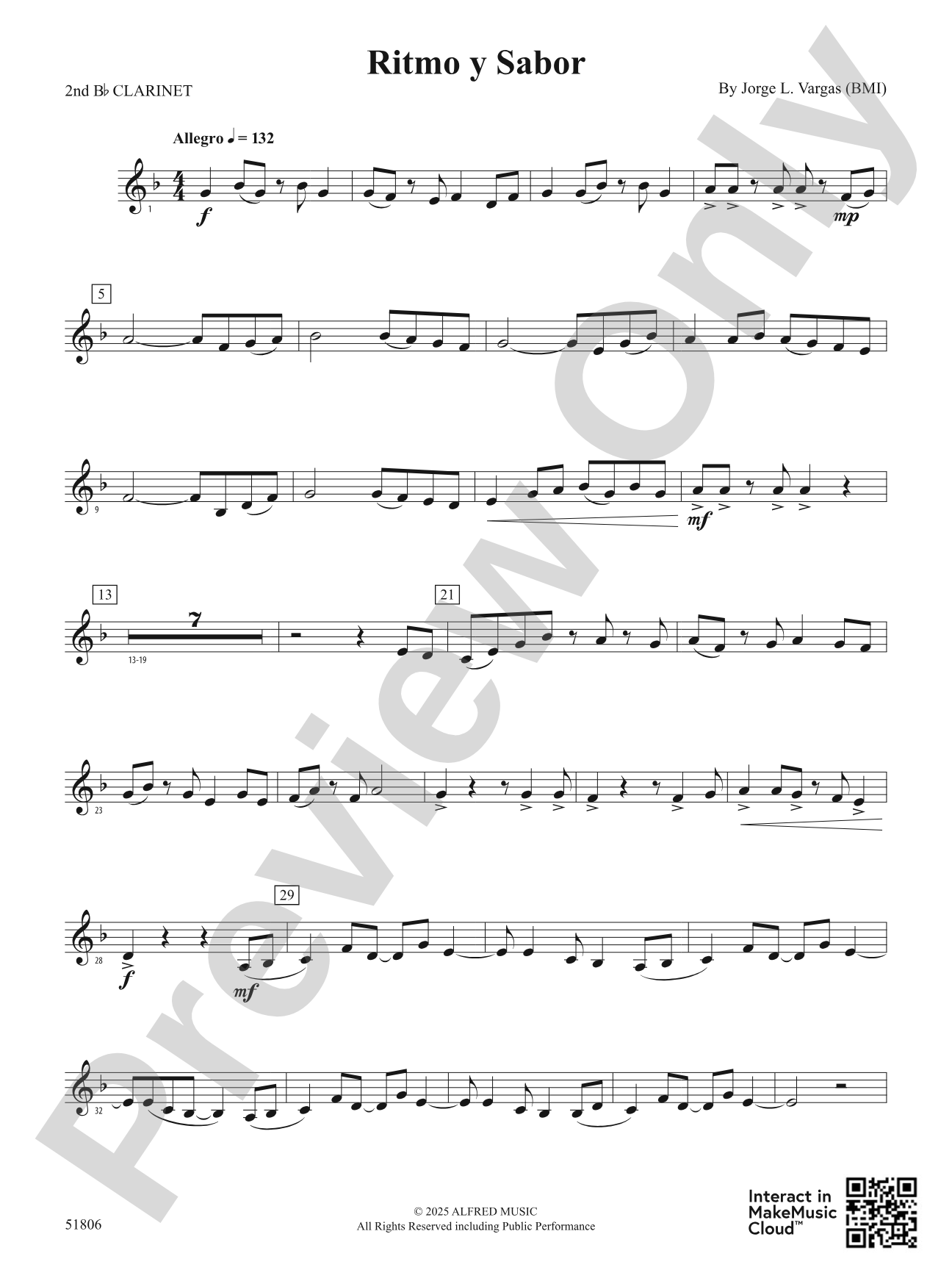

Ritmo y Sabor: 2nd B-flat Clarinet
By Jorge L. Vargas
Grade: 2
Item: 00-PC-0019506_C2
$3.00
Pickup currently not available
Description
Ritmo y Sabor (Rhythm and Flavor), by Jorge Vargas, is based on the Cha Cha and Danzón styles of Latin music. These particular styles of music are characterized by syncopated rhythms and auxiliary percussion. Each style has its own corresponding dance moves, and both are extremely popular throughout the world. This piece has plenty of rhythm to engage your students and plenty of flavor to make you want to dance! (2:20)


Don't just read it, hear it, play along with it, and watch your students grow with it. In MakeMusic Cloud, Ritmo y Sabor: 2nd B-flat Clarinet comes alive with professional accompaniment, adjustable tempo, and built-in practice tools that turn solo practice into real progress.
Open in the Player
Jump straight in and assign it today.
Start Your Free Trial
Open this title and explore the full library in minutes.
Sample Audio
1
Audio File
--:--
0:00
0:00
Sample Video
Additional Details
Series:
Young Symphonic Series
Publisher:
Alfred Music
SKU:
00-PC-0019506_C2
More about this title
About the Composer: Jorge L. Vargas

Jorge L. Vargas brings both classroom experience and deep roots in Latin music traditions to his compositional work. Born in Piedras Negras, Coahuila, Mexico, he earned his Bachelor's in Music Education from The University of Texas-San Antonio and his Master's in Education from Lamar University. At Memorial Junior High in Eagle Pass, Texas, he directs the concert band and mariachi ensemble while coordinating beginner classes, giving him direct insight into what energizes young musicians.
Vargas has built a substantial catalog across concert band, marching band, string orchestra, and mariachi ensembles. His compositions have earned recognition on state and festival lists, appeared on the J.W. Pepper Editor's Choice list and Bandworld Magazine's Top 100, and been featured at the Midwest Clinic in Chicago. His work draws authenticity from the cultural landscape he knows well, translating genuine musical idioms into accessible and engaging repertoire for student ensembles.
Why we love this
Vargas strips away unnecessary complexity and lets rhythm and melody do the heavy lifting. The piece invites genuine engagement with Latin dance styles that students recognize and want to move to, which means your rehearsals naturally gain energy without requiring you to manufacture interest. It's substantial enough for a festival or contest performance while remaining solidly achievable at Grade 2.
What to expect
Warmth, movement, and joy. The Cha Cha and Danzón styles arrive with their own built-in dance character, so the piece carries momentum that pulls the band forward. Syncopation and auxiliary percussion create texture and color that make every section feel alive, even at Grade 2 accessibility.
Who it's for
Grade 2 concert bands ready to move beyond march repertoire and explore styles beyond traditional European concert music. This works equally well for directors seeking a contest piece with cultural substance or for ensembles that thrive on repertoire with infectious rhythm and built-in audience appeal.
How to get the most out of it
- Anchor the pulse in your auxiliary percussion section. The clave patterns and syncopation feel most secure when your drummer and percussionists lock in and lead the band forward rather than follow.
- Balance the rhythmic complexity by keeping the melody lines singing and clear. Students often overplay syncopated parts when they're uncertain; steady conducting will help them hear the melody line above the dance rhythm.
- Use the recorded accompaniment (if available separately) during sectionals to let students internalize the groove independently before rehearsing with the full band.
- Mark which style appears in each section. Students respond better to the Cha Cha and Danzón when they understand how the two styles differ rhythmically and can prepare accordingly.
How to use it
Program this during a concert section exploring Latin music, world music, or multicultural traditions, where it gains context alongside other pieces from different cultures. It also serves as an excellent contest or festival selection when your ensemble needs a crowd-pleasing opener that demonstrates both technical control and musical maturity. The 2:20 length fits neatly into most concert and contest schedules.
Skills your students will build
- Reading and performing syncopated rhythms in both simple and compound meter
- Ensemble precision with auxiliary percussion parts (clave, guiro, cowbell, etc.)
- Maintaining steady pulse while negotiating rhythmic complexity
- Stylistic interpretation of Latin dance music idioms
- Balance between melodic clarity and rhythmic texture