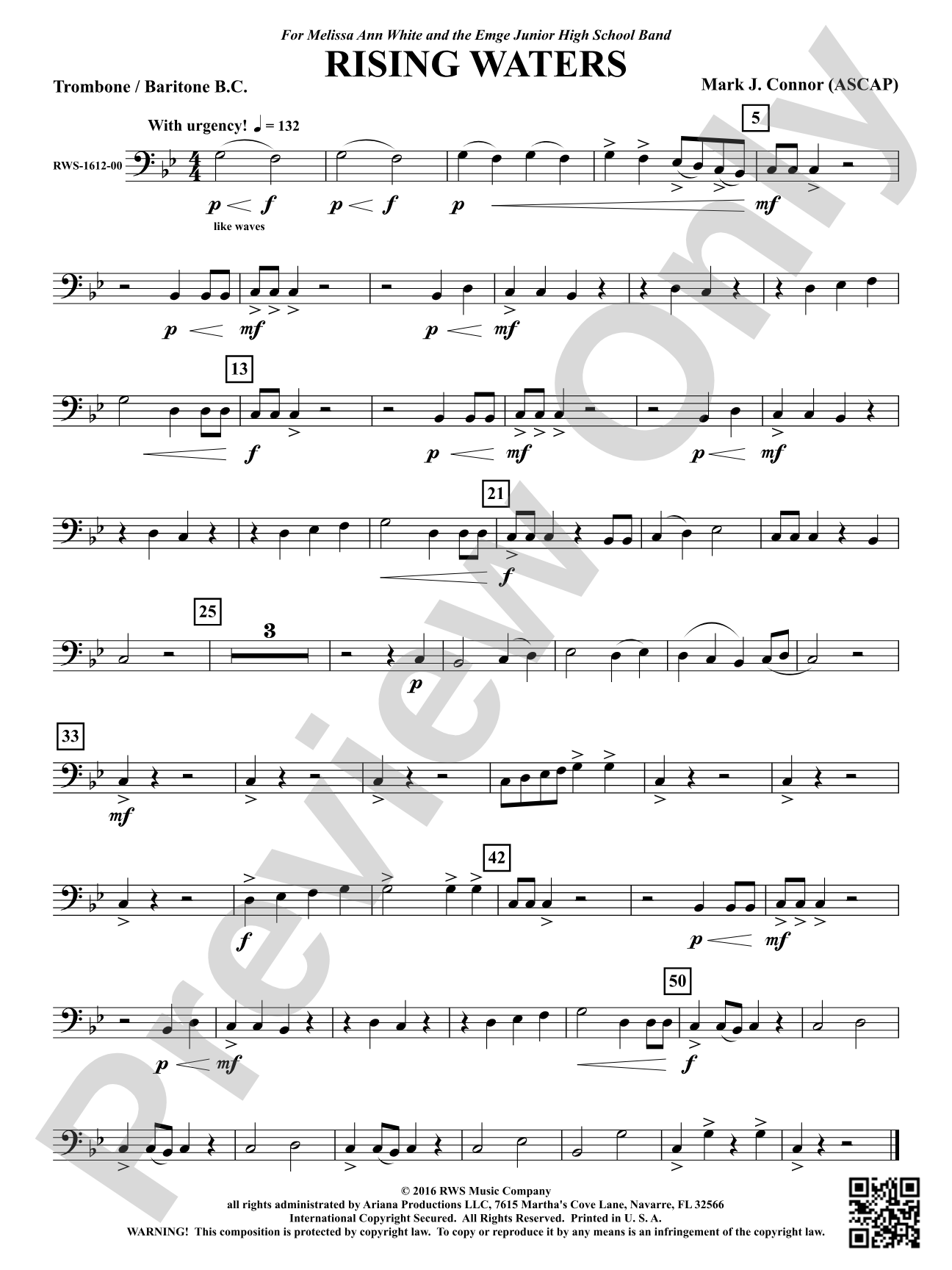
Rising Waters: Trombone/Euphonium Sheet Music Preview

Rising Waters: Trombone/Euphonium

By Mark J. Connor

Grade: 1

Item: 98-PC-RWS1612_TN1BBC1

Digital Download
$3.99
Description
The rain won't stop and time is running out! "Rising Waters" perfectly captures the feeling of extreme urgency through energetic rhythmic interplay and exciting percussion. Written for beginning band using only the first six notes, this dramatic music has plenty to teach and will keep everyone on the edge of their seat!

Original Item#: RWS-1612-00

Rising Waters: Trombone/Euphonium isn't in MakeMusic Cloud just yet...but it could be. Let us know you'd like to see it, and you'll help shape what comes next. In the meantime, start a free trial and dive into thousands of interactive titles your students can play along with today.

Sample Audio
0:00
0:00
Sample Video
Additional Details
Series: RWS - Beginning Band
Publisher: RWS Music Company
SKU: 98-PC-RWS1612_TN1BBC1

More about this title

About the Composer: Mark J. Connor

Mark J. Connor has established himself as a composer with a keen understanding of what beginning band students need to play. His work in the RWS series demonstrates a gift for crafting music that teaches fundamental musicianship while delivering genuine dramatic impact, rather than relying on technical complexity to hold interest.

Why we love this

Connor captures genuine dramatic tension using only six pitches, which means your early-year band can execute a piece with real theatrical weight without technical overwhelm. The rhythmic interplay he builds into the score creates urgency that keeps students engaged and audiences invested, proving that restraint in note choice doesn't mean restraint in impact.

What to expect

A storm building in real time. The limited pitch set paradoxically intensifies the emotional experience, forcing focus onto rhythm, dynamics, and texture as the primary storytelling tools. Energy propels the entire work from start to finish.

Who it's for

Beginning band directors who need repertoire that challenges students musically without overwhelming them technically. This piece works for first-year ensembles ready to engage with programmatic ideas and rhythmic complexity at their level.

How to get the most out of it

  • Lock the rhythm section (percussion and low brass) first; the driving pulse is the foundation that allows the melodic instruments to sit confidently on top of it.
  • Shape the dynamic trajectory as a conductor rather than leaving it to individual sections. Build intensity through crescendos tied to rhythmic density, not volume alone.
  • Emphasize the percussion's role as more than accompaniment. The interplay between unpitched instruments and the ensemble is where much of the drama lives.
  • Maintain steady time through the energetic sections; this music benefits from precision that matches its urgency, not from flexibility.

How to use it

Open a concert with this to establish high energy and capture immediate attention, or use it as a bridge between a ballad and another upbeat work. The dramatic arc and programmatic title also make it suitable for festival or contest programming where visual and musical storytelling enhance the performance experience.

Skills your students will build

  • Rhythmic precision and ensemble synchronization
  • Dynamic shaping and phrase building with limited melodic material
  • Coordination between pitched instruments and percussion
  • Musicality within structural constraints (working effectively within a six-note palette)

You May Also Like