
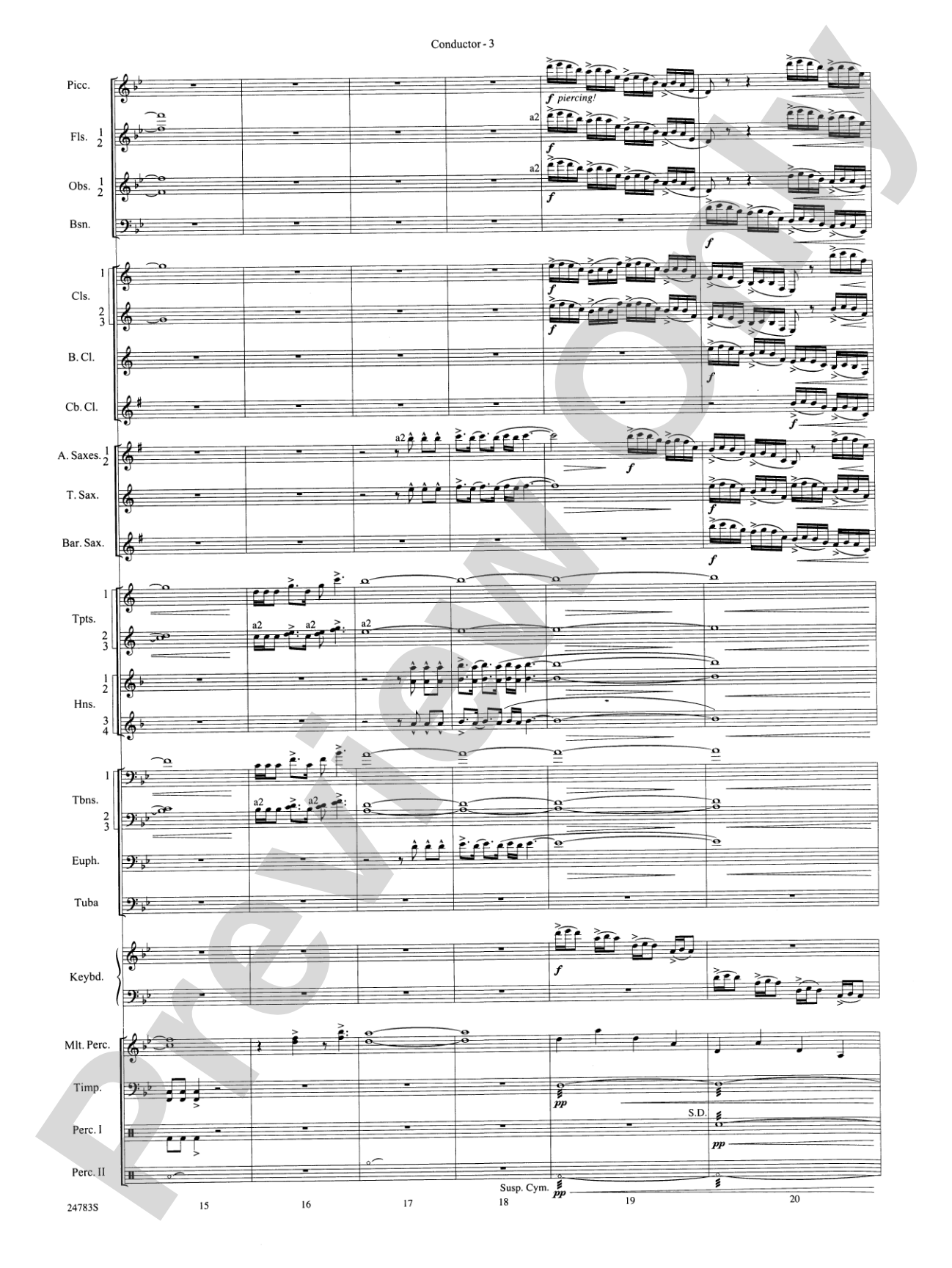
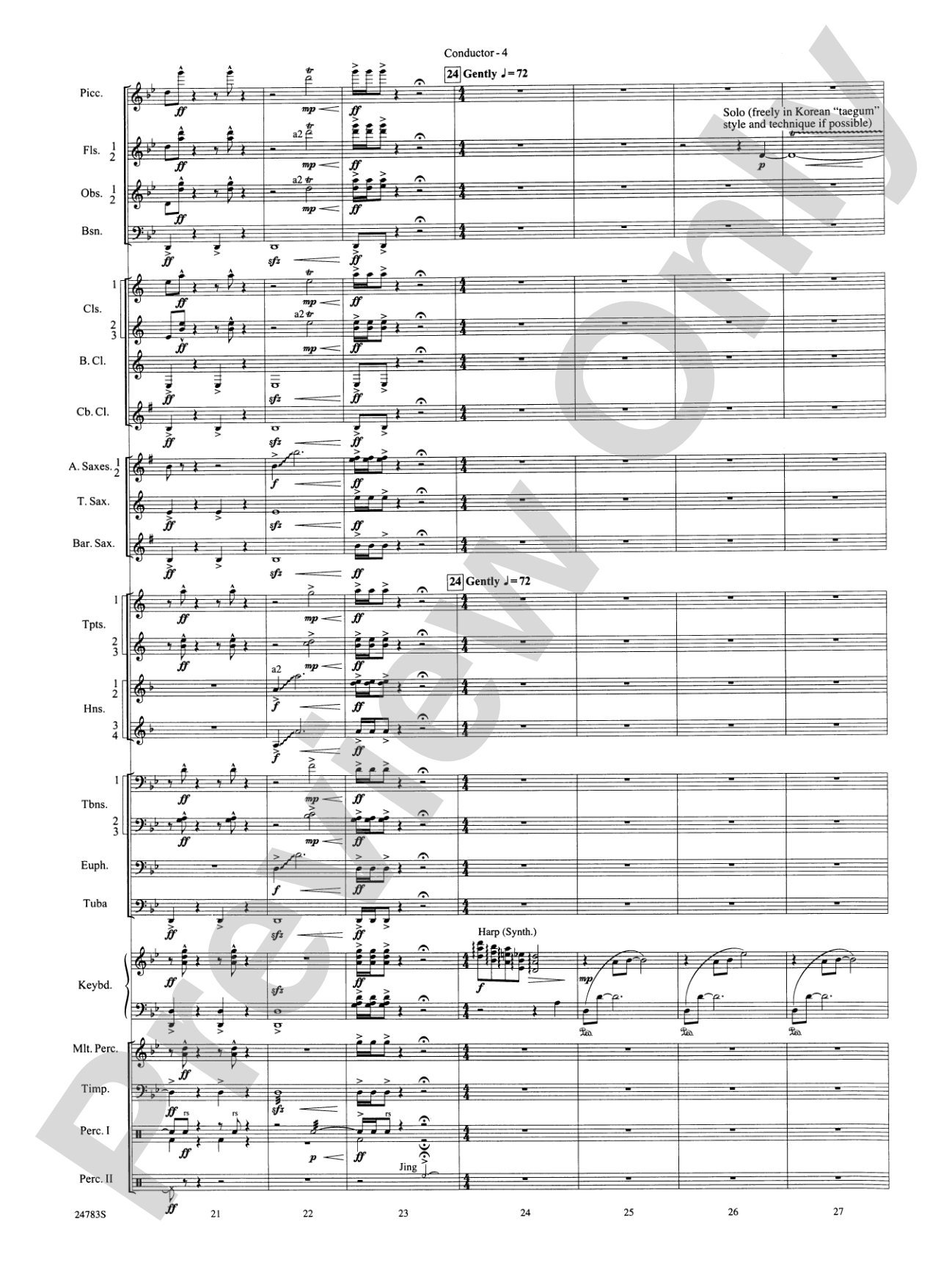
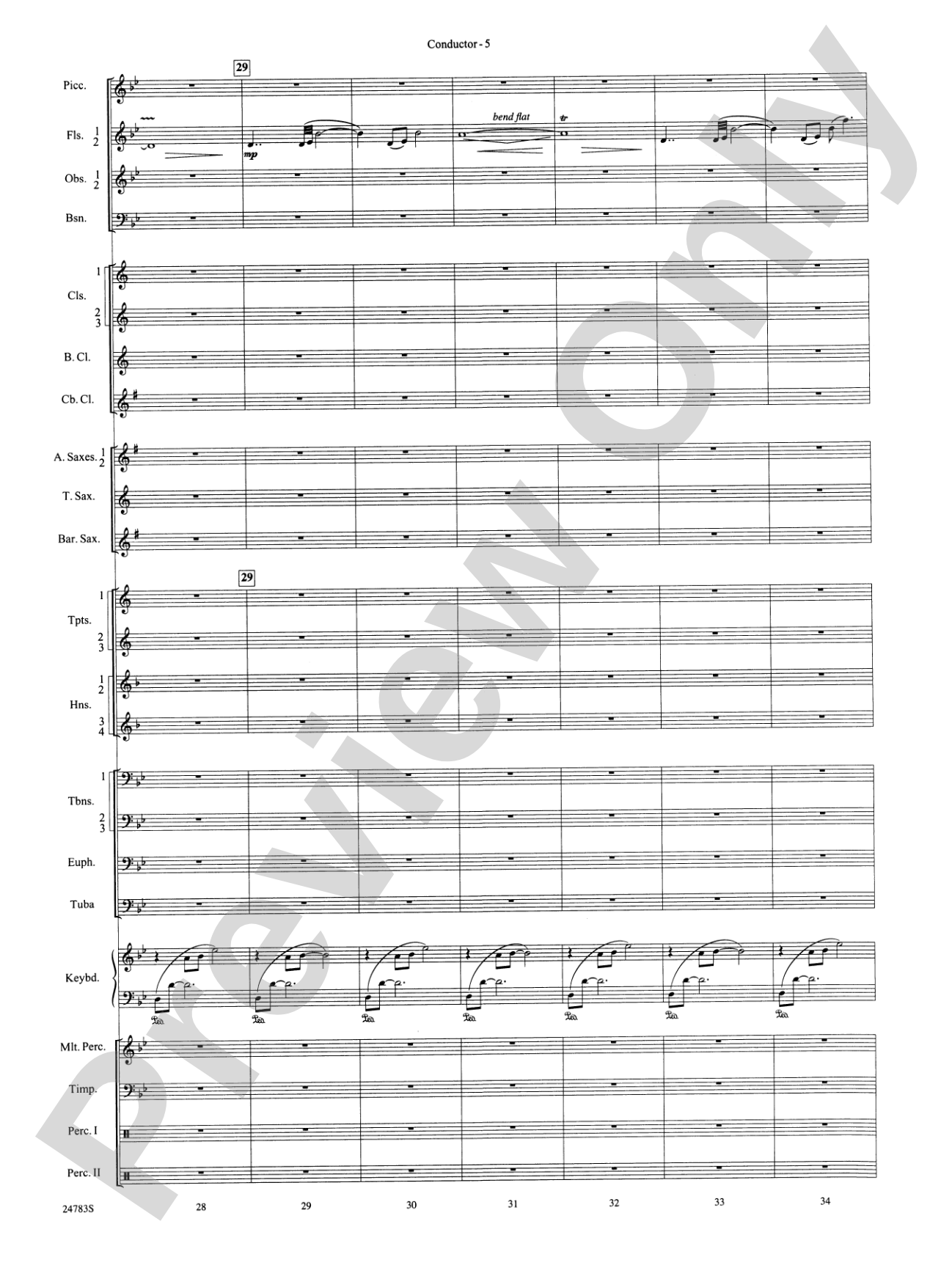
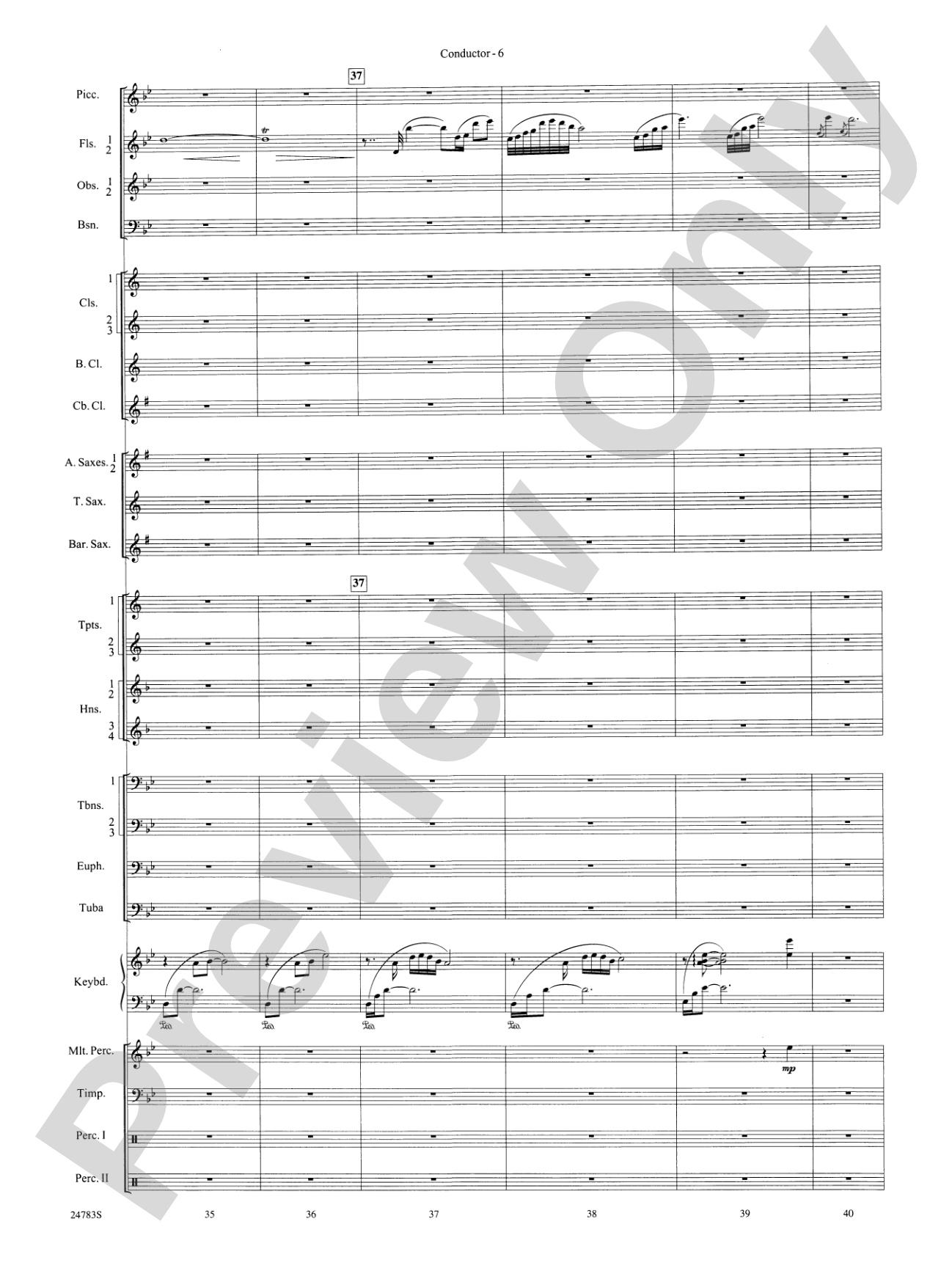
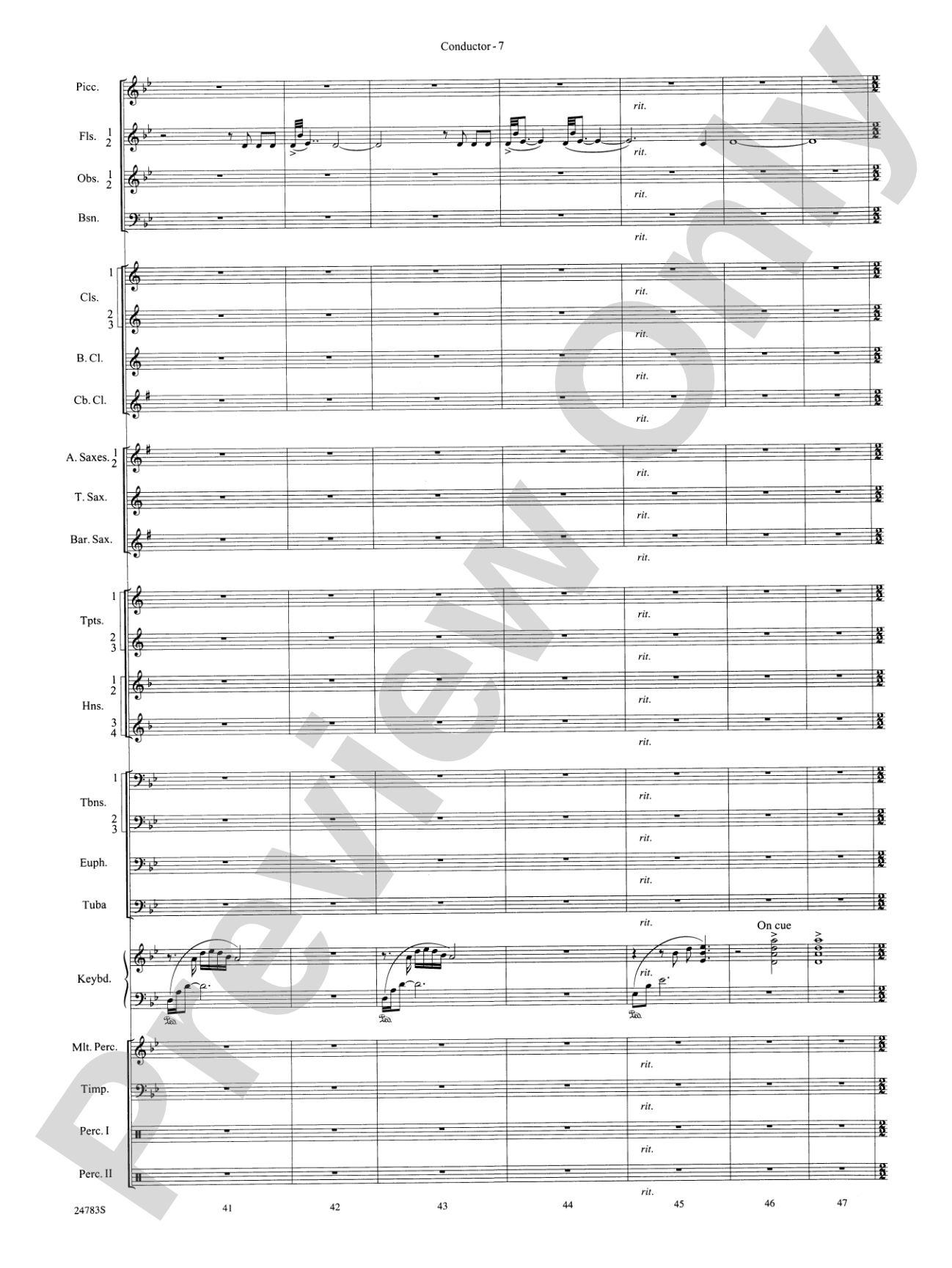
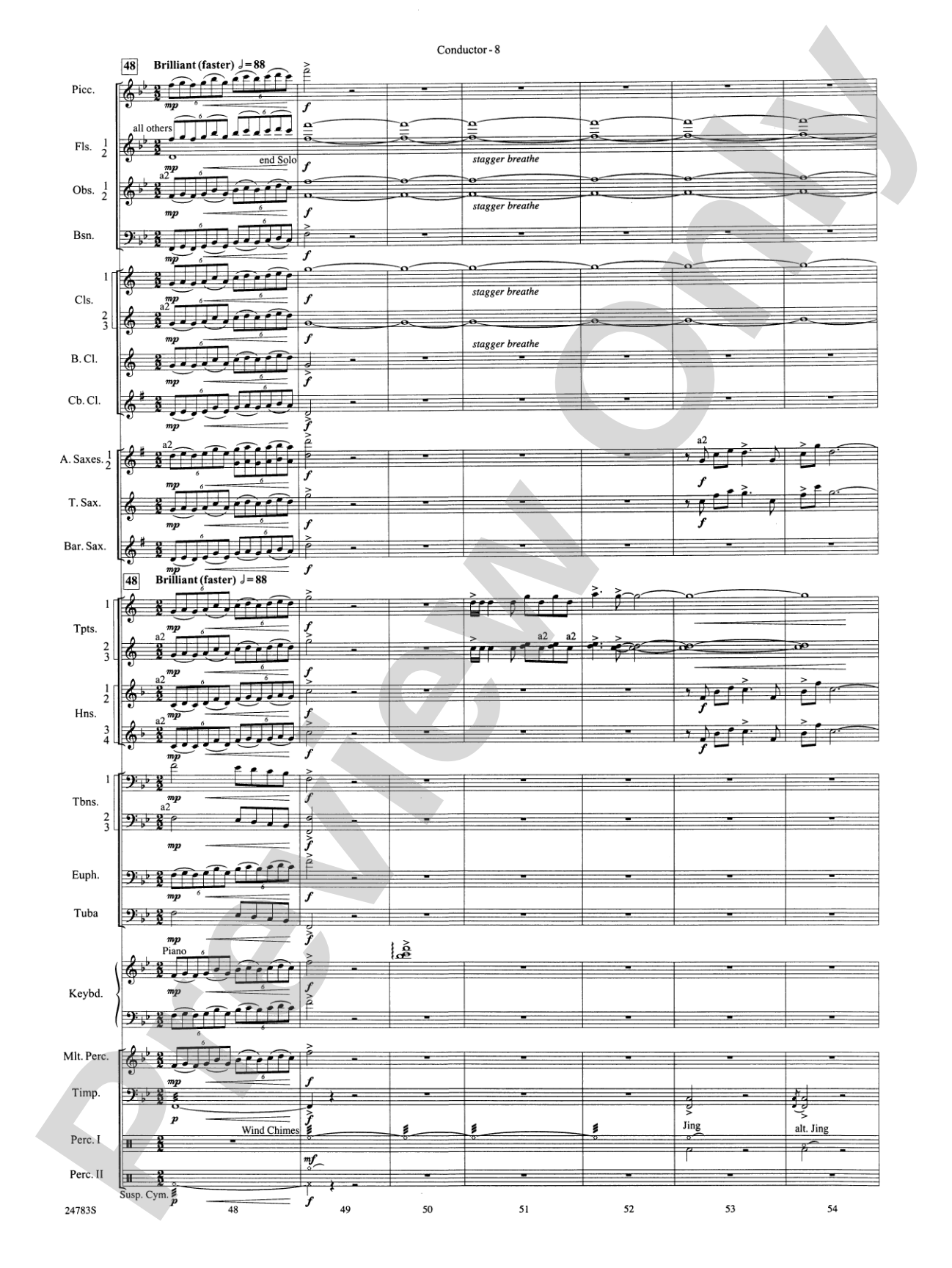
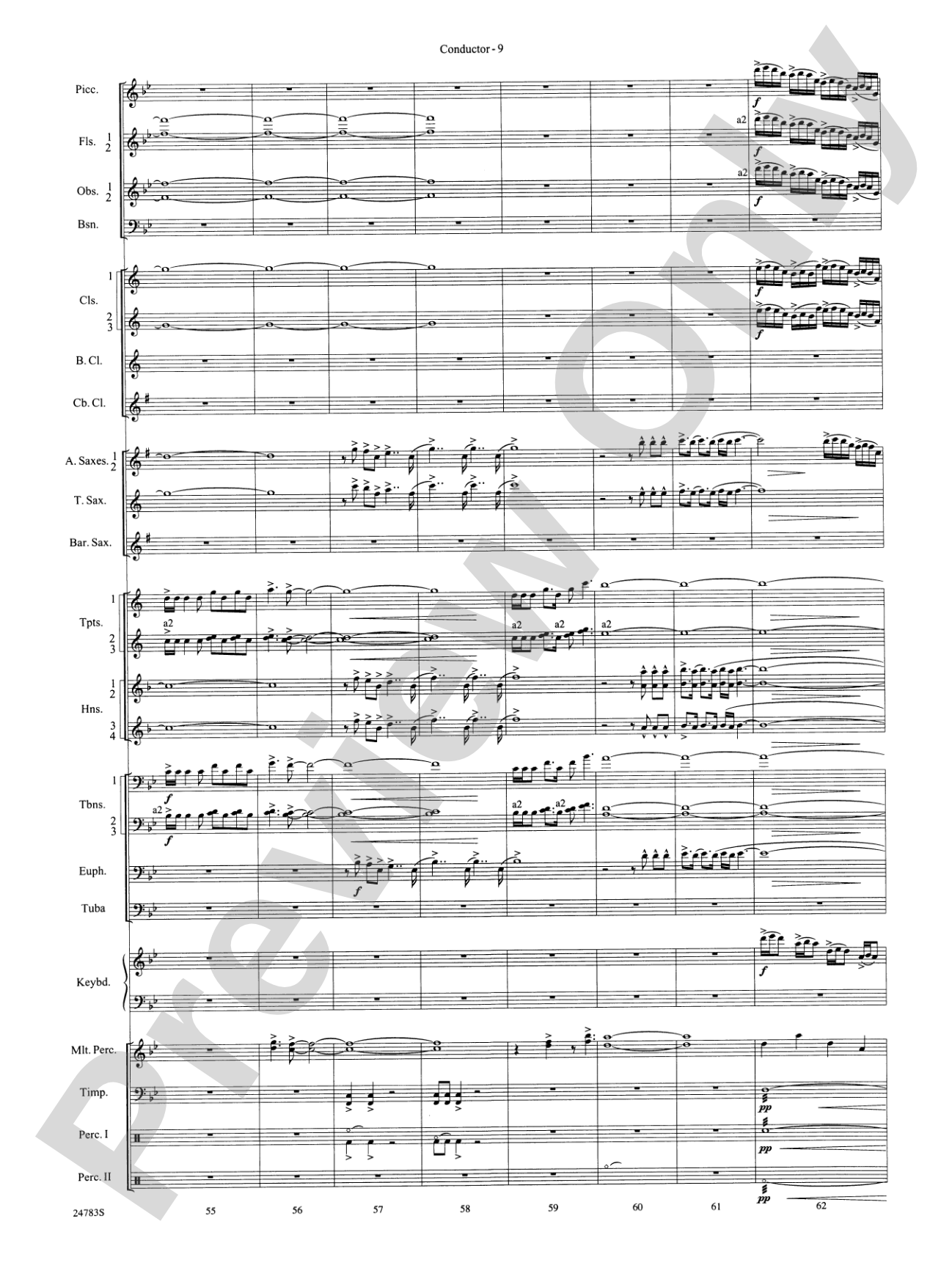
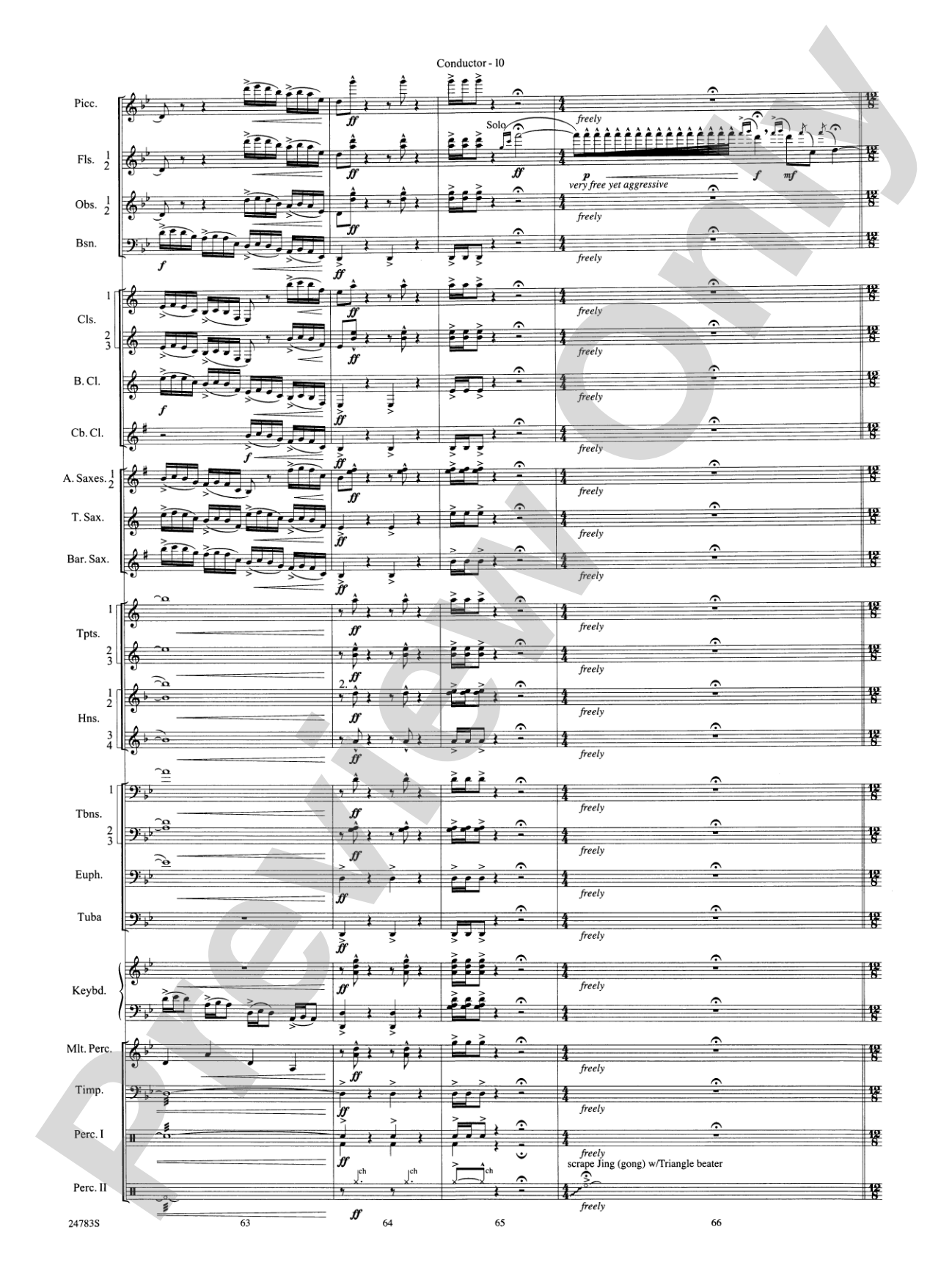
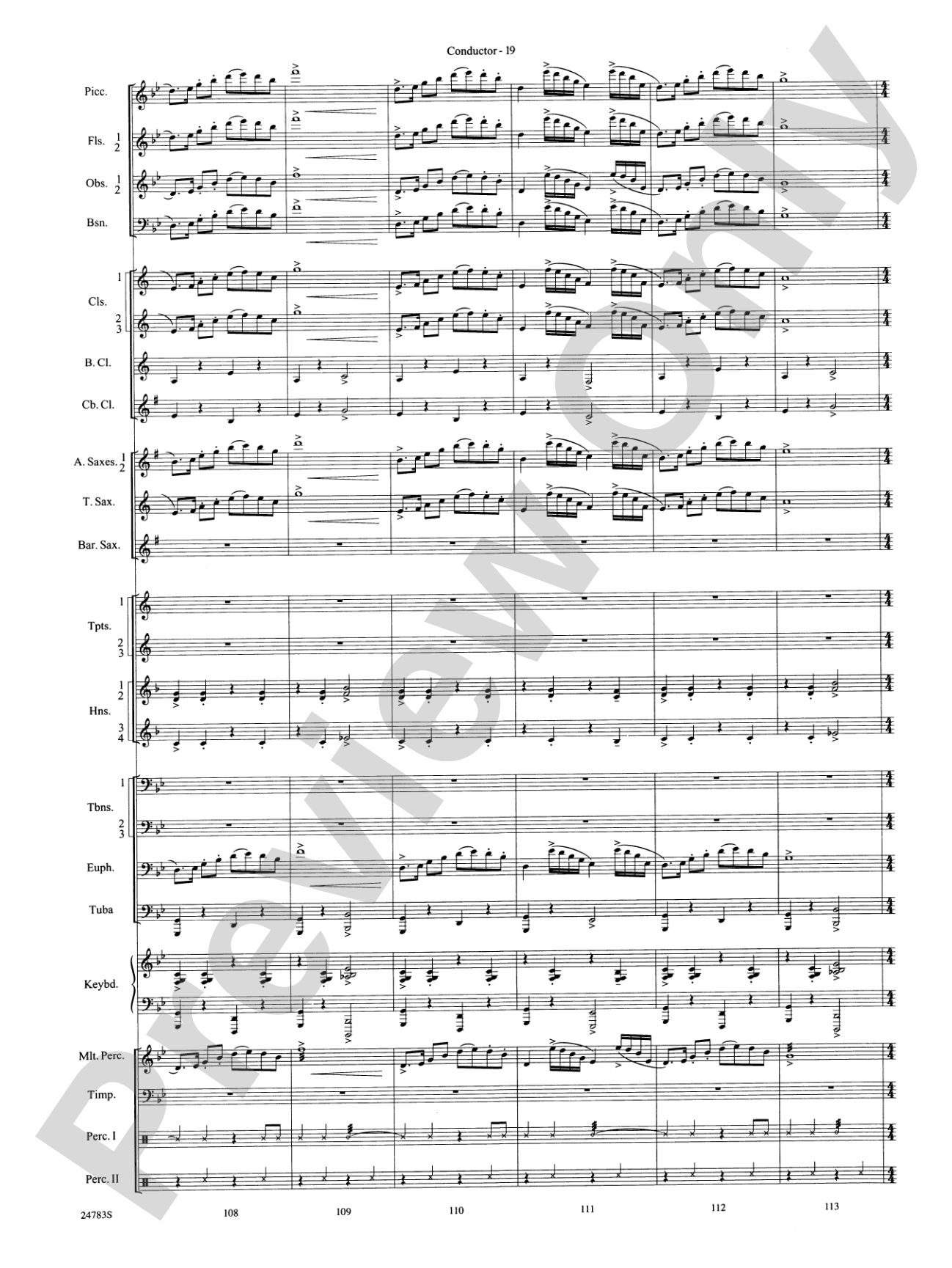
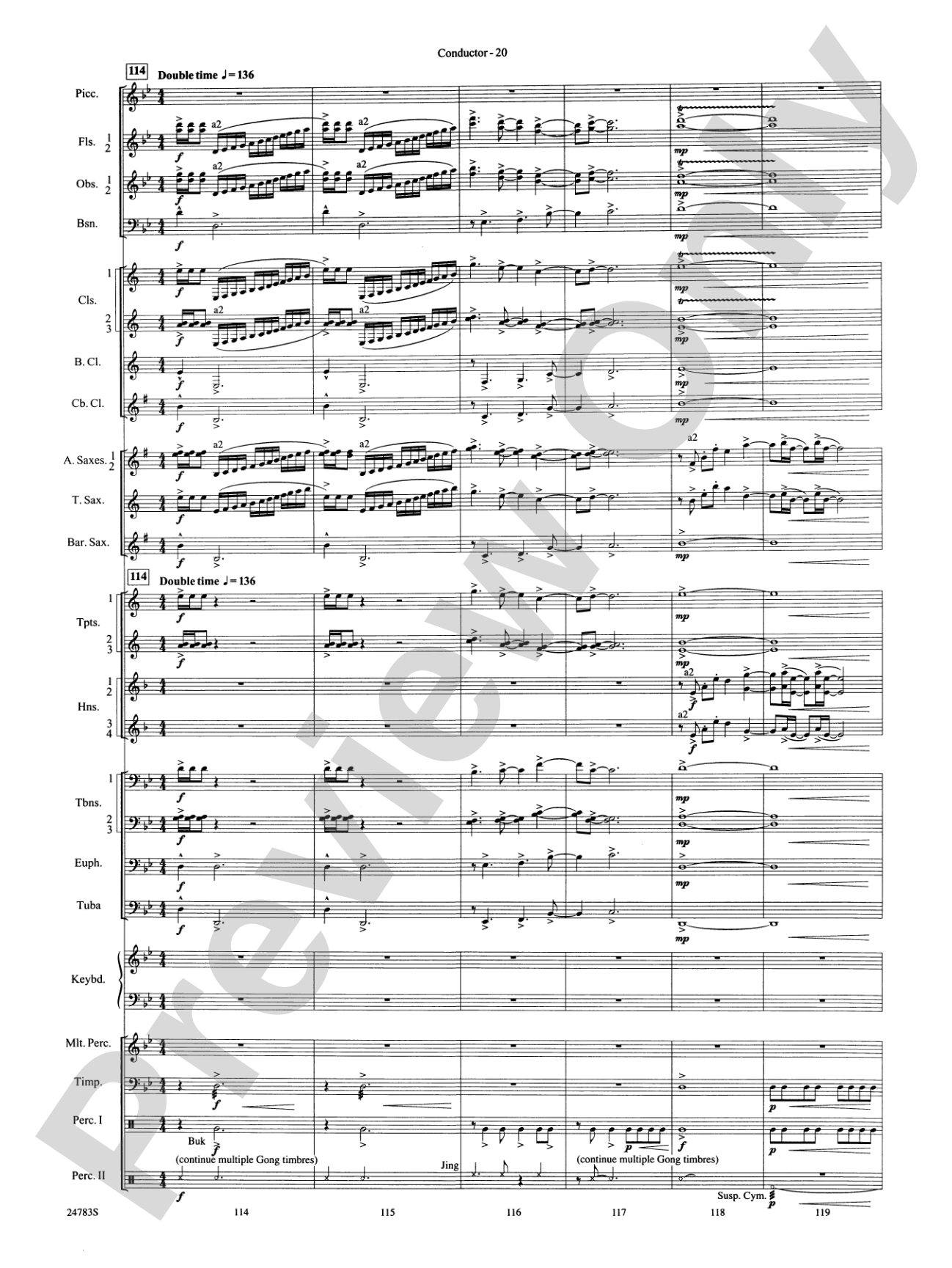
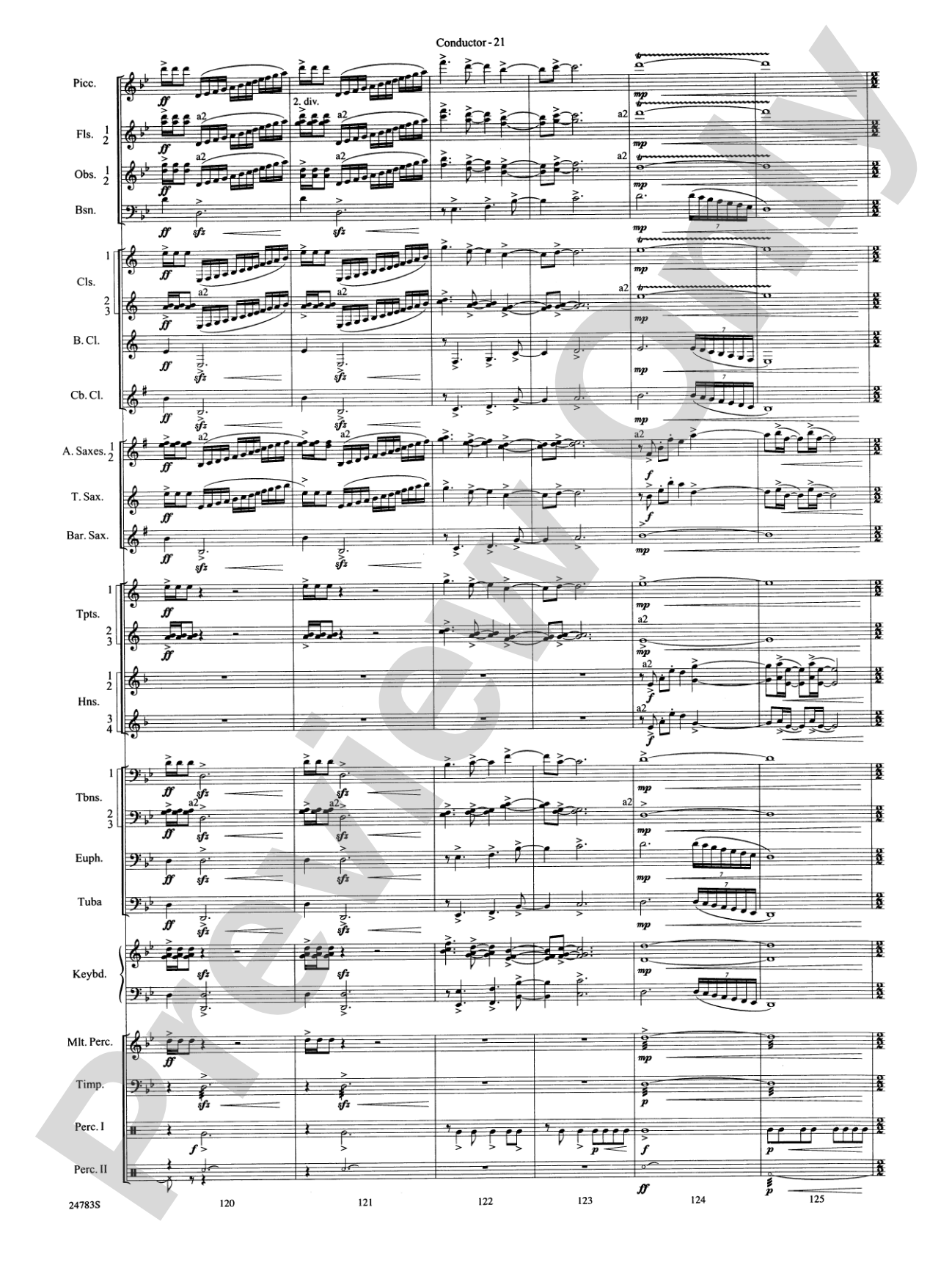
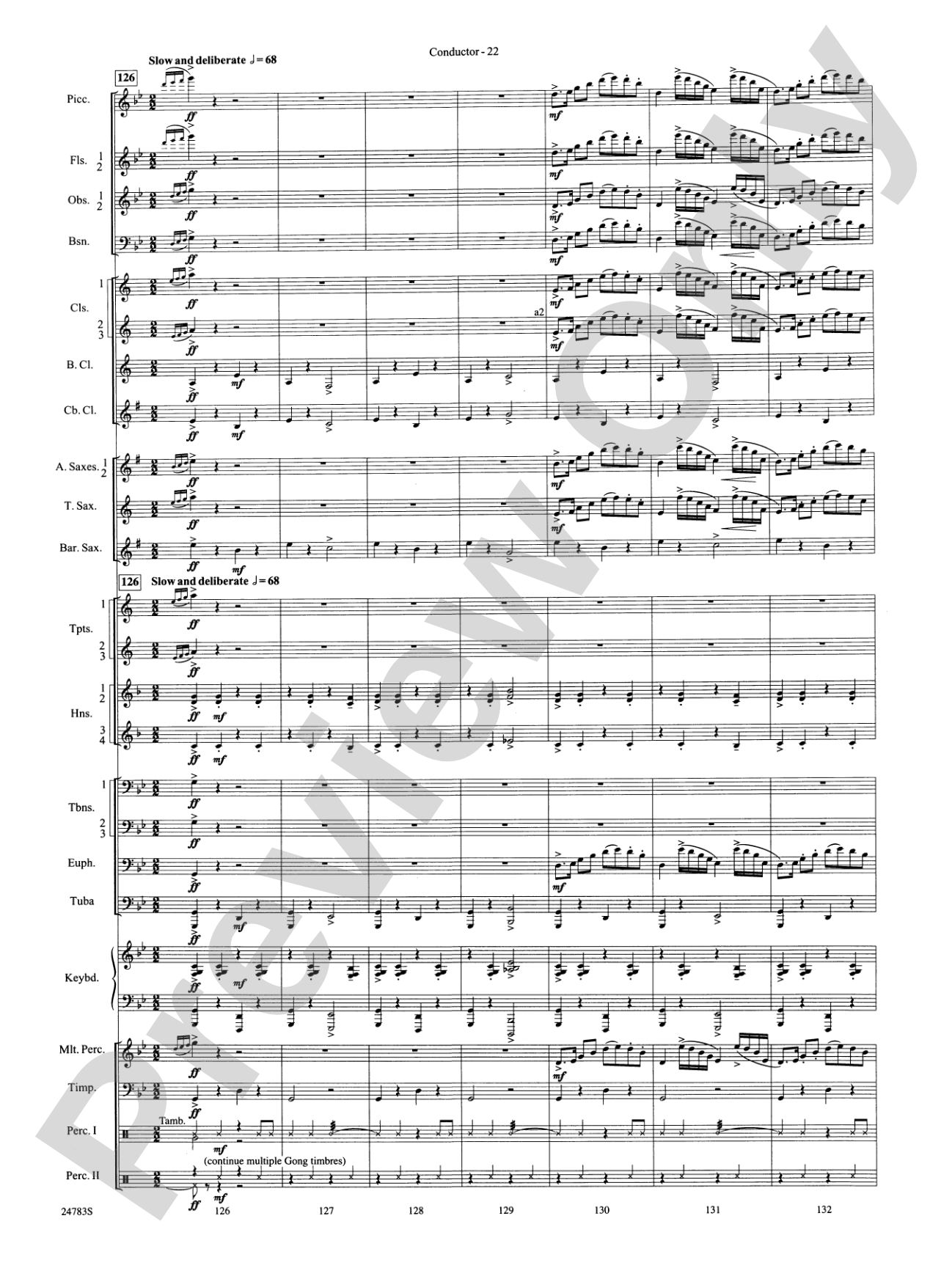
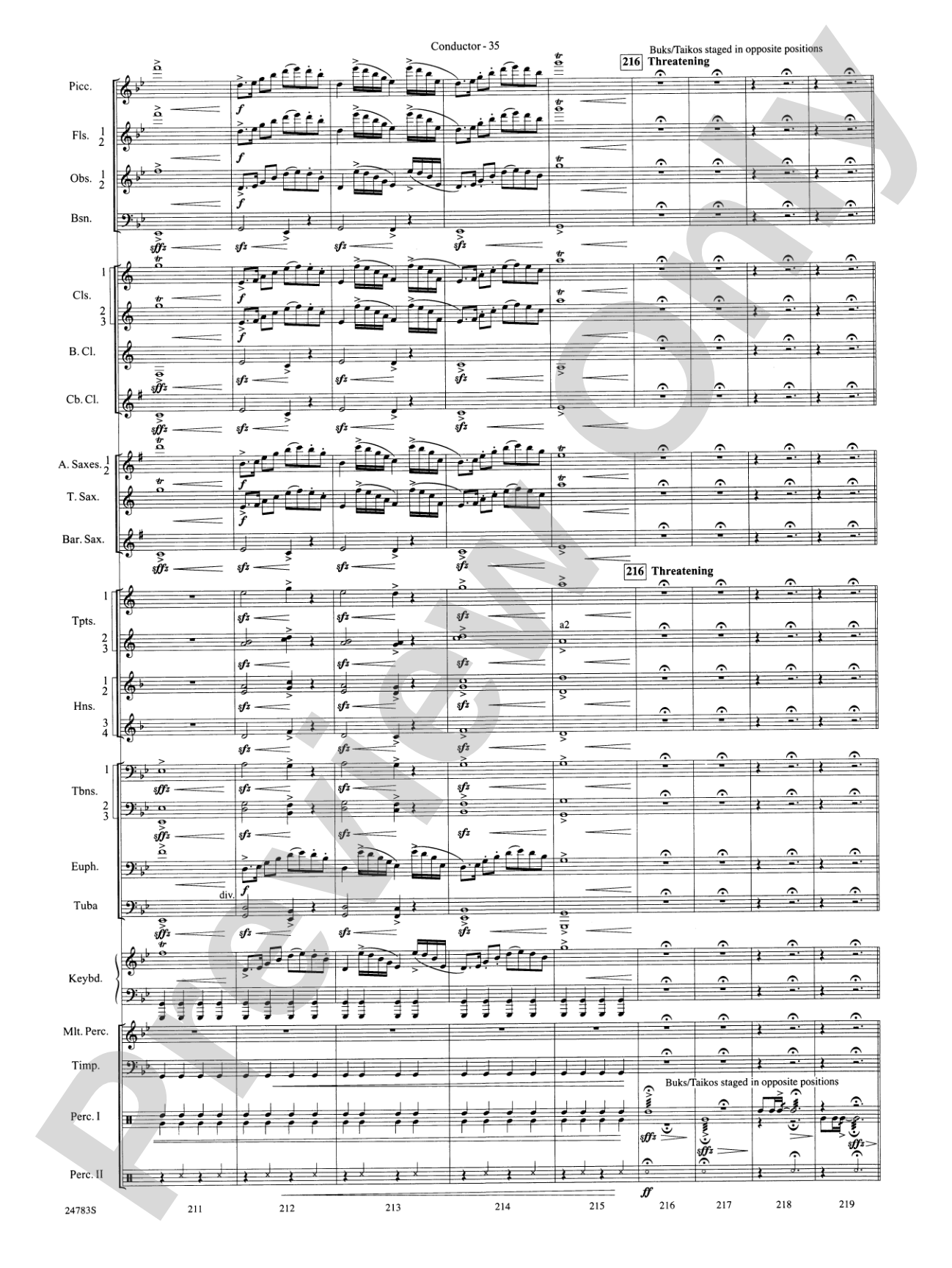
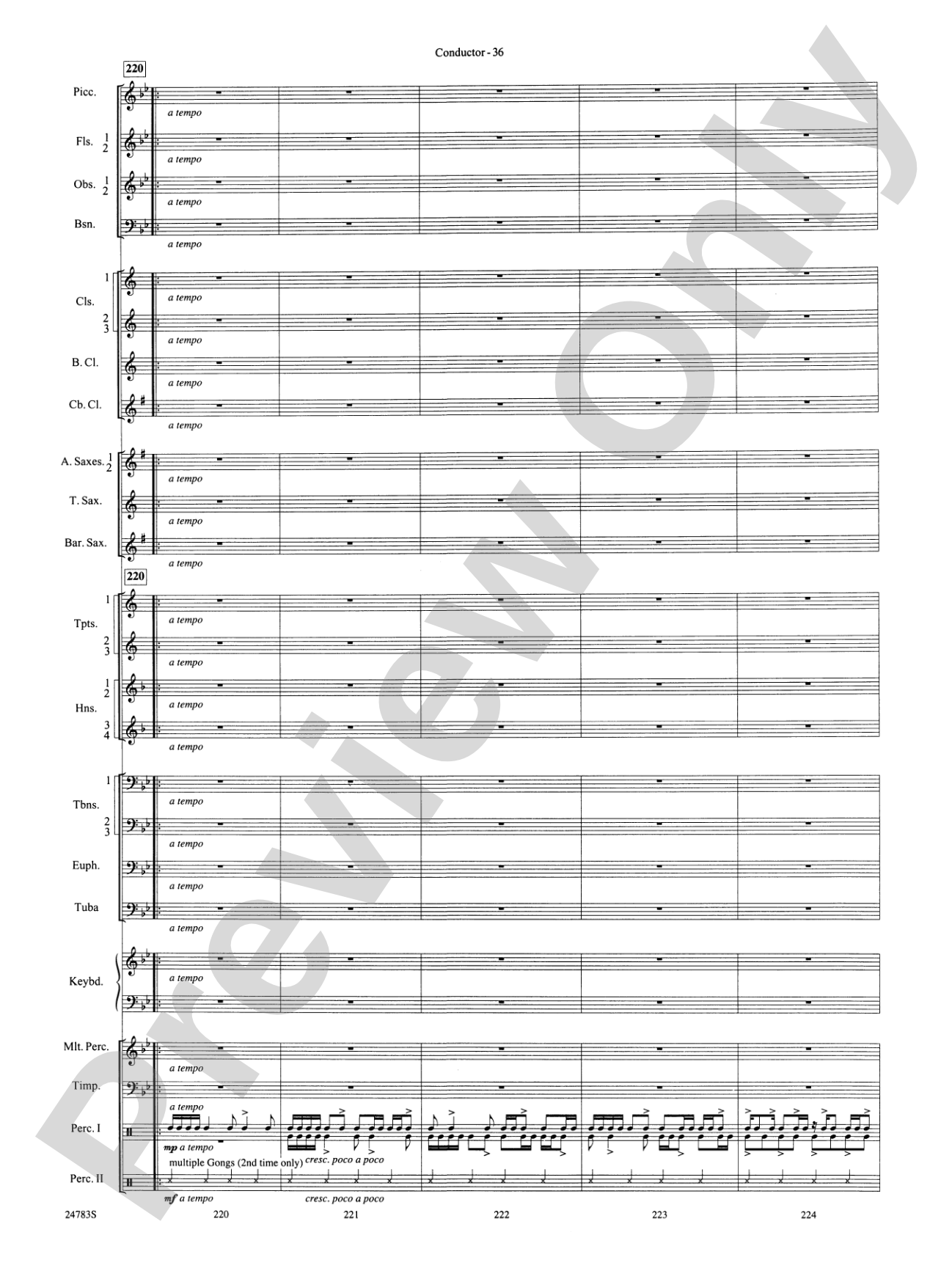
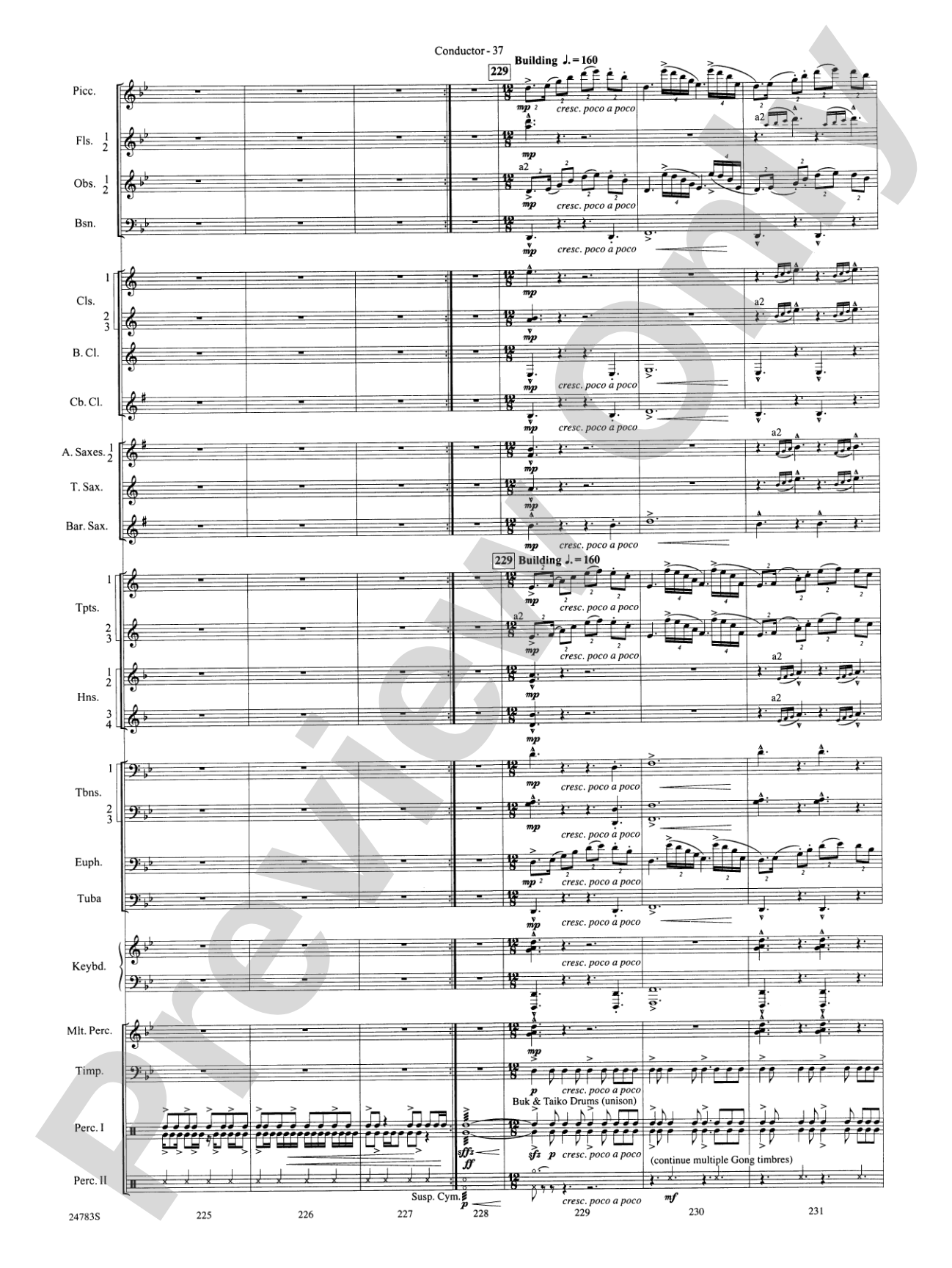
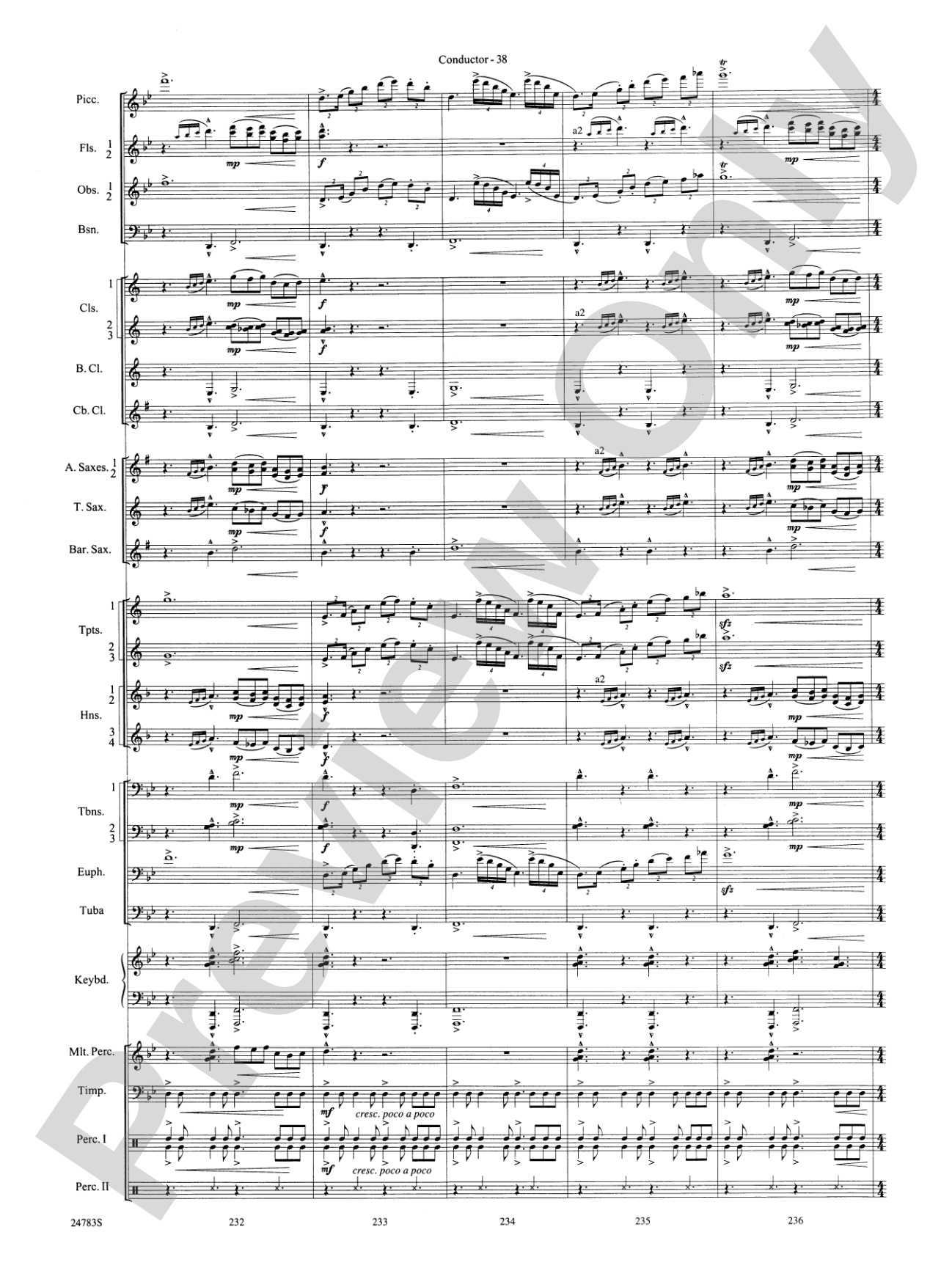

Rising Dragons: Concert Band Conductor Score & Parts
By Robert W. Smith
Grade: 4.5 (Medium to Medium Advanced)
Item: 00-PK-0000925

$87.00
Pickup currently not available
Buy Extra Parts (Digital PDF Download)
Parts Added to Cart!
Description
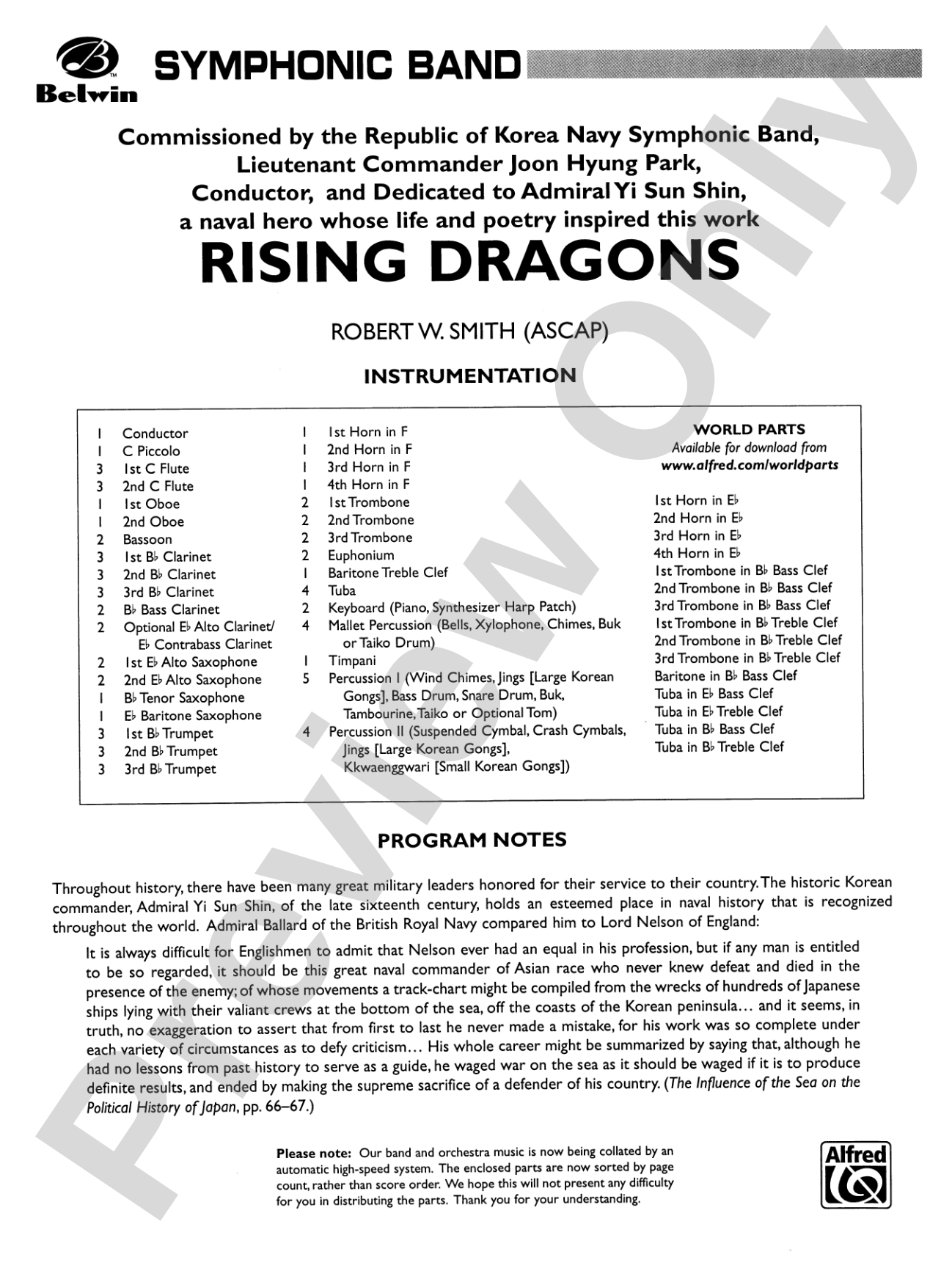
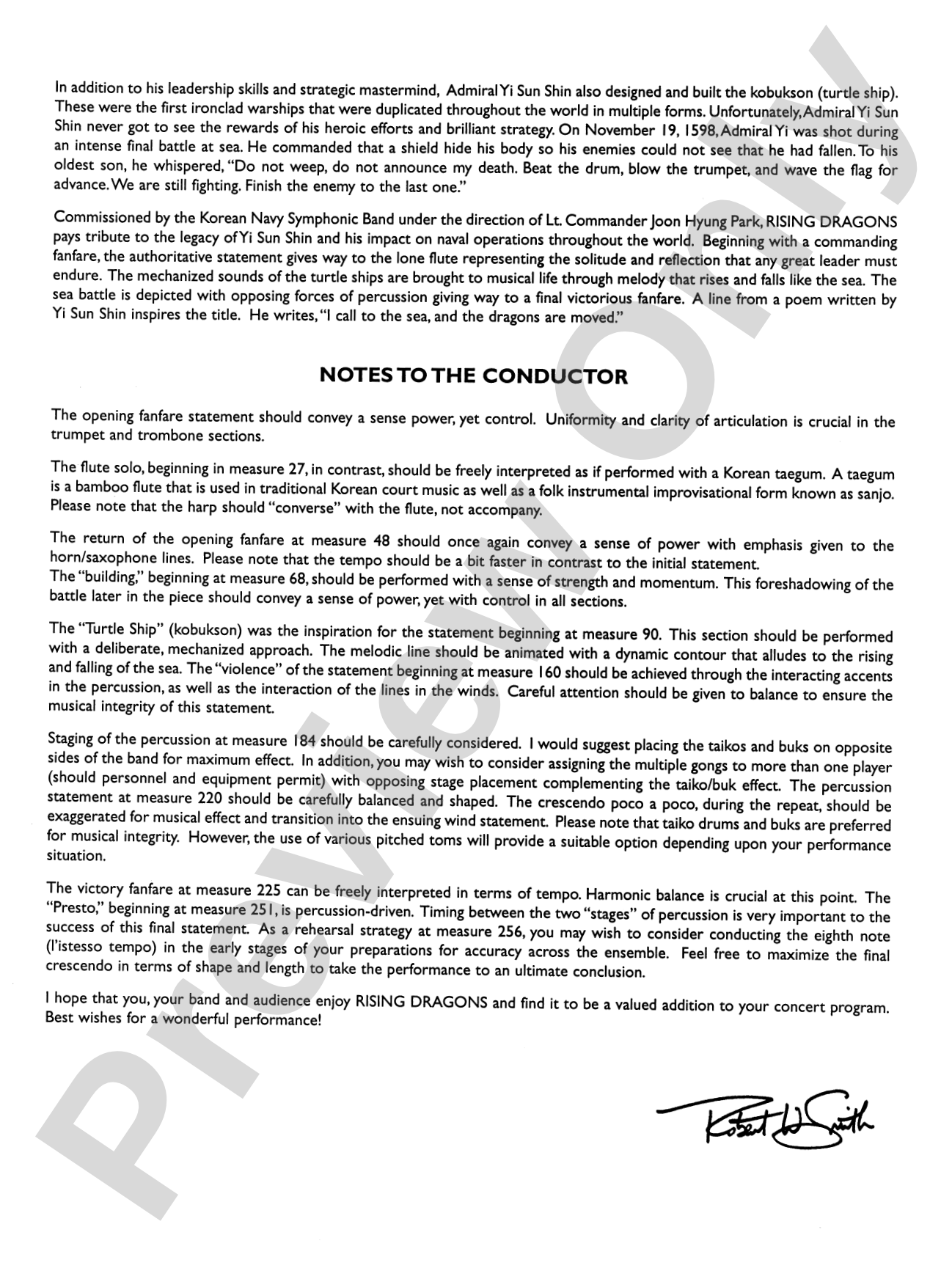
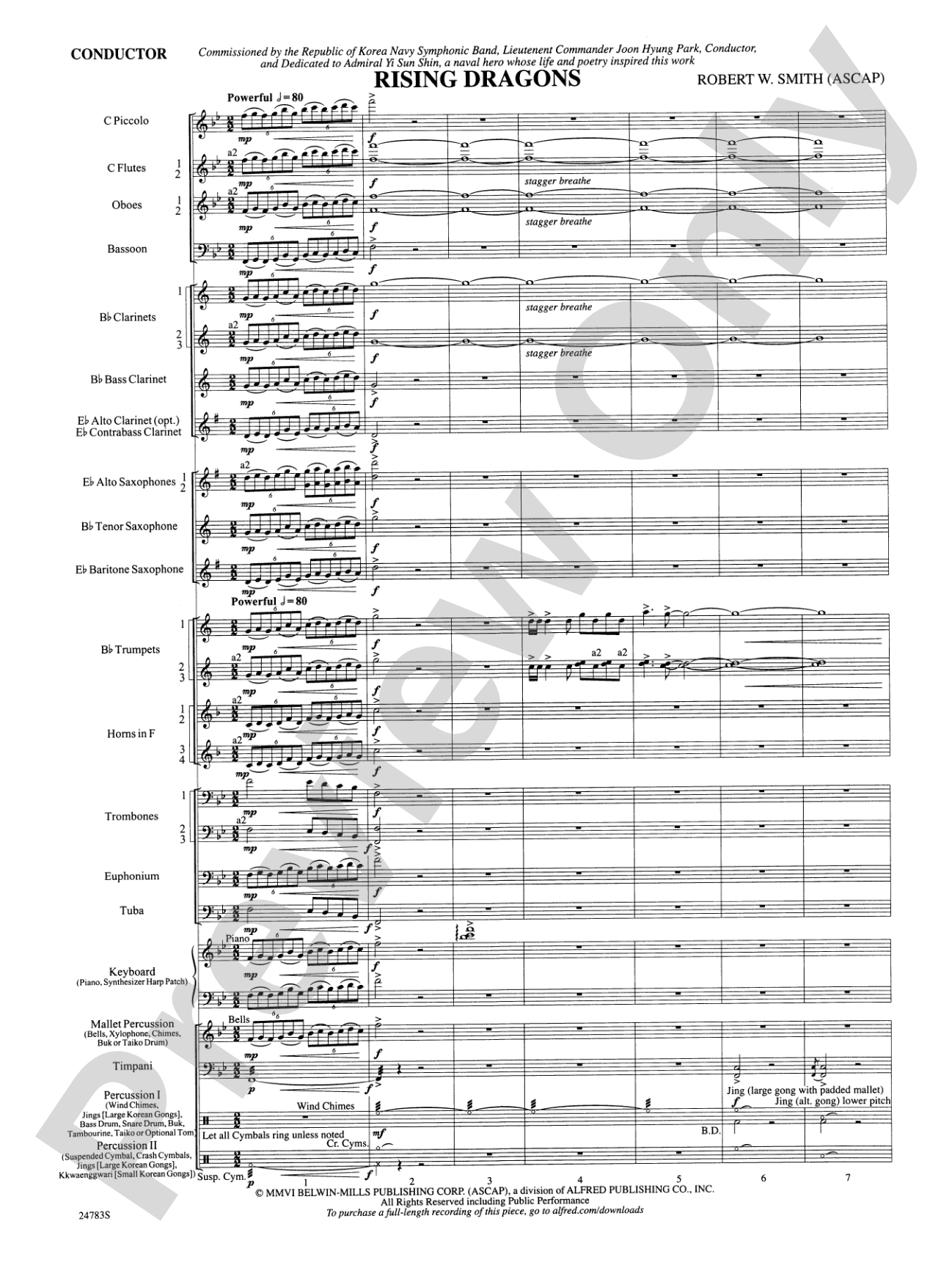
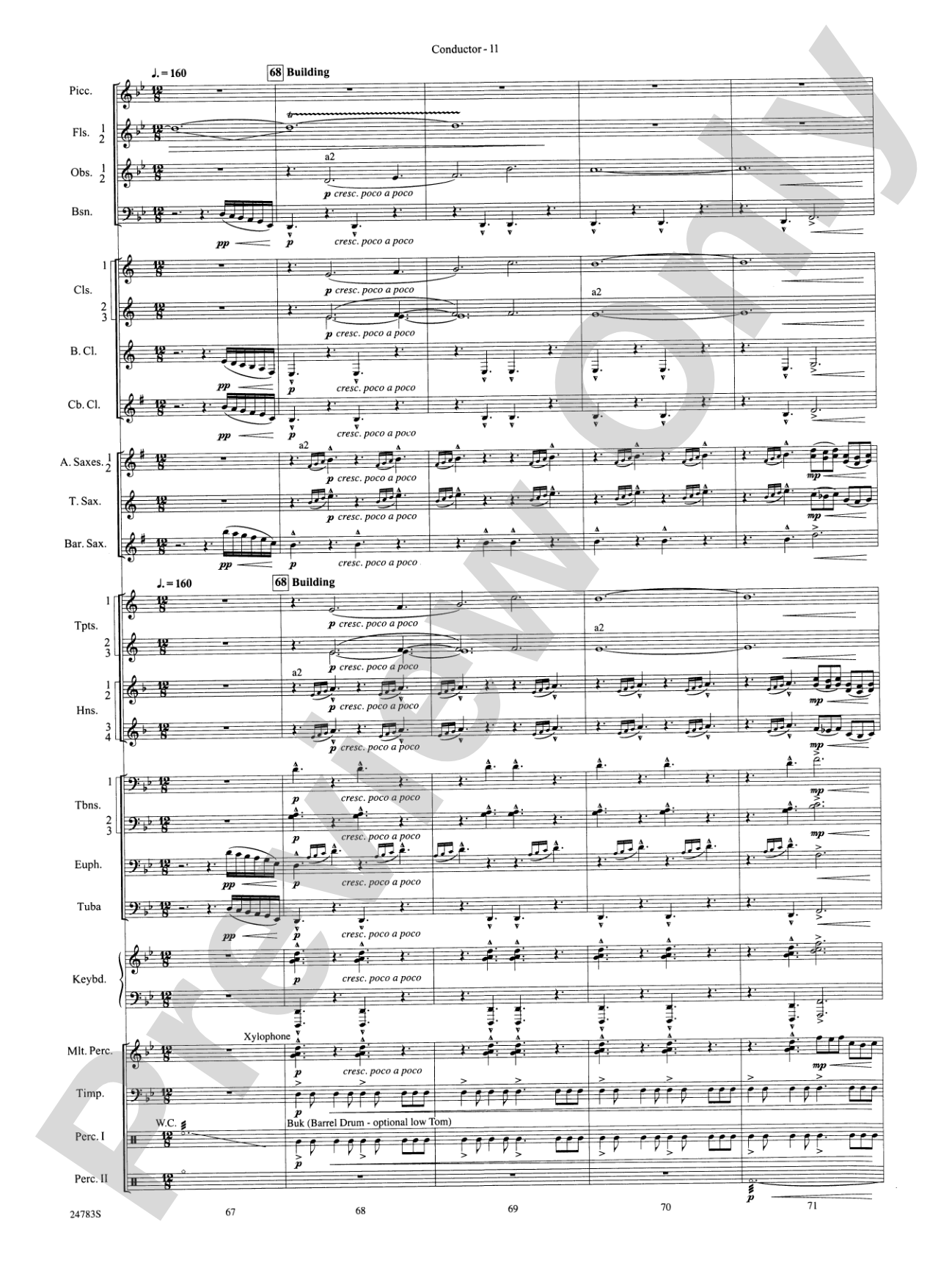
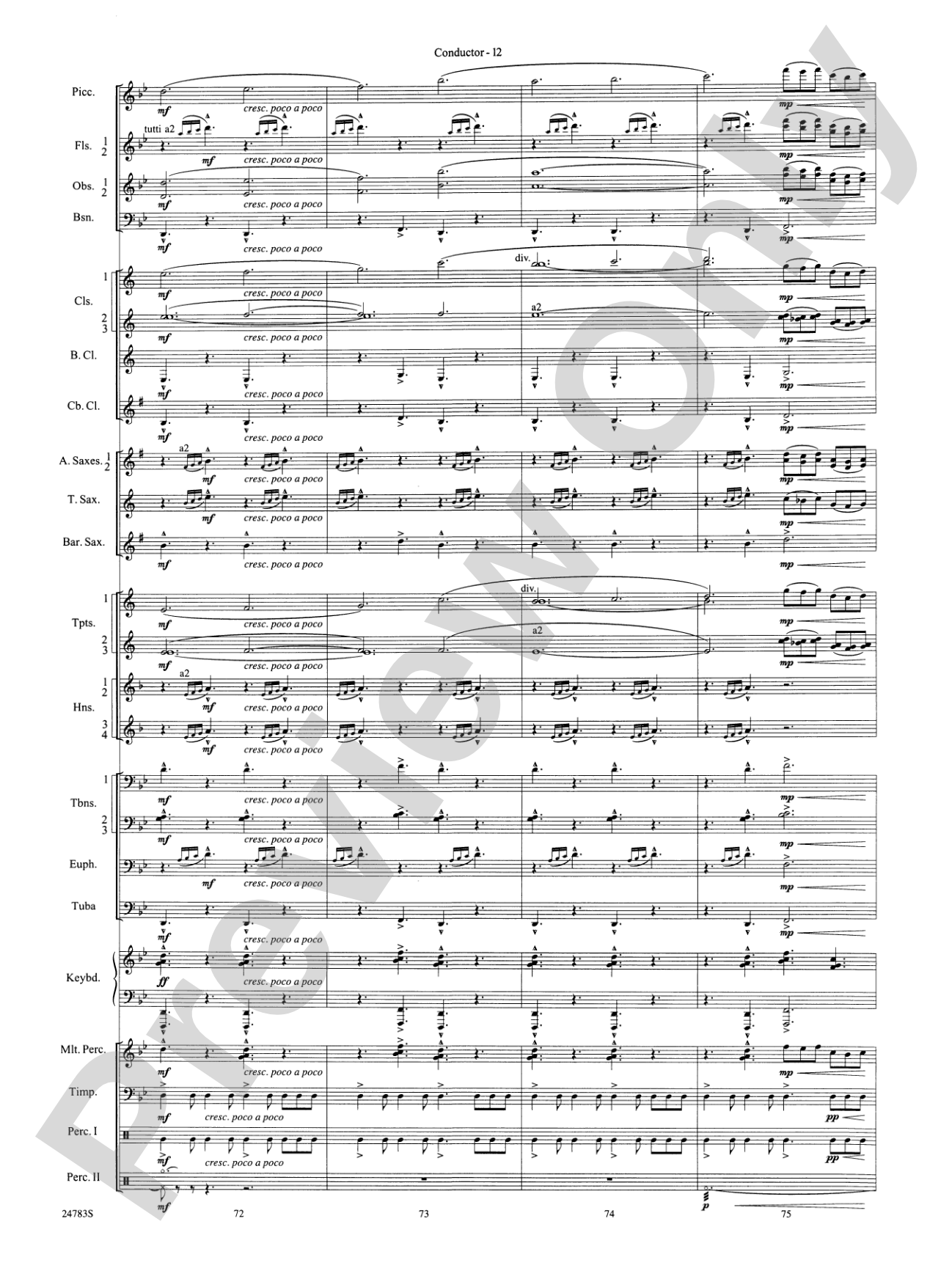
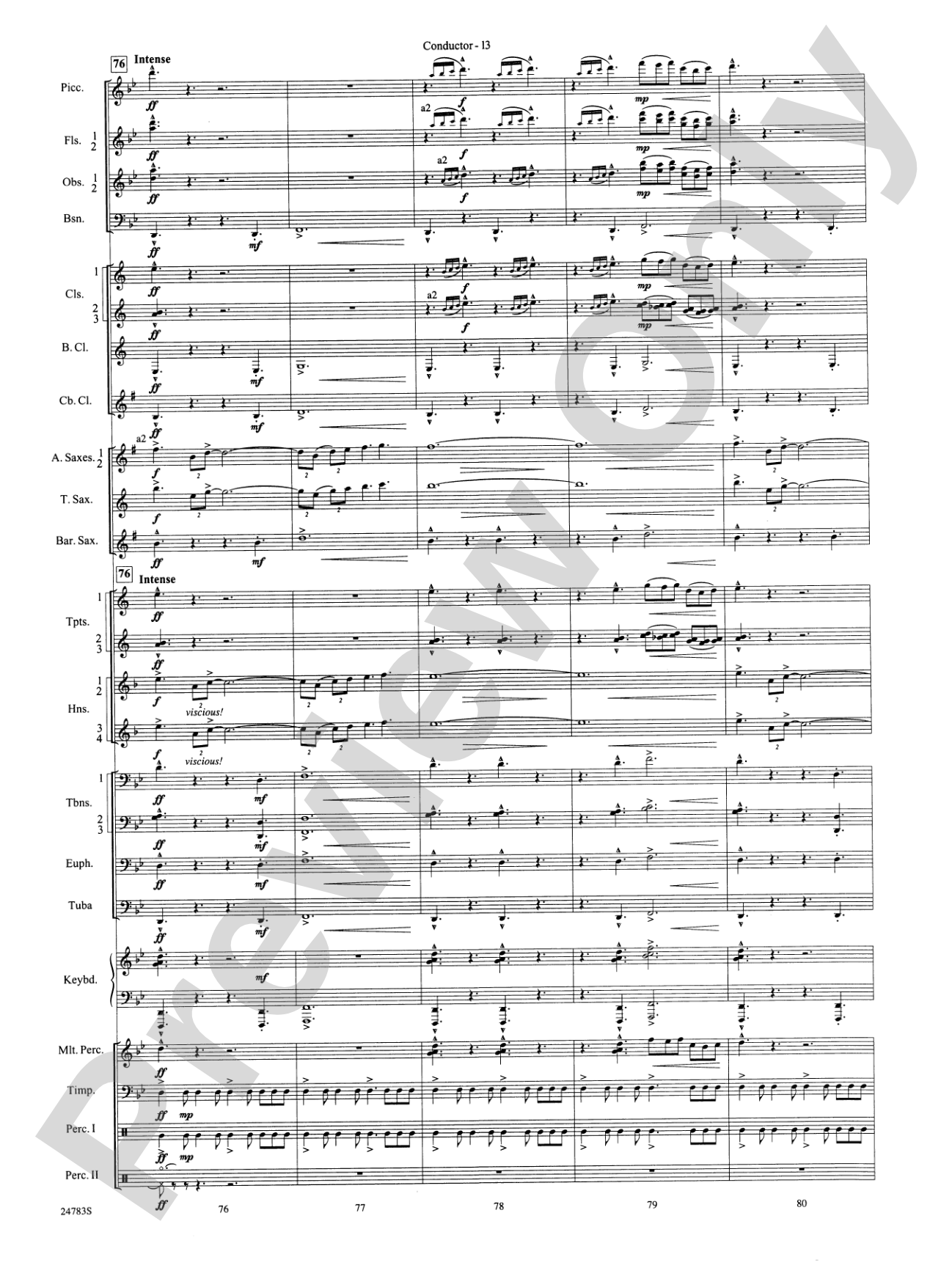
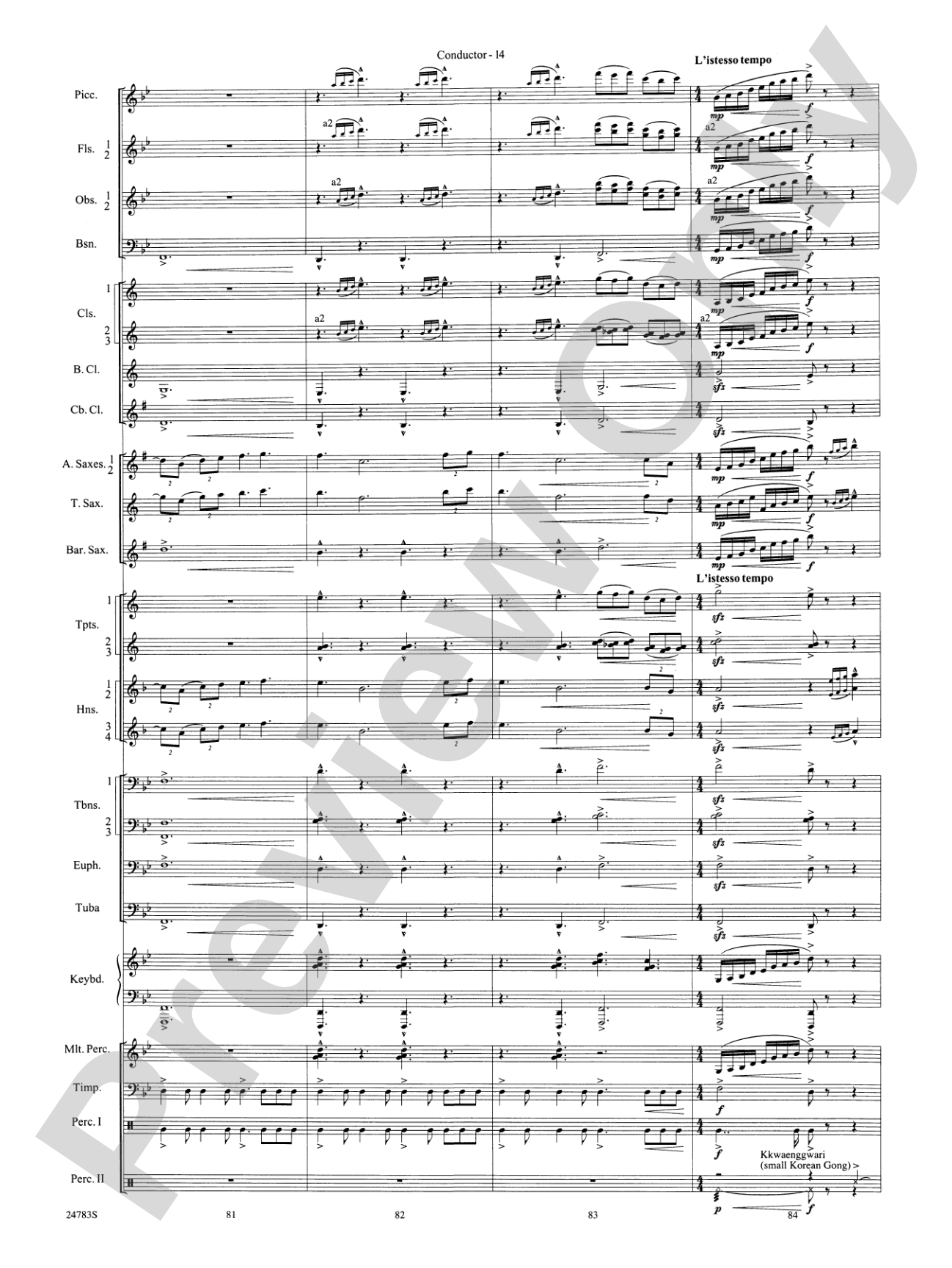
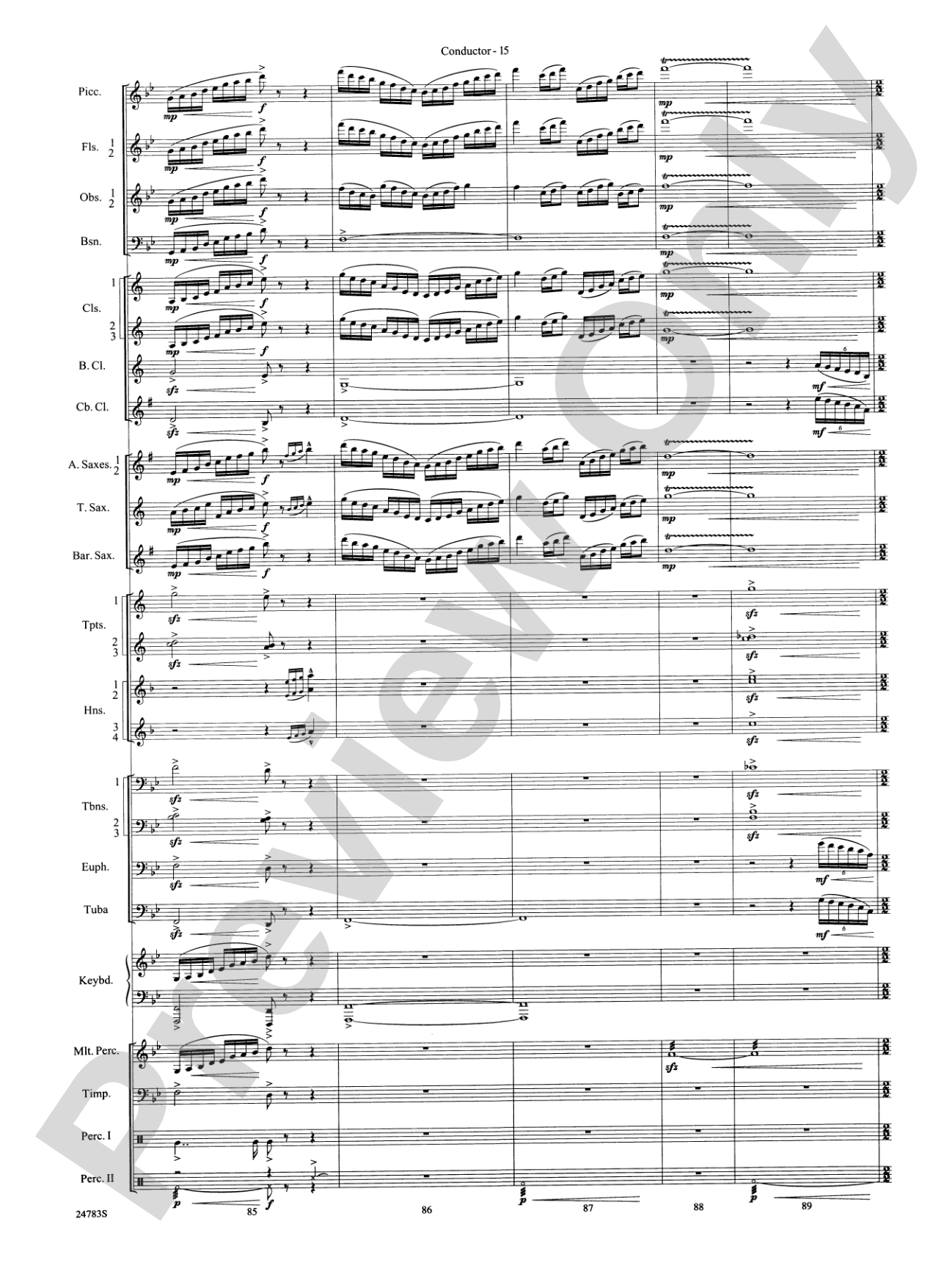
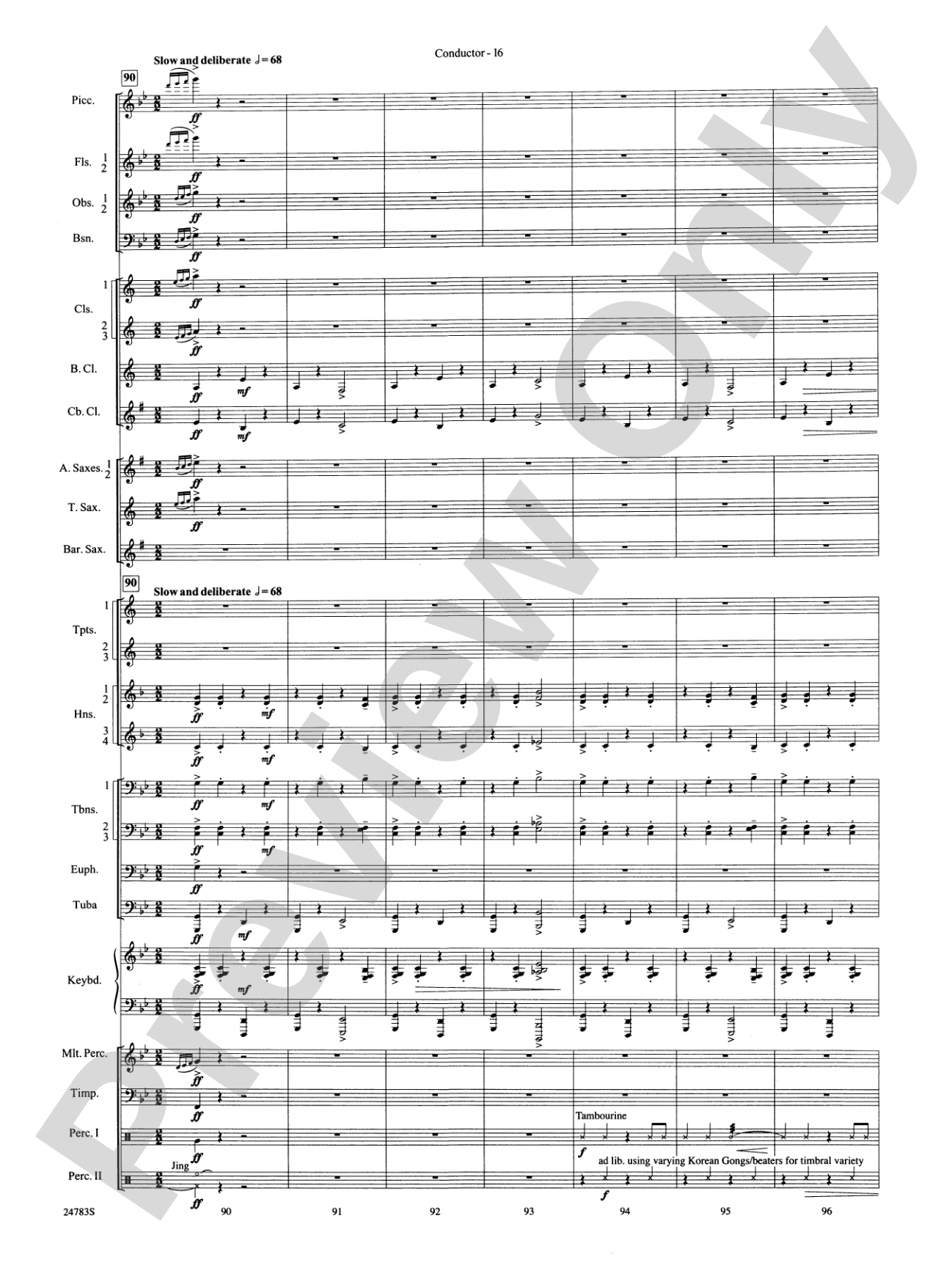
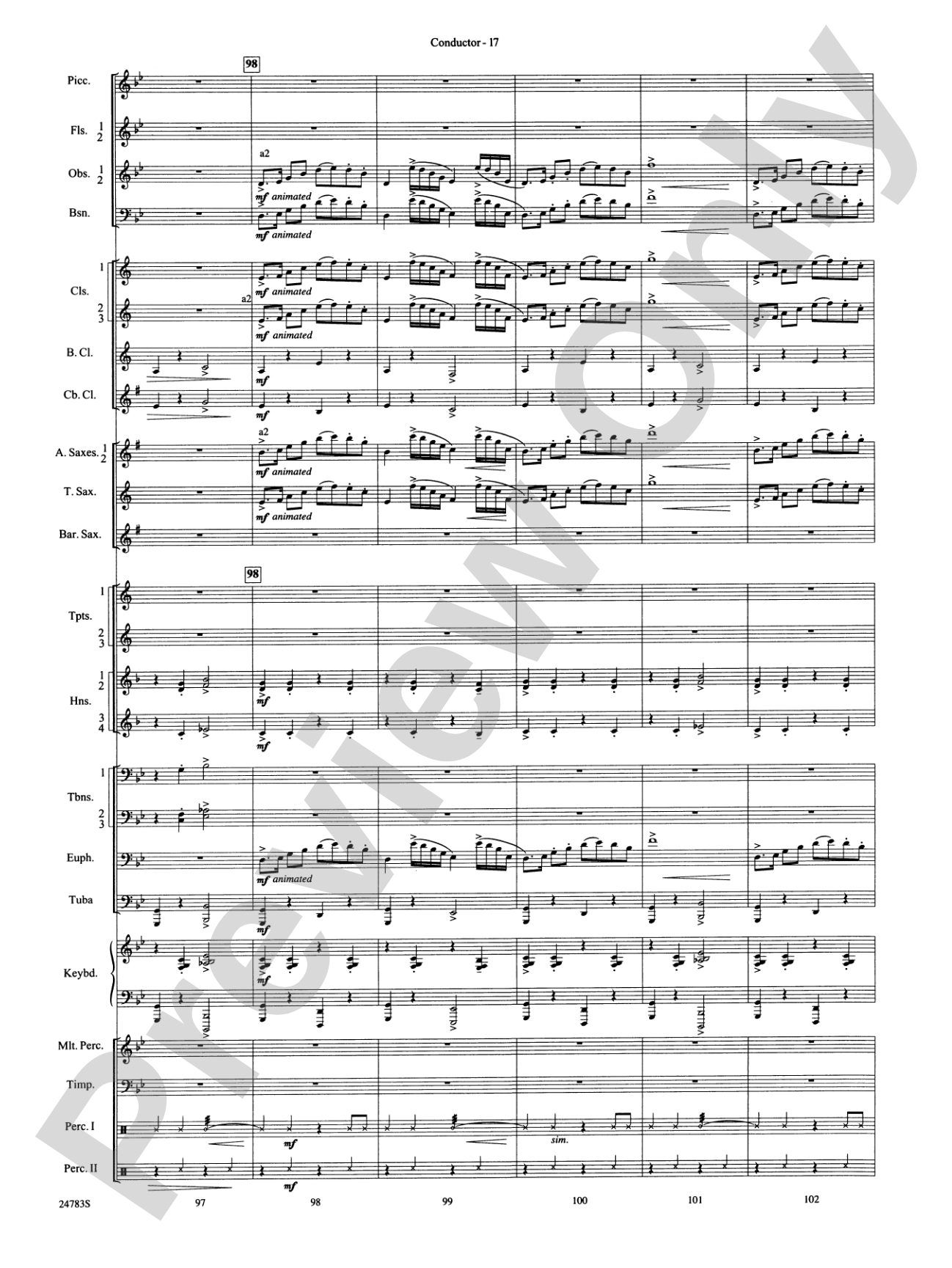
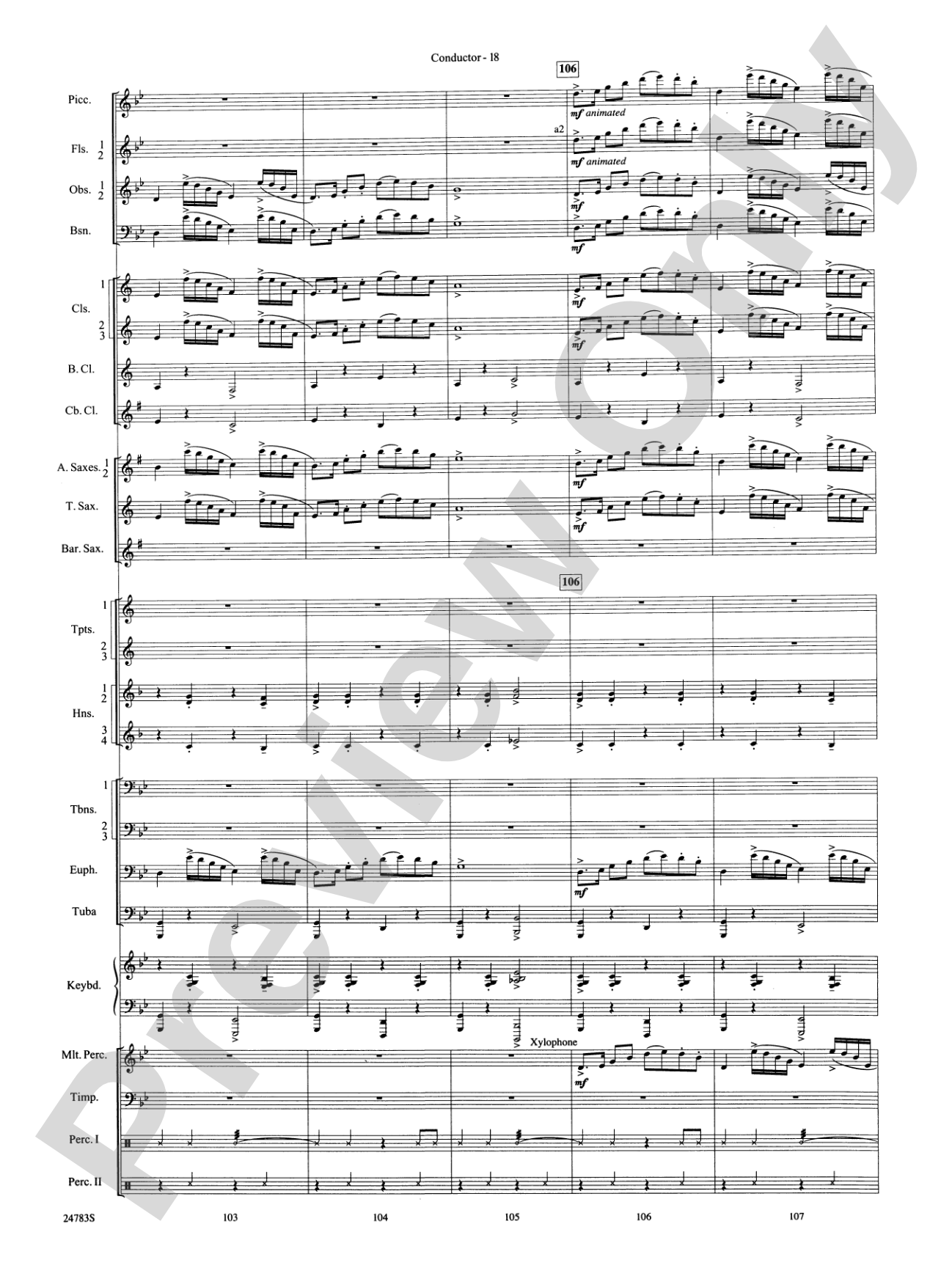
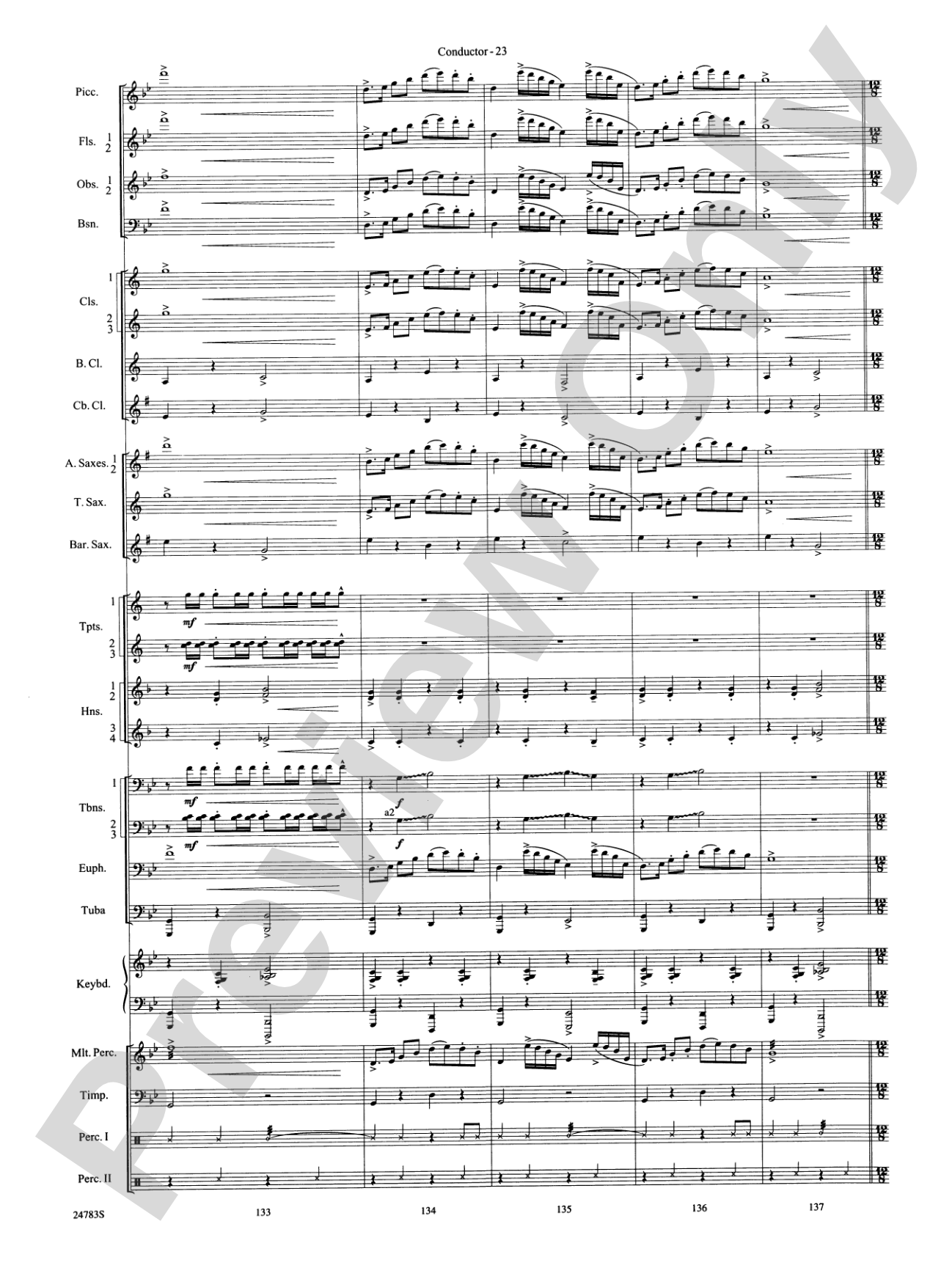
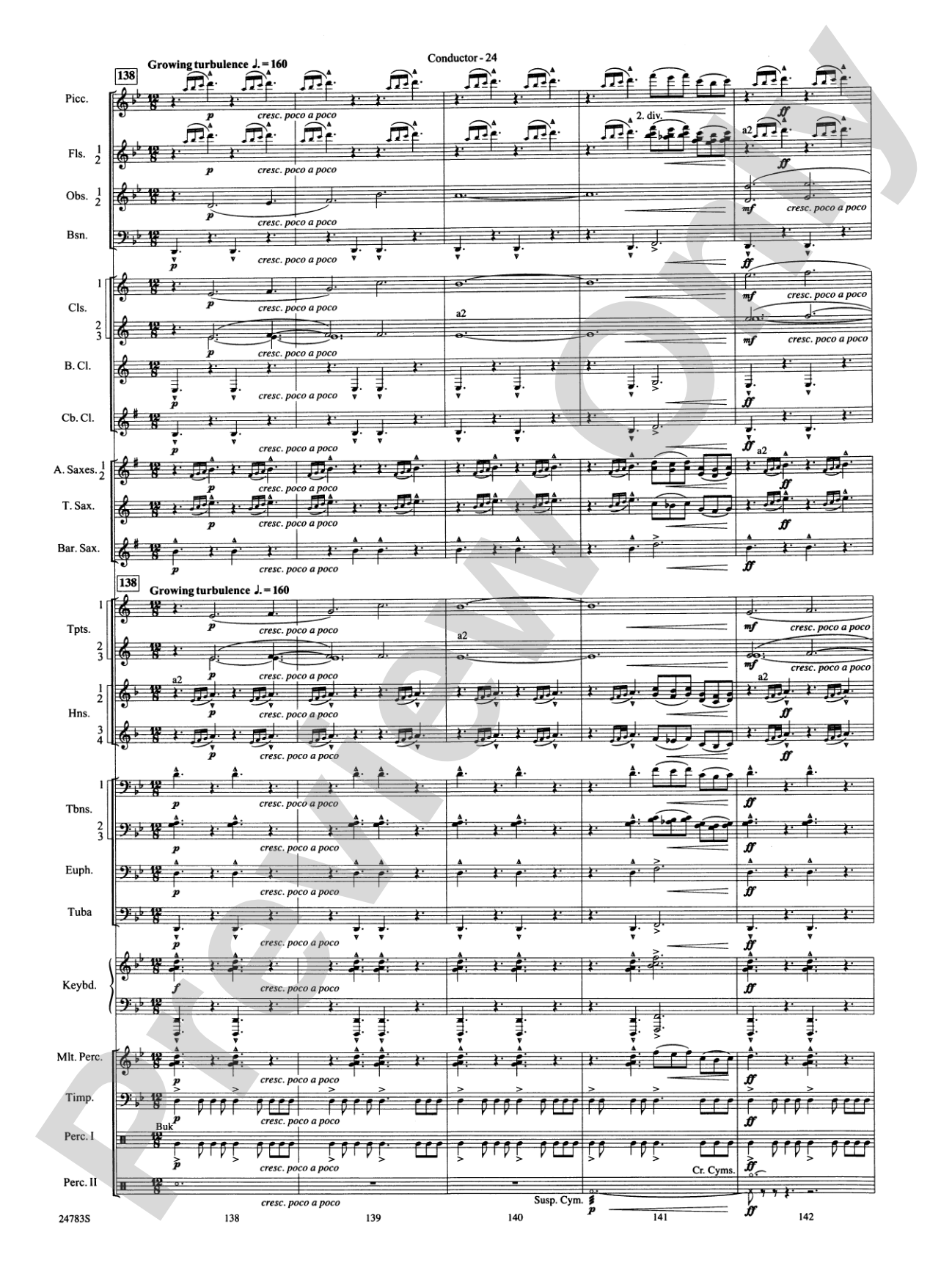
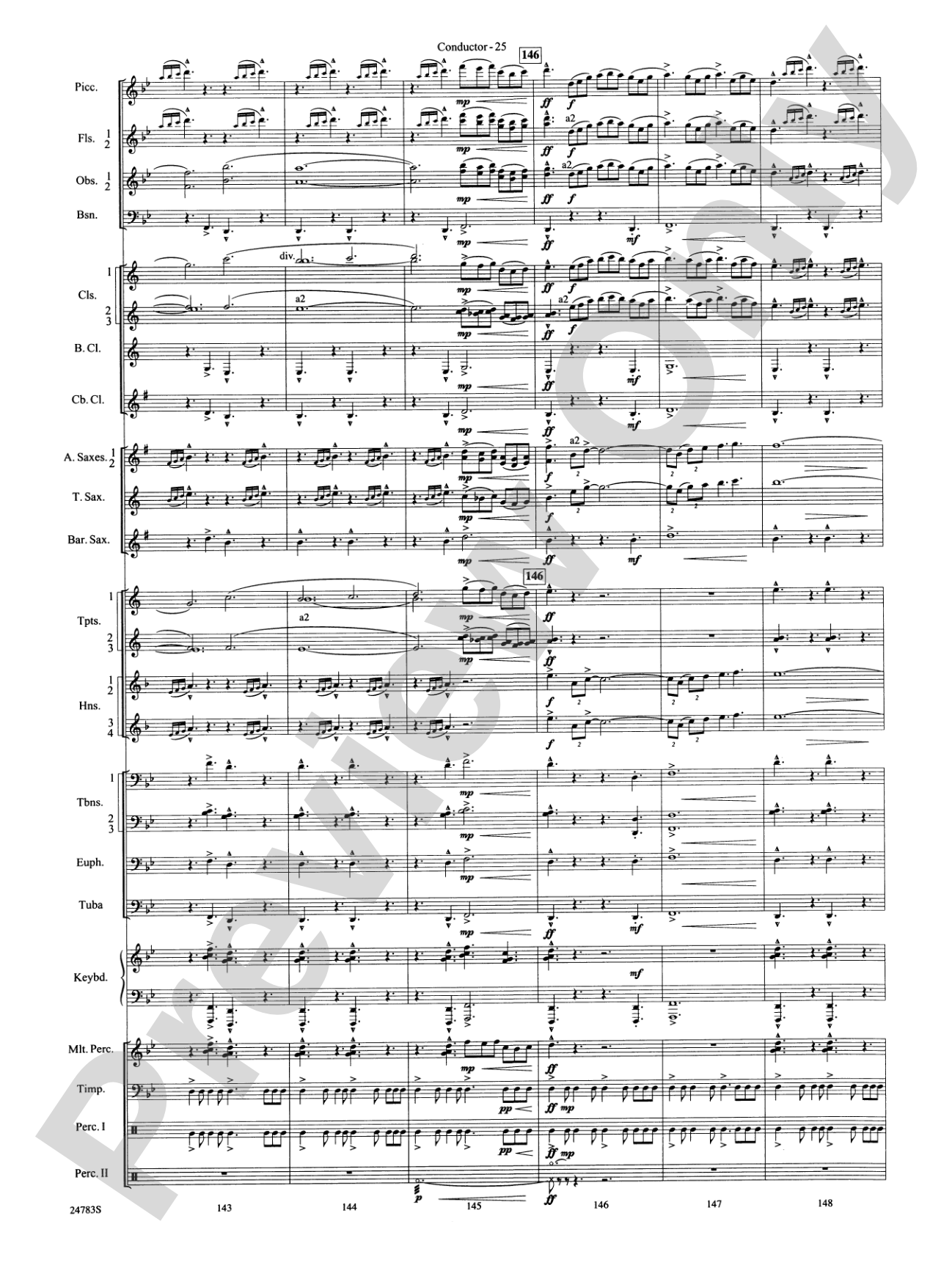
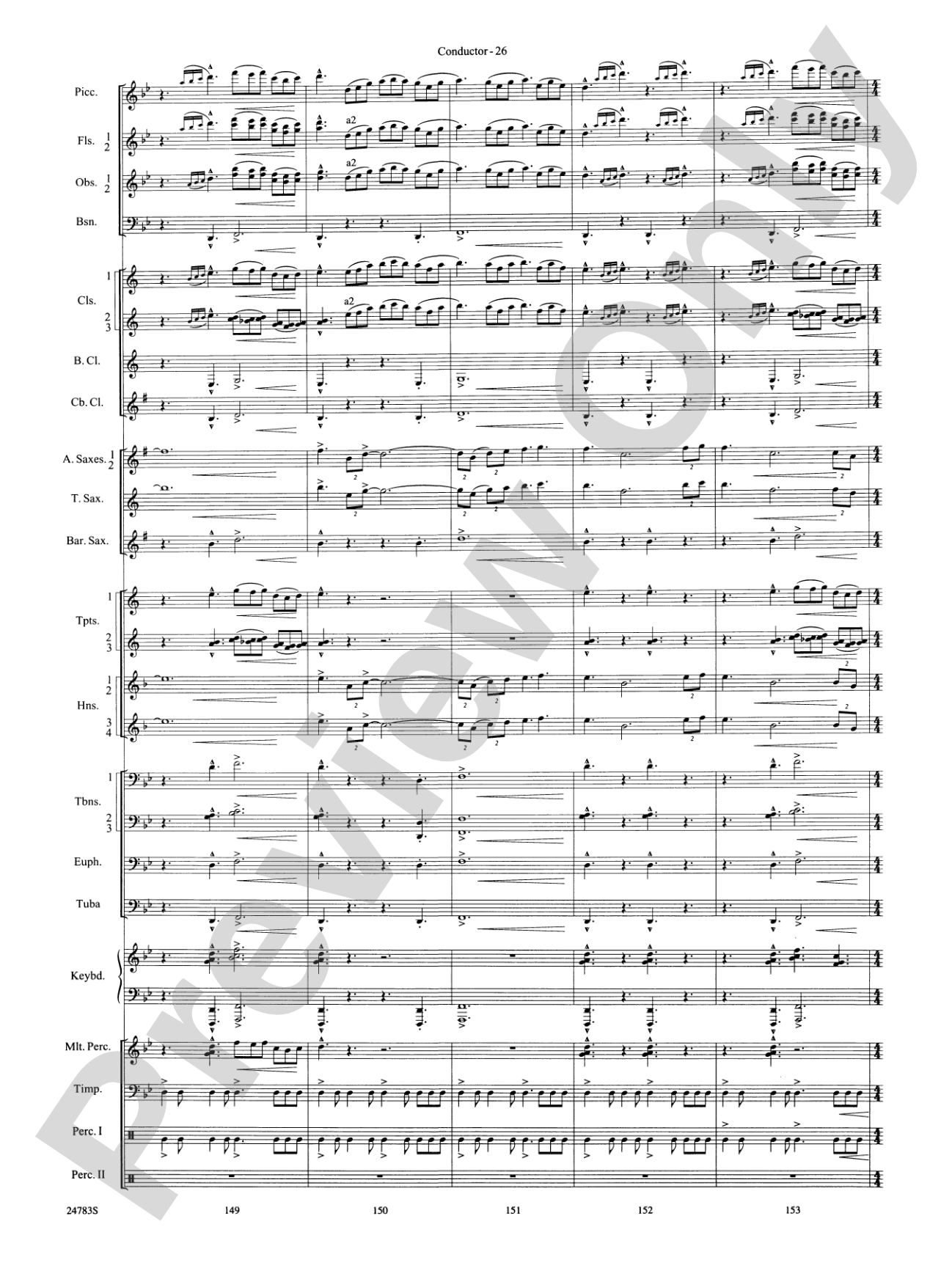
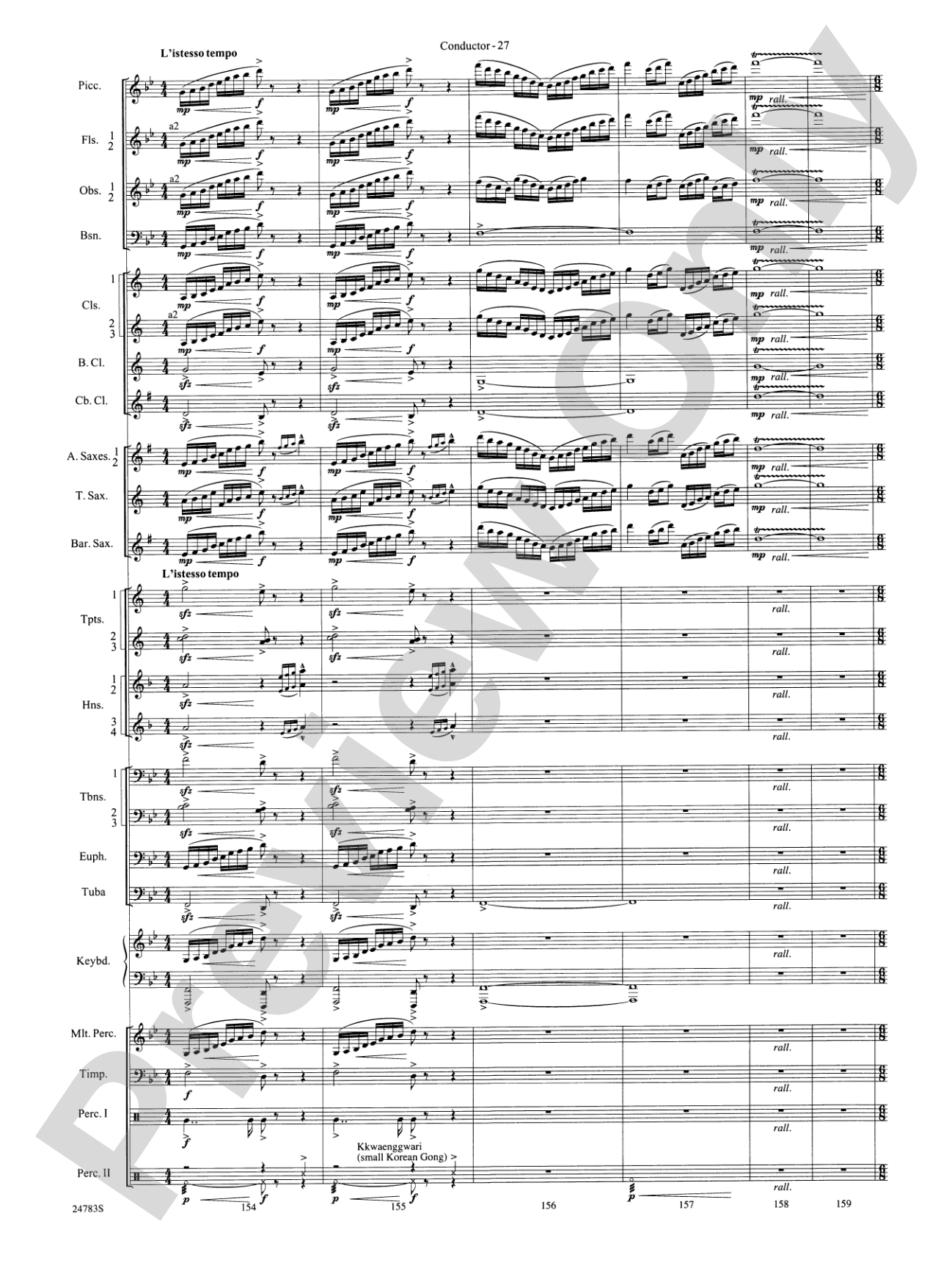
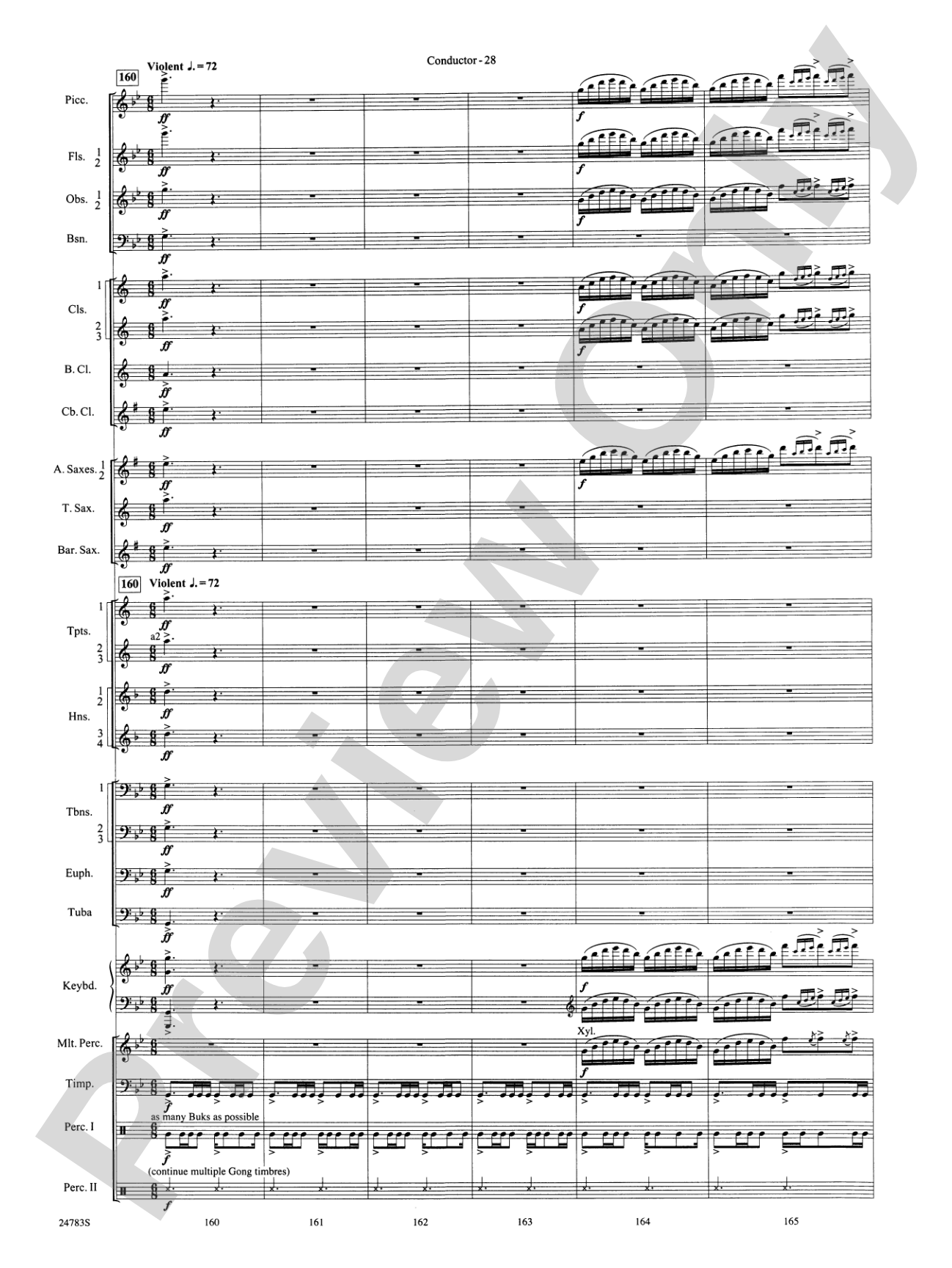
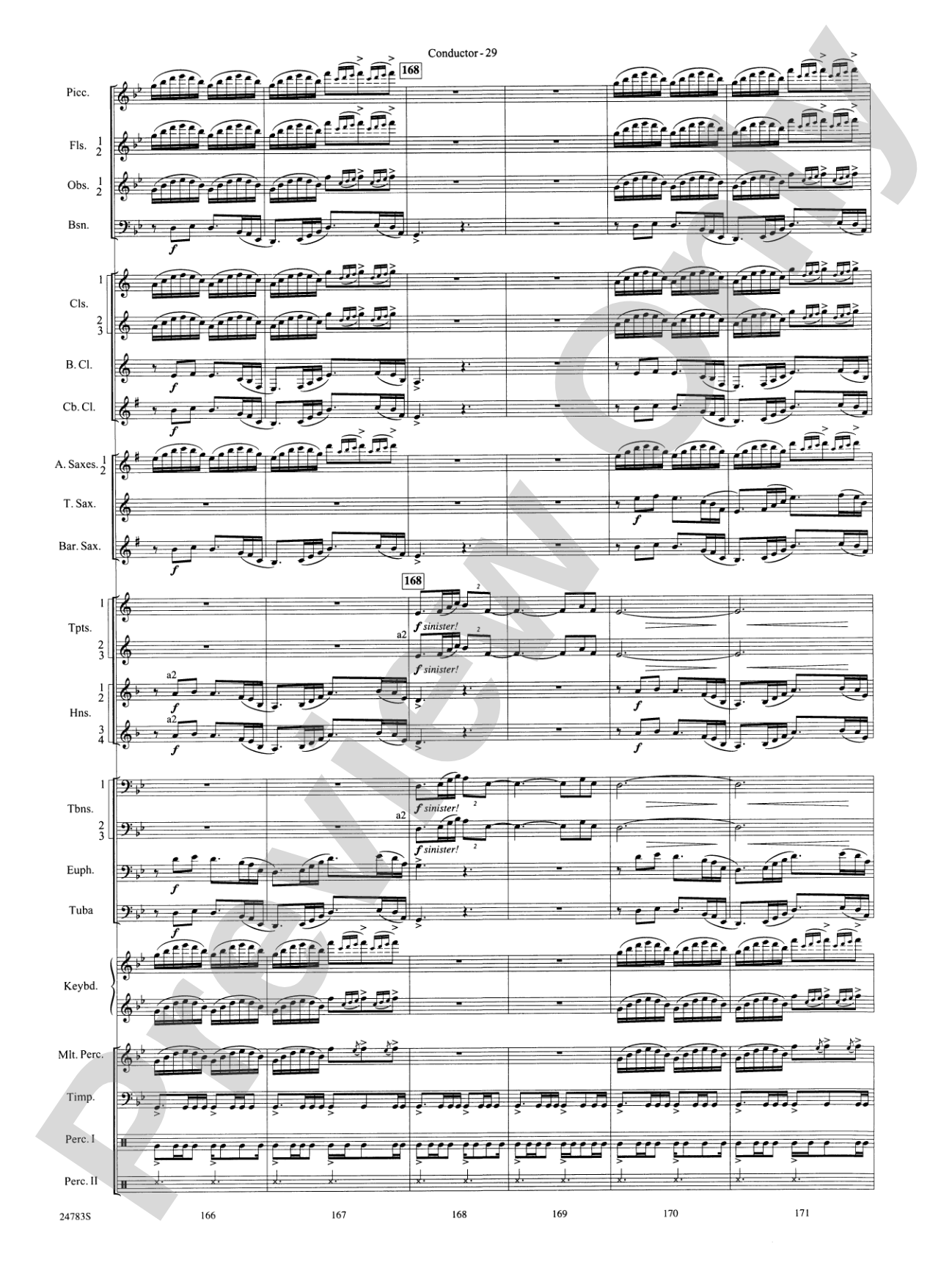
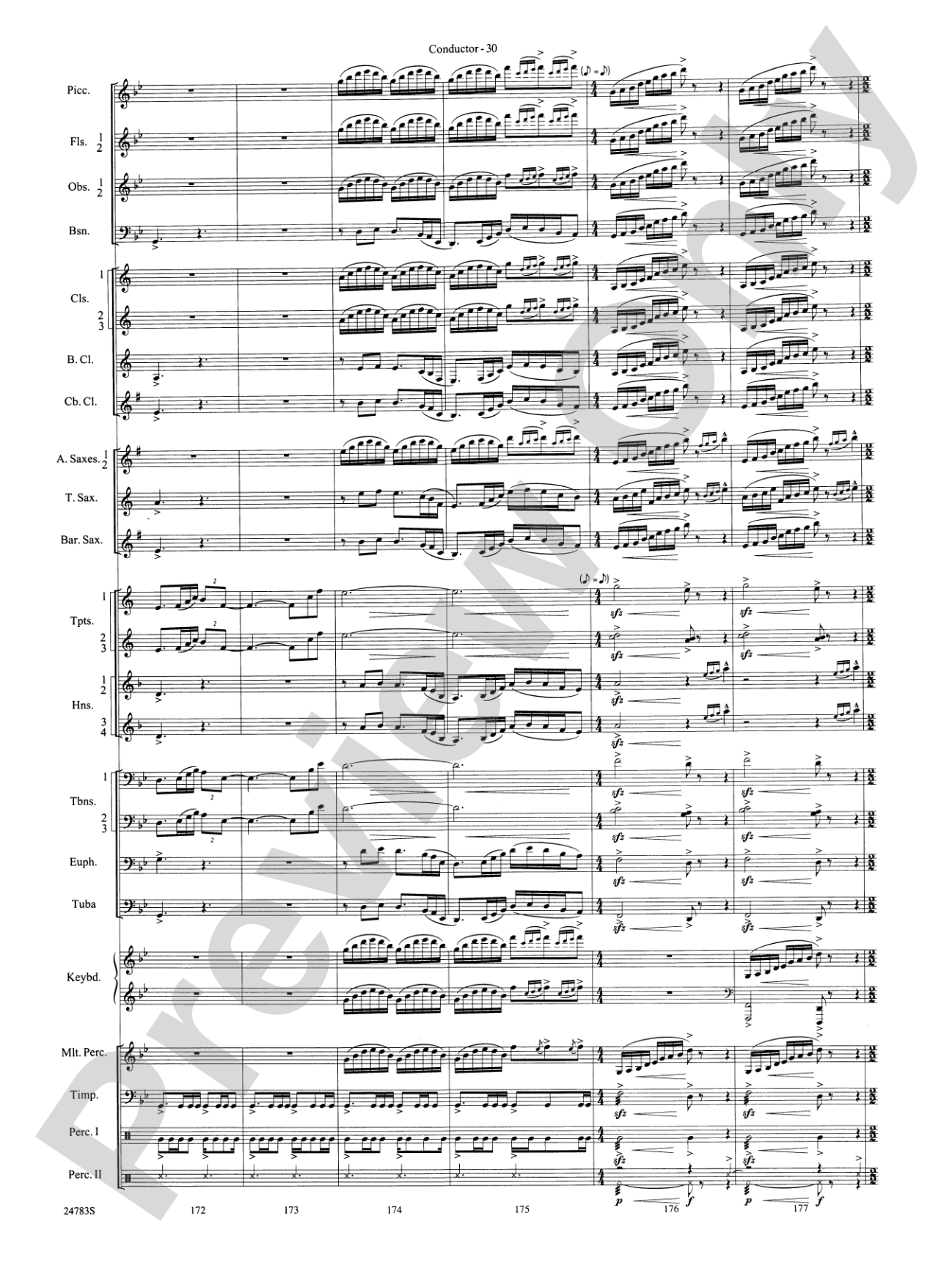
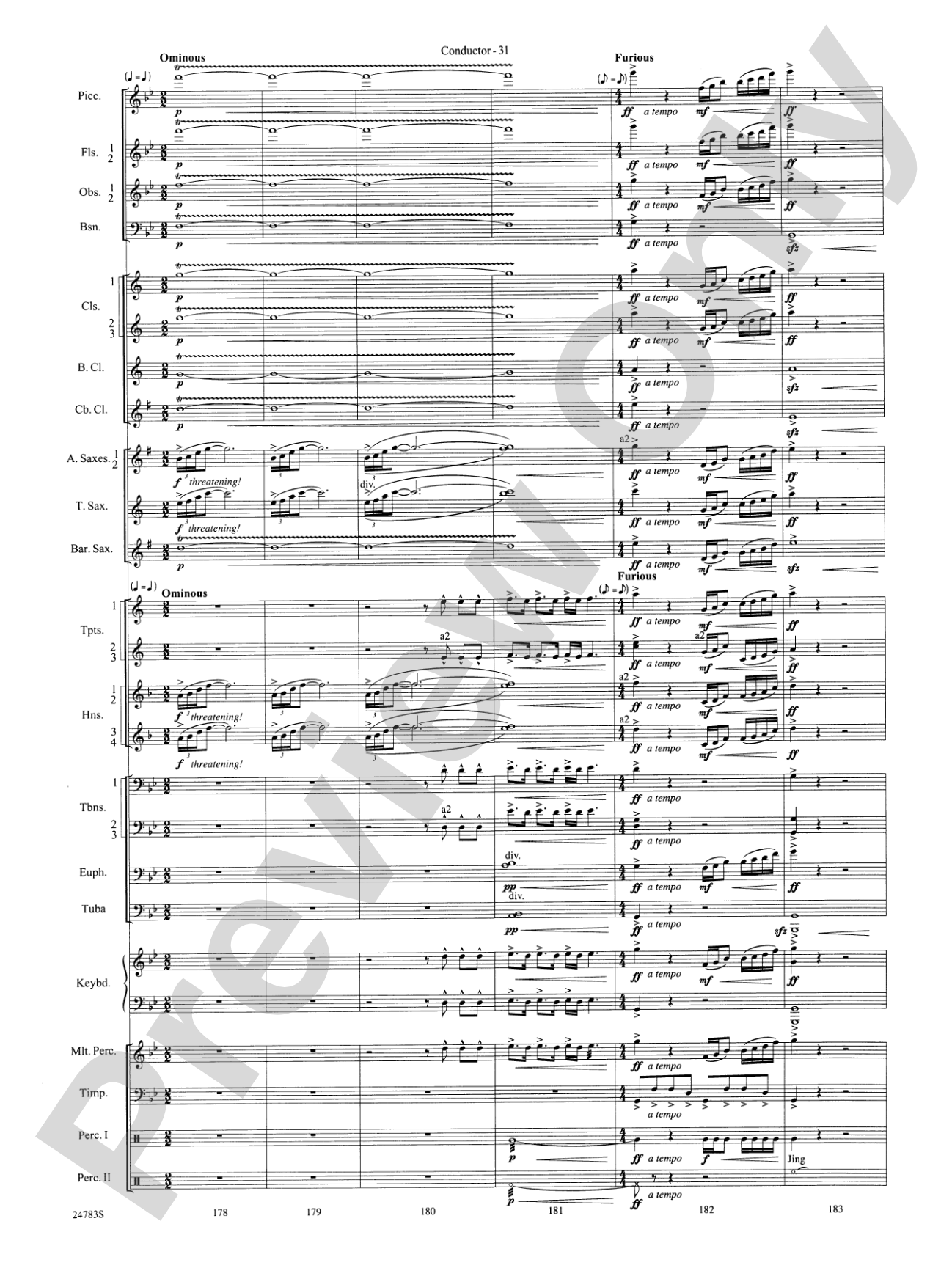
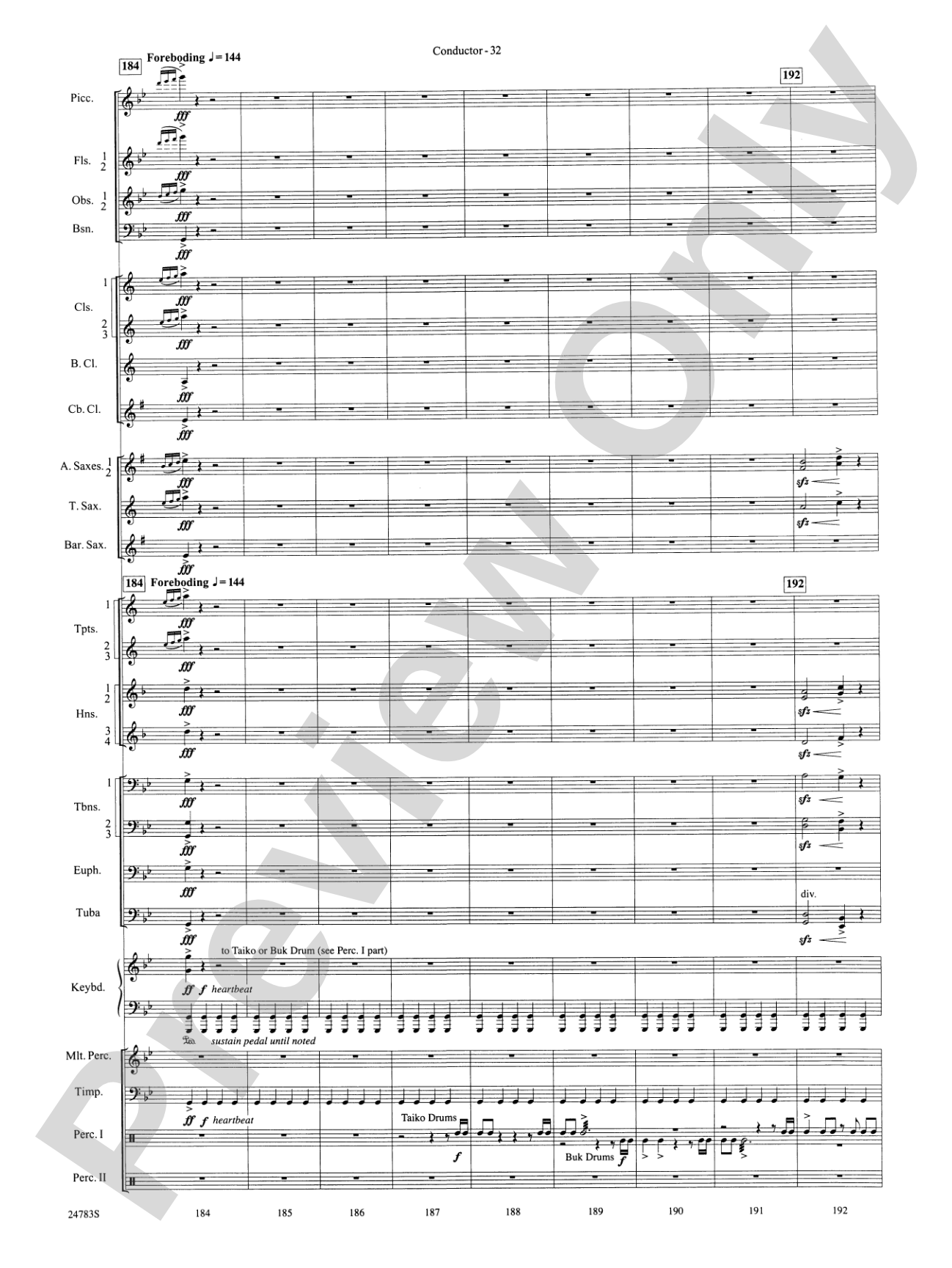
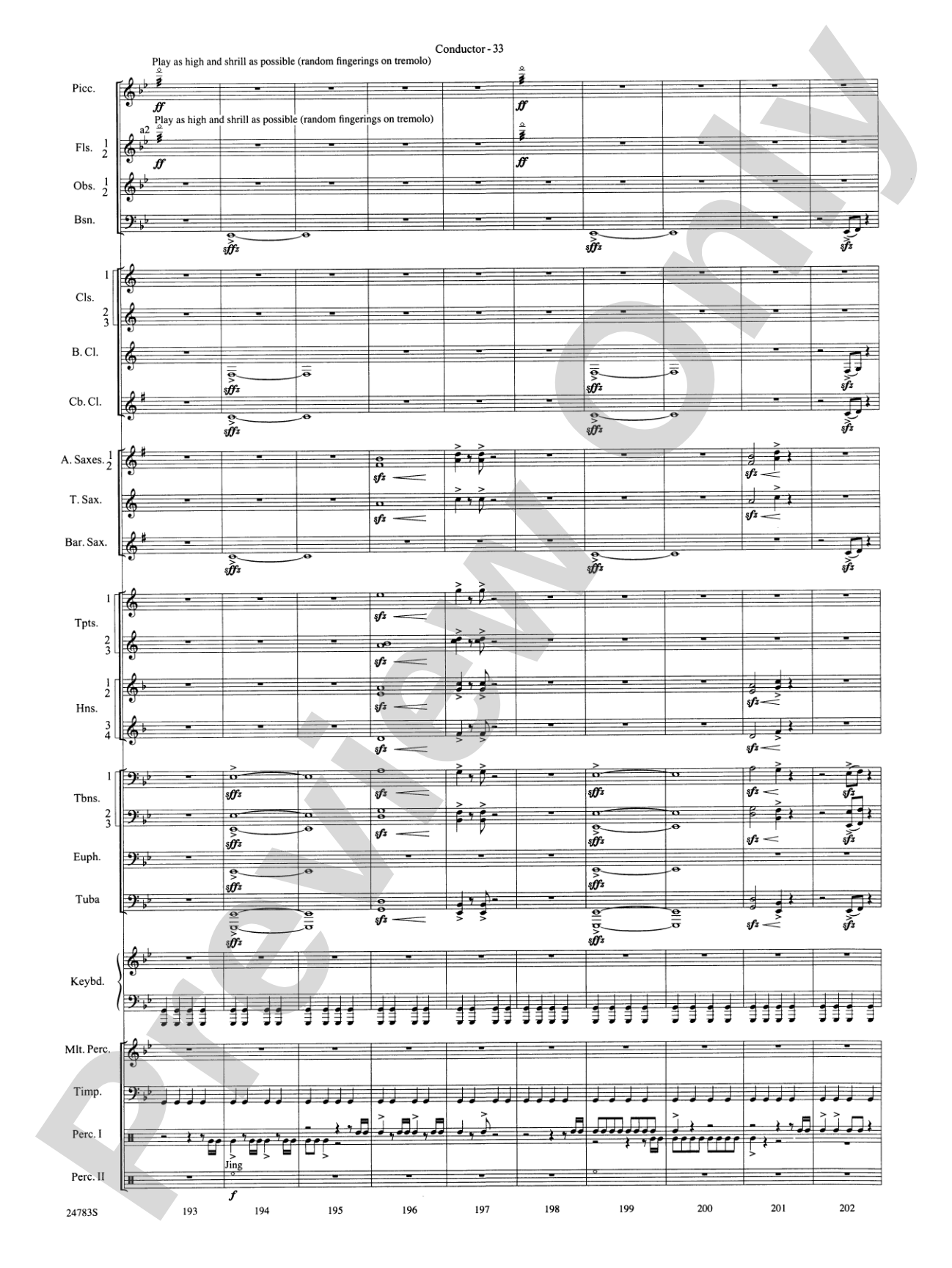
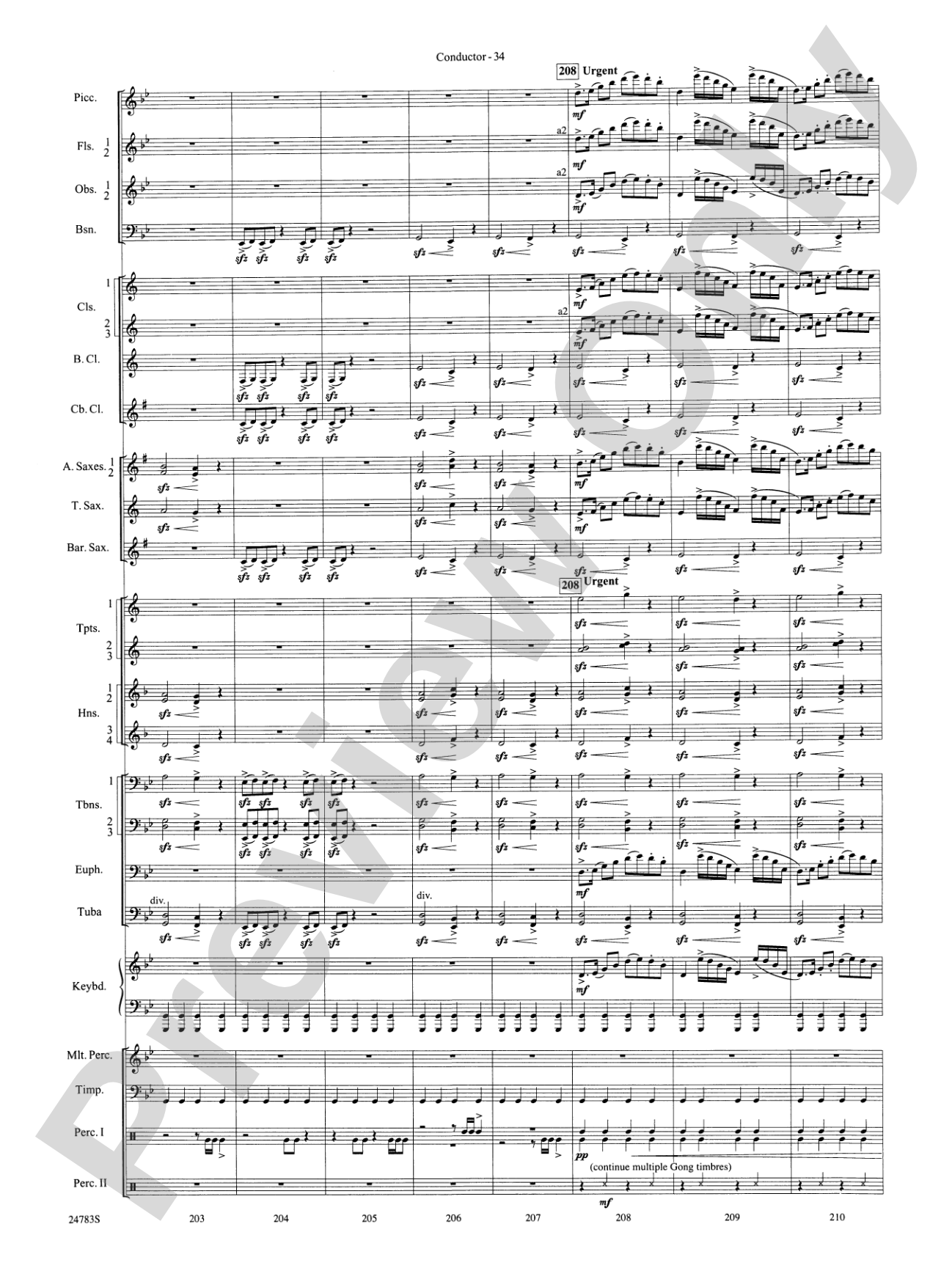
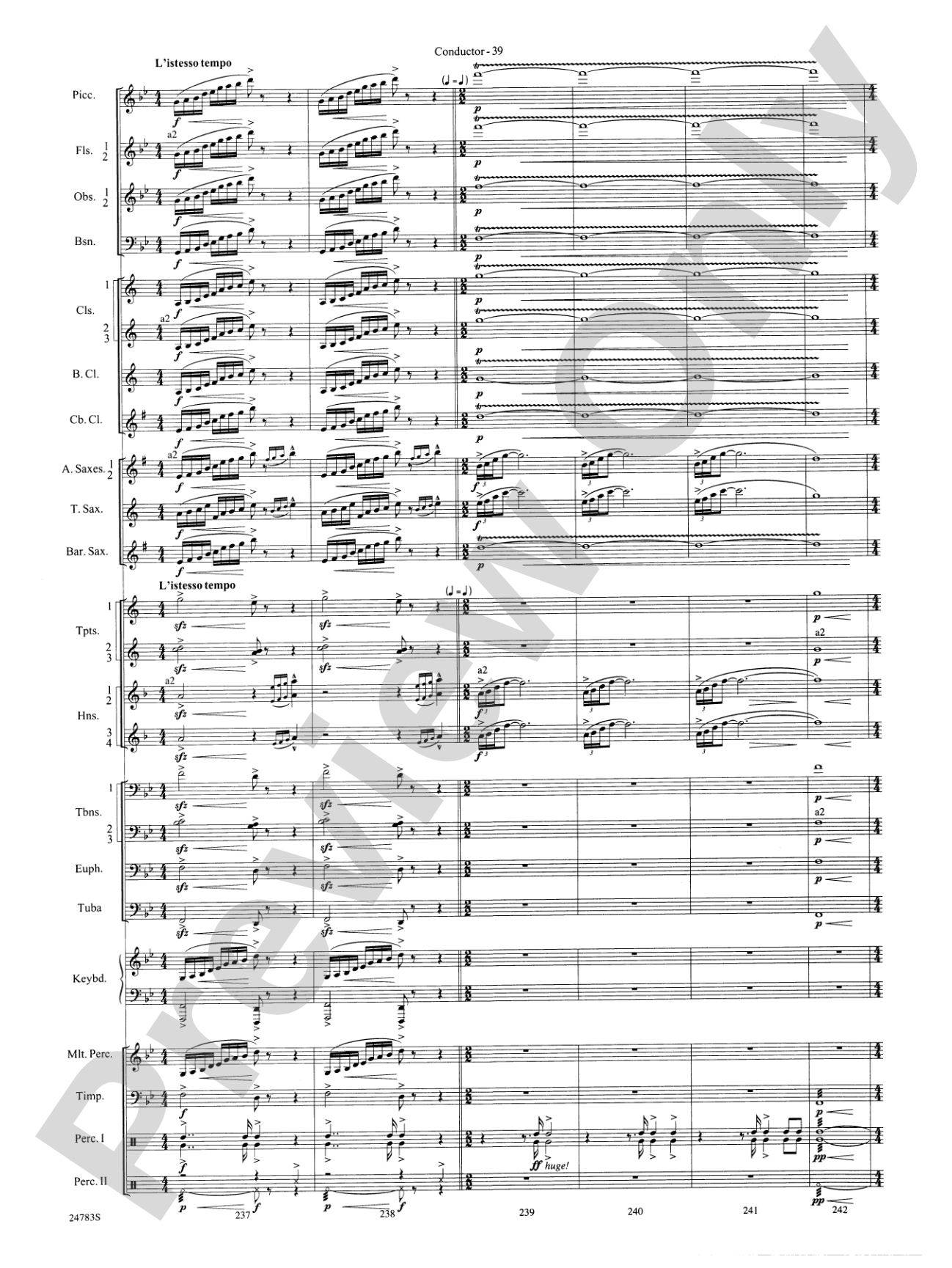
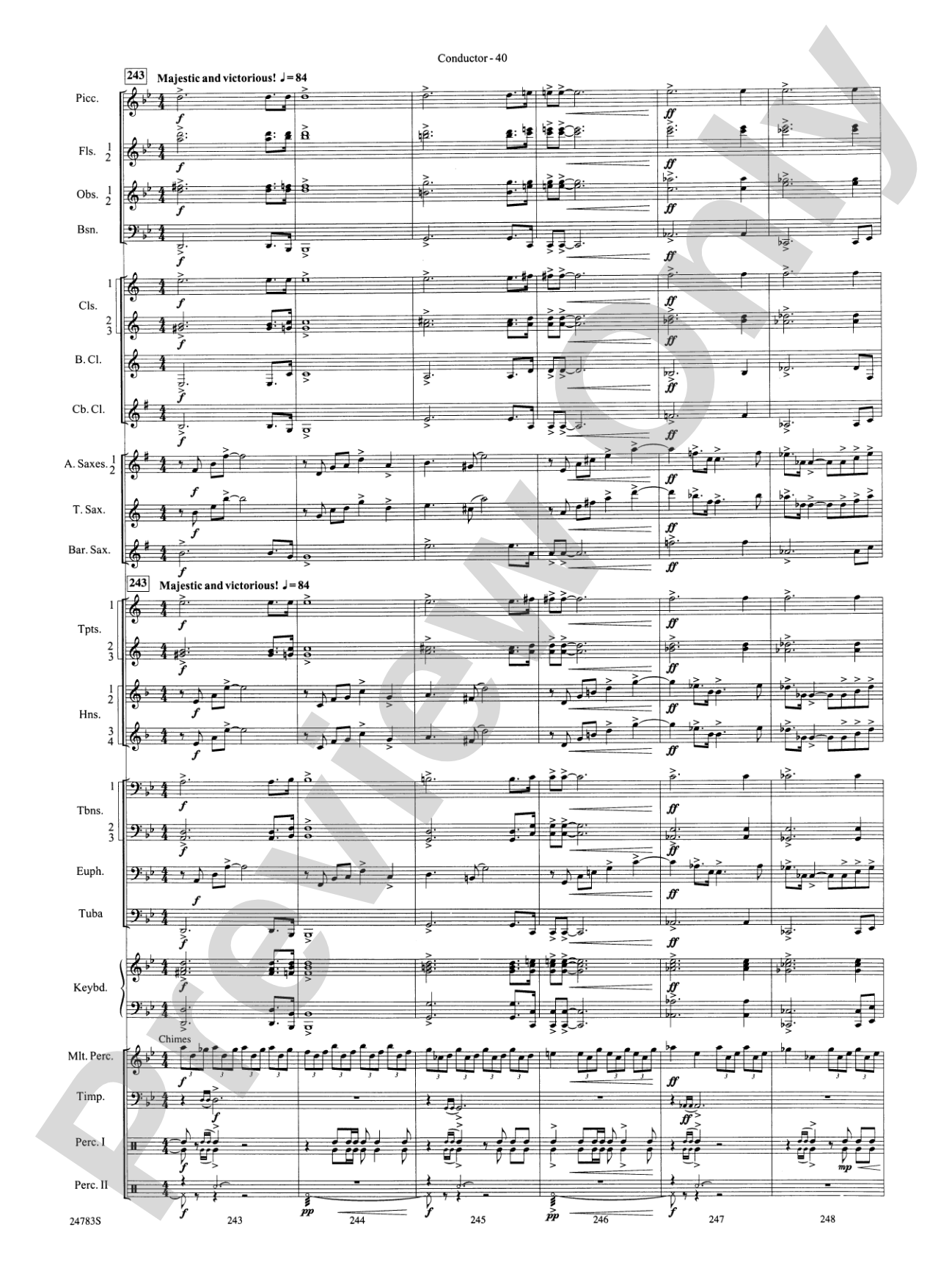
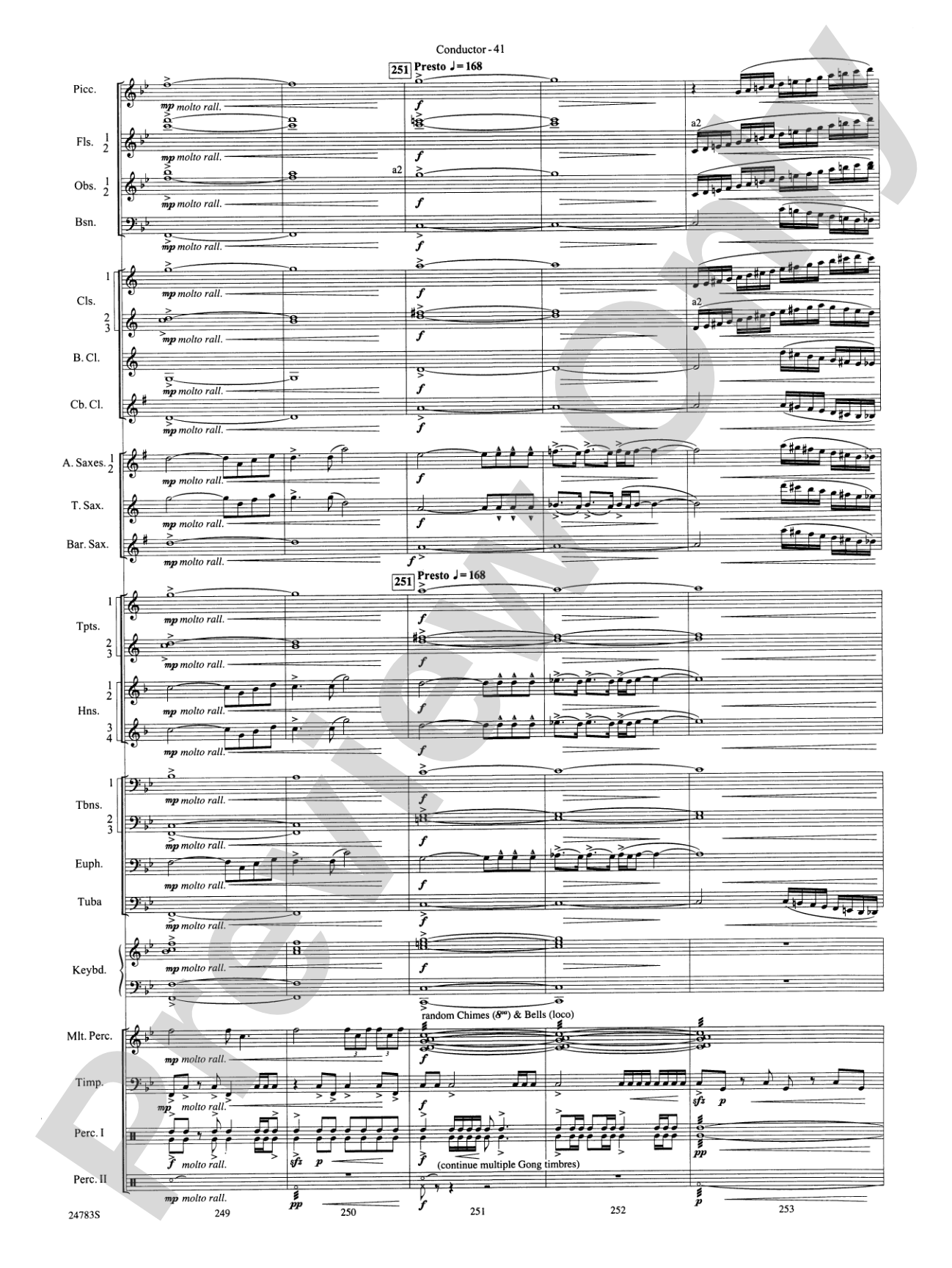
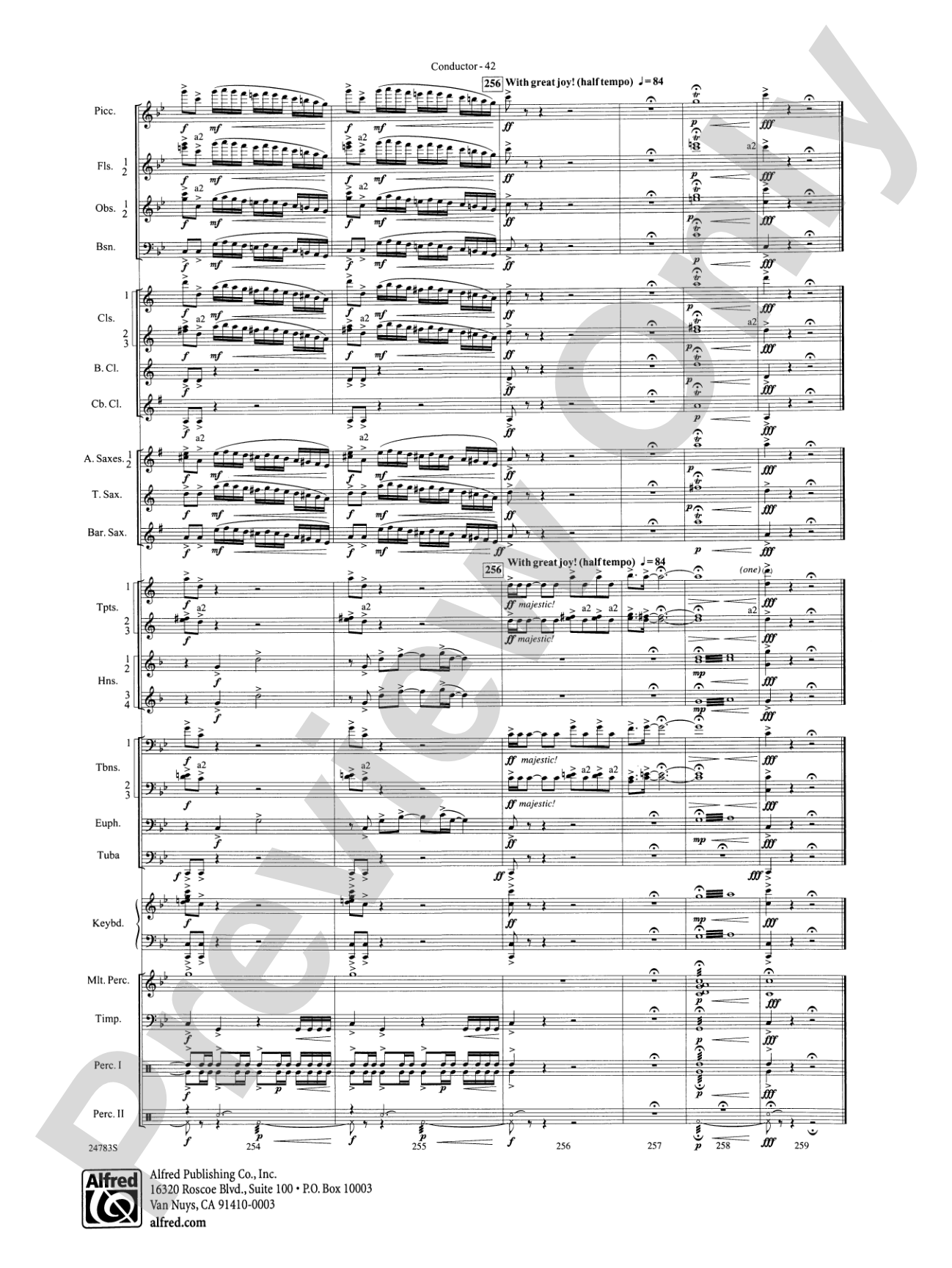
Commissioned by the Korean Navy Symphonic Band under the direction of Lt. Commander Joon Hyung Park, Rising Dragons pays tribute to the legacy of Yi Sun Shin and his impact on naval operations throughout the world. Beginning with a commanding fanfare, the authoritative statement gives way to the lone flute representing the solitude and reflection that any great leader must endure. The mechanized sounds of the turtle ships are brought to musical life through melody that rises and falls like the sea. The sea battle is depicted with opposing forces of percussion giving way to a final victorious fanfare. A line from a poem written by Yi Sun Shin inspires the title: "I call to the sea, and the dragons are moved."


Don't just read it, hear it, play along with it, and watch your students grow with it. In MakeMusic Cloud, Rising Dragons: Concert Band Conductor Score & Parts comes alive with professional accompaniment, adjustable tempo, and built-in practice tools that turn solo practice into real progress.
Open in the Player
Jump straight in and assign it today.
Start Your Free Trial
Open this title and explore the full library in minutes.
Sample Audio
1
Audio File
--:--
0:00
0:00
Sample Video
No sample videos found.
Additional Details
Series:
Belwin Symphonic Band
Publisher:
Alfred Music
Page Count:
374
SKU:
00-PK-0000925
More about this title
About the Composer: Robert W. Smith

Robert W. Smith has established himself as a defining voice in American concert band and orchestral composition, with over 400 published works performed internationally across North America, Europe, Australia, and Asia. His education in music education from Troy State University and advanced study at the University of Miami grounded his ability to write across ensemble levels with both sophistication and accessibility.
Smith's concert band catalog includes works that have become repertoire standards: The Divine Comedy and The Odyssey symphonies, The Tempest, and numerous pieces for developing ensembles. Beyond the concert hall, his compositions have appeared on major television broadcasts, from the Macy's Thanksgiving Day Parade to Olympic ceremonies, and his work as a conductor and clinician has taken him across the United States, Canada, Japan, Australia, and Europe.
Why we love this
Rising Dragons combines dramatic structural arc with genuinely singable orchestration, making it accessible for Grade 4.5 bands while never condescending musically. The narrative clarity of the work—fanfare, solo reflection, mechanized turtle ships, sea battle, triumphant close—gives students concrete imagery to shape their interpretation, and the percussion writing is inventive enough to keep your advanced section engaged without overwhelming younger players.
What to expect
The work opens with martial authority before shifting to intimate reflection, then builds visceral energy through the battle sequence. The interplay between solo flute and mechanical percussion creates a distinctive soundscape, and the final return to fanfare lands with genuine triumph rather than empty bombast.
Who it's for
Rising Dragons suits concert bands at the Grade 4.5 level seeking a work with programmatic substance and strong contest appeal. Directors programming a concert around Asian cultural themes, military history, or leadership narratives will find rich thematic material here.
How to get the most out of it
- Balance the opening fanfare between brass choirs; let the initial statement project boldly, then pull back dynamically when the solo flute enters to establish clear contrast.
- Shape the turtle ship melody section with flowing phrasing despite the mechanized character. Avoid rigid, metronomic playing; allow the melodic line to rise and fall like the sea as the score indicates.
- In the sea battle percussion passage, establish clear independence between opposing forces. Assign specific sections to specific percussion lines and drill them separately before combining.
- Bring the final victorious fanfare to full voice, but don't lose articulation; clarity of line matters as much as power at this grade level.
How to use it
Program Rising Dragons as a centerpiece work in a concert exploring historical or cultural narratives; its commissioned origin story and connection to Yi Sun Shin invites program notes and educational context that deepens audience engagement. The piece also performs well in contest settings where judges reward both technical execution and musical storytelling.
Skills your students will build
- Dynamic shaping and phrasing in lyrical passages (solo flute section)
- Independence and balance within multi-line texture (percussion section passages)
- Articulation clarity in fast, mechanized rhythmic figures
- Controlling volume and projection in full-ensemble fanfare sections
- Interpreting programmatic context to inform musical decision-making