
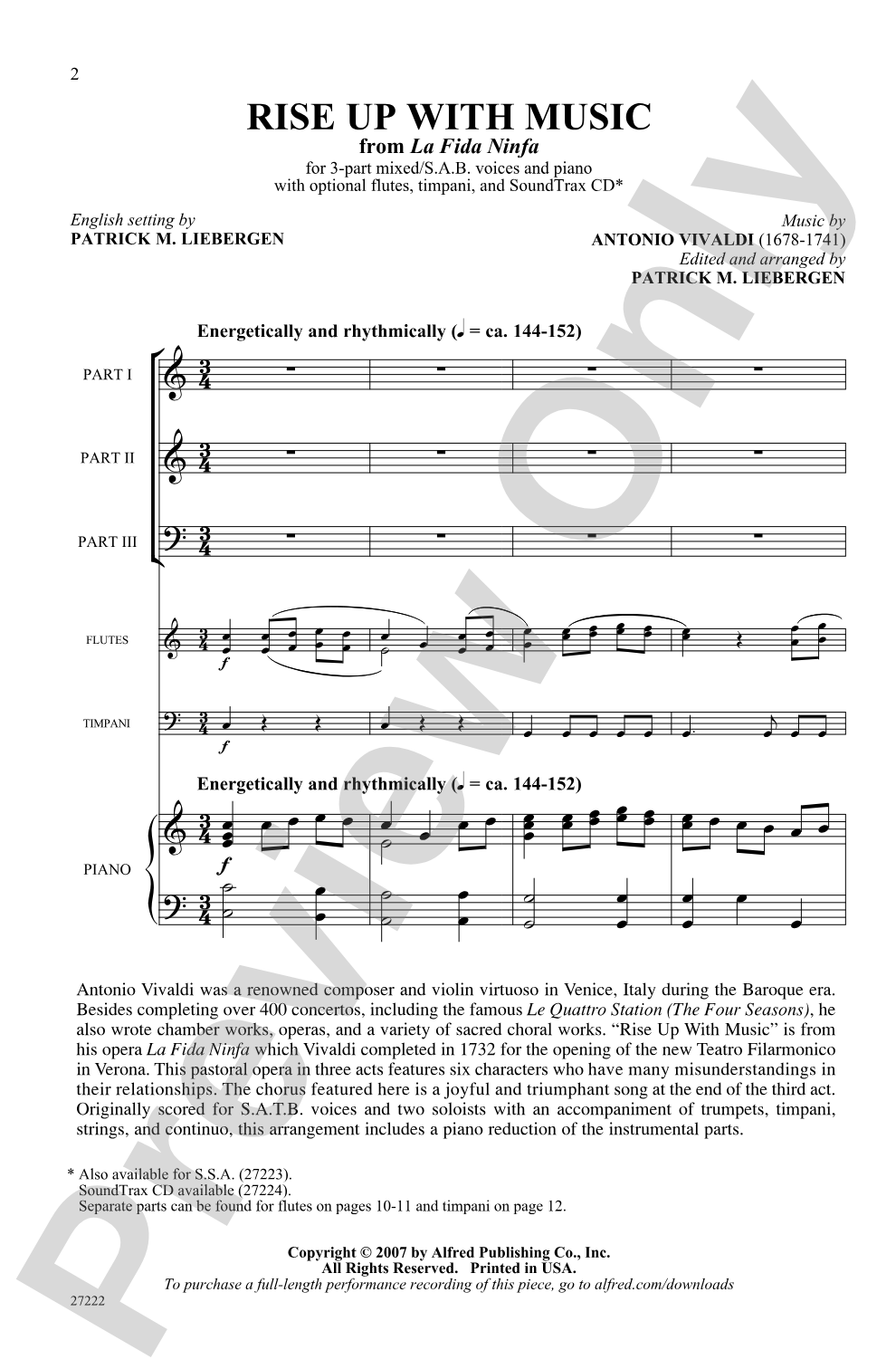
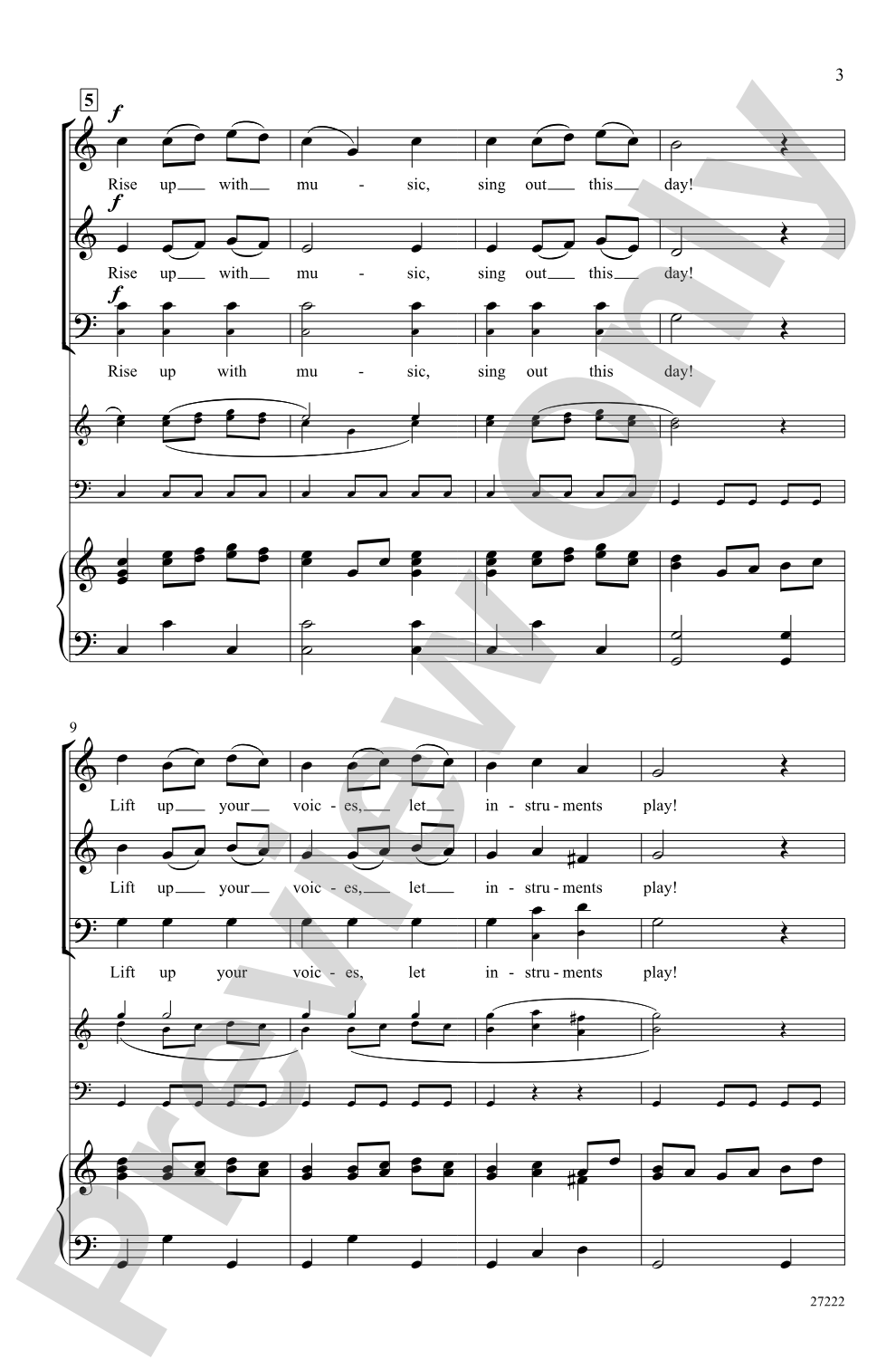
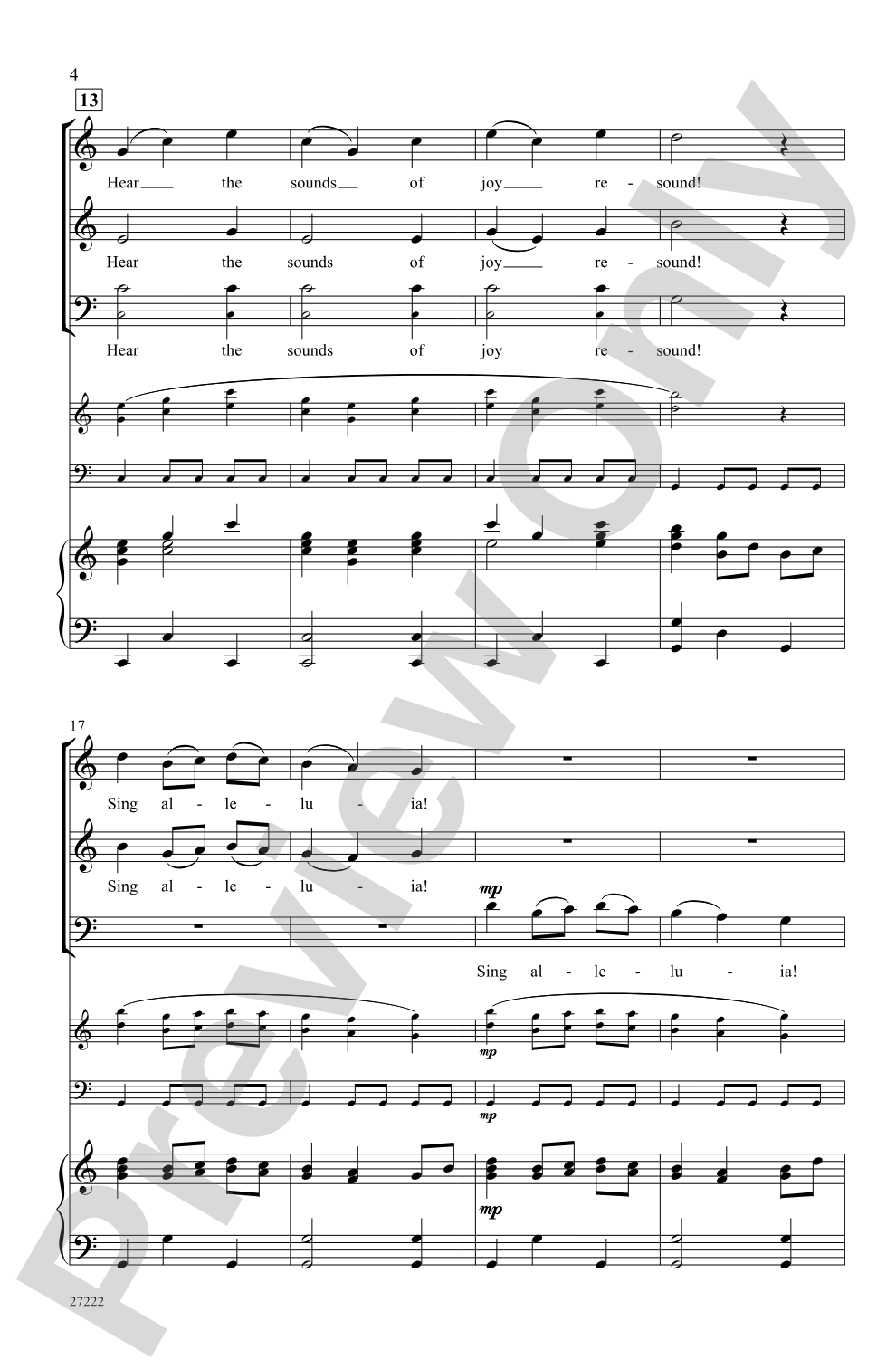

Rise Up with Music (from La Fida Ninfa): 3-Part Mixed / SAB Choral Octavo
From La Fida Ninfa
Music by Antonio Vivaldi / ed. and arr. Patrick M. Liebergen
Item: 00-PO-0000331
$1.75
Minimum order quantity: 20 copies
Pickup currently not available
Related Items
Rise Up with Music: SoundTrax Digital Audio Download |
$22.95
|
View | |
Rise Up with Music (from La Fida Ninfa): SSA Choral Octavo |
$1.75
|
View | |
Rise Up with Music: 3-Part Mixed / SAB Choral Octavo |
$1.75
|
View | |
Rise Up with Music: SSA Choral Octavo |
$1.75
|
View | |
Rise Up with Music: Choral Octavo SoundTrax CD |
$22.95
|
View |
Description
From the third act of Vivaldi's opera La Fida Ninfa, this triumphant chorus in 3/4 is built upon solid 3-part choral writing. An optional flute duet, timpani part, and featured small ensemble in the B section add interest to Dr. Liebergen's joyful arrangement. Characteristic harmonies, clear choral phrasing, and appropriate vocal ranges make this Baroque masterwork easy to teach (and learn).


Rise Up with Music (from La Fida Ninfa): 3-Part Mixed / SAB Choral Octavo isn't in MakeMusic Cloud just yet...but it could be. Let us know you'd like to see it, and you'll help shape what comes next. In the meantime, start a free trial and dive into thousands of interactive titles your students can play along with today.
Request This Title
Tell us you want it.
Start Your Free Trial
Explore everything that's ready to play right now.
Sample Audio
1
Audio File
--:--
0:00
0:00
Sample Video
No sample videos found.
Additional Details
Series:
Alfred Choral Designs
Publisher:
Alfred Music
Page Count:
12
SKU:
00-PO-0000331
Instrumentation:
Opt. 2 Flutes & Percussion
More about this title
About the Composer: Antonio Vivaldi
Antonio Vivaldi (1678-1741) was a Venetian priest and virtuoso violinist whose prolific output shaped the Baroque concerto and influenced composers across Europe. His four-part opera cycle "La Fida Ninfa" exemplifies his gift for vocal writing: clear melodic lines, rhythmic vitality, and harmonies that sit comfortably in the voice while maintaining dramatic force.
Why we love this
Liebergen's arrangement preserves Vivaldi's jubilant character while respecting the limitations and strengths of mixed treble and lower voices. The optional flute and timpani parts give ensembles flexibility to expand beyond the core three parts, making this work rewarding at multiple levels of capability.
What to expect
Bright and celebratory, this chorus radiates the optimism of Vivaldi's operatic world. The steady 3/4 pulse and straightforward harmonic language create a sense of forward momentum, while the shift to a smaller ensemble in the B section offers intimate contrast before the full group returns in triumph.
Who it's for
This arrangement works well for mixed choirs at the middle school through early high school level, or for adult community choirs seeking accessible Baroque literature with substance. Singers need basic sight-reading skills and comfort with SAB texture, but the clear writing and modest vocal range demands make it achievable for developing ensembles.
How to get the most out of it
- Establish a clear pulse in 3/4 before rehearsal begins. Baroque triple meter often pulls toward a lilting, unified downbeat, which unifies the choir and prevents the piece from becoming too languid.
- Shape the phrase endings in the B section where the small ensemble is featured. Let those soloists breathe independently, then bring the full chorus back with renewed energy and unified articulation.
- If adding the flute duet, balance it so the melodic line sits on top without overwhelming the choral texture. The flutes should sparkle, not dominate.
- Pay attention to the harmonic rhythm, particularly where chord changes occur. Clear articulation at these points helps singers hear the Baroque language and locks the parts together.
How to use it
Pair this with other Baroque choral works for a concert showcasing operatic chorus traditions, or use it as a showpiece that opens a lighter spring concert. Its modest length and joyful character make it an excellent choice for festive occasions or as a contrast piece between weightier contemporary repertoire.
Skills your students will build
- Reading and singing SAB voicing with secure part independence
- Performing in 3/4 meter with Baroque phrasing conventions
- Balancing choral blend while maintaining harmonic clarity
- Responding to optional instrumental parts and adapting ensemble texture
- Understanding Baroque melodic language and its connection to vocal range
- Executing clean phrase endings and breath points in a fast-moving harmonic rhythm