Rise to Power: Trombone Sheet Music Preview

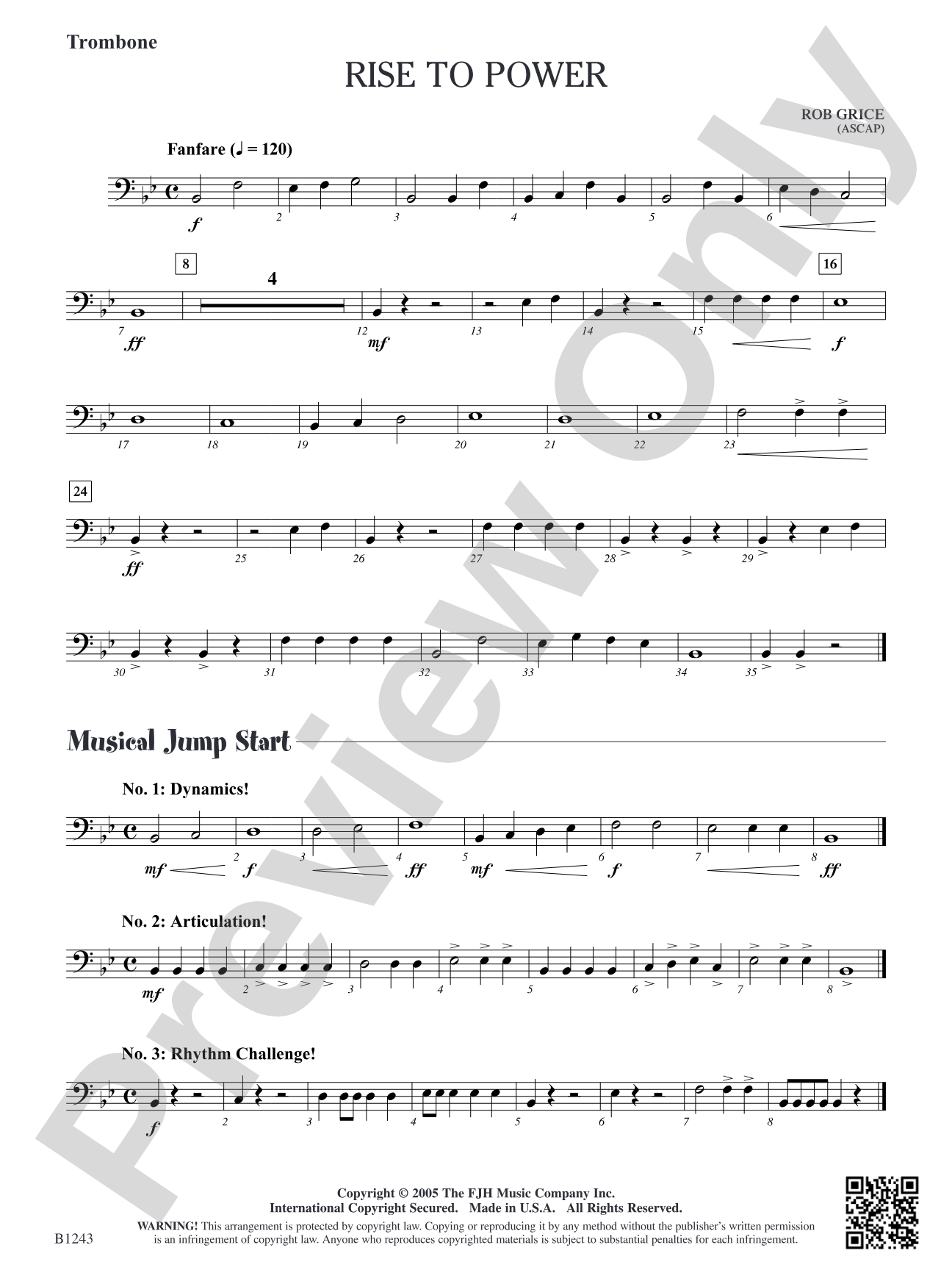
Rise to Power: Trombone

By Rob Grice

Level:.5

Item: 98-PC-DB1243_TN1

Digital Download
$7.00
Description
Your students will feel the power as they perform this exciting beginning level piece by Rob Grice. The audience is sure to be impressed as your young instrumentalists perform music that makes them sound mature, but actually requires very limited technical ability. Great writing and a wonderful chance to get your students out of the method for their first concert!

Rise to Power: Trombone isn't in MakeMusic Cloud just yet...but it could be. Let us know you'd like to see it, and you'll help shape what comes next. In the meantime, start a free trial and dive into thousands of interactive titles your students can play along with today.

Sample Audio
0:00
0:00
Sample Video
Additional Details
Series: FJH Starter Series
Publisher: The FJH Music Company, Inc.
SKU: 98-PC-DB1243_TN1

More about this title

About the Composer: Rob Grice

Rob Grice

Rob Grice has built a reputation as a composer whose works reach far beyond the classroom. His pieces have been performed across the United States, Australia, Canada, Europe, and Japan, and have appeared at prestigious venues including Carnegie Hall, the Midwest Clinic, and the Society of Wind Instruments conference in Germany. His compositions regularly appear on state and national contest lists, earning respect from music educators and adjudicators alike.

Grice's strength in writing for young ensembles stems directly from his decades of classroom experience at elementary, secondary, and community college levels. His work earned him recognition as "Secondary Teacher of the Year" in the Enterprise City School System in Alabama and a Golden Apple Award from WDHN-TV18. He remains active as a guest conductor, clinician, and adjudicator for concert bands and indoor percussion.

Why we love this

Grice understands the exact moment when a young band needs to sound polished without the technical demands that derail rehearsals. This piece delivers maturity through smart orchestration and strong melodic writing rather than complicated passages, so your students can focus on intonation, balance, and confidence instead of wrestling with their parts. It's the kind of opening number that convinces audiences your program knows what it's doing.

What to expect

Energetic and assured, with momentum that carries the band forward. The writing feels open and spacious enough that young players won't feel cramped, yet structured enough that every section has a clear voice in the texture.

Who it's for

Beginning concert bands making their first appearance in front of an audience, or young ensembles whose experience is primarily limited to method book exercises. If your students can play with basic accuracy and a steady tempo, they have everything needed to succeed with this piece.

How to get the most out of it

  • Lock in the tempo at rehearsal's start. A steady pulse makes the piece feel controlled and impressive rather than rushed or uncertain.
  • Shape the melodic lines with dynamic contrast. Even at this level, thoughtful phrasing transforms simple writing into something that sounds intentional and mature.
  • Balance the harmony so inner voices support without overwhelming the melody. Young players often play too loudly in their parts; remind them they're the foundation, not the feature.
  • Mark breathing points clearly in all parts. Coordinated breath releases keep the ensemble unified and prevent raggedness at phrase endings.

How to use it

Open your first concert with this as an icebreaker. It sets a professional tone immediately while giving your ensemble an early win, which settles nerves and builds momentum for the rest of the program. It also works perfectly as a festival or solo/ensemble contest selection where you want your band to make a strong first impression without overextending their abilities.

Skills your students will build

  • Sustaining pitch with steady airflow across full phrases
  • Balancing individual parts within a full ensemble texture
  • Responding to dynamic changes and shaping musical lines
  • Maintaining consistent tempo and rhythmic precision
  • Coordinating ensemble entrances and releases

You May Also Like