
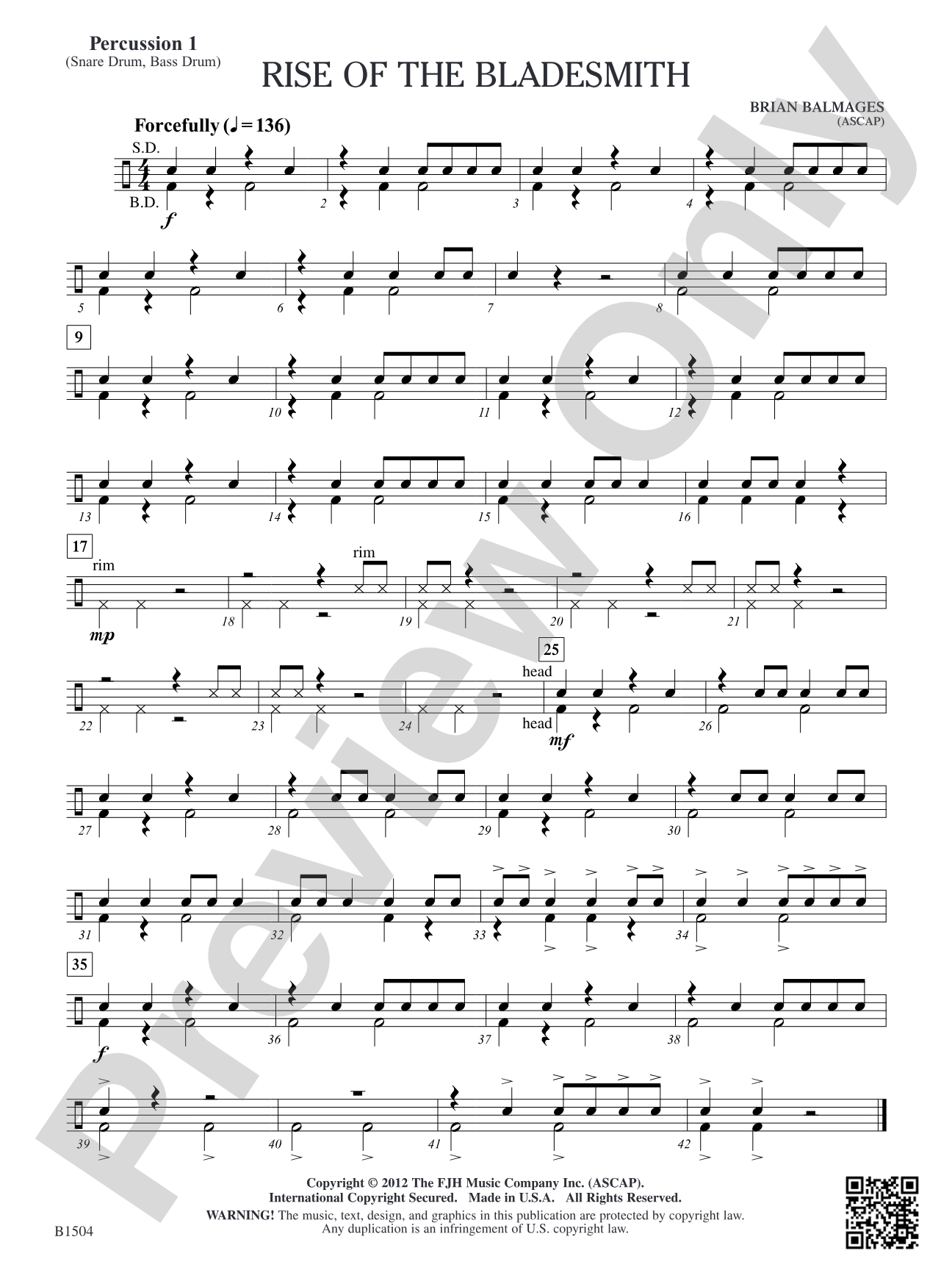

Rise of the Bladesmith: Percussion 1
By Brian Balmages
Level:.5
Item: 98-PC-DB1504_PC1
$7.00
Pickup currently not available
Description
Conjuring images of a master craftsman forging the perfect sword, this dramatic work portrays the intense heat and relentless pounding as the blade begins to take shape. A reference to the Dies Irae conveys the image of glowing metal, which almost seems to resemble molten lava. With no eighth notes in the wind parts, this piece is truly accessible to the youngest of musicians!


Don't just read it, hear it, play along with it, and watch your students grow with it. In MakeMusic Cloud, Rise of the Bladesmith: Percussion 1 comes alive with professional accompaniment, adjustable tempo, and built-in practice tools that turn solo practice into real progress.
Open in the Player
Jump straight in and assign it today.
Start Your Free Trial
Open this title and explore the full library in minutes.
Sample Audio
1
Audio File
--:--
0:00
0:00
Sample Video
No sample videos found.
Additional Details
Series:
FJH MOS Performance Series
Publisher:
The FJH Music Company, Inc.
SKU:
98-PC-DB1504_PC1
More about this title
About the Composer: Brian Balmages

Brian Balmages has built an international reputation as a composer and conductor working across orchestral, band, and chamber idioms. His music has been commissioned and performed by prestigious ensembles in world-renowned venues including Carnegie Hall, the Kennedy Center, and the Sydney Opera House. He received the A. Austin Harding Award from the American School Band Directors Association and won the 2020 NBA William D. Revelli Composition Contest. An elected member of the American Bandmasters Association, Balmages was honored with the inaugural James Madison University Distinguished Alumni Award and later commissioned by the University of Miami to compose for the inauguration of its sixth president.
As a guest conductor, Balmages regularly works with all-state ensembles, university groups, and professional orchestras worldwide. His engagements have taken him to major conferences including the Midwest Clinic, Western International Band Clinic, and the College Band Directors Conference, as well as international venues from Italy to Australia. He currently serves as Director of MakeMusic Publications and Digital Education for Alfred and MakeMusic.
Why we love this
Balmages crafts a visceral dramatic arc without relying on rapid note values, making this piece ideal for younger ensembles seeking authentic concert material that sounds far more sophisticated than its technical demands. The Dies Irae reference and forge-hammer imagery give directors a rich narrative hook to work with, while the absence of eighth notes in the winds means students can focus entirely on tone, balance, and the fervor of the musical storytelling rather than managing complex rhythms.
What to expect
Hear the roar of the forge and feel the intensity of creation. The Dies Irae evocation suggests something almost sacred in the craftsman's work, conjuring images of molten metal glowing in darkness, while the steady pounding builds relentless momentum toward completion. The piece captures both the violence and beauty of transformation.
Who it's for
Elementary and middle school concert bands looking for accessible yet meaningful festival and contest material. This piece works particularly well for newer ensembles in their first or second year of concert literature, as students can deliver a powerful musical performance without managing demanding rhythmic figures.
How to get the most out of it
- Shape the Dies Irae motif with intentional phrasing to establish the glowing-metal imagery early; this musical reference becomes the emotional anchor for the entire piece.
- Balance the percussion layer carefully, especially the rhythmic pounding that evokes the blacksmith's hammer; let it drive the pulse without overpowering the wind voices.
- Use dynamic layering strategically to show the blade's transformation from raw forging to finished weapon; the crescendos and decrescendos should feel earned, not rushed.
How to use it
Program this as a standout opener or mid-concert moment that commands attention and demonstrates your ensemble's maturity to an audience unfamiliar with younger band capabilities. Its contest-festival pedigree makes it ideal for spring programming when building toward adjudication, while the vivid imagery also pairs well with thematic concert concepts centered on craftsmanship, mythology, or transformation.
Skills your students will build
- Sustaining focused tone quality across dynamic contrasts
- Responding to detailed narrative and imagery through musical shape
- Blending complex textures with limited rhythmic complexity
- Executing accurate entrances and cutoffs in a texturally dense score