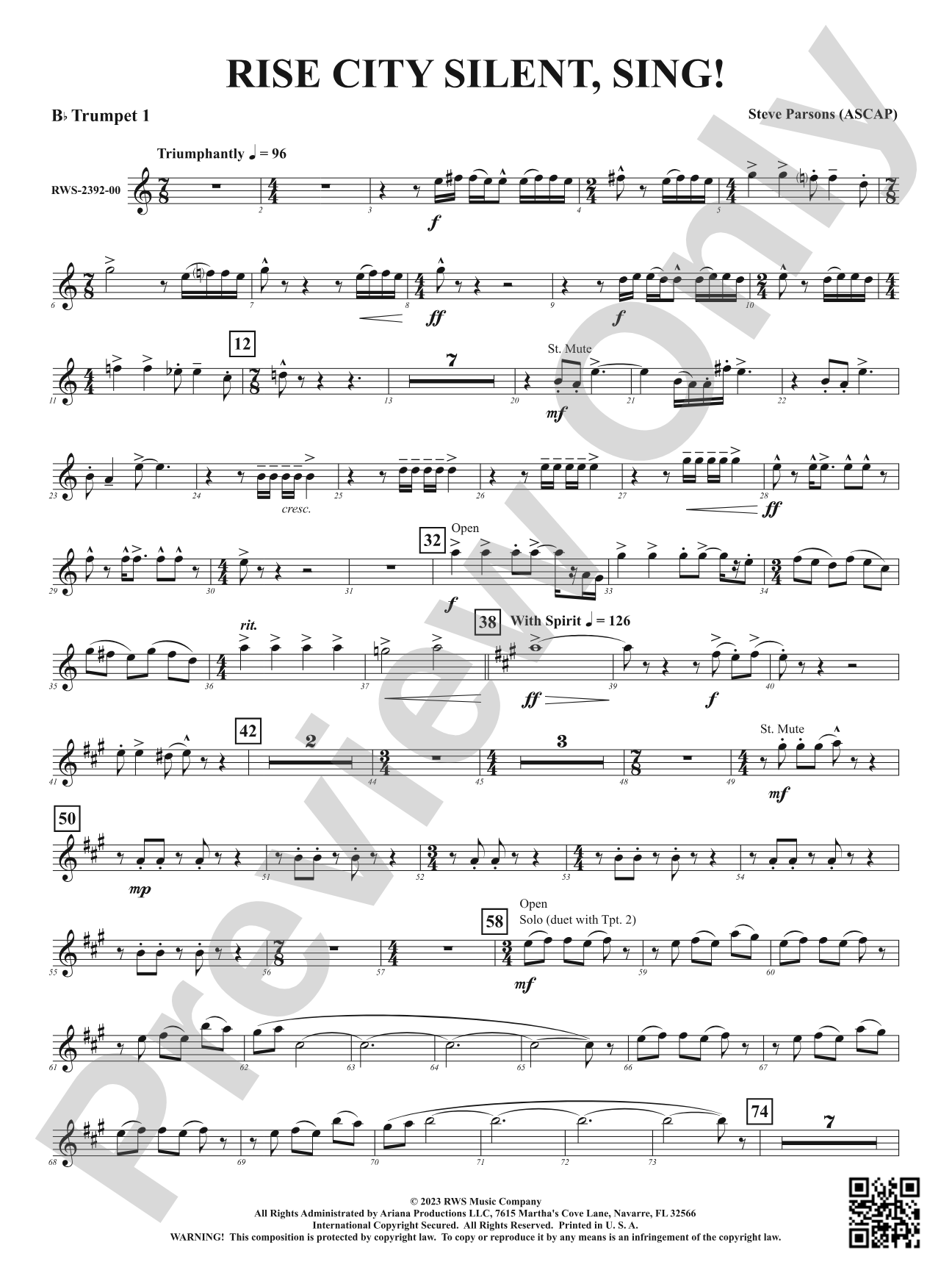
Rise City Silent, Sing!: 1st B-flat Trumpet Sheet Music Preview

Rise City Silent, Sing!: 1st B-flat Trumpet

By Steve Parsons

Grade: 5

Item: 98-PC-RWS2392_T1

Digital Download
$3.99
Description
A dramatic, colorful work full of exciting brass fanfares and sweeping string lines, Rise City Silent, Sing! captures the sounds of a bustling city and its renewed celebration of the arts. Powerful ostinatos energetically drive forward until the piece breaks forth into a final triumphant antiphonal statement. A perfect concert opener for any occasion!

Original Item#: RWS-2392-00

Rise City Silent, Sing!: 1st B-flat Trumpet isn't in MakeMusic Cloud just yet...but it could be. Let us know you'd like to see it, and you'll help shape what comes next. In the meantime, start a free trial and dive into thousands of interactive titles your students can play along with today.

Sample Audio
0:00
0:00
Sample Video
Additional Details
Series: RWS - Symphony Orchestra
Publisher: RWS Music Company
SKU: 98-PC-RWS2392_T1

More about this title

Why we love this

Steve Parsons writes for orchestras with genuine understanding of what conductors need: clear textures, playable parts, and moments that soar. Rise City Silent, Sing! delivers all three while serving a practical concert need. Most orchestras open with either standard repertoire or understated transitions. This gives you a fresh, substantial opener that commands attention without requiring extended rehearsal time.

What to expect

Energy radiates from every measure. Brass cuts through with brilliant fanfares while strings build momentum underneath in driving, repetitive figures that propel you forward. The piece captures the restless excitement of urban life, then harnesses that intensity into a climactic moment of celebration where the whole ensemble speaks in unified triumph.

Who it's for

Orchestra directors seeking a confident opener for concert programs, pops series, or festival performances. Works equally well for advanced high school orchestras and college/community ensembles that want contemporary fanfare writing with accessible orchestration.

How to get the most out of it

  • Shape the opening ostinatos with clarity rather than heaviness. Let the rhythmic drive emerge from precise ensemble attacks, especially in the lower strings and bass line, so the texture stays light enough for the brass to cut through.
  • Prepare the antiphonal section with specific seating or positioning. Identify which instrumental sections will answer each other, and make those spatial relationships obvious in rehearsal so the dialogue lands clearly in performance.
  • Build the fanfares gradually across rehearsals. Start by isolating the brass lines and locking them to the harmonic structure before adding the full orchestration, which prevents the brass from overplaying in excitement.
  • Give the sweeping string lines room to breathe between the driving rhythmic passages. Conductors often tighten tempos unconsciously during ostinato sections; maintaining a steady pulse allows the contrast to register when the strings take over.

How to use it

Place this as your concert opener to establish energy and focus from the first downbeat. The fanfare character makes it ideal for gala openings, season premieres, or pops concerts where you need something contemporary but grounded. It also pairs well with more introspective repertoire on the same program, providing the extroverted bookend that balances quieter works.

Skills your students will build

  • Maintaining steady ostinatos while listening to surrounding sections
  • Balancing brass transparency against full orchestral texture
  • Executing antiphonal (call-and-response) entrances with rhythmic precision
  • Responding to expressive direction within a high-energy context

You May Also Like