
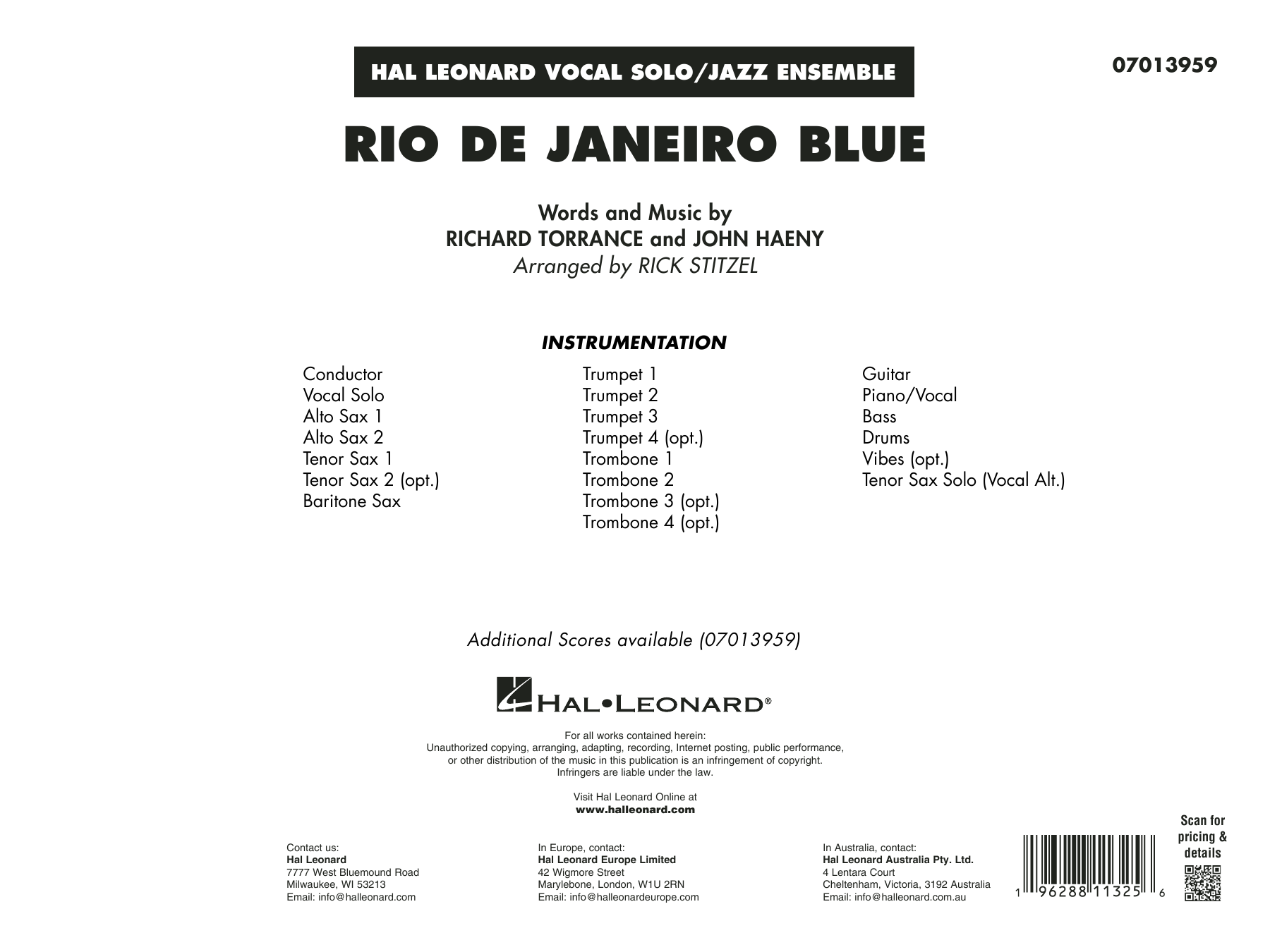

Rio de Janeiro Blue (Key: C min) (arr. Rick Stitzel): Jazz Ensemble Conductor Score & Parts
As performed by Randy Crawford / Arranged by Rick Stitzel
Grade: 3-4
Item: 35-PK01275101
$55.00
Pickup currently not available
Buy Extra Parts (Digital PDF Download)
Parts Added to Cart!
Description
Inspired by the recording by jazz singer Randy Crawford, Rick's version of this marvelous tune features a smooth rock style and a sultry, singable melody. Scored for vocal soloist, this classy chart also features a brief solo for alto sax.


Rio de Janeiro Blue (Key: C min) (arr. Rick Stitzel): Jazz Ensemble Conductor Score & Parts isn't in MakeMusic Cloud just yet...but it could be. Let us know you'd like to see it, and you'll help shape what comes next. In the meantime, start a free trial and dive into thousands of interactive titles your students can play along with today.
Request This Title
Tell us you want it.
Start Your Free Trial
Explore everything that's ready to play right now.
Sample Audio
No sample audio found.
Sample Video
No sample videos found.
Additional Details
Publisher:
Hal Leonard
SKU:
35-PK01275101
More about this title
About the Artist: Randy Crawford
Randy Crawford brought a sophisticated jazz vocalist's sensibility to popular music throughout her career, earning recognition for her ability to inhabit a song with emotional depth and impeccable phrasing. Her interpretations of standards and contemporary material demonstrated the kind of vocal control and interpretive maturity that makes arrangers eager to score charts around her recordings.
Crawford's influence extends into the educational realm through arrangements like this one, where her recorded artistry serves as the model for how a melody can be shaped and supported by an ensemble. Her approach to melody and rhythm provides an excellent study in how vocal sophistication translates into compelling ensemble writing.
Why we love this
Rick Stitzel's arrangement captures the easeful sophistication of Crawford's original in a way that works beautifully for high school and early college ensembles. The rock-inflected groove keeps energy accessible while the alto sax solo and vocal feature create natural moments for soloists to shine without technical overwhelm. You get a genuine jazz standard here, not a pop tune dressed up as jazz.
What to expect
Cool without being cold. The minor key and rock groove create an understated sophistication, like stepping into a dimly lit room where something real is happening. The melody unfolds with the kind of unhurried elegance that makes listeners lean in to pay attention.
Who it's for
Jazz ensembles at grades 3-4 looking for material that sounds genuinely musical without requiring advanced soloists or complex harmonic reading. This works equally well for groups with a strong vocalist or those developing one, since the chart supports rather than exposes.
How to get the most out of it
- Balance the melody so the vocalist sits comfortably above the ensemble; the rock groove works best when it feels laid back rather than driven.
- Have your alto saxophonist listen closely to the recording before the solo section. The phrasing and tone color choices matter more than technical flash here.
- Lock the comping rhythm section into a conversational feel with the vocalist rather than playing "at" them. The chart breathes best when everyone listens actively.
- Shape the melody through dynamics and phrasing rather than tempo changes. Let the sultry quality emerge from how individual players phrase their lines.
How to use it
Consider this as a closer for a set where you want to shift into an evening mood after more uptempo material. It pairs naturally with other Stitzel arrangements or sits well alongside standards-based charts when you're building a concert around vocal features and jazz sophistication.
Skills your students will build
- Rock rhythm section coordination (riding the groove without pushing tempo)
- Comping vocabulary in a minor blues context
- Listening and responding as an accompaniment to a featured soloist
- Phrasing control in a slower, lyrical setting
- Alto saxophone solo construction over jazz changes