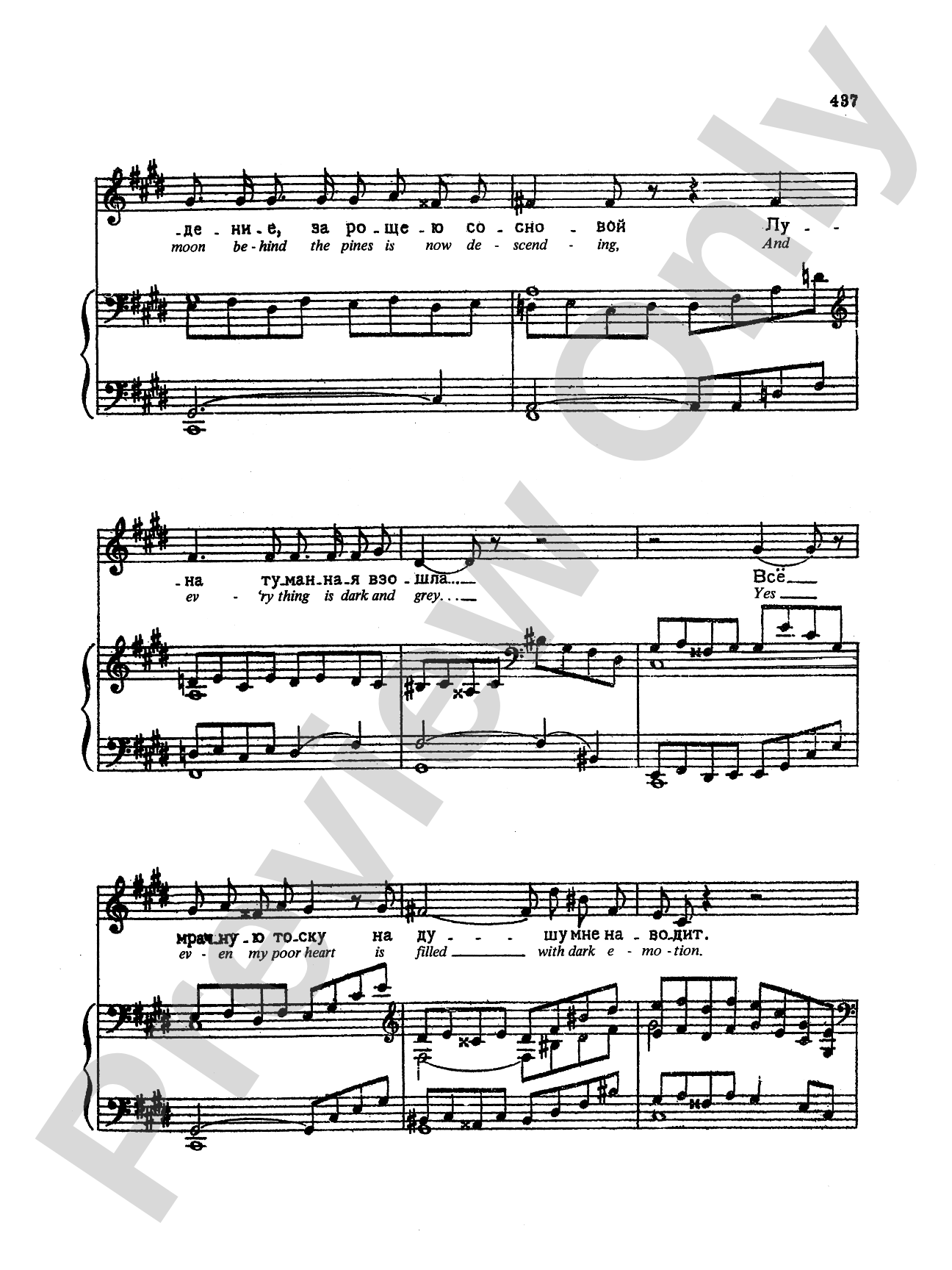
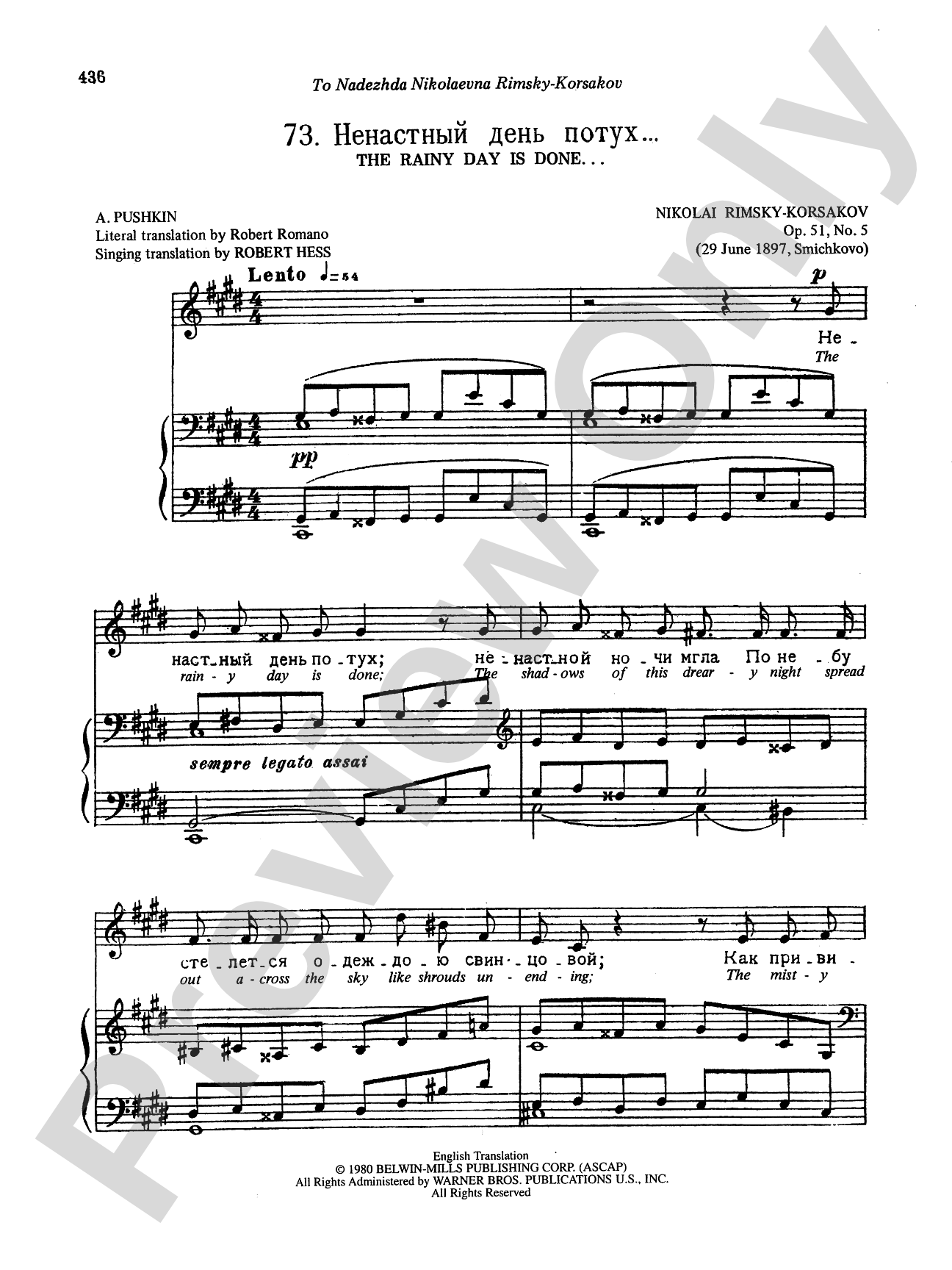
Rimsky-Korsakov: Songs, Volume VI (Russian/English) Sheet Music Preview

Rimsky-Korsakov: Songs, Volume VI (Russian/English)

Vocal Score with English and Russian Text

By Nicolai Rimsky-Korsakov

Item: 00-PC-0011195

Digital Download
$0.99
Description
A collection of pieces for Voice, composed by Nicolai Rimsky-Korsakov.

Don't just read it, hear it, play along with it, and watch your students grow with it. In MakeMusic Cloud, Rimsky-Korsakov: Songs, Volume VI (Russian/English) comes alive with professional accompaniment, adjustable tempo, and built-in practice tools that turn solo practice into real progress.

Sample Audio
No sample audio found.
Sample Video
Additional Details
Series: Kalmus Edition
Publisher: Alfred Music
Page Count: 88
SKU: 00-PC-0011195

More about this title

About the Composer: Nicolai Rimsky-Korsakov

Nicolai Rimsky-Korsakov (1844-1908) was a Russian composer and master orchestrator whose influence shaped the sound of Russian classical music. Beyond his celebrated orchestral works and operas, he composed over 70 songs that reveal a lyricist's sensibility alongside his orchestral brilliance. His vocal writing balances profound poetic expression with the technical demands that keep singers returning to his catalog across generations.

Rimsky-Korsakov spent decades as a professor of composition in St. Petersburg, where he mentored emerging Russian composers while continuing his own prolific output. His songs draw deeply from Russian poetry and folk traditions, yet his harmonic language remains distinctly cosmopolitan, reflecting his travels and his position at the intersection of nationalist and European Romantic aesthetics.

Why we love this

This volume presents Rimsky-Korsakov's vocal writing at its most intimate and refined, offering singers works that demand genuine interpretive sophistication without the operatic scale of his theatrical pieces. The Russian and English texts side by side serve diverse program needs while honoring the original language, and the collection's breadth means you'll find material suited to recital themes, competition repertoire, and studio work.

What to expect

These songs inhabit a world of lyrical intimacy combined with emotional depth; Rimsky-Korsakov's gift for melody unfolds with apparent simplicity while his harmony reveals layers of color and psychological nuance beneath the surface. The textures range from transparent and song-like to richly chromatic, and the Russian language itself brings a distinctive resonance and warmth to pieces that feel both timeless and distinctly rooted in their cultural moment.

Who it's for

This collection serves advanced vocalists and serious voice students who are ready to tackle the harmonic sophistication and expressive range of late Romantic Russian song. It is equally valuable for voice teachers building recital repertoire, competition programs, or exploring the Russian vocal tradition with mature singers.

How to get the most out of it

  • Attend closely to the harmonic language; Rimsky-Korsakov's unexpected progressions and chromatic movement require clear vocal line to prevent muddiness, even at moderate tempos.
  • Shape phrases according to the poetic meter and stress patterns of the Russian text, allowing natural language rhythms to guide your musical phrasing rather than imposing rigid symmetry.
  • Balance lyrical expression with precise diction in both languages; neither should overshadow the other, and the interplay between vocal melody and accompaniment figures deserves careful attention from singer and pianist alike.

How to use it

Program selections from this volume in recitals that showcase Russian Romantic vocal music, or use individual songs as contrasting contemporary-era pieces alongside German Lied or French mélodie. The bilingual texts make pieces accessible for educational presentations where translation clarity matters, and the range of character and mood across the collection supports thematic programming around specific Russian poets or seasonal concert concepts.

Skills your students will build

  • Reading and interpreting chromatic harmony in late Romantic contexts
  • Sustained legit singing with clear diction in Russian and English
  • Managing dynamic nuance across longer phrases without sacrificing line
  • Balancing vocal independence from piano accompaniment while maintaining musical unity
  • Interpreting the relationship between poetic stress and musical meter

You May Also Like