
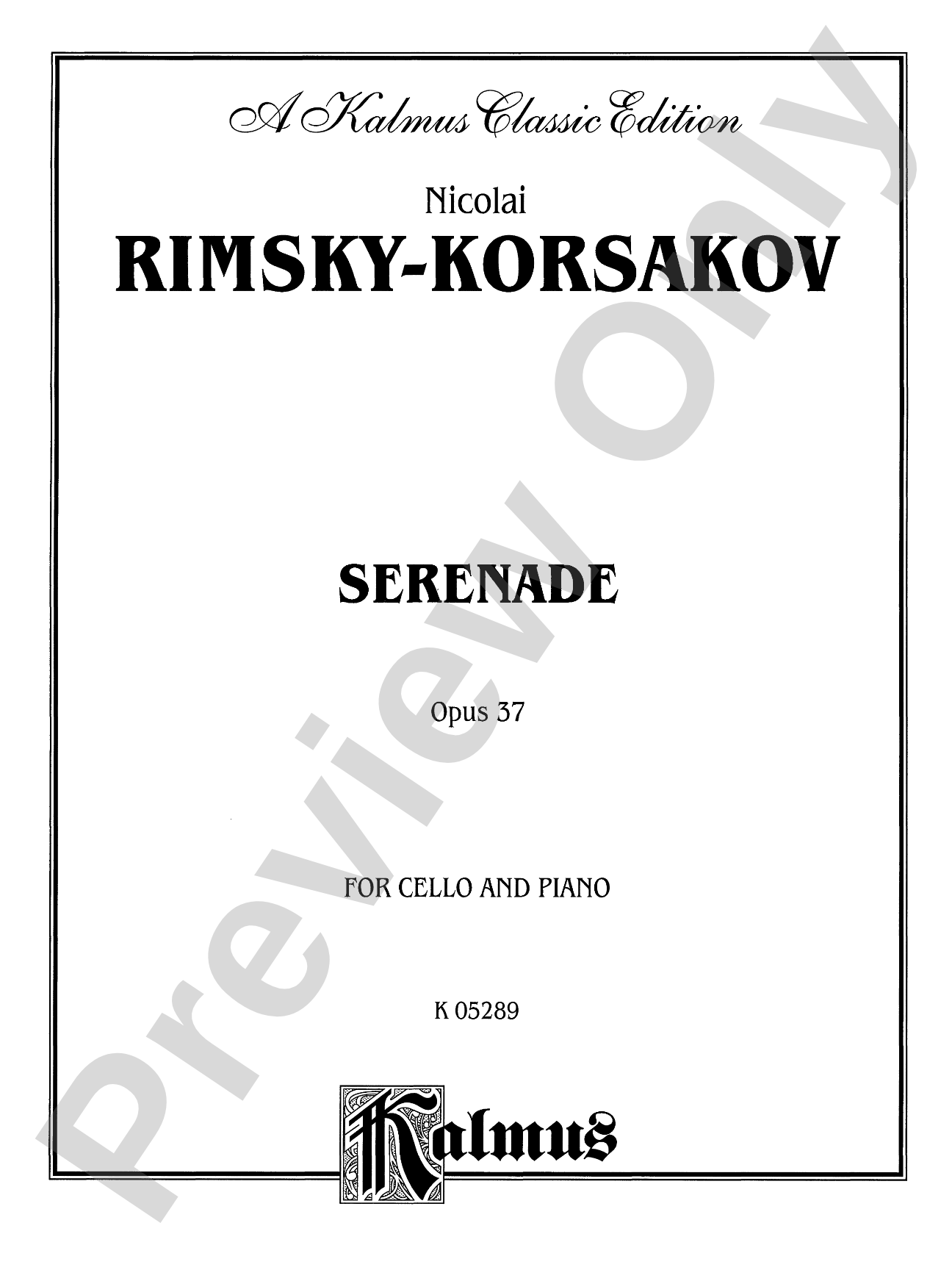
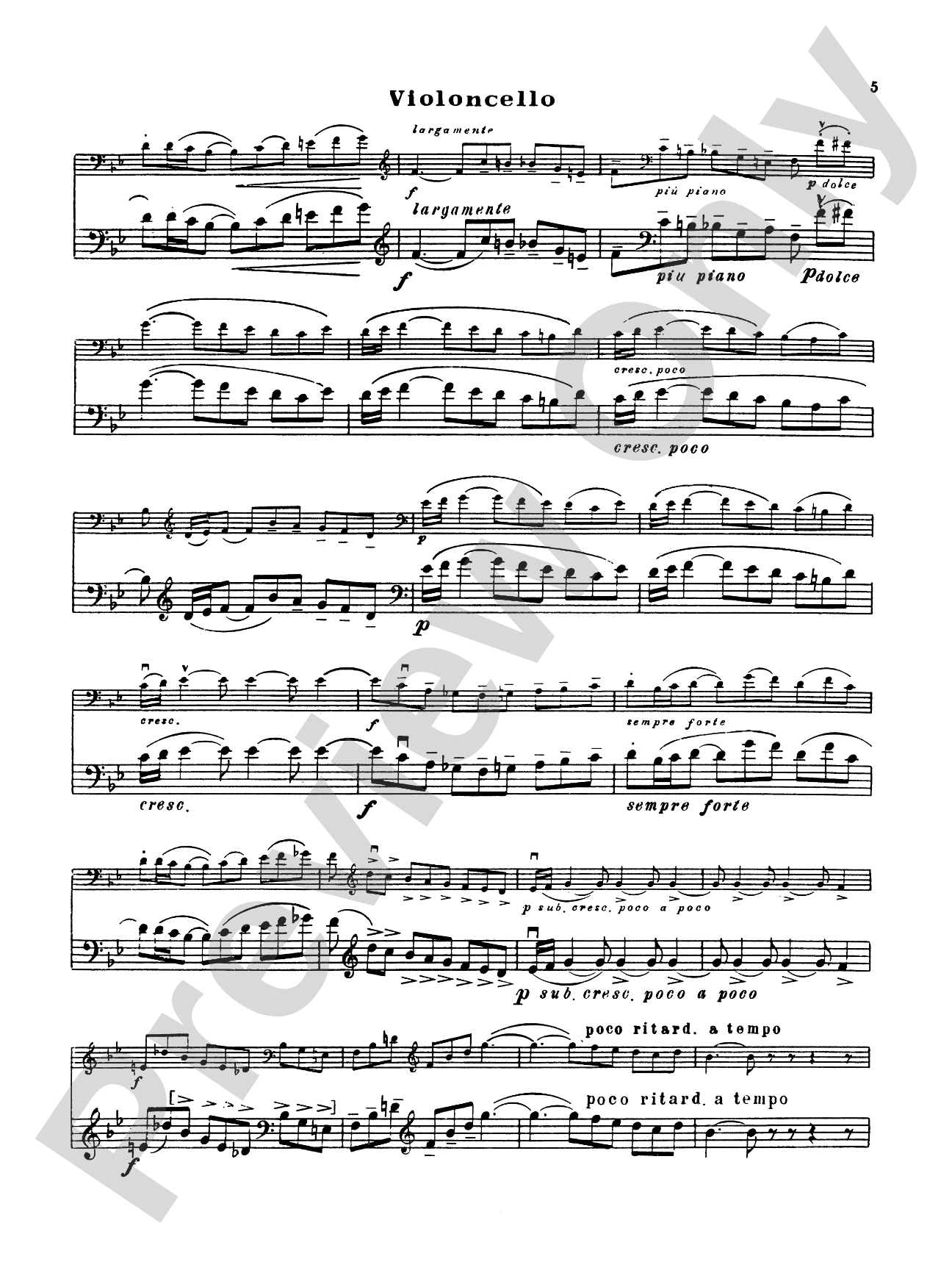
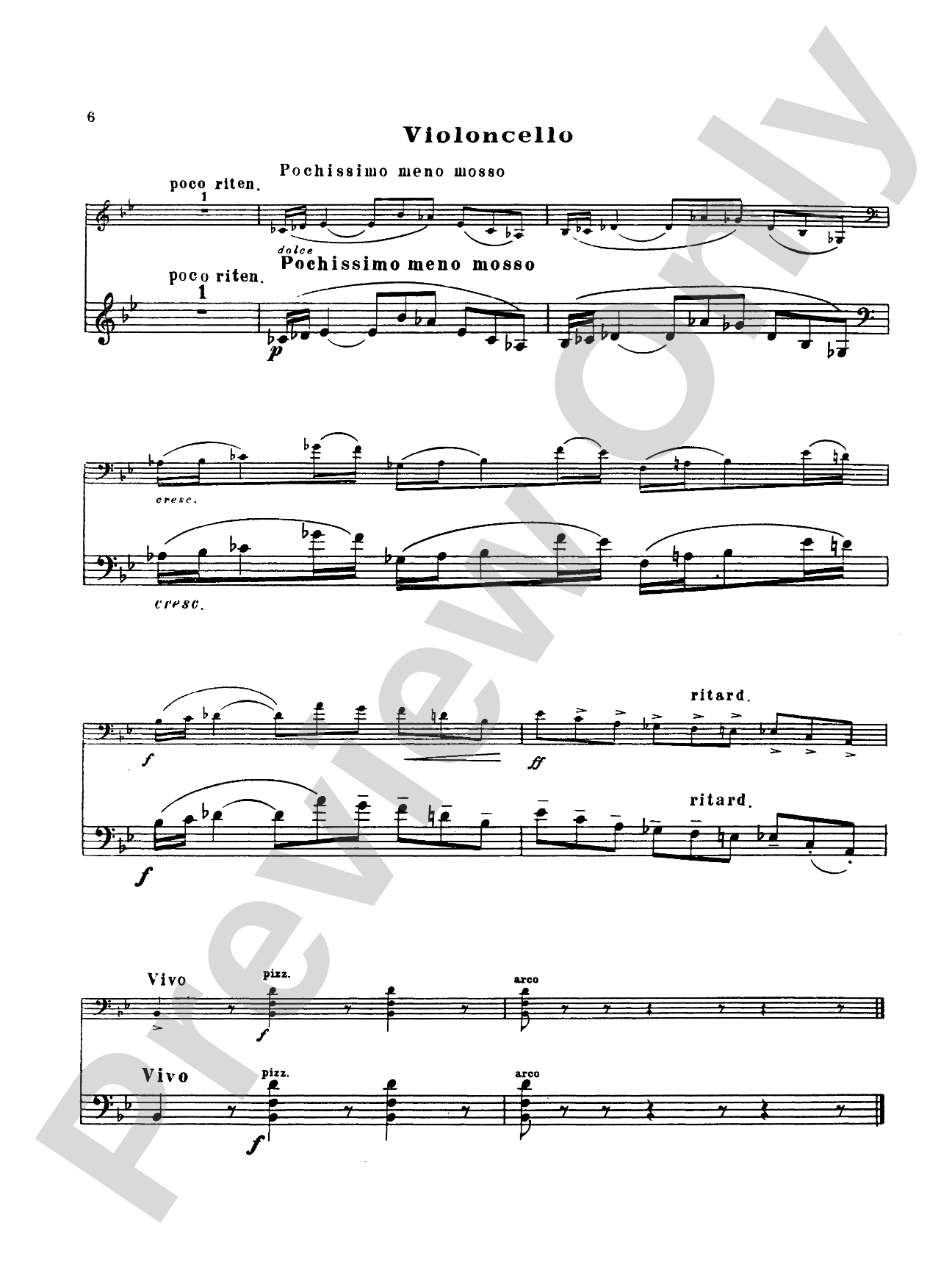



Rimsky-Korsakov: Serenade, Op. 37: Cello Book
By Nicolai Rimsky-Korsakov
Item: 00-PK-0003630

$7.99
Pickup currently not available
Buy Extra Parts (Digital PDF Download)
| Product | Price | Quantity |
|---|---|---|
| Rimsky-Korsakov: Serenade, Op. 37 | $2.99 | |
| Rimsky-Korsakov: Serenade, Op. 37 | $2.99 |
Parts Added to Cart!
Description
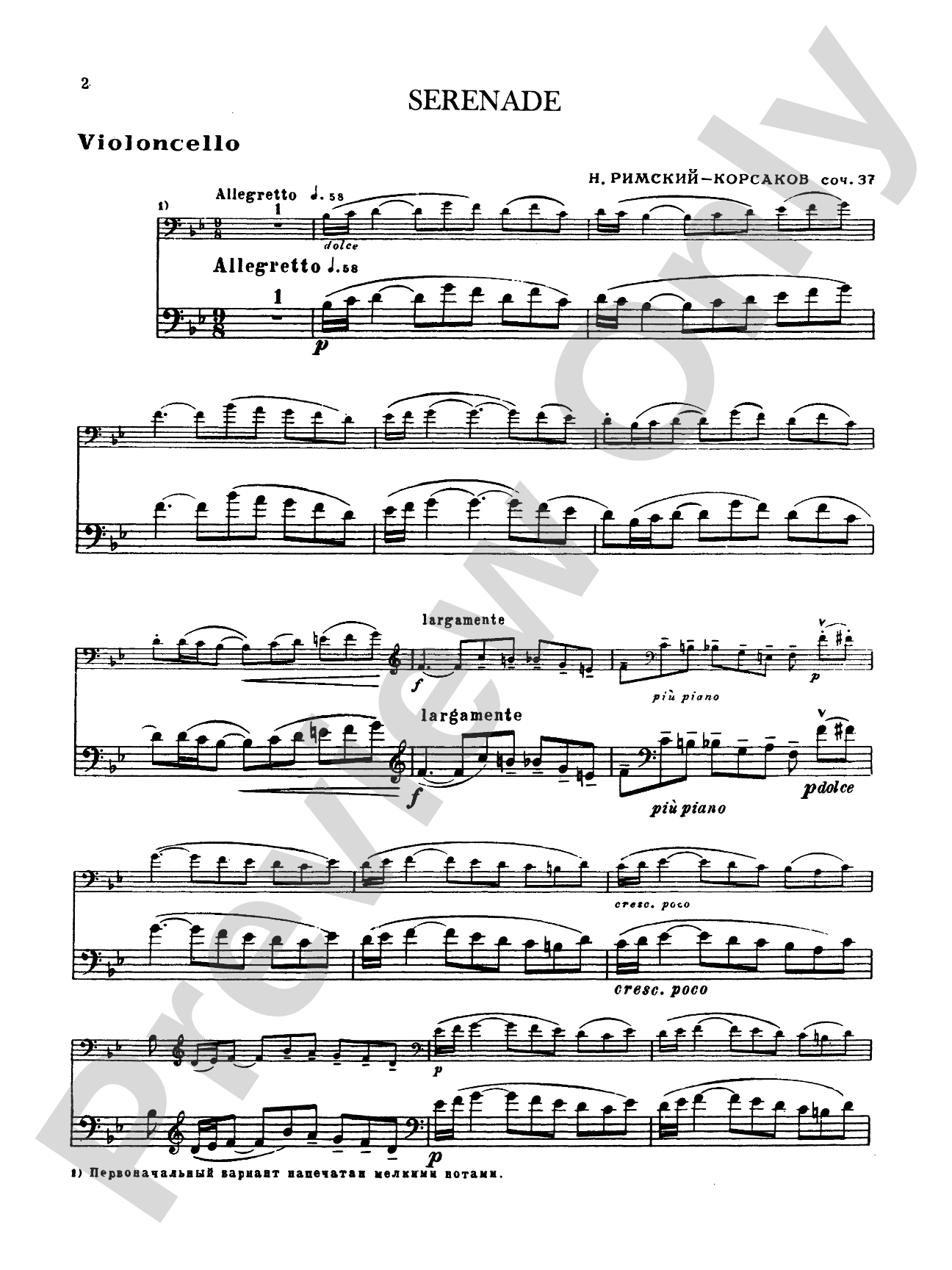
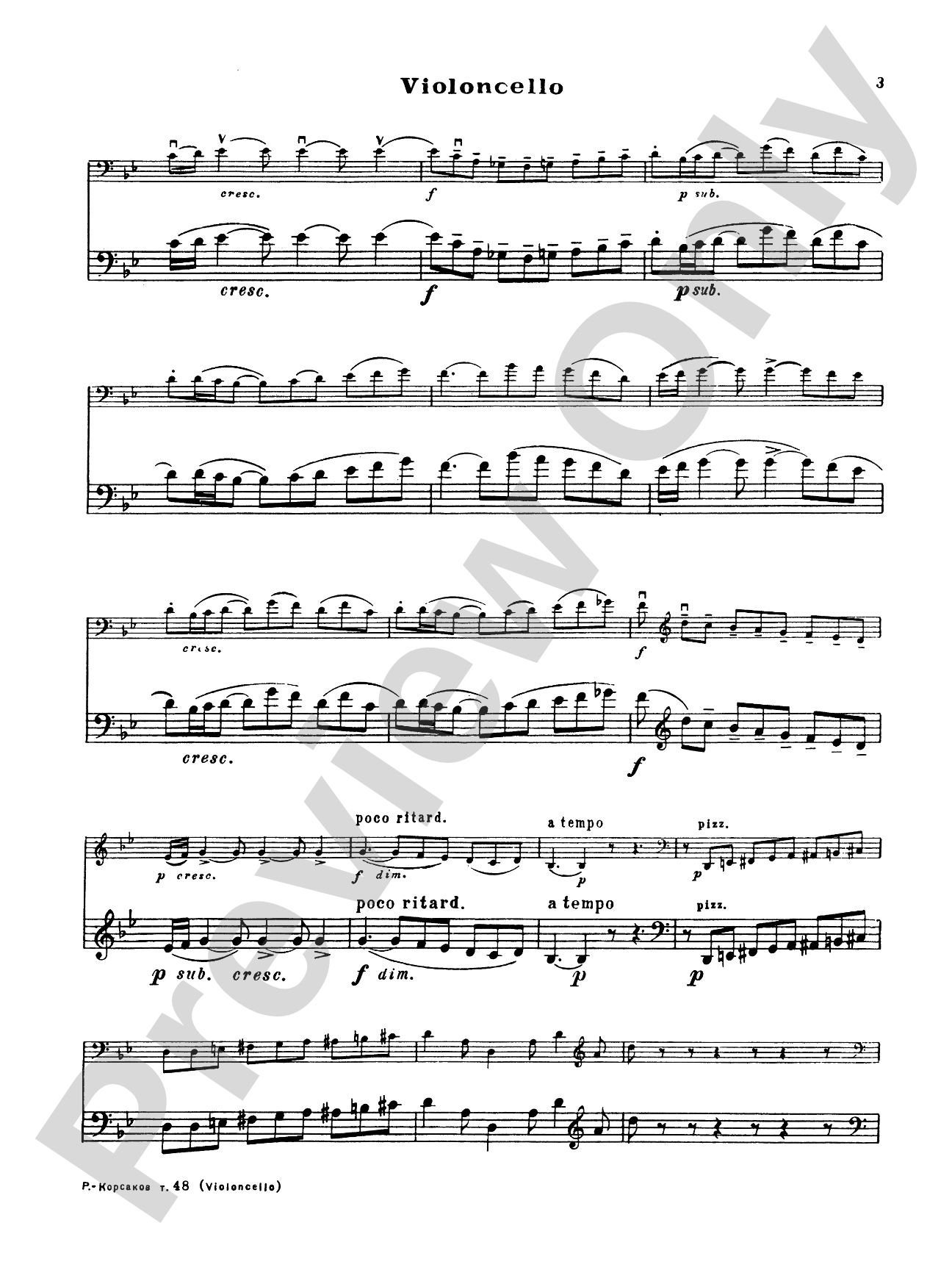
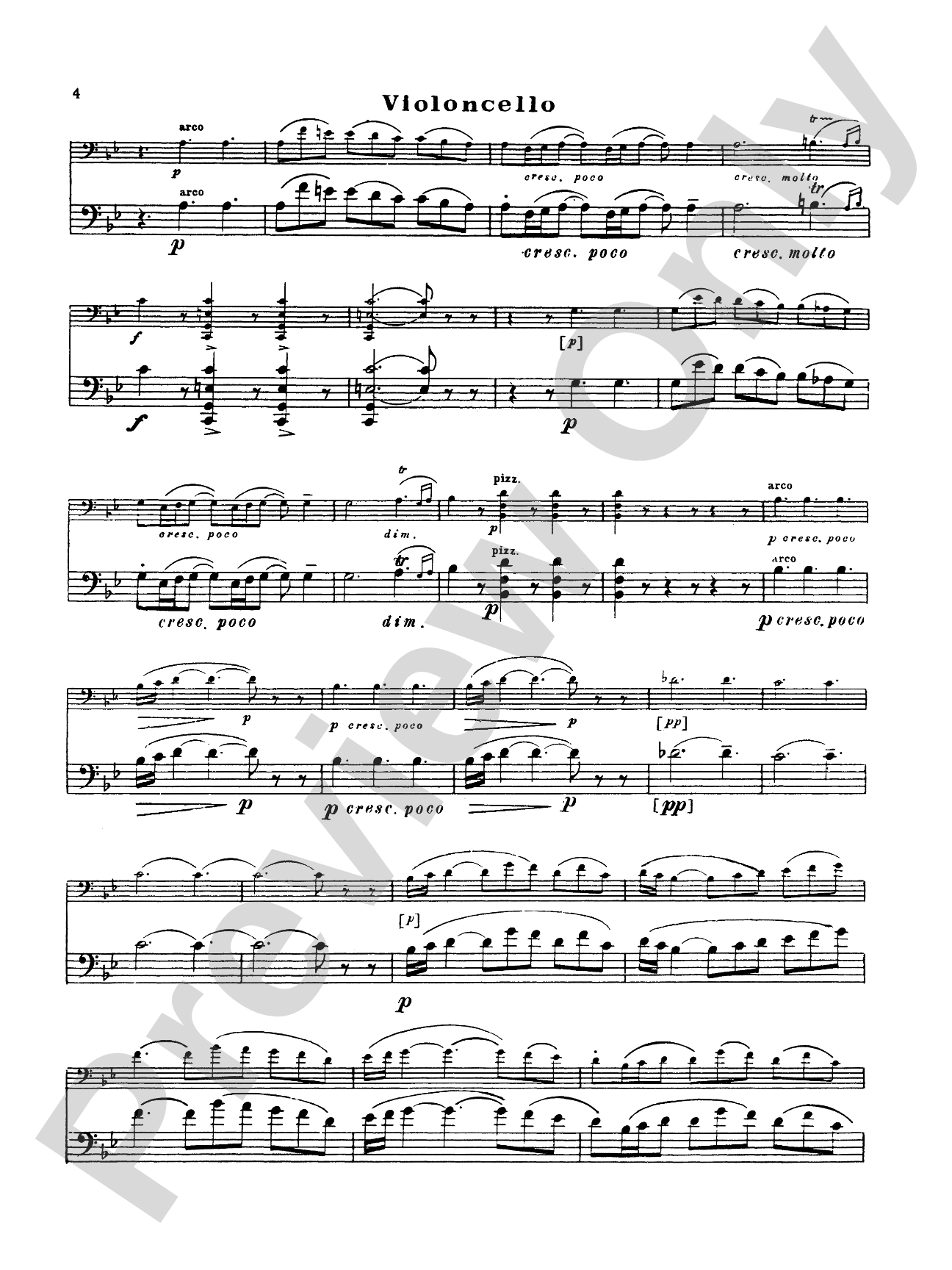
A cello solo with piano accompaniment by Nicolai Rimsky-Korsakov.


Don't just read it, hear it, play along with it, and watch your students grow with it. In MakeMusic Cloud, Rimsky-Korsakov: Serenade, Op. 37: Cello Book comes alive with professional accompaniment, adjustable tempo, and built-in practice tools that turn solo practice into real progress.
Open in the Player
Jump straight in and assign it today.
Start Your Free Trial
Open this title and explore the full library in minutes.
Sample Audio
No sample audio found.
Sample Video
No sample videos found.
Additional Details
Series:
Kalmus Edition
Publisher:
Alfred Music
Page Count:
8
SKU:
00-PK-0003630
More about this title
About the Composer: Nicolai Rimsky-Korsakov
Nicolai Rimsky-Korsakov (1844-1908) was a Russian composer and orchestrator whose harmonic innovations and coloristic brilliance shaped the sound of late 19th-century music. A navy officer turned full-time composer, he brought the richness of Russian folk music and orientalist influences into the classical tradition, leaving behind a catalog of operas, symphonies, and instrumental works that remain central to the concert repertoire.
As a teacher at the St. Petersburg Conservatory, Rimsky-Korsakov shaped generations of Russian composers and wrote the definitive orchestration treatise. His works demand sophisticated musicianship: intricate harmony, sensitive phrasing, and the ability to project both lyrical warmth and dramatic intensity.
Why we love this
Rimsky-Korsakov understood the cello's singing voice with uncommon refinement. This serenade sits in an ideal register for cantabile playing, offering cellists a chance to explore sustained lyricism without excessive technical display, and it carries the compositional weight that makes for genuinely compelling festival competition.
What to expect
The serenade unfolds with the intimacy of a personal conversation: gentle and reflective, with moments of modest eloquence. Harmonic colors shift delicately beneath a singing melody, creating a sense of romantic reverie without sentimentality.
Who it's for
This work suits intermediate-to-advanced cellists preparing for competitions, festival performances, or recitals. It demands secure intonation, phrase control, and enough technical fluency to sustain longer passages, making it accessible beyond the absolute beginner level while offering genuine artistic substance.
How to get the most out of it
- Shape long phrases with subtle dynamic contours rather than rigid forte-piano changes. Rimsky-Korsakov's harmonic motion often guides phrasing naturally.
- Balance tone color across the range: the work moves between tender, intimate passages and moments of darker warmth. Use bow pressure and position to shift between these characters.
- Collaborate closely with your pianist on tempo relationships and rubato. The accompaniment contains independent harmonic ideas that need space to breathe alongside your line.
How to use it
Program this as a recital centerpiece or competition entry where you want to demonstrate lyrical maturity and harmonic sophistication. It pairs naturally with other 19th-century salon music or shorter contemporary pieces, offering audiences a window into Russian romanticism without the scale of a concerto.
Skills your students will build
- sustained legato playing across multiple phrases
- intonation precision in extended range transitions
- collaborative listening with piano accompaniment
- harmonic awareness and phrase architecture
- dynamic control without losing tone quality