Rimsky-Korsakov: Piano Solos, Volume II
By Nicolai Rimsky-Korsakov
Item: 00-PC-0011237
Pickup currently not available
Description
Don't just read it, hear it, play along with it, and watch your students grow with it. In MakeMusic Cloud, Rimsky-Korsakov: Piano Solos, Volume II comes alive with professional accompaniment, adjustable tempo, and built-in practice tools that turn solo practice into real progress.
Jump straight in and assign it today.
Open this title and explore the full library in minutes.
Sample Audio
Sample Video
Additional Details
More about this title
About the Composer: Nicolai Rimsky-Korsakov
Nicolai Rimsky-Korsakov (1844-1908) was a Russian composer and orchestrator whose influence shaped not only the concert hall but also the teaching studio. Known primarily for his orchestral and operatic works, Rimsky-Korsakov brought the same harmonic sophistication and coloristic imagination to his piano writing. His keyboard compositions reveal a composer thinking through the instrument's full range of sonority and technical possibility.
As a professor at the St. Petersburg Conservatory, Rimsky-Korsakov wrote for advancing pianists who needed both musical substance and pedagogical rigor. His piano solos span from character pieces to substantial variations and fugues, offering students a direct line into the harmonic language and structural thinking of late Romantic Russia.
Why we love this
This collection assembles Rimsky-Korsakov's essential piano works in one volume, offering advanced pianists access to music that sits at the intersection of technical demand and genuine artistic depth. The pieces showcase his distinctive harmonic language without relying on orchestral effects to carry the music, making them ideal for recital programming or study of late Romantic Russian composition. Most pianists know Rimsky-Korsakov through arrangements of his orchestral work; these original compositions reveal what he conceived directly for the instrument.
What to expect
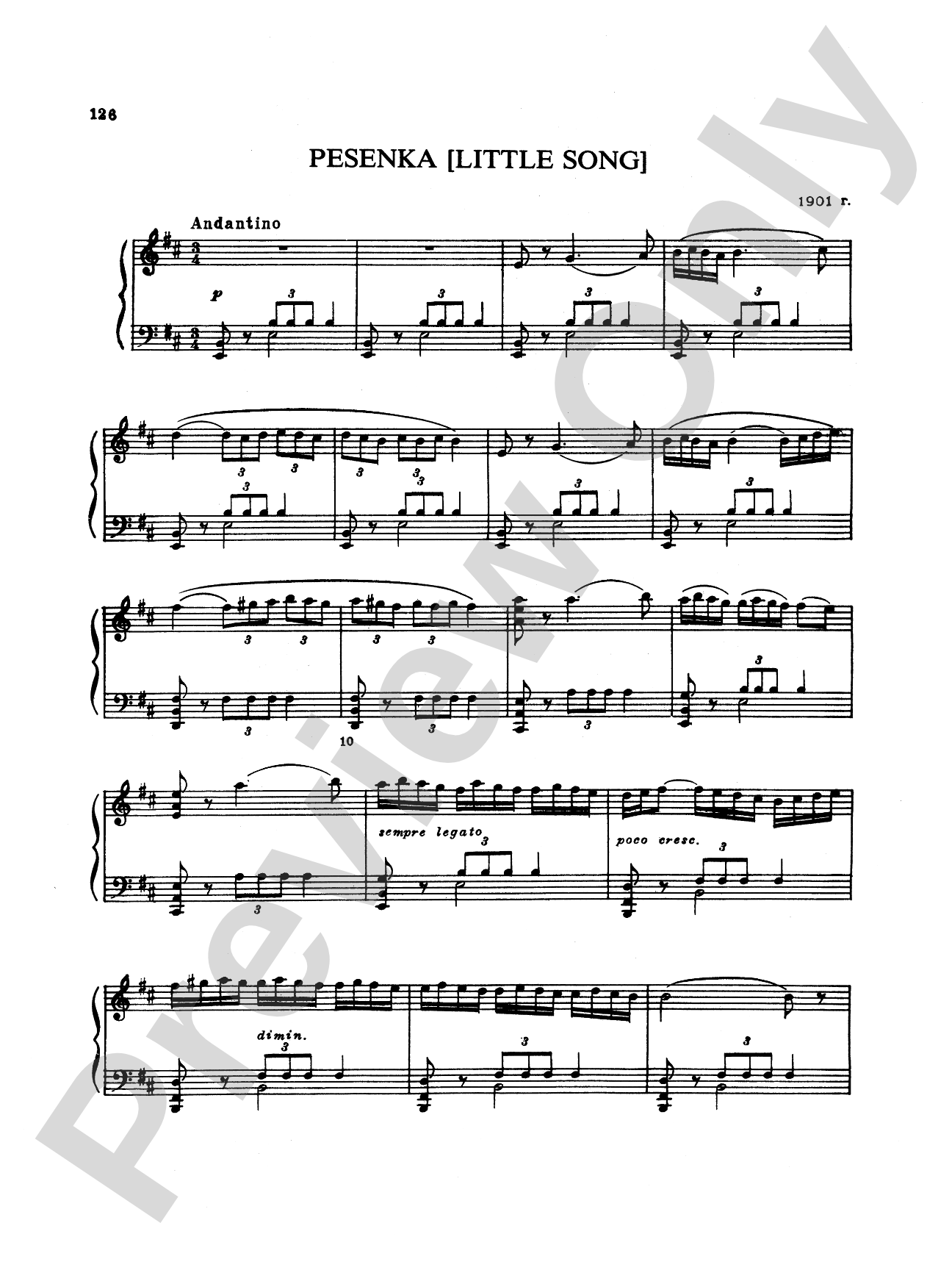
These pieces exhale the atmosphere of late 19th-century Russia: sophisticated harmonic language layered beneath moments of directness and even simplicity, as in the folk-tinged Mazurka and Pesenka. Lyrical passages sit alongside passages of structural severity, particularly in the fugues, creating music that rewards repeated listening. The overall impression is of a composer at ease with both formal rigor and expressive freedom, never sacrificing one for the other.
Who it's for
Intermediate to advanced pianists seeking Romantic-era repertoire beyond the standard canon of Chopin and Liszt. This collection serves students pursuing university-level piano study, adult recitalists looking to expand their knowledge of Russian composition, and teachers who want to introduce their advanced students to a major figure in music history through his own keyboard writing.
How to get the most out of it
- Attend closely to the harmonic color in pieces like the Romance and Prelude. Rimsky-Korsakov's chord progressions often move by unexpected intervals; let the voice leading speak through careful pedal control rather than blurring harmonic detail.
- In the variations on B.A.C.H. and the Russian Theme, each variation transforms the source material through texture and accompaniment rather than melodic development. Shape phrases to highlight these shifting colors, not just surface-level figuration.
- The fugues demand clarity of voice independence without sacrificing the legato quality Rimsky-Korsakov expects. Practice each voice separately at tempo, then layer them gradually so entries emerge distinctly but never stiffly.
- Treat the shorter character pieces (Mazurka, Pesenka, Scherzino) with the same attention to phrasing as the larger works. Even brief pieces contain harmonic subtlety that rewards patient listening and shaping.
How to use it
Program shorter pieces like the Valse, Romance, or Mazurka as contrasts to heavier works in a recital; their focused harmonic language and approachable length make them ideal encores or program fillers. The variations on B.A.C.H. and the Prelude-Impromptu work well as anchors in a concert exploring Romantic approaches to form. Alternatively, build an entire recital around this volume to showcase Russian Romanticism alongside Slavic piano traditions students may encounter in Tchaikovsky or Medtner.
Skills your students will build
- Voice independence and clarity in fugal writing
- Harmonic analysis of non-functional chord progressions and voice leading by interval
- Pedal technique that preserves harmonic definition while sustaining resonance
- Interpretive approaches to variations (recognizing how texture and accompaniment create transformation)
- Phrasing and structure in character pieces across different national styles (Waltz, Mazurka, Nocturne-like forms)
- Sight-reading moderate to advanced Russian Romantic notation and harmonic language