

Rimsky-Korsakov: Piano Solos, Volume I: Piano Book
By Nicolai Rimsky-Korsakov
Item: 00-PK-0003631

$14.99
Pickup currently not available
Buy Extra Parts (Digital PDF Download)
Parts Added to Cart!
Related Items
Piano Solos, Volume I: Piano Book |
$14.99
|
View |
Description
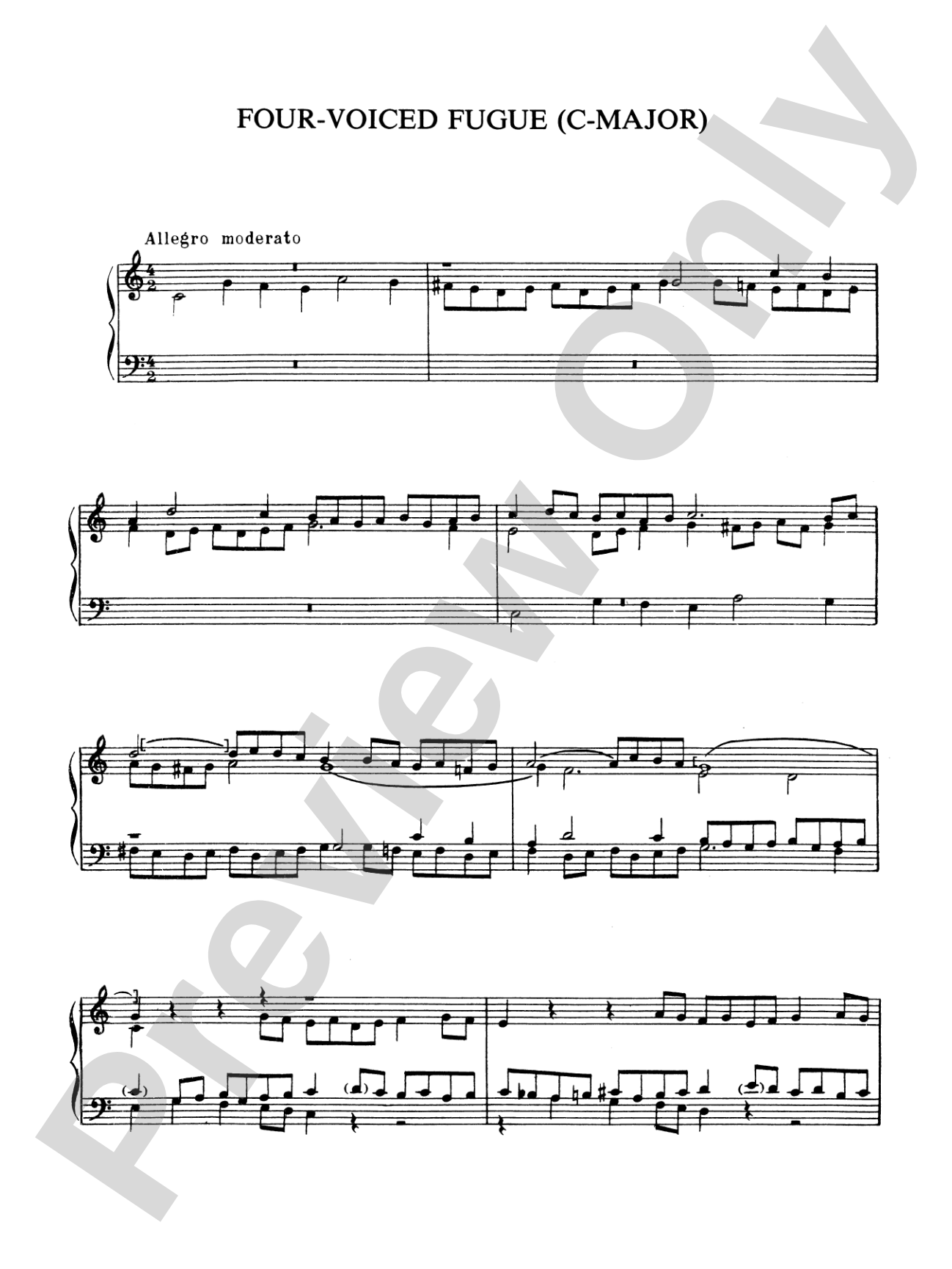
4-Voice Fugue in C Major * Two 3-Voice Fugues (G Major, F Major) * 3-Voice Fugues (E Major, F Major, C minor) * 3-Voice Fugue in D Major * Variations on the Previous Fugue * Three Fughettas on Russian Themes: 1. G minor, 2. D minor, 3. G minor * Three 4-Voice Fugues: 1. C Major, 2. Double Fugue in minor, 3. Double Fugue on B.A.C.H. (G minor)


Don't just read it, hear it, play along with it, and watch your students grow with it. In MakeMusic Cloud, Rimsky-Korsakov: Piano Solos, Volume I: Piano Book comes alive with professional accompaniment, adjustable tempo, and built-in practice tools that turn solo practice into real progress.
Open in the Player
Jump straight in and assign it today.
Start Your Free Trial
Open this title and explore the full library in minutes.
Sample Audio
No sample audio found.
Sample Video
No sample videos found.
Additional Details
Series:
Kalmus Edition
Publisher:
Alfred Music
Page Count:
68
SKU:
00-PK-0003631
More about this title
About the Composer: Nicolai Rimsky-Korsakov
Nicolai Rimsky-Korsakov (1844-1908) was a Russian composer and music teacher whose symphonic and operatic works helped define the nationalist sound of 19th-century Russian music. Beyond his fame for orchestral masterpieces like Scheherazade, he was a rigorous craftsman who valued counterpoint and formal structure, qualities evident throughout his keyboard writing.
As a professor of composition at the St. Petersburg Conservatory, Rimsky-Korsakov mentored generations of Russian composers and wrote extensively on orchestration and harmony. His piano fugues reflect both his pedagogical interests and his deep engagement with contrapuntal tradition, offering pianists a window into how a major orchestral voice thought through architectural musical problems.
Why we love this
This collection captures Rimsky-Korsakov working in the disciplined language of Bach and his descendants, yet coloring these formal structures with harmonic language unmistakably his own. Advanced pianists will find material that demands serious technical and interpretive control while rewarding that effort with genuinely engaging musical problems that sit apart from the standard Romantic piano repertoire.
What to expect
These fugues possess architectural clarity and harmonic color that merge formal rigor with Russian melodic warmth. The writing alternates between moments of crystalline counterpoint and passages where chromatic language and unexpected modulations remind the listener of Rimsky-Korsakov's orchestral voice, creating an intellectually bracing yet deeply musical experience.
Who it's for
Advanced pianists seeking serious contrapuntal repertoire beyond the standard Bach and Brahms canon will find substantial material here. This collection works well for conservatory students preparing recitals, pianists exploring nationalist-era keyboard writing, and teachers looking to introduce students to fugal forms through the voice of a major orchestral composer.
How to get the most out of it
- Attend closely to voice independence in the three- and four-voice fugues; Rimsky-Korsakov's orchestral thinking sometimes creates unexpected doublings and voice crossings that can blur if the hands don't maintain clear textural articulation.
- In the fughettas and variations, lean into the Russian melodic character without abandoning the strict contrapuntal framework; these pieces sit at the intersection of national style and formal tradition.
- Use the digital format to study the score in detail before performance; the harmonic progressions often move quickly, and familiarity with the page layout supports confident navigation and clear voicing.
How to use it
Program a single fughetta or the variations on an advanced recital to offer audiences something formally grounded yet stylistically distinctive. Alternatively, group several short fugues together to create a sustained exploration of how one major voice treated contrapuntal forms; this approach works particularly well for concerts exploring keyboard tradition across different national schools.
Skills your students will build
- Voice leading and independence in multi-voice counterpoint
- Reading and interpreting fugal forms (three-voice, four-voice, double fugues)
- Balancing harmonic color with structural clarity
- Interpreting Russian melodic character within contrapuntal frameworks
- Navigating chromatic harmony and unexpected modulations in formal contexts