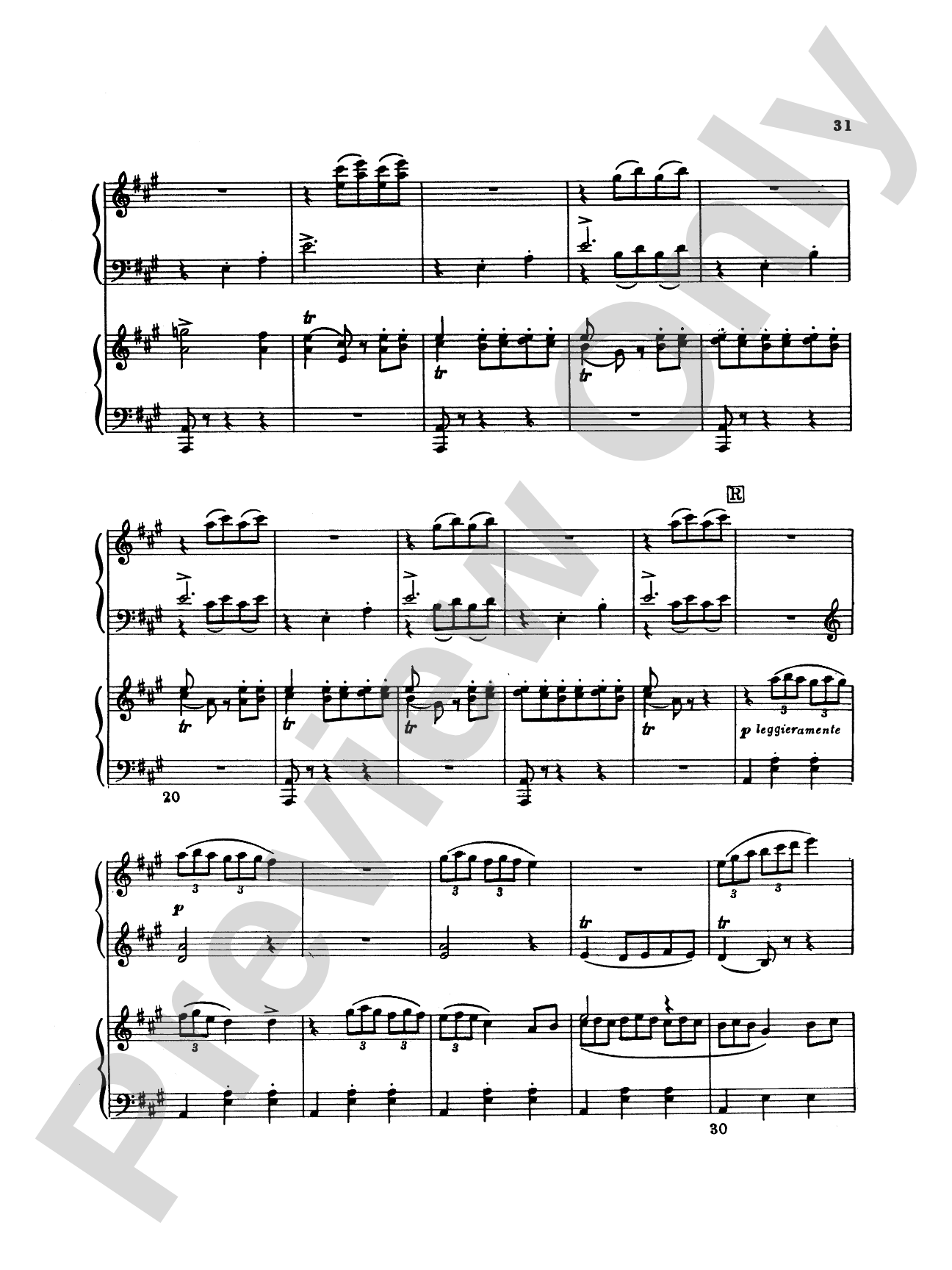
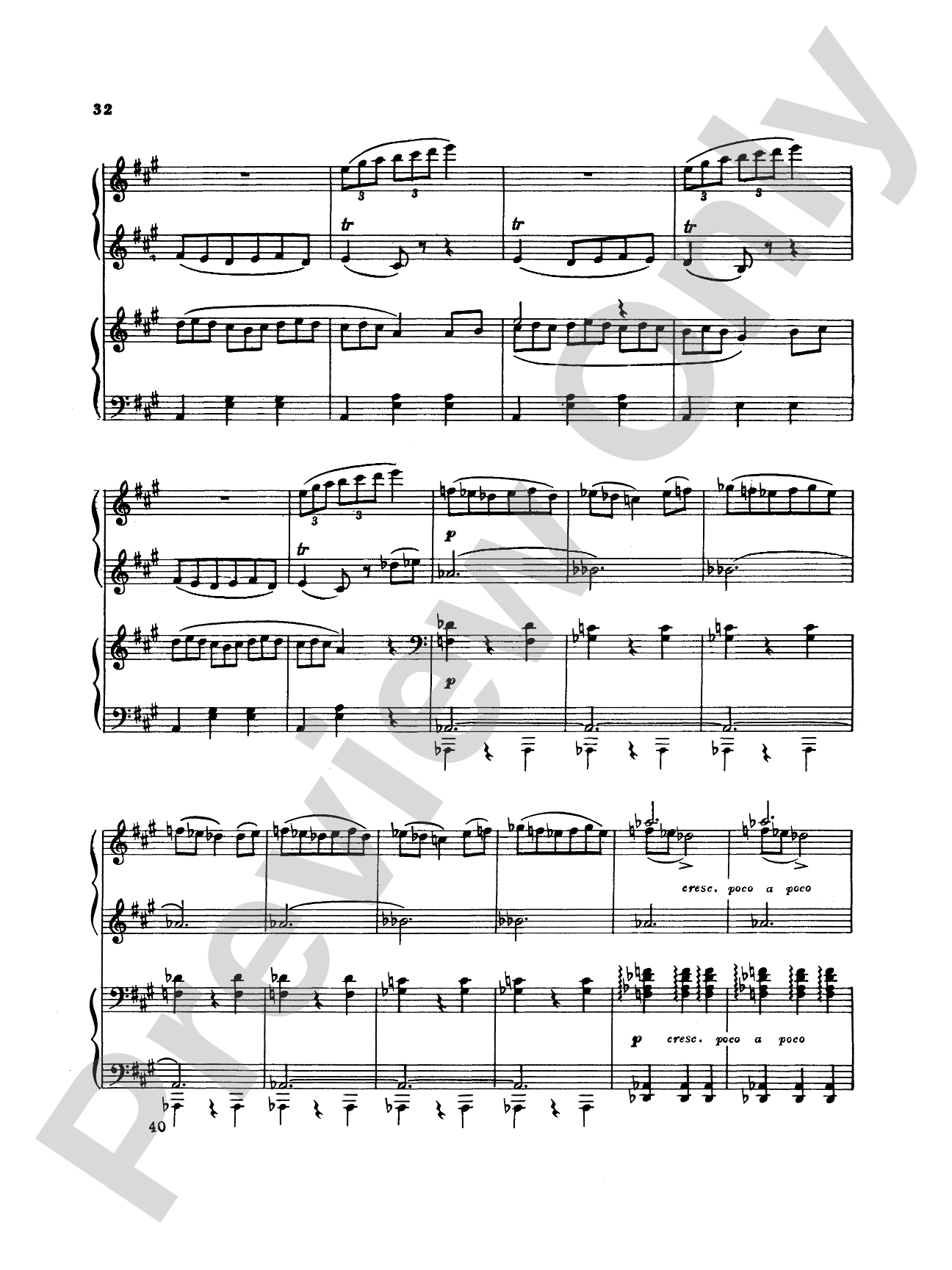
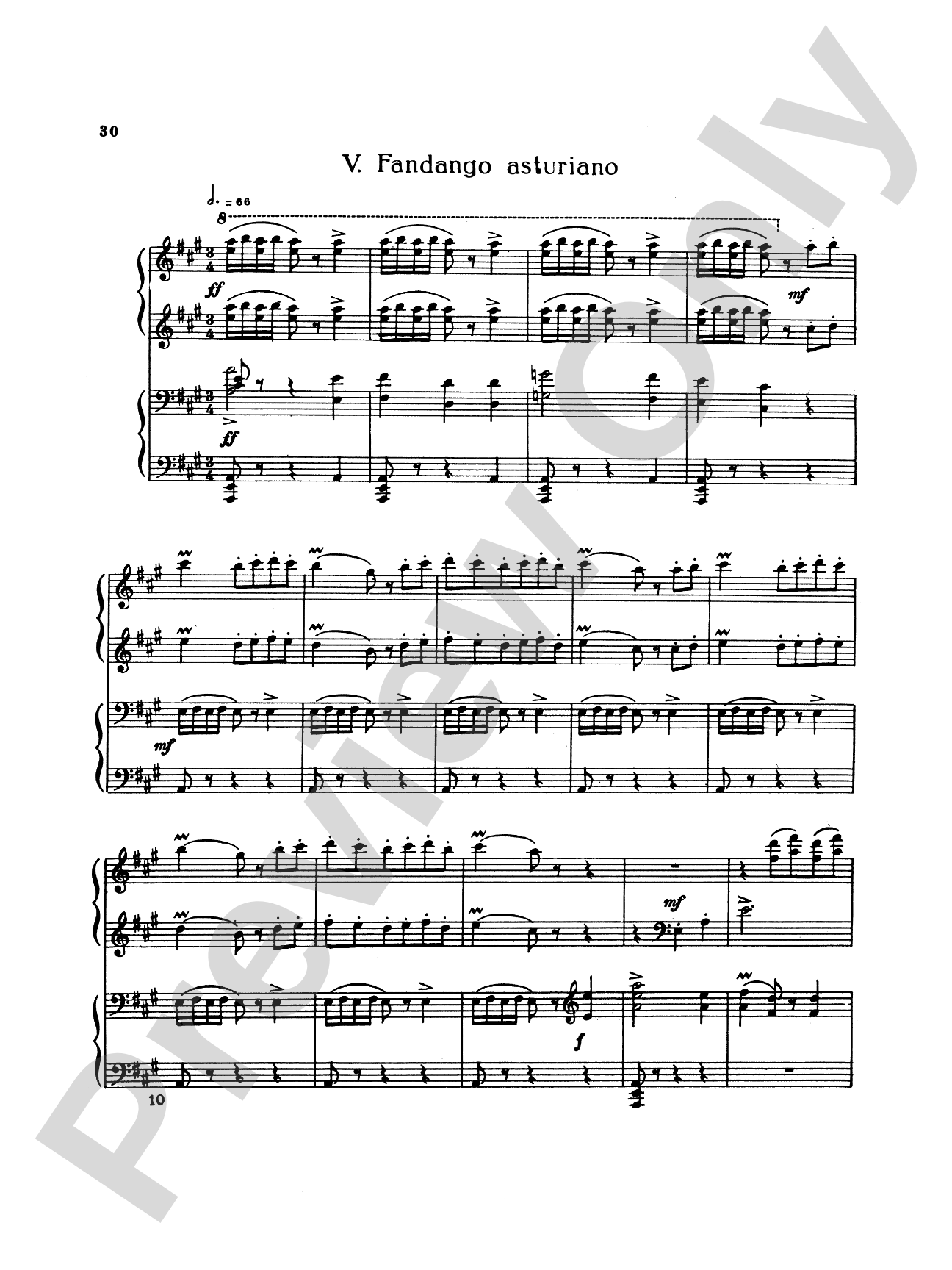
Rimsky-Korsakov: Capriccio Espagnole Piano Duet Sheet Music Preview

Rimsky-Korsakov: Capriccio Espagnole Piano Duet

By Nicolai Rimsky-Korsakov

Item: 00-PC-0011268

Digital Download
$1.99
Description
The Capriccio Espagnole for symphonic orchestra, composition No. 34, was written in 1887. This edition is based on the manuscript of the arrangement in the Saltykov-Shchedrin Public Ligrary, on the arrangement published by Beliaiev, and on the printed scrore in volume 21 of The Complete Works of Rimsky-Korsakov, published by Muzgiz in 1958.

Don't just read it, hear it, play along with it, and watch your students grow with it. In MakeMusic Cloud, Rimsky-Korsakov: Capriccio Espagnole Piano Duet comes alive with professional accompaniment, adjustable tempo, and built-in practice tools that turn solo practice into real progress.

Sample Audio
No sample audio found.
Sample Video
Additional Details
Series: Kalmus Edition
Publisher: Alfred Music
Page Count: 48
SKU: 00-PC-0011268

More about this title

About the Composer: Nicolai Rimsky-Korsakov

Nicolai Rimsky-Korsakov (1844-1908) was a Russian composer and master orchestrator whose innovative approach to color and instrumental combination shaped orchestral music for generations. A professor of composition and later director of the Imperial Chapel, he treated the orchestra as a palette, developing new techniques for blending timbres and creating vivid musical imagery that influenced composers across Europe and beyond.

Why we love this

Capriccio Espagnole distills some of Rimsky-Korsakov's most thrilling orchestral writing into a format that makes it accessible to advanced pianists without losing any of the work's rhythmic vitality and Spanish flair. The duet arrangement preserves the brilliant passagework and colorful harmonies while giving both players substantial, rewarding material that demands real musical maturity and technical control.

What to expect

Capriccio Espagnole sparkles with Spanish flavor, bright rhythmic energy, and moments of genuine grandeur. The writing conjures guitar strums, castanets, and festive street scenes, moving from lyrical passages to whirlwind displays of keyboard dexterity that feel both exhilarating and infectious.

Who it's for

Advanced pianists preparing for duet recitals or ensemble concerts will find this arrangement both musically satisfying and technically substantial. It suits conservatory students and serious amateurs who have mastered standard repertoire and are ready to tackle virtuosic writing with real orchestral color.

How to get the most out of it

  • Balance the parts carefully so that soloistic material sings through while accompaniment figures stay transparent. The secondo part often carries important harmonic and rhythmic foundation; resist the urge to let it fade into the background.
  • Attend to the Spanish rhythmic character throughout, particularly the syncopations and hemiola patterns. Precision and vitality matter more than romantic rubato in passages built on folk idioms.
  • Use the metronome selectively during rehearsal. Lock the structural pulse in sections with fast passagework, then allow yourself controlled flexibility only in marked ritardandi or where the score indicates expressive freedom.
  • Coordinate hand crossings and position shifts visually or through light communication. Several passages require quick navigation of the keyboard; practice the transitions away from tempo first.

How to use it

This duet works beautifully as a centerpiece on a recital of Romantic keyboard music, or as a high-energy showpiece late in a program where its virtuosity and rhythmic drive can electrify the room. It pairs well alongside other Spanish-inflected works or as a foil to deeper, more introspective repertoire.

Skills your students will build

  • Executing rapid passagework and scalar figures with evenness and clarity
  • Balancing duet sonorities so that melodic and harmonic material both project
  • Maintaining rhythmic vitality through Spanish-inflected meters and syncopations
  • Coordinating independence of hands across keyboard positions and register shifts
  • Interpreting orchestral color and texture at the piano

You May Also Like