Riley's Rhapsody Sheet Music Preview

Riley's Rhapsody: Piano

By Carolyn Miller

Item: 98-DW9251

Digital Download
$3.50
Description
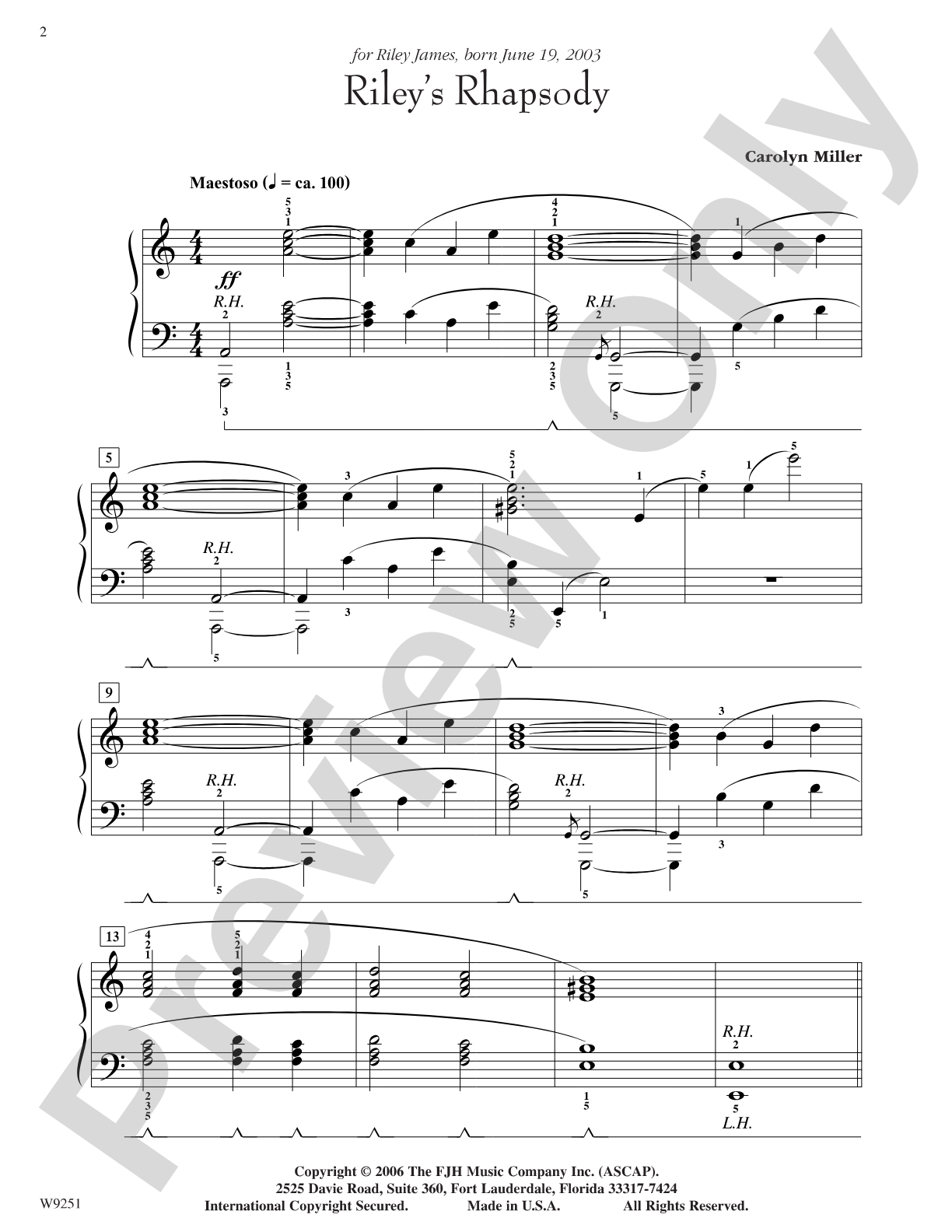
Technical and pedagogical challenges are explored with this creative Intermediate level piece. Contains contrasting melodic and rhythmic sections, and opens with a majestic Maestoso beginning where both hands mirror each other playing octaves. Single note melodies, triads, and a flurry of sixteenth note patterns are all put to show in this piece offering a wide variety of musical technique.

Riley's Rhapsody: Piano isn't in MakeMusic Cloud just yet...but it could be. Let us know you'd like to see it, and you'll help shape what comes next. In the meantime, start a free trial and dive into thousands of interactive titles your students can play along with today.

Sample Audio
No sample audio found.
Sample Video
Additional Details
Series: Written For You
Publisher: The FJH Music Company, Inc.
SKU: 98-DW9251

More about this title

About the Composer: Carolyn Miller

Carolyn Miller is a prolific composer whose output centers on accessible, musically substantial piano repertoire for students at all levels. Her work is characterized by clear harmonic writing, pedagogically thoughtful technical demands, and a genuine sense of musical shape that engages both player and listener.

Why we love this

Riley's Rhapsody succeeds because it takes the intermediate student seriously. The piece genuinely explores different technical textures and moods without resorting to oversimplification, and the mirrored octave opening immediately signals that something substantial is coming. Students feel accomplished when they finish this one.

What to expect

Riley's Rhapsody opens with grandeur and confidence, then shifts between moments of lyrical melody and driving rhythmic energy. The piece feels assured and colorful rather than precious, with enough technical firepower to satisfy an advancing student's desire to play something genuinely challenging.

Who it's for

Intermediate pianists ready to move beyond single-texture pieces and tackle a work with real structural variety. This is ideal for students who have solid hand independence and basic velocity control but are still building confidence with faster passagework and dynamic shaping.

How to get the most out of it

  • Shape the opening octaves with clear weight and control; the mirroring effect only lands if both hands move with identical intention and voicing.
  • Isolate the sixteenth note passages and establish a comfortable tempo for them first, then let the surrounding material settle into that foundation rather than rushing into the faster sections.
  • Differentiate the contrasting sections through genuine character work. The melodic passages should breathe differently than the rhythmic ones, not just play at different speeds.
  • Balance single-note melodies against triadic harmony by letting the melody line sing without overwhelming the harmonic context that supports it.

How to use it

Program this as a solo recital piece for a student preparing to move toward more ambitious repertoire, or pair it with another intermediate work to create a short student showcase featuring distinct musical voices. It also works well as a performance piece during an end-of-year student concert where teachers want to highlight the range of student achievement at the intermediate level.

Skills your students will build

  • Playing octaves with coordination and matching tone between hands
  • Managing contrasting rhythmic and melodic textures within a single piece
  • Executing fast sixteenth note patterns with clarity and control
  • Balancing single-note melody lines with harmonic accompaniment
  • Shaping longer musical phrases with intentional dynamic and tonal variety

You May Also Like