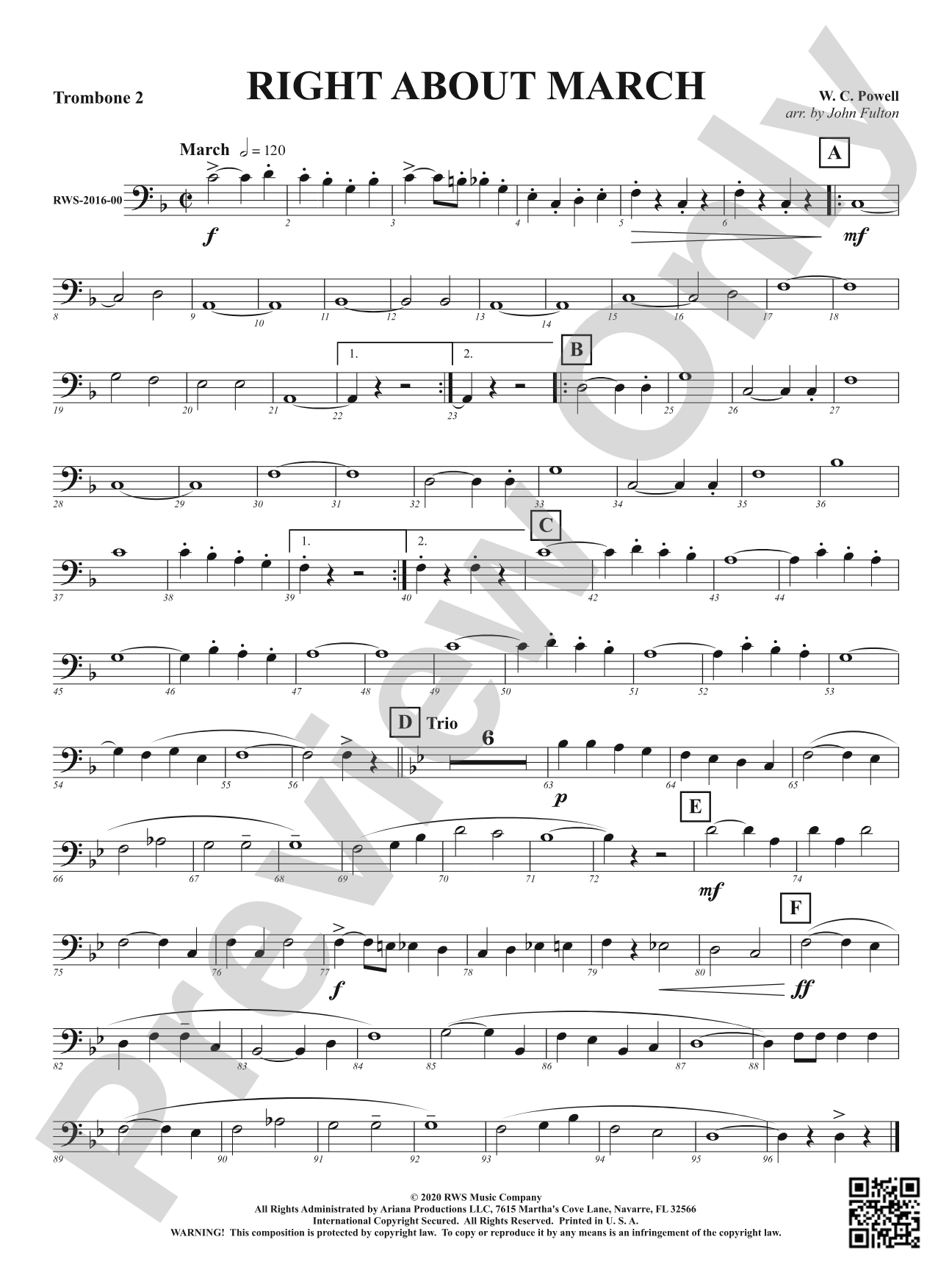
Right About March: 2nd Trombone Sheet Music Preview

Right About March: 2nd Trombone

Arranged by John Fulton

Grade: 3

Item: 98-PC-RWS2016_TN2

Digital Download
$3.99
Description
Originally composed for piano in 1908 by W. C. Powell, Right About March has been arranged for the modern concert band by John Fulton. This upbeat march works well as a concert opener and is appropriate for all seasons, including music performance assessment.

Original Item#: RWS-2016-00

Right About March: 2nd Trombone isn't in MakeMusic Cloud just yet...but it could be. Let us know you'd like to see it, and you'll help shape what comes next. In the meantime, start a free trial and dive into thousands of interactive titles your students can play along with today.

Sample Audio
0:00
0:00
Sample Video
Additional Details
Series: RWS - Concert Band
Publisher: RWS Music Company
SKU: 98-PC-RWS2016_TN2

More about this title

Why we love this

John Fulton's arrangement transforms a 1908 piano march into a piece that sits comfortably in the Grade 3 concert band repertoire. The orchestration balances accessibility with musicality, giving young ensembles a march that sounds polished without demanding advanced technical facility. It's the kind of arrangement that feels naturally composed for band, not simply transcribed.

What to expect

Bright and forward-moving, the piece carries the character of a traditional concert march. The upbeat energy and straightforward harmonic language make it approachable for audiences and performers alike, evoking the optimism of early 20th-century band music without feeling dated.

Who it's for

This arrangement works well for developing concert bands working toward Grade 3 proficiency. It suits ensembles building confidence with march style and looking for a professional-sounding opener that doesn't demand extensive rehearsal time.

How to get the most out of it

  • Keep the tempo brisk but controlled; resist the urge to rush the opening. A steady, marching pulse establishes the character immediately and gives the ensemble confidence.
  • Balance the melody between your trumpet and woodwind sections so the primary theme cuts through without overwhelming the harmonic foundation.
  • Shape phrases with subtle dynamics. Even a march benefits from light and shade; let the sections breathe rather than playing at one dynamic throughout.
  • Ensure the low brass and percussion lock together in the accompaniment figures. A tight rhythm section makes the entire band sound more unified.

How to use it

Program this as a concert opener to establish energy and set a positive tone. Its versatility also makes it suitable for music performance assessments where you need a piece that allows students to demonstrate musicality and ensemble balance in a familiar genre.

Skills your students will build

  • march style interpretation and phrasing
  • ensemble balance between melody and accompaniment voices
  • steady tempo maintenance in a traditionally styled form
  • coordination of rhythm section parts with wind lines

You May Also Like