
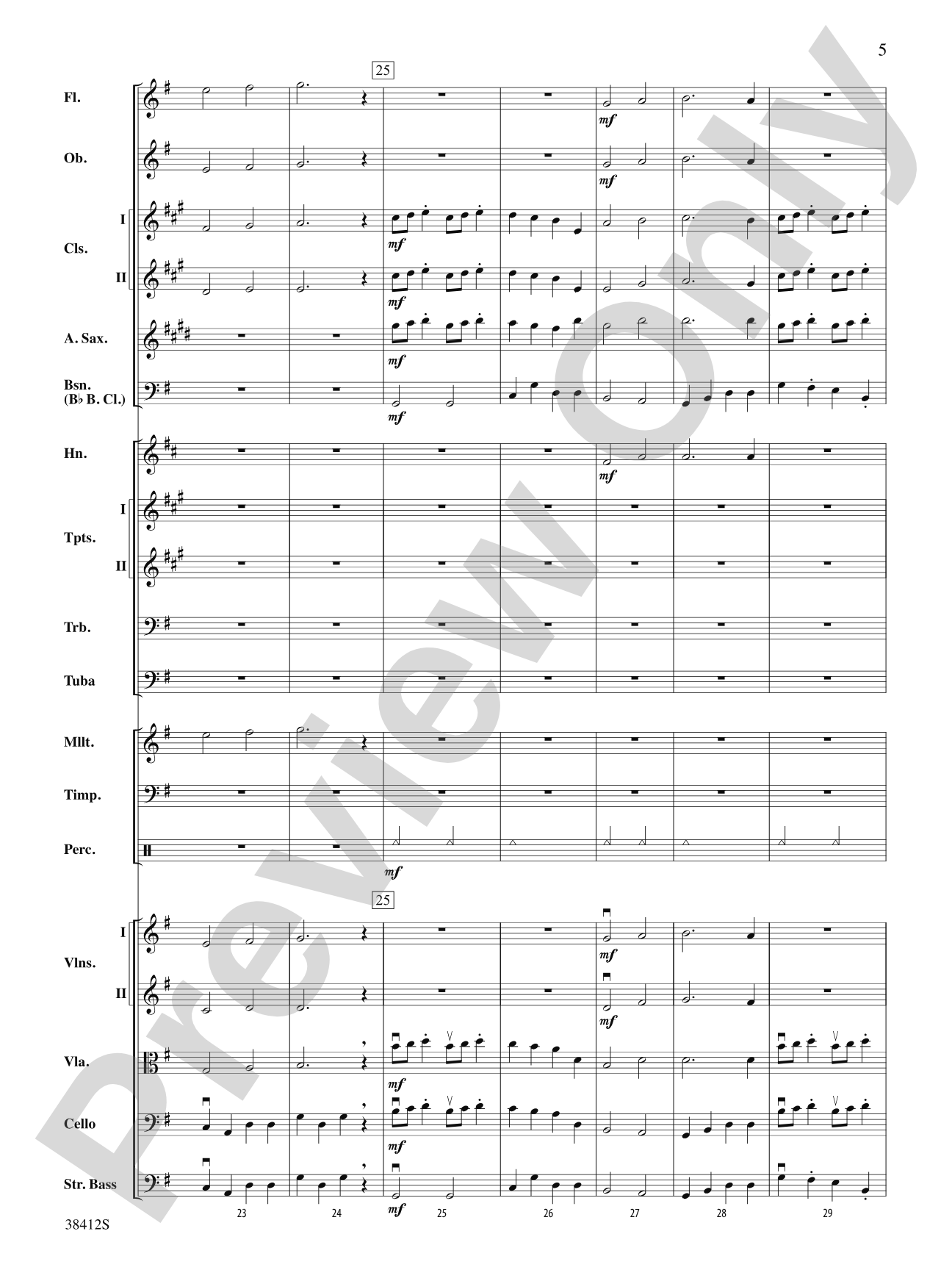
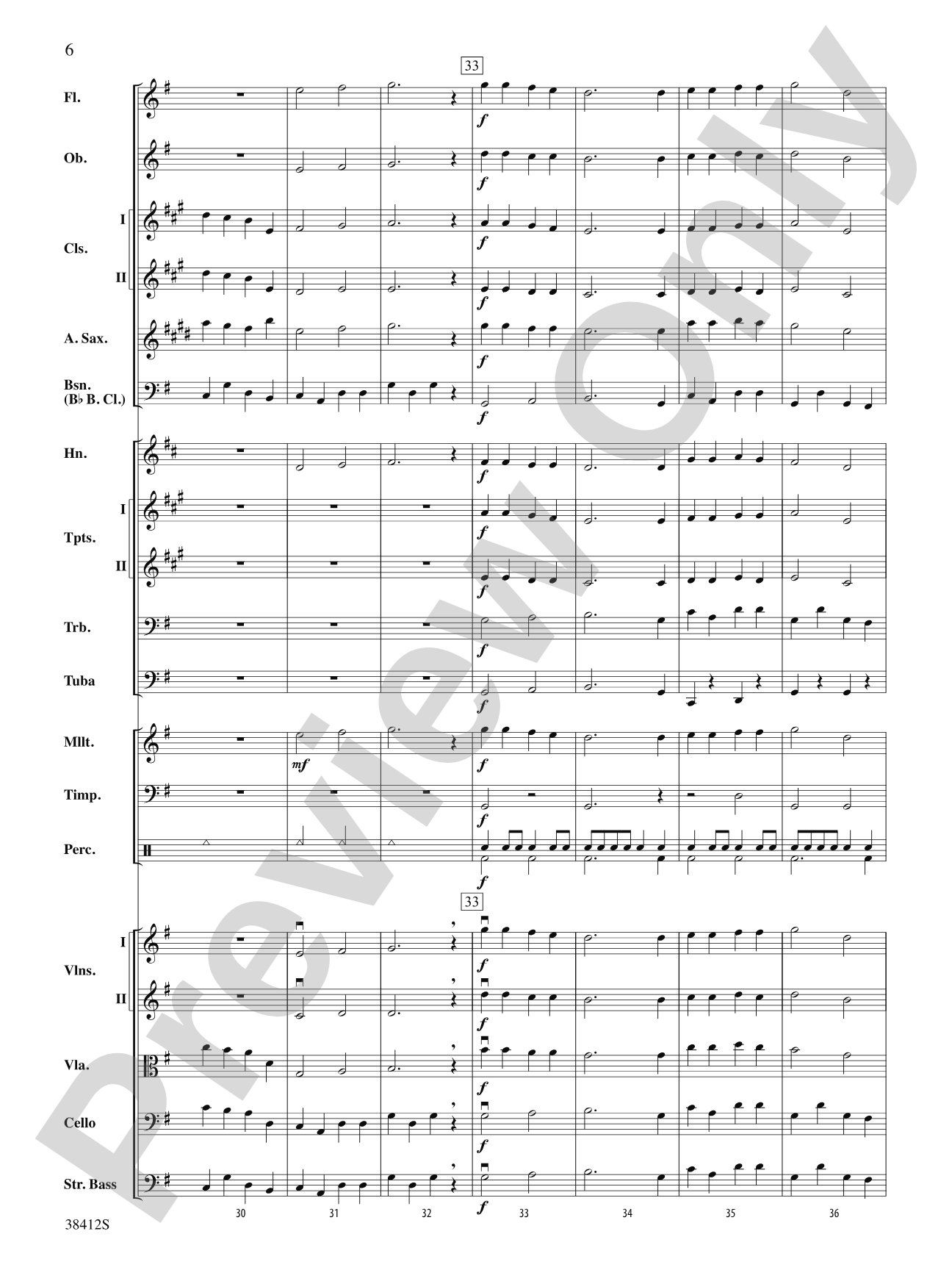
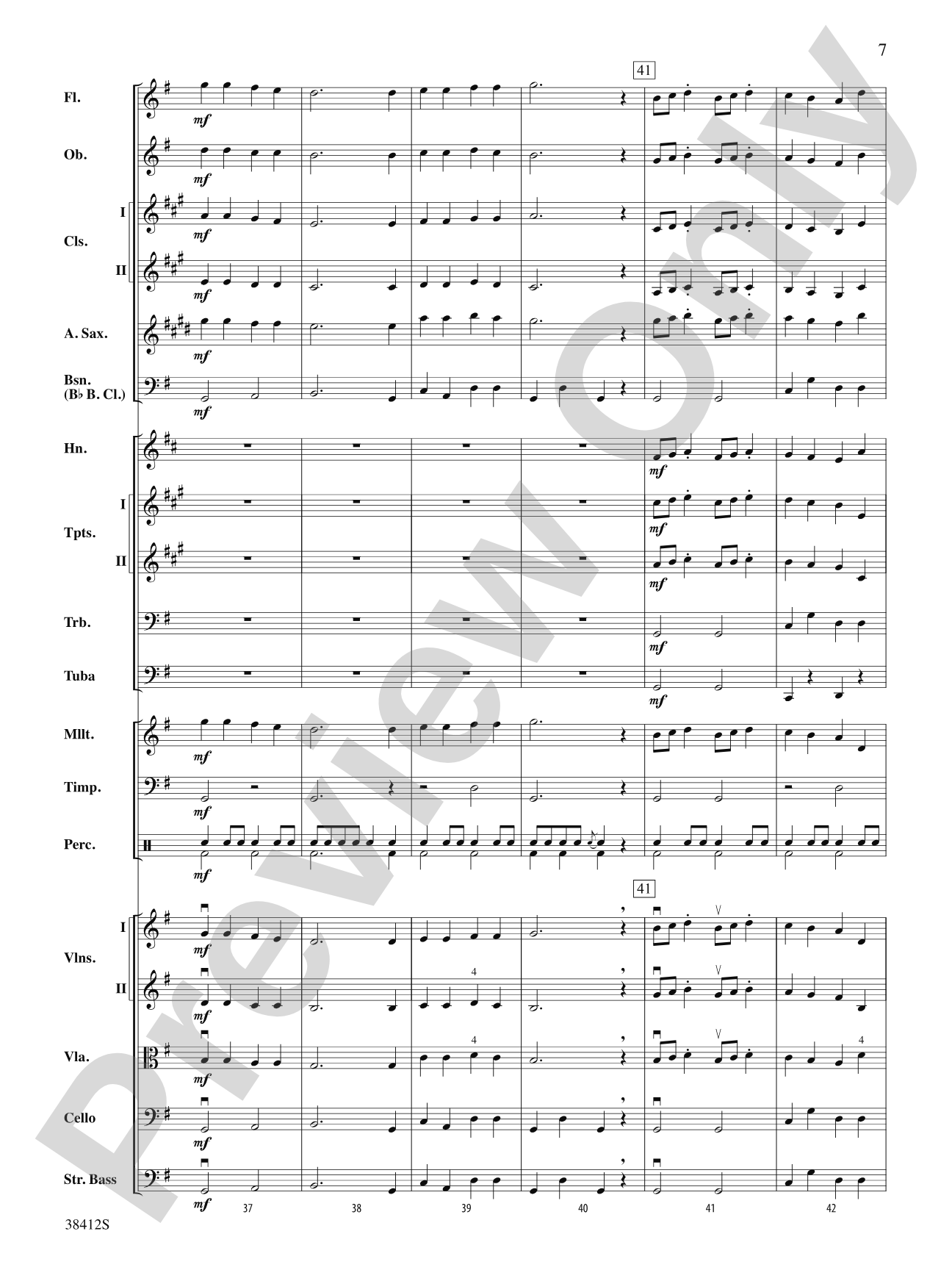
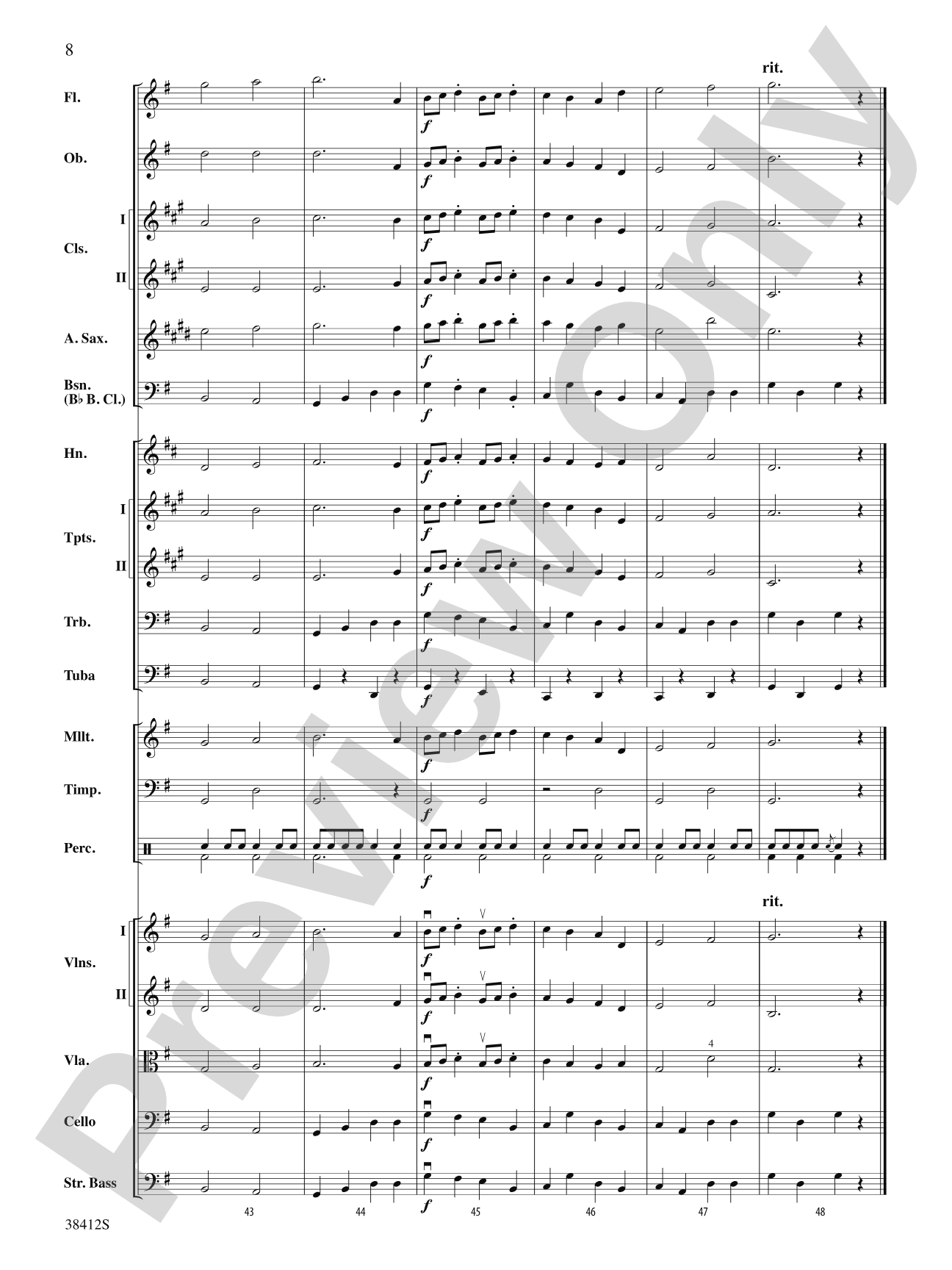

Rigaudon: Score
By Henry Purcell / arr. Bob Phillips
Grade: 1.5
Item: 00-PR-0003791
$7.00
Pickup currently not available
Description
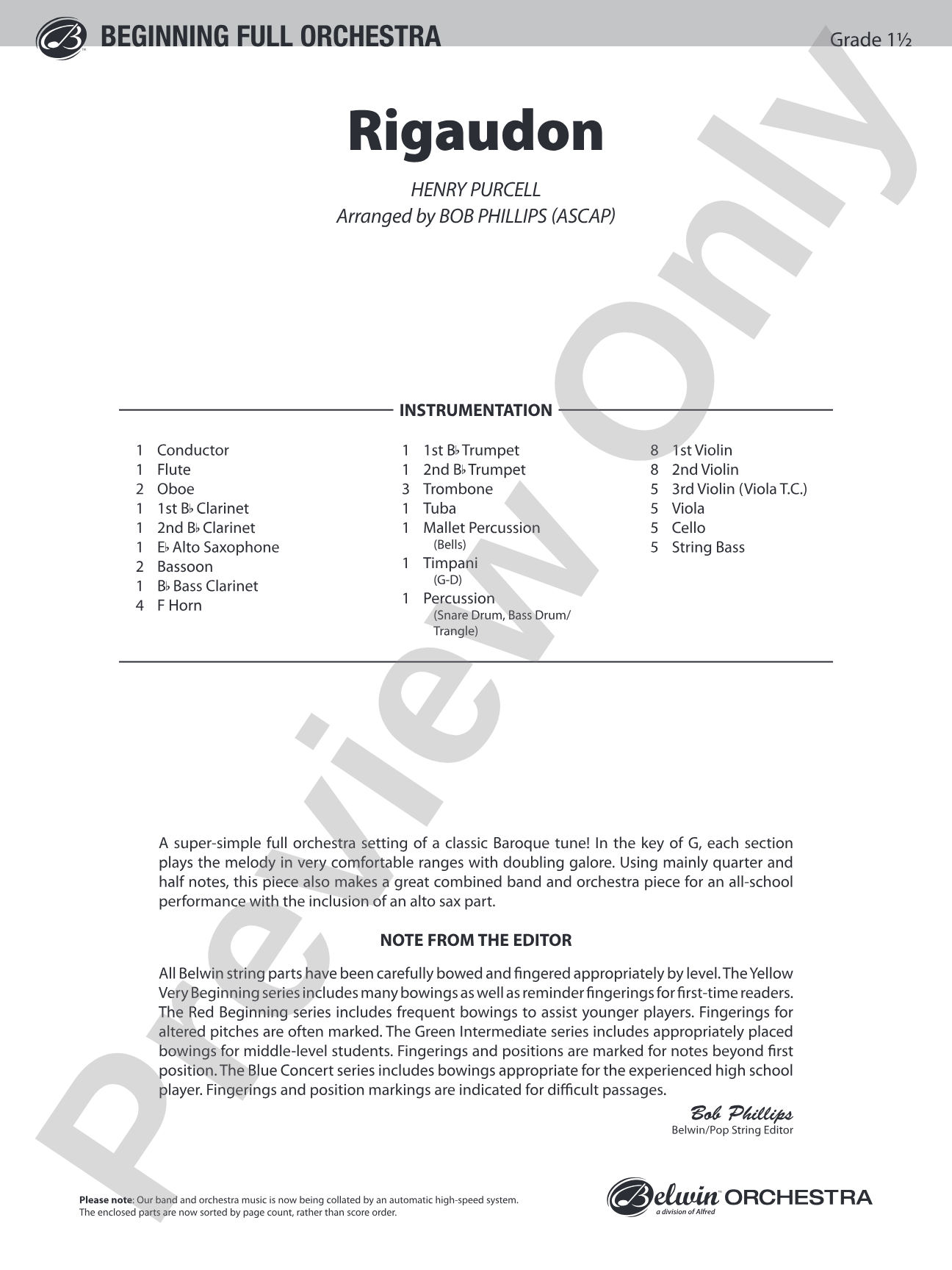
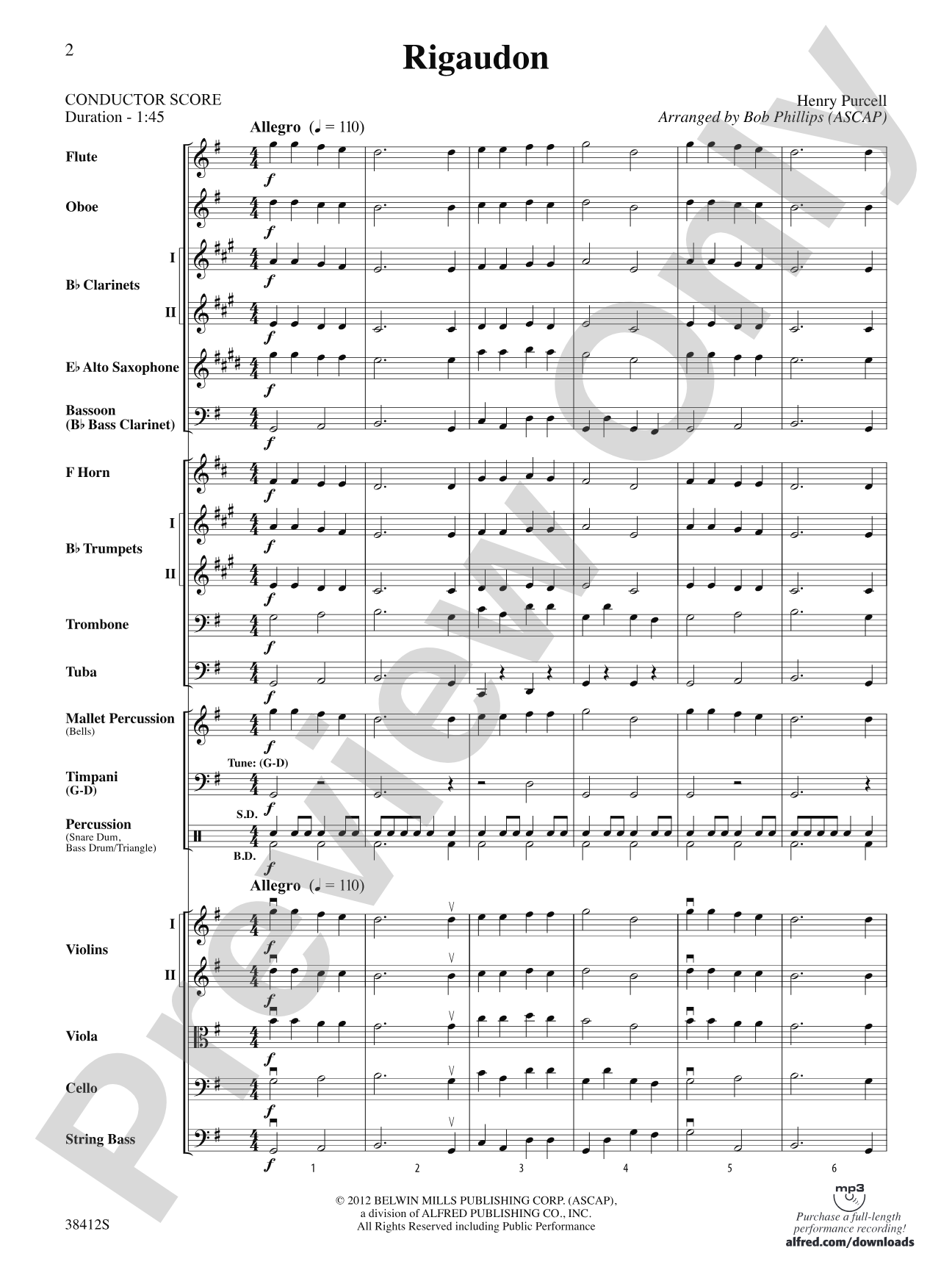
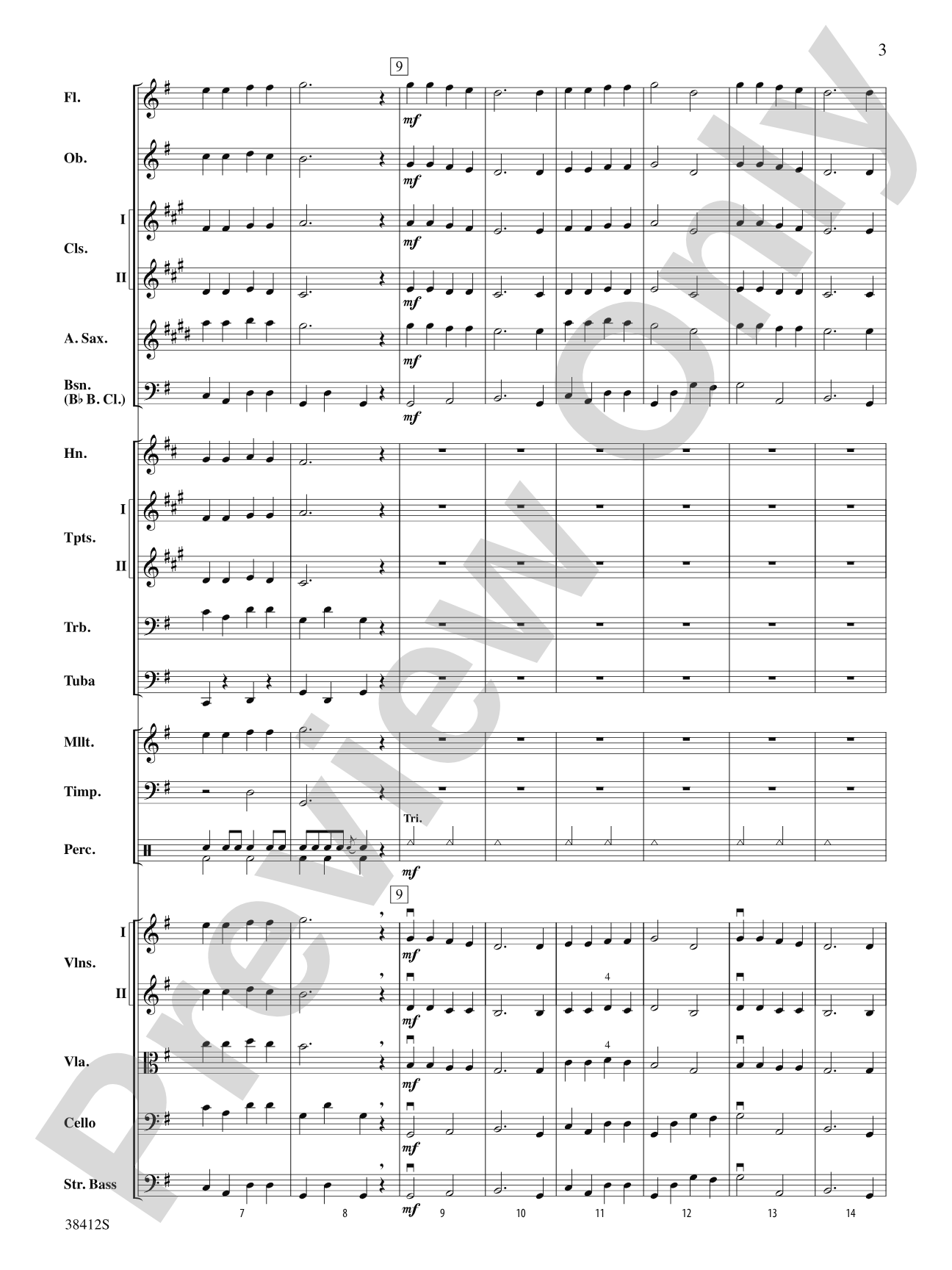
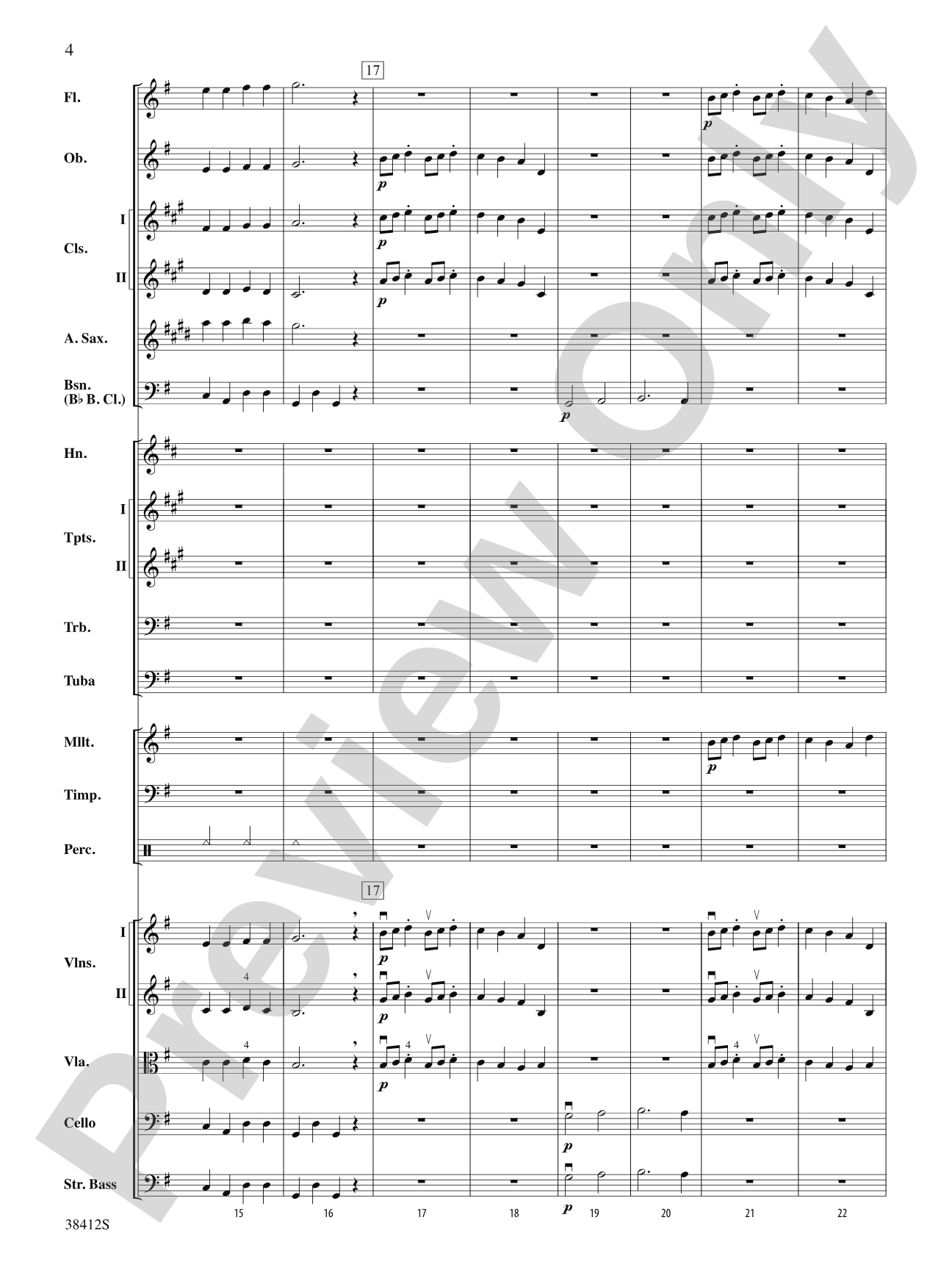
A super-simple full orchestra setting of a classic Baroque tune! In the key of G, each section plays the melody in very comfortable ranges with doubling galore. Using mainly quarter and half notes, this piece also makes a great combined band and orchestra piece for an all-school performance with the inclusion of an alto sax part. This title is available in MakeMusic Cloud.


Don't just read it, hear it, play along with it, and watch your students grow with it. In MakeMusic Cloud, Rigaudon: Score comes alive with professional accompaniment, adjustable tempo, and built-in practice tools that turn solo practice into real progress.
Open in the Player
Jump straight in and assign it today.
Start Your Free Trial
Open this title and explore the full library in minutes.
Sample Audio
1
Audio File
--:--
0:00
0:00
Sample Video
No sample videos found.
Additional Details
Series:
Belwin Beginning Full Orchestra
Publisher:
Alfred Music
Page Count:
106
SKU:
00-PR-0003791
More about this title
About the Composer: Henry Purcell
Henry Purcell (1659-1695) stands as England's greatest Baroque composer and a figure of international significance during the 17th century. His prolific output spanned sacred music, theatrical works, chamber compositions, and instrumental pieces that revealed a sophisticated harmonic language and deep melodic gift. Purcell's influence extended far beyond his lifetime; his music remained in the repertoire continuously and shaped English musical identity for generations.
Why we love this
This arrangement captures what makes Purcell's melodies enduring: elegant contour, clear phrasing, and immediate appeal. The orchestration hands material generously across all sections without asking for technical virtuosity, which means your beginning ensemble can sound genuinely musical from the very first rehearsal. The inclusion of an alto sax part transforms this into a genuine all-school event, accommodating both band and orchestra students in a single, cohesive performance.
What to expect
A Rigaudon is a lively, energetic French dance, and Purcell's version dances with courtly grace. The straightforward rhythmic profile and comfortable ranges let young musicians focus on phrasing and ensemble listening rather than mechanical execution, making the piece feel accessible and genuinely rewarding to perform.
Who it's for
This score and parts serve beginning orchestras and combined band-orchestra ensembles ready for their first Baroque masterwork. Teachers seeking repertoire that demands musicality rather than technical display will find a reliable teaching piece here.
How to get the most out of it
- Balance the doublings by having each section listen across the ensemble rather than playing in isolation; this creates blend and prevents any one color from dominating the melody.
- Shape the quarter-note figures with light articulation and consistent phrasing so that what appears simple on the page becomes graceful in sound.
- Allow the half notes their full value and breathe naturally between phrases; resist the urge to rush, as Baroque melodies rely on proportional spacing to communicate clearly.
- Use the parts as written to identify which sections carry the melody at each moment, then rehearse those sections together first to establish a unified interpretation before bringing everyone in.
How to use it
Program this early in a concert to establish a polished, classical foundation before moving to contemporary or more technically demanding works. The Baroque style provides strong contrast to modern pieces and offers a natural opening for an all-school concert that includes both instrumental groups; the melody's clarity reads well in any concert hall without elaborate staging.
Skills your students will build
- Reading score with multiple clefs and transpositions (concert pitch)
- Baroque articulation and phrasing conventions
- Ensemble balance across full orchestra seating
- Listening within sections to achieve melodic unison
- Sustaining half notes with consistent tone quality