
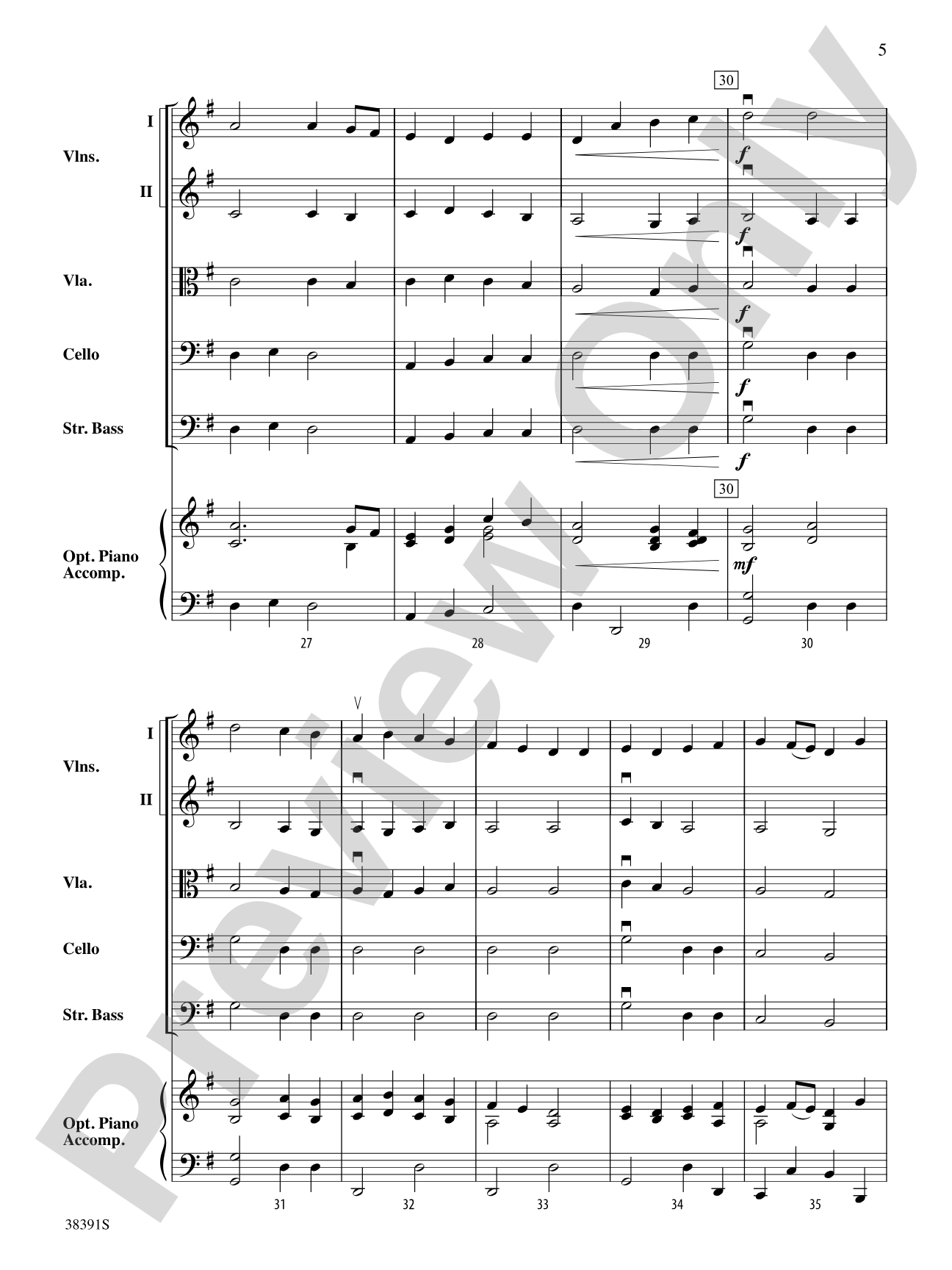
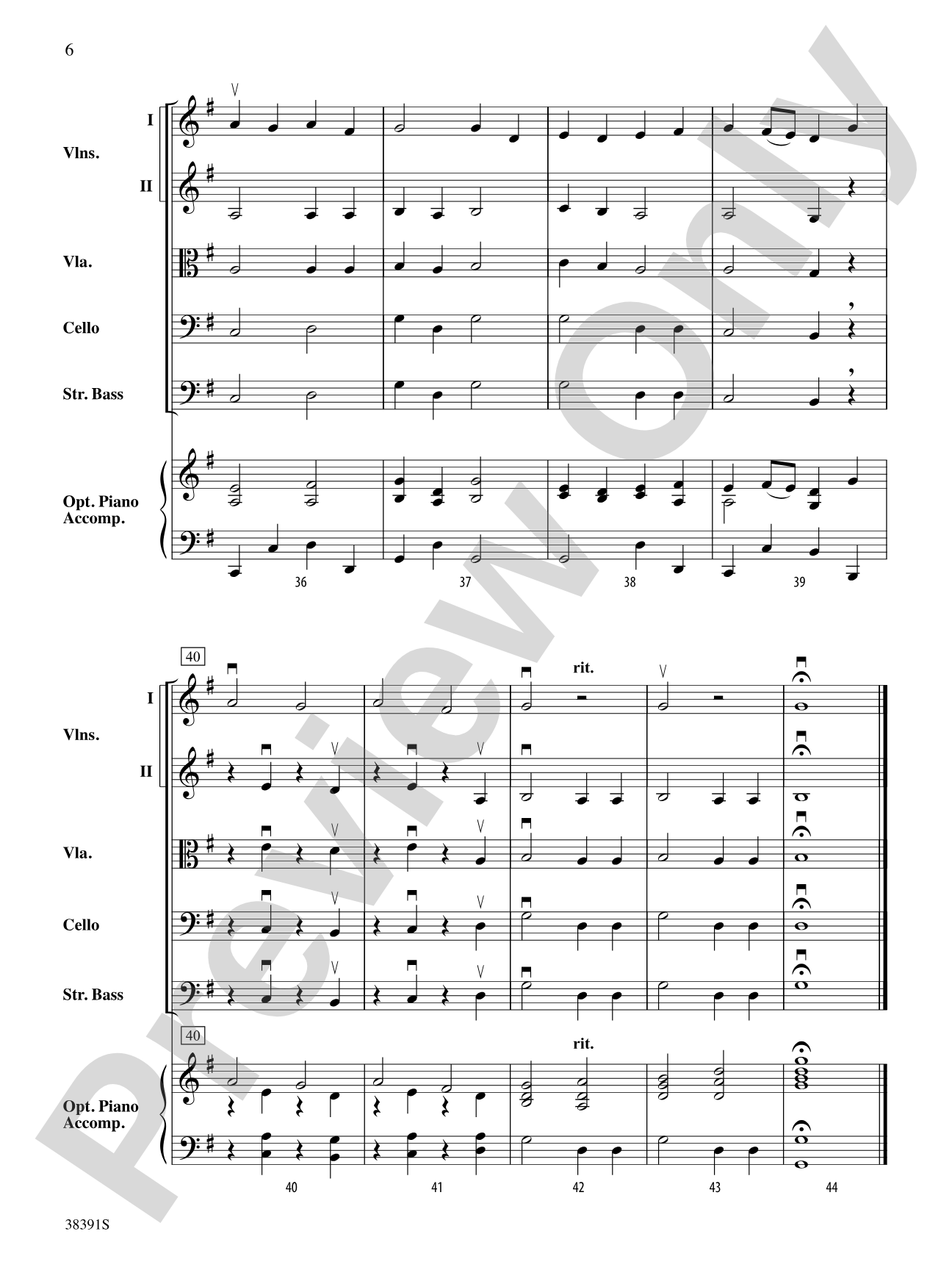



Rigaudon: Score
By André Campra / arr. Douglas E. Wagner
Grade: 1
Item: 00-PR-0003771
$8.00
Pickup currently not available
Description
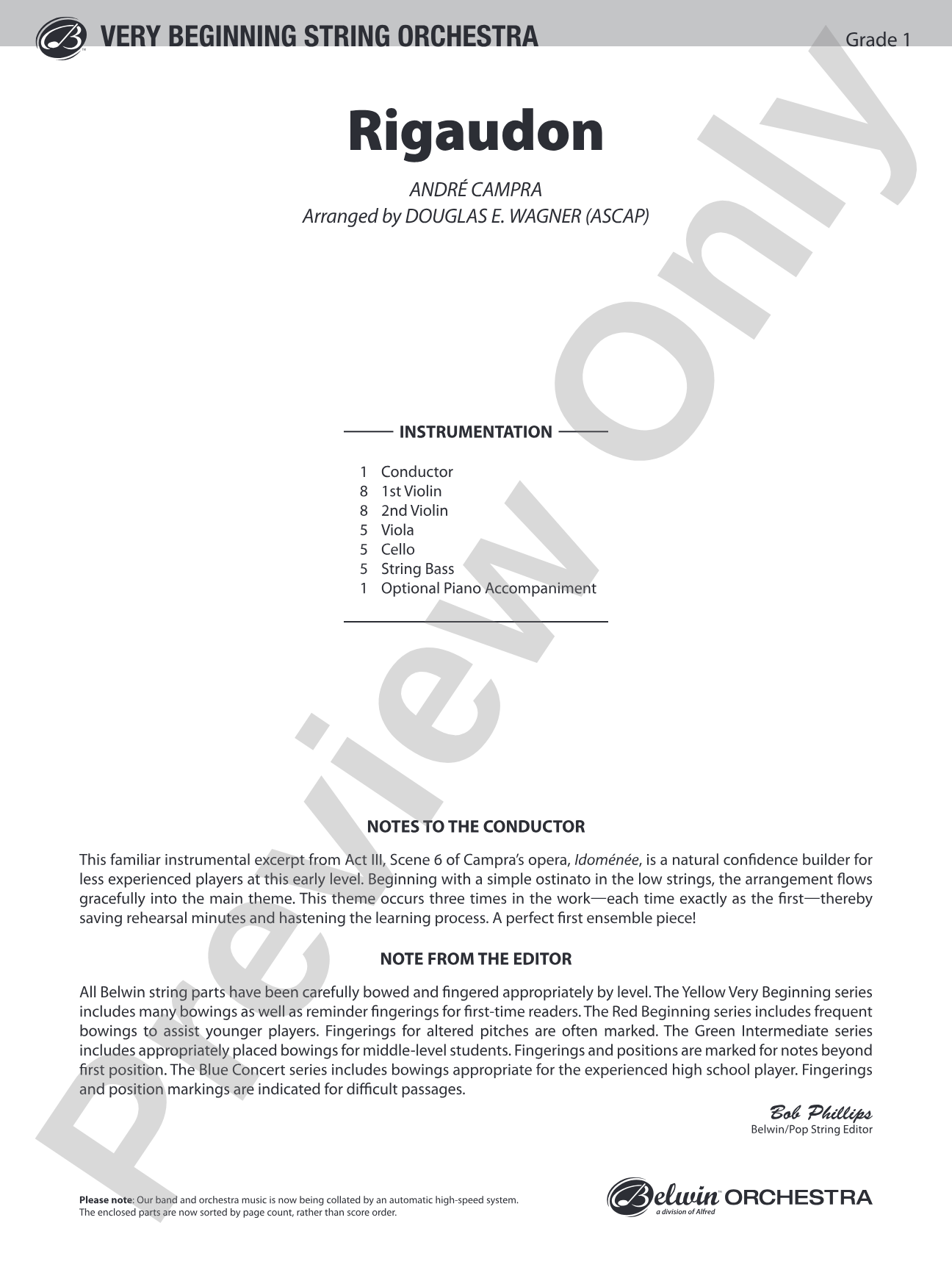
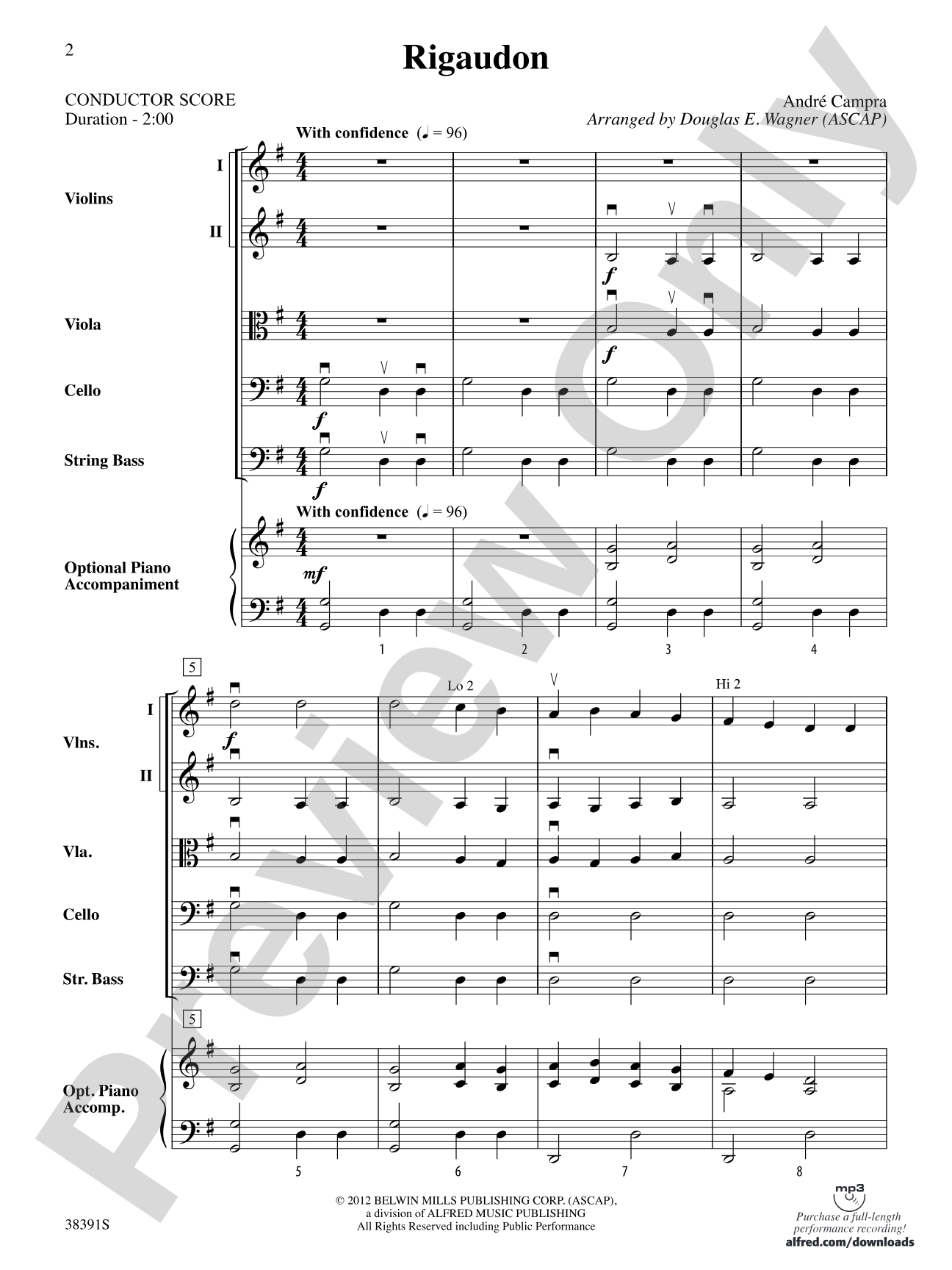
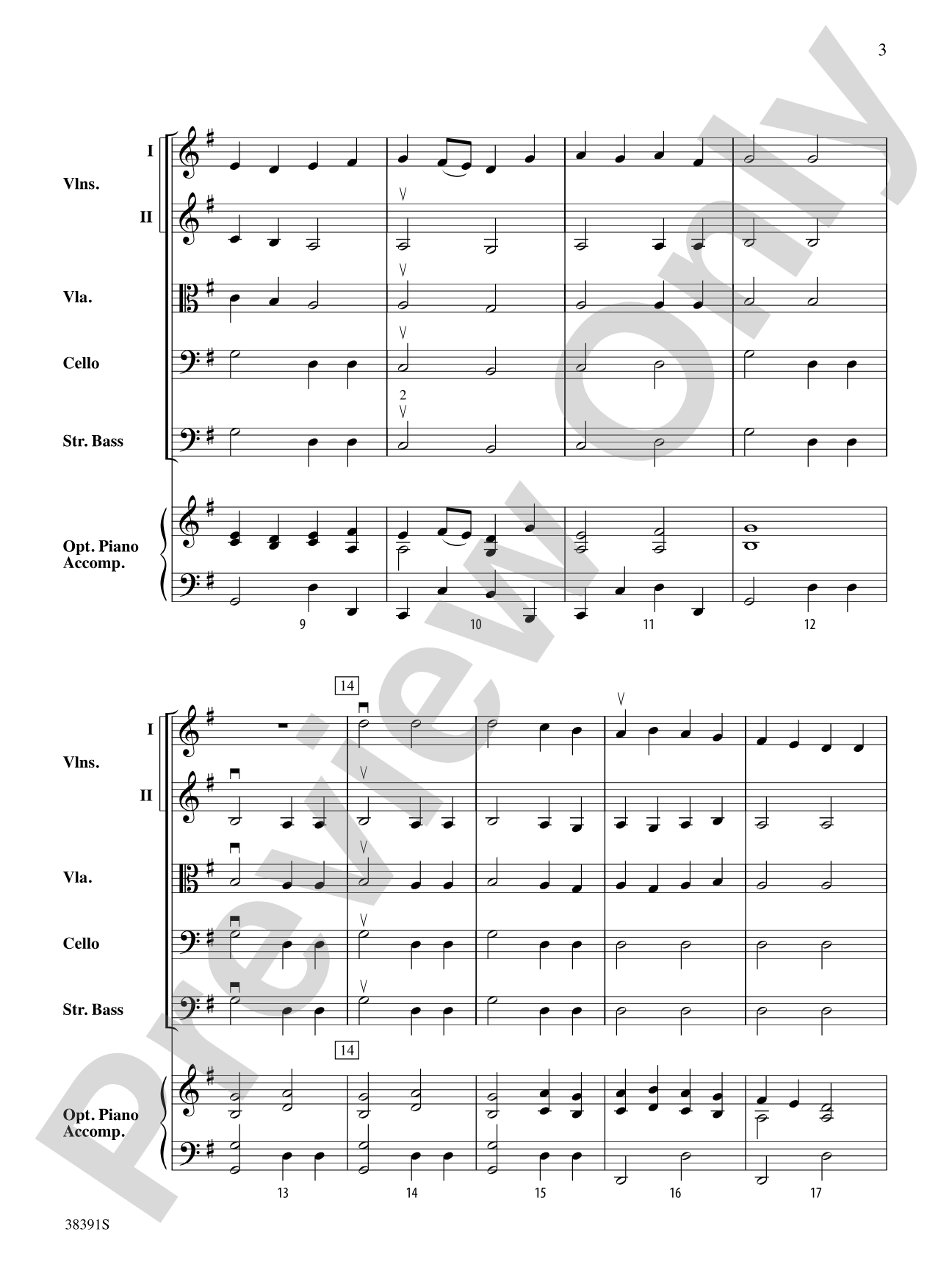
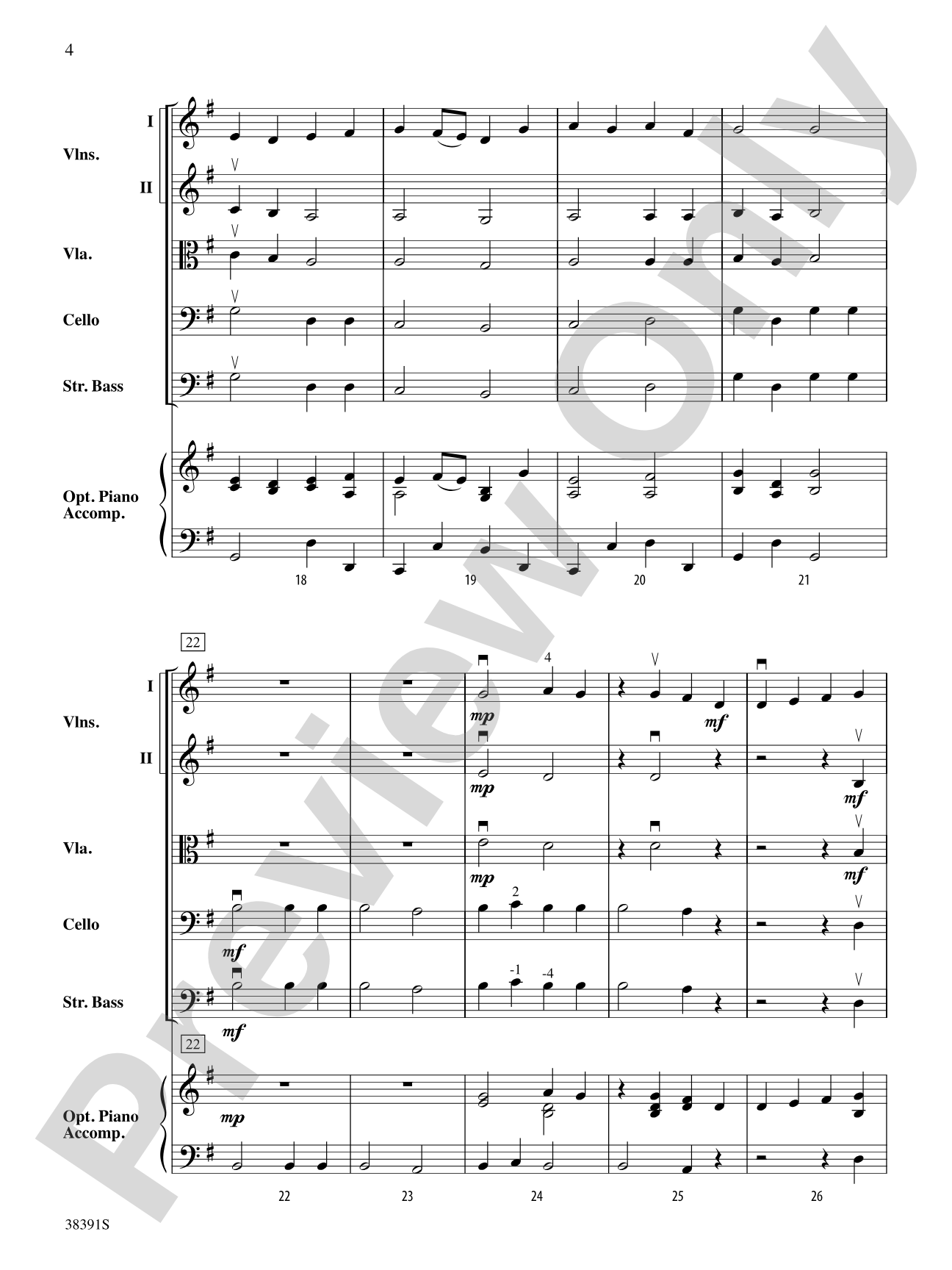
This familiar instrumental excerpt from Campra's opera, Idoménée, is a natural confidence builder for young players. Beginning with a simple ostinato in the low strings, the arrangement flows gracefully into the main theme. This theme occurs three times in the work, each time exactly as the first, thereby saving rehearsal minutes and hastening the learning process. A perfect first ensemble piece! This title is available in MakeMusic Cloud.


Don't just read it, hear it, play along with it, and watch your students grow with it. In MakeMusic Cloud, Rigaudon: Score comes alive with professional accompaniment, adjustable tempo, and built-in practice tools that turn solo practice into real progress.
Open in the Player
Jump straight in and assign it today.
Start Your Free Trial
Open this title and explore the full library in minutes.
Sample Audio
1
Audio File
--:--
0:00
0:00
Sample Video
No sample videos found.
Additional Details
Series:
Belwin Very Beginning String Orchestra
Publisher:
Alfred Music
Page Count:
66
SKU:
00-PR-0003771
More about this title
About the Composer: André Campra
André Campra (1660-1744) was a French Baroque composer and church musician whose operas and instrumental works defined the French operatic style of his era. His gift for melody and orchestration made his music accessible to performers at all levels, a quality that has kept his works in circulation for nearly three centuries. Campra served as a maître de chapelle in several French cathedrals and composed prolifically across opera, ballet, cantata, and sacred music.
Why we love this
Wagner's arrangement captures the elegance of Baroque melody without overwhelming young orchestras. The repeating theme removes the pressure to learn multiple musical ideas, letting students focus on ensemble balance, intonation, and the simple joy of playing something genuinely beautiful together. It's the kind of piece that makes inexperienced players feel like accomplished musicians.
What to expect
Graceful and unhurried, with the gentle forward motion of a French dance. The ostinato creates a steady rhythmic foundation while the melody unfolds with Baroque simplicity, evoking the elegance of the opera house without any of the complexity.
Who it's for
First-year string orchestra students and newly combined ensembles who need repertoire that builds confidence without heavy technical demands. This piece works equally well for concert performances and beginning festival competitions, where young players gain valuable experience in a low-pressure setting.
How to get the most out of it
- Shape the ostinato in the low strings with gentle dynamic contour rather than playing it mechanically; this foundation anchors the entire texture and gives the melody room to sing above it.
- Take the three statements of the main theme at exactly the same tempo and with consistent articulation, allowing the familiarity itself to build confidence in the ensemble.
- Balance the strings so the melody line floats clearly above the accompaniment; younger players often play louder than necessary when anxious, so model restraint during sectional rehearsals.
How to use it
Open a spring concert with this piece to establish an immediate sense of accomplishment and musicality, then move into more challenging repertoire. Its straightforward charm also makes it an ideal opener for a festival performance, settling nerves and demonstrating the ensemble's basic musicianship before tackling heavier works.
Skills your students will build
- Playing sustained tones with steady intonation
- Maintaining a consistent ostinato while other sections carry the melody
- Balancing melody against accompaniment in a homophonic texture
- Counting repeated sections accurately without losing focus
- Responding to conductor's tempo and dynamic gestures in a unified way