Rigaudon: 1st Violin Sheet Music Preview

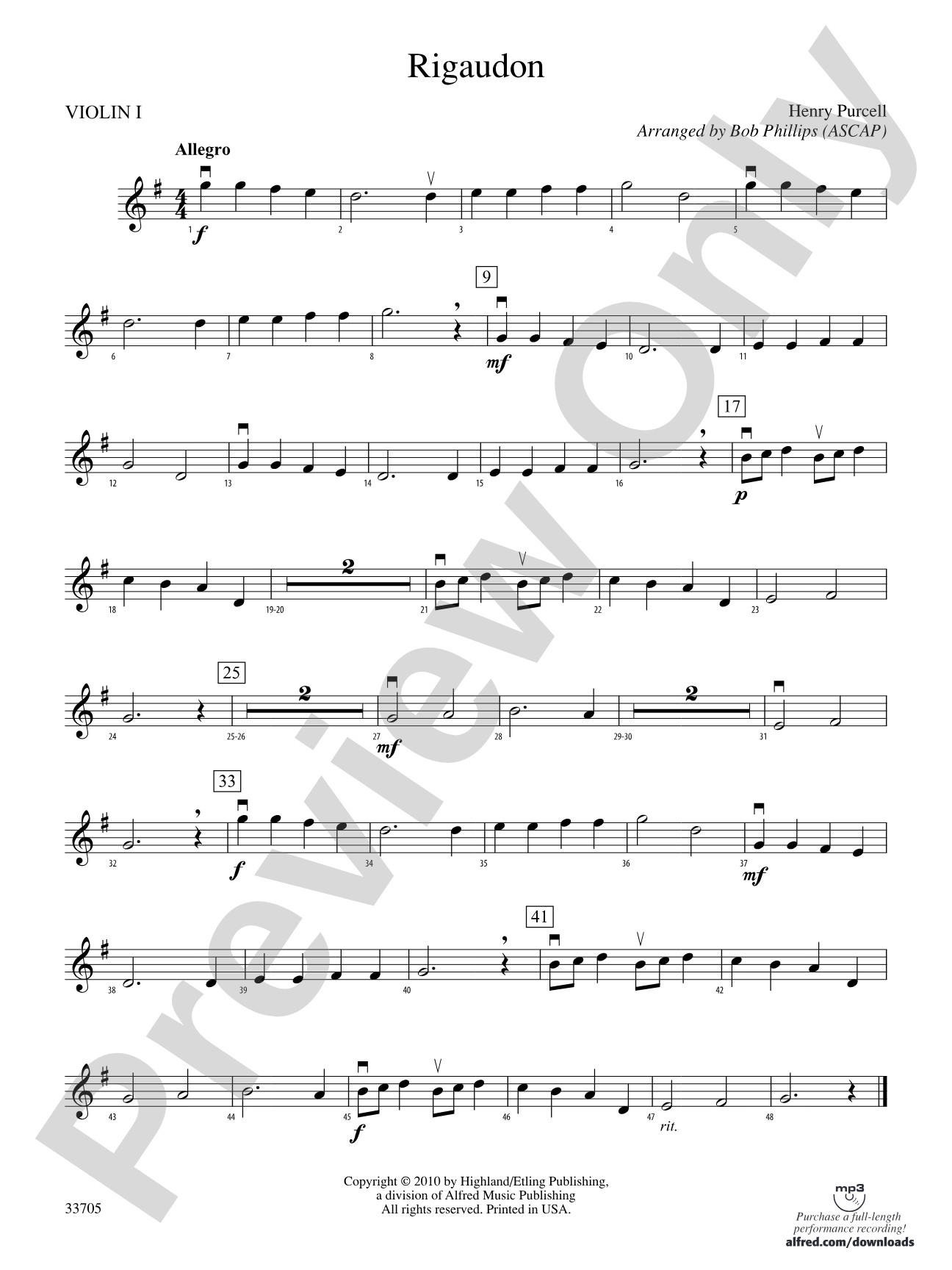
Rigaudon: 1st Violin

By Henry Purcell / arr. Bob Phillips

Grade: 1

Item: 00-PC-0014491_VN1

Digital Download
$5.99
Description
A super simple presentation of a classic Baroque tune! In the key of G, each section plays the melody in very comfortable ranges. The perfect piece to make a young orchestra sound good on classic repertoire and provide a great first experience with playing parts. Includes an educational packet with each part that features technical exercises, history, theory, composition, and more. This title is available in MakeMusic Cloud. Correlates to Sound Innovations for String Orchestra, Book 1 Level 4.

Don't just read it, hear it, play along with it, and watch your students grow with it. In MakeMusic Cloud, Rigaudon: 1st Violin comes alive with professional accompaniment, adjustable tempo, and built-in practice tools that turn solo practice into real progress.

Sample Audio
0:00
0:00
Sample Video
Additional Details
Series: Sound Innovations for String Orchestra
Publisher: Alfred Music
Page Count: 80
SKU: 00-PC-0014491_VN1

More about this title

About the Composer: Henry Purcell

Henry Purcell (1659-1695) stands as England's greatest Baroque composer, bridging the gap between Renaissance polyphony and the modern orchestral tradition. His output spanned sacred music, stage works, and instrumental pieces that shaped the sound of English music for generations. Purcell's gift for melody and harmonic inventiveness makes his works enduringly popular in educational settings, where they demonstrate the craft of the Baroque period without overwhelming young players.

Why we love this

Bob Phillips's arrangement keeps the melodic character of Purcell's Rigaudon intact while positioning each section to shine without technical strain. Young orchestras gain immediate success playing a genuine masterwork, building confidence that translates to their next rehearsal. The educational packet transforms a single piece into a comprehensive learning experience covering history, theory, and technique.

What to expect

The Rigaudon sparkles with courtly grace, its straightforward melodies landing comfortably in every voice. There's a sense of structured elegance rather than complexity; players feel the weight and purpose of a real piece without wrestling with unruly ranges or intricate rhythms. The key of G sits well across the orchestra, creating brightness and clarity that rewards good intonation with immediate musical payoff.

Who it's for

String orchestra directors introducing young players to Baroque repertoire and the experience of playing from parts. Students at the end of their first year of study gain confidence performing a real historical work rather than an exercise. The Grade 1 level keeps the technical demands low while the educational packet supports classroom integration and music history instruction.

How to get the most out of it

  • Emphasize the dance character of the Rigaudon by keeping articulation crisp and rhythms clean; resist the urge to slow down just because the piece is Grade 1
  • Balance the G major key by letting the violas sing their supporting lines rather than having them play background filler
  • Use the comfortable ranges to encourage singers-on-instruments; students should feel the phrase shape, not just read note by note
  • Conduct in one when the tempo feels secure; a lighter beat reinforces the piece's elegance

How to use it

Program this as a concert opener or a confident moment in a young orchestra's first public performance. It pairs well with contemporary Grade 1 arrangements, showing students that classical repertoire remains vital and playable at every level. The accompanying educational materials make it suitable for thematic programming around Baroque music or English composers.

Skills your students will build

  • Playing from parts while maintaining ensemble cohesion
  • Identifying and performing melody, harmony, and countermelody roles
  • Baroque articulation and phrasing conventions
  • Reading G major key signature with confidence
  • Understanding dance form and Baroque musical structure
  • Intonation awareness in a major key center

You May Also Like