
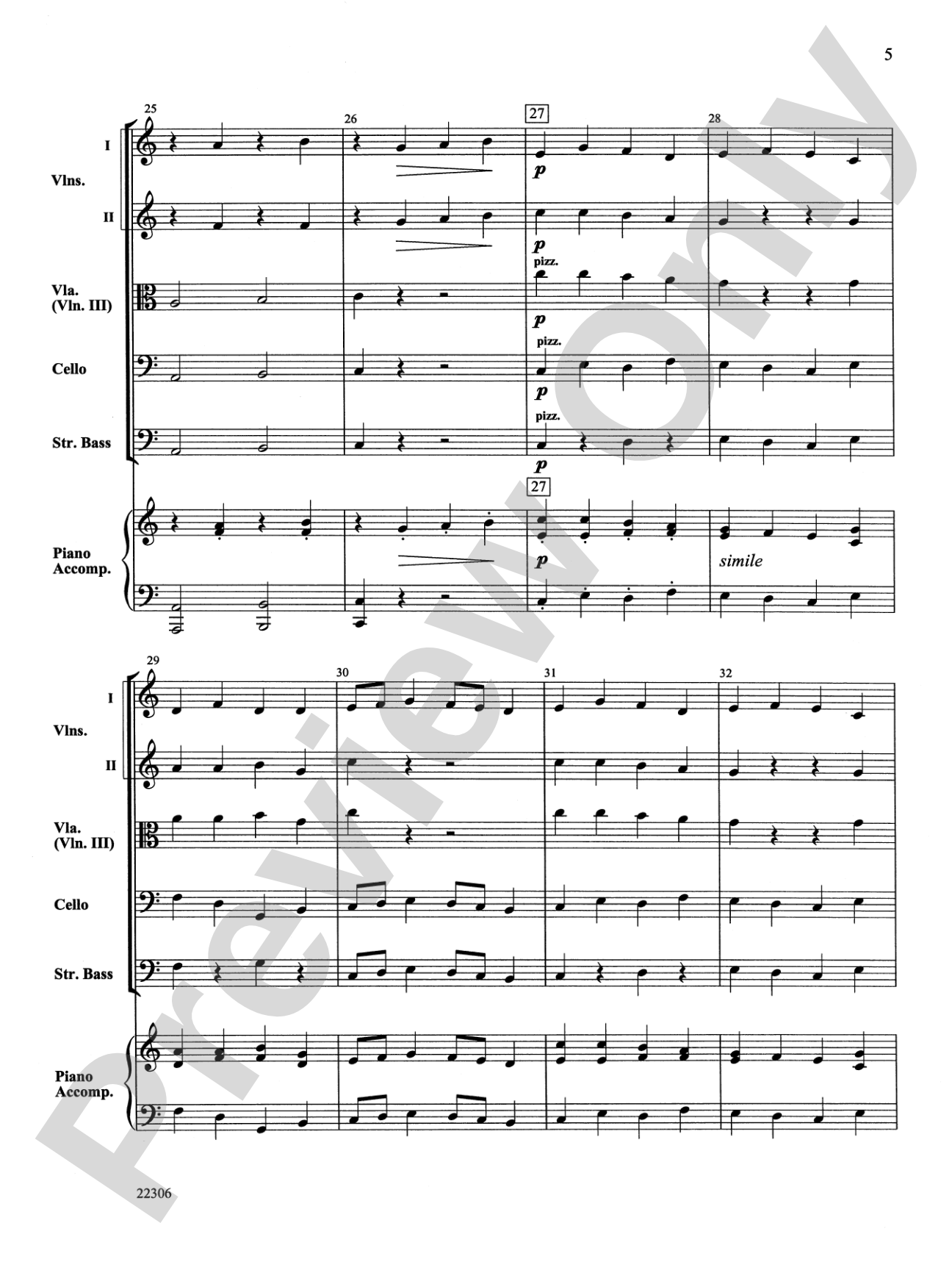
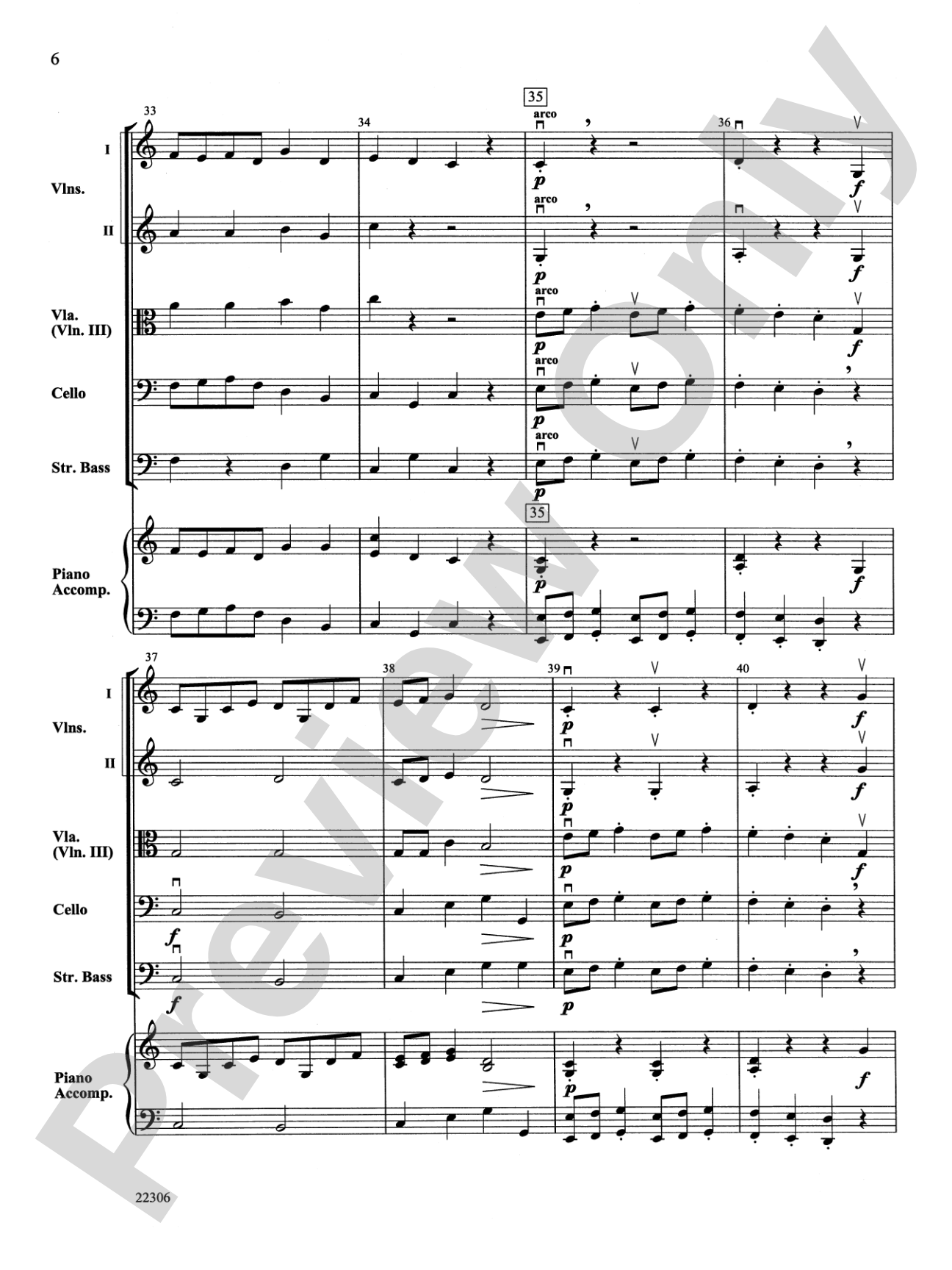
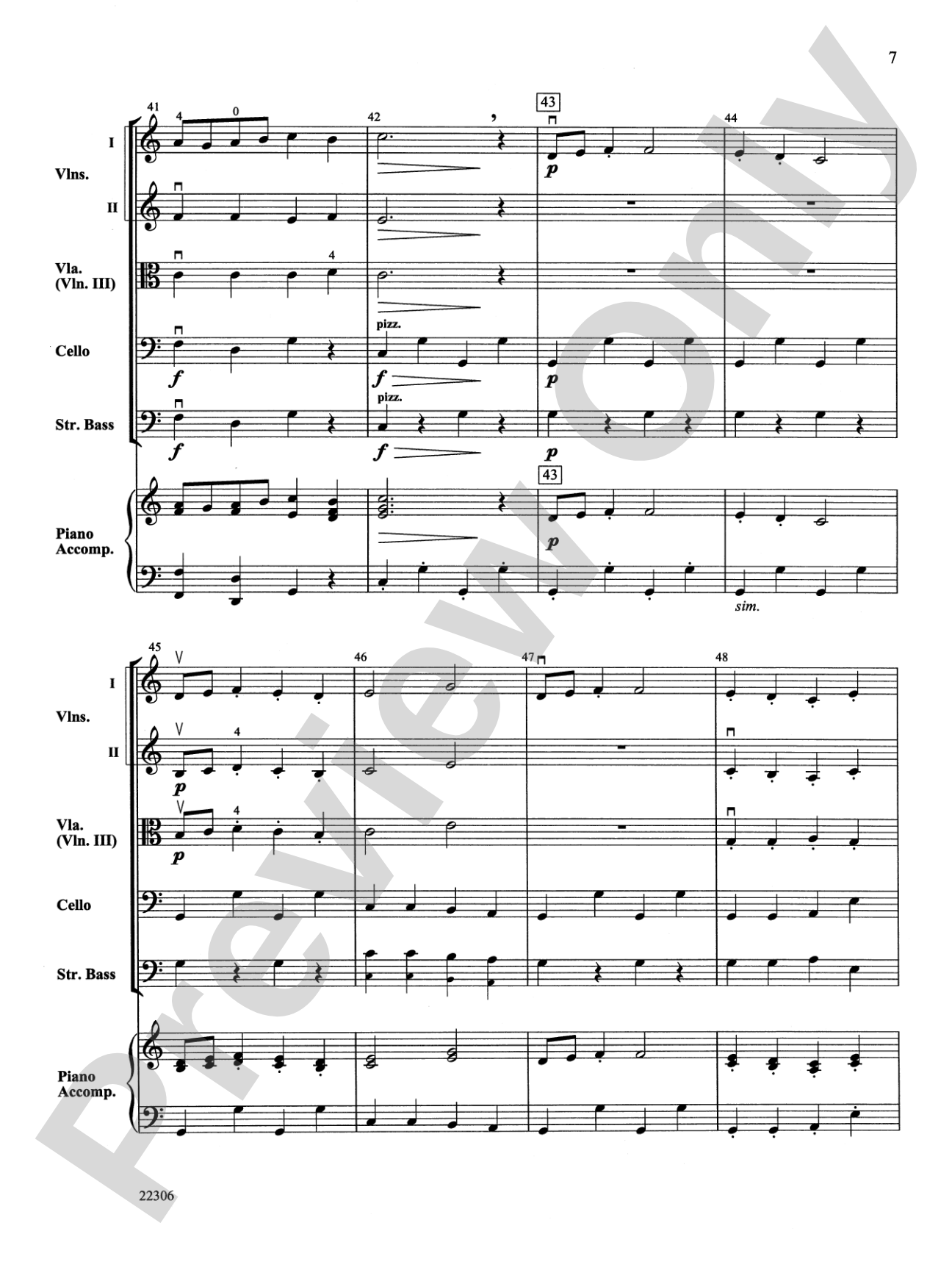
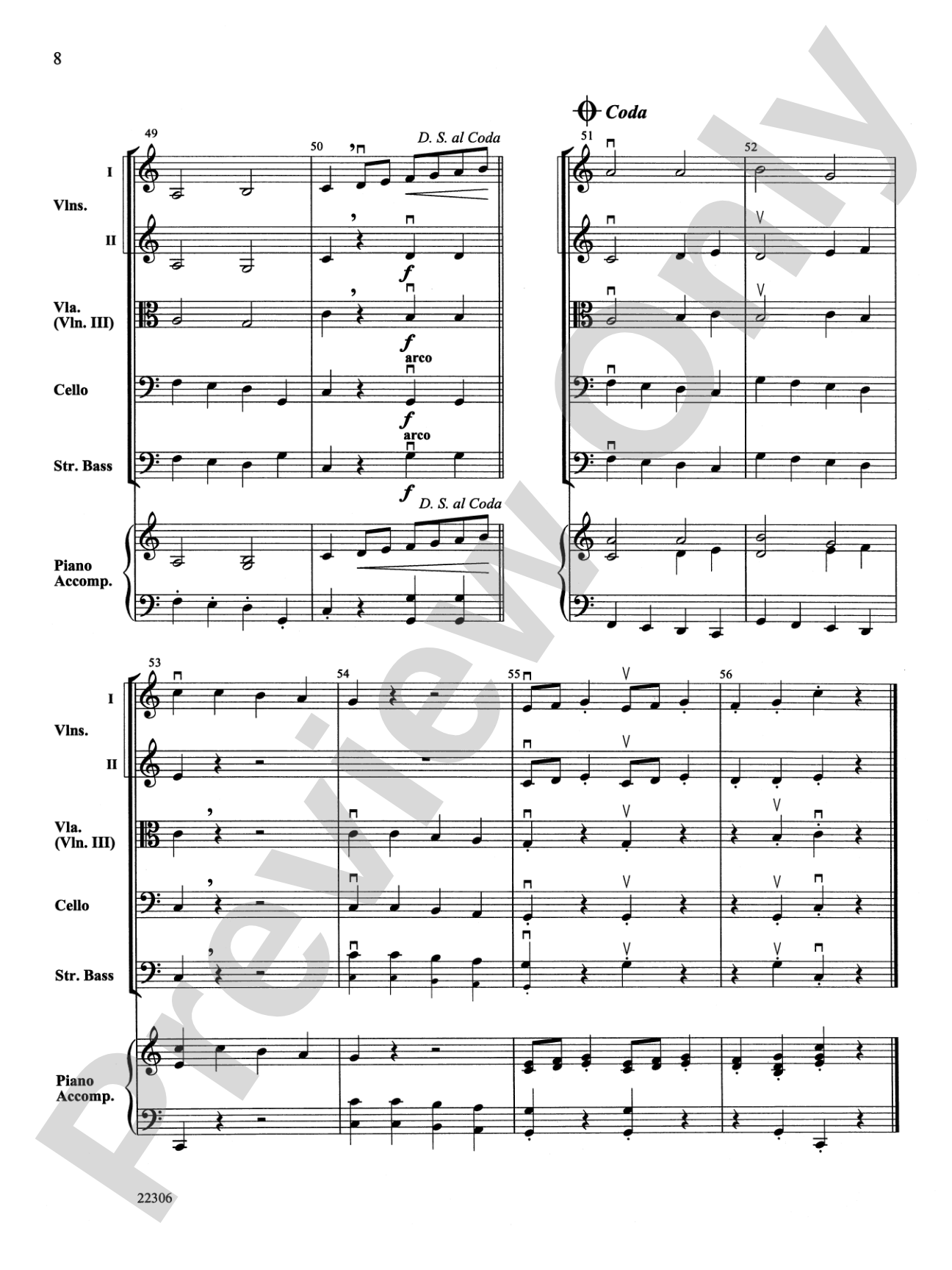

Rigaudon: String Orchestra Conductor Score & Parts
By Henry Purcell / arr. Richard Meyer
Grade: 1.5
Item: 00-PK-0000563

$46.00
Pickup currently not available
Buy Extra Parts (Digital PDF Download)
| Product | Price | Quantity |
|---|---|---|
| Rigaudon: Score | $6.00 | |
| Rigaudon: 1st Violin | $5.99 | |
| Rigaudon: 2nd Violin | $5.99 | |
| Rigaudon: 3rd Violin (Viola [TC]) | $5.99 | |
| Rigaudon: Viola | $5.99 | |
| Rigaudon: Cello | $5.99 | |
| Rigaudon: String Bass | $5.99 | |
| Rigaudon: Piano Accompaniment | $5.99 |
Parts Added to Cart!
Description
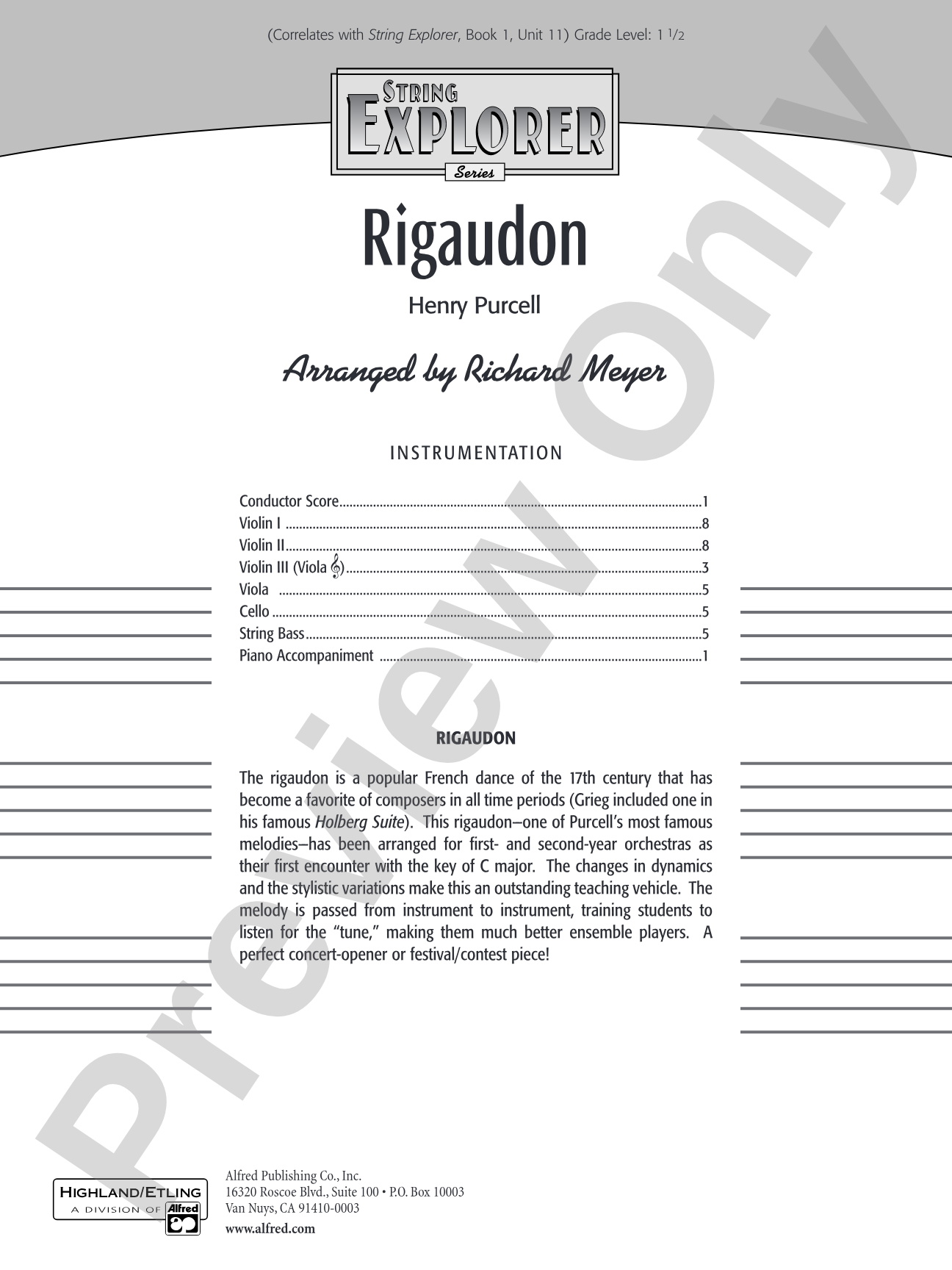
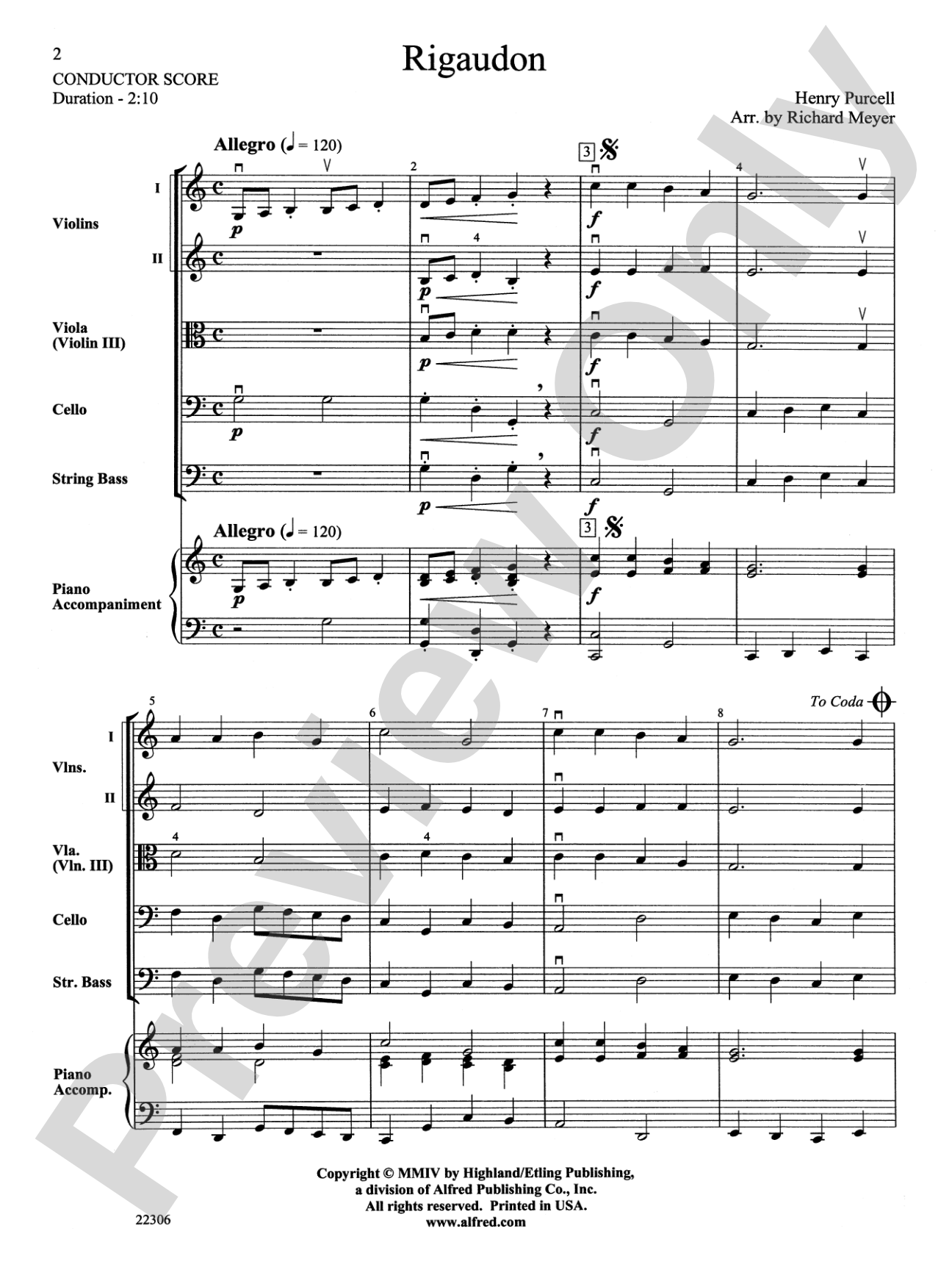
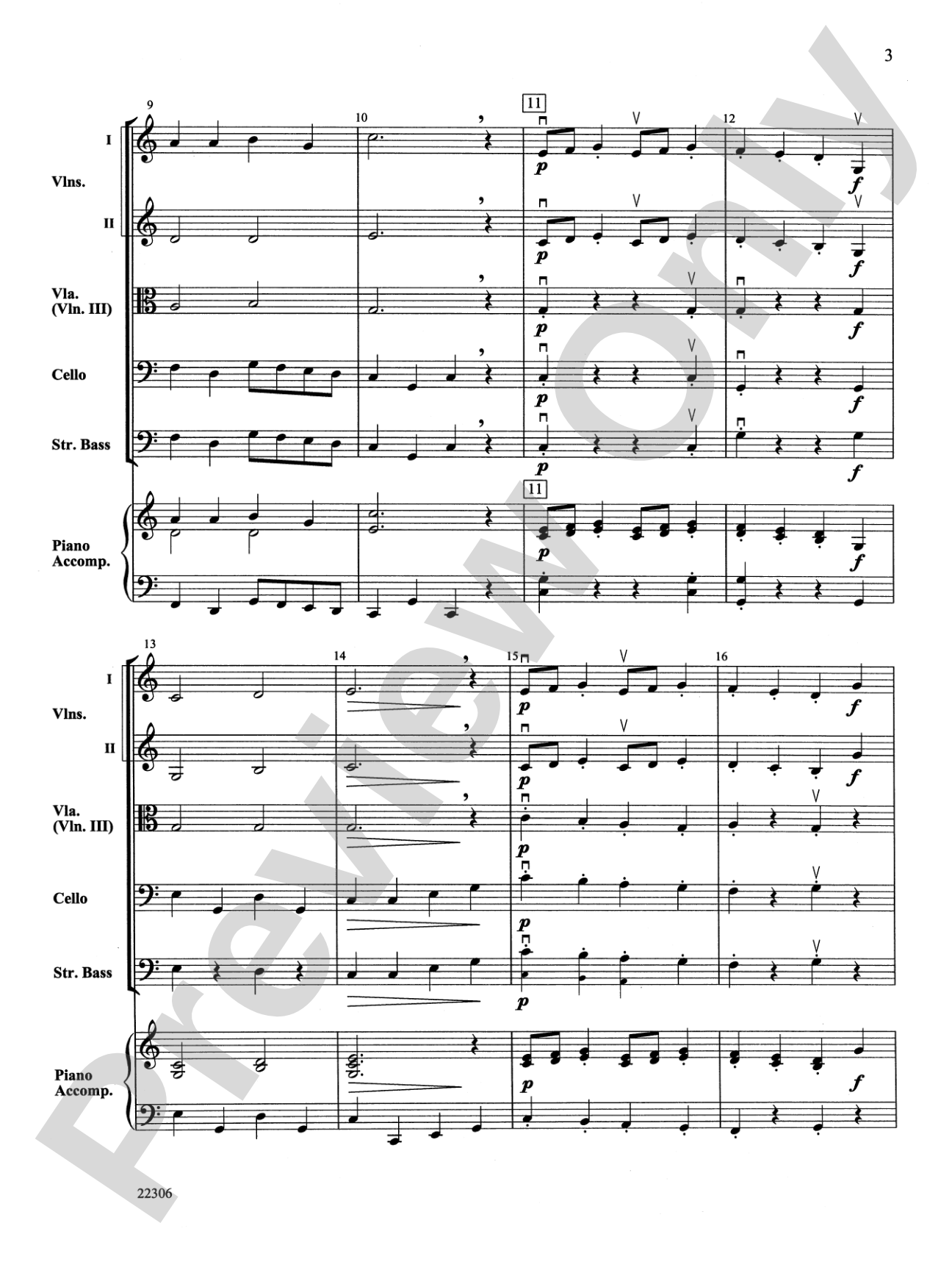
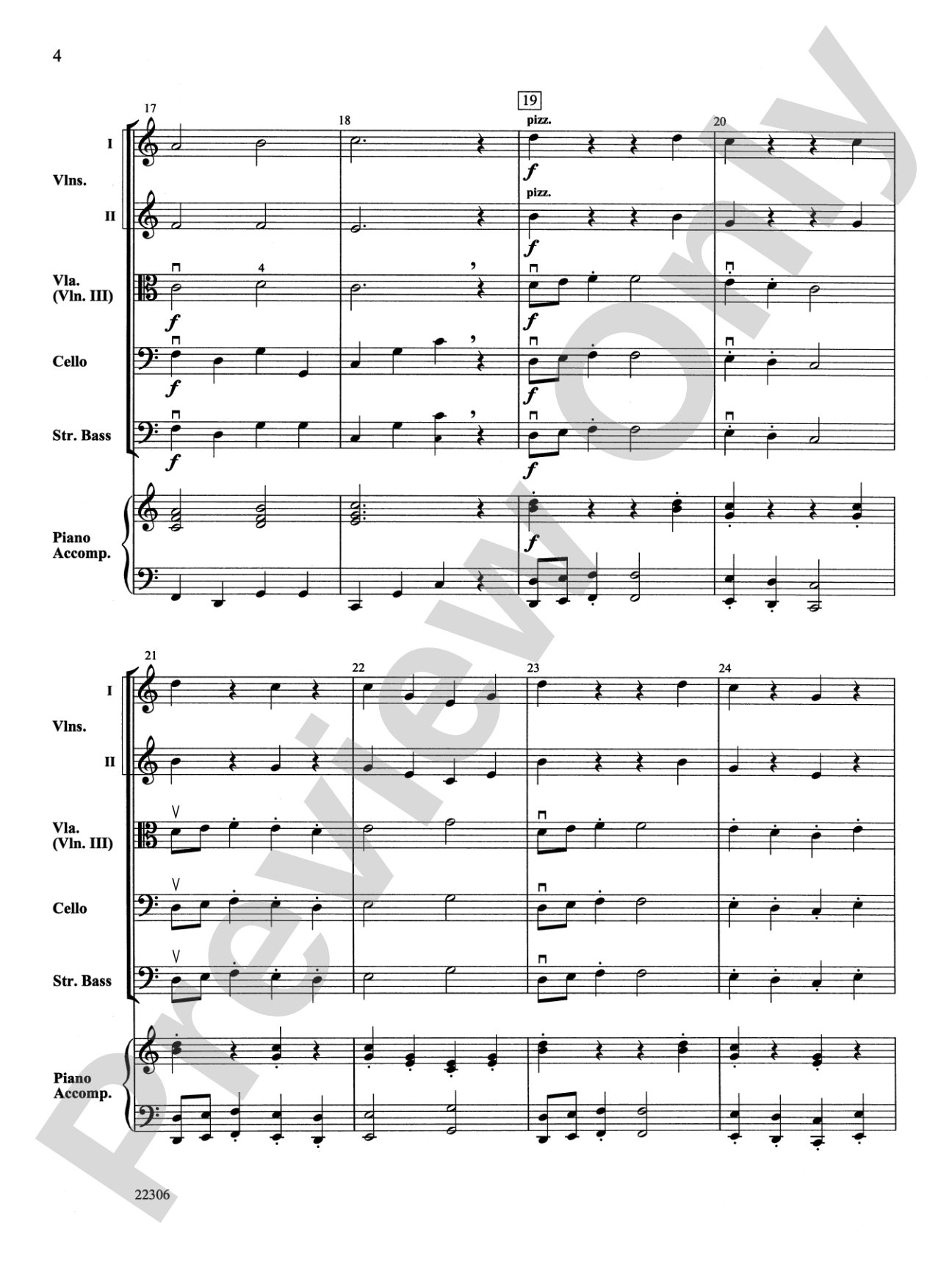
The rigaudon is a popular French dance of the 17th century that has become a favorite of composers in all time periods. This rigaudon-one of Purcell's most famous melodies-has been arranged for first- and second-year orchestras as their first encounter with the key of C major. The melody is constantly passed from instrument to instrument, training students to listen for the "tune," making them much better ensemble players. A perfect concert opener! This title is available in MakeMusic Cloud.


Don't just read it, hear it, play along with it, and watch your students grow with it. In MakeMusic Cloud, Rigaudon: String Orchestra Conductor Score & Parts comes alive with professional accompaniment, adjustable tempo, and built-in practice tools that turn solo practice into real progress.
Open in the Player
Jump straight in and assign it today.
Start Your Free Trial
Open this title and explore the full library in minutes.
Sample Audio
1
Audio File
--:--
0:00
0:00
Sample Video
No sample videos found.
Additional Details
Series:
Highland/Etling String Explorer
Publisher:
Alfred Music
Page Count:
72
SKU:
00-PK-0000563
More about this title
About the Composer: Henry Purcell
Henry Purcell (1659-1695) stands as England's greatest Baroque composer, a figure whose influence shaped musical practice across generations. His command of melody, harmonic innovation, and dramatic expression made him essential to both court and theater music during the Restoration era. Purcell's works remain central to the orchestral and choral repertoire, valued for their structural clarity and emotional immediacy—qualities that translate exceptionally well to student ensembles.
Why we love this
This arrangement delivers authentic Baroque writing at a level where students can actually absorb it. The constant exchange of melodic material keeps every section engaged and accountable, while the C major tonality and straightforward harmonic language make it accessible without feeling simplified. It opens a concert with immediate elegance and sets a professional tone for what follows.
What to expect
Graceful and purposeful. The rigaudon moves with courtly poise, never hurried, with a quality of refined clarity that appeals to audiences of all ages. Its familiar melodic character makes it feel immediate and rewarding to perform.
Who it's for
First- and second-year string orchestra students encountering C major as a primary key and learning to track shifting melodic responsibility. This piece works equally well for ensembles beginning their concert season or preparing for festival performance.
How to get the most out of it
- Bring out the melodic transfers between sections. Mark in your parts where the tune passes from violins to violas to cellos, and remind students that following and supporting the active melody is their primary job.
- Shape the phrasing across phrase lengths rather than within single measures. Purcell's lines breathe in arcs, not in small gestures, so longer bows and fewer choppy accents will serve the music.
- Balance the parts so the supporting voices remain audible. In early-year orchestras, students often bow heavily on sustained accompaniment figures; light, consistent pressure underneath the melody helps the texture stay transparent.
- Establish a clean ensemble tempo in rehearsal before adding any expressive variation. Once the rhythm section locks together, the upper parts will find their place naturally.
How to use it
Open your concert or festival slot with this piece. Its elegance and recognizable character establish credibility immediately, while its short duration leaves room for more substantial repertoire later in the program. It also serves as an effective final dress rehearsal before a full concert, since students can execute it reliably once rehearsed.
Skills your students will build
- Following and identifying melodic lines as they transfer between instrument families
- Playing in C major with secure intonation across all parts
- Sustaining accompaniment figures with consistent tone and dynamics while listening to an active melody elsewhere
- Ensemble balance and transparency in homophonic textures
- Baroque stylistic phrasing and articulation