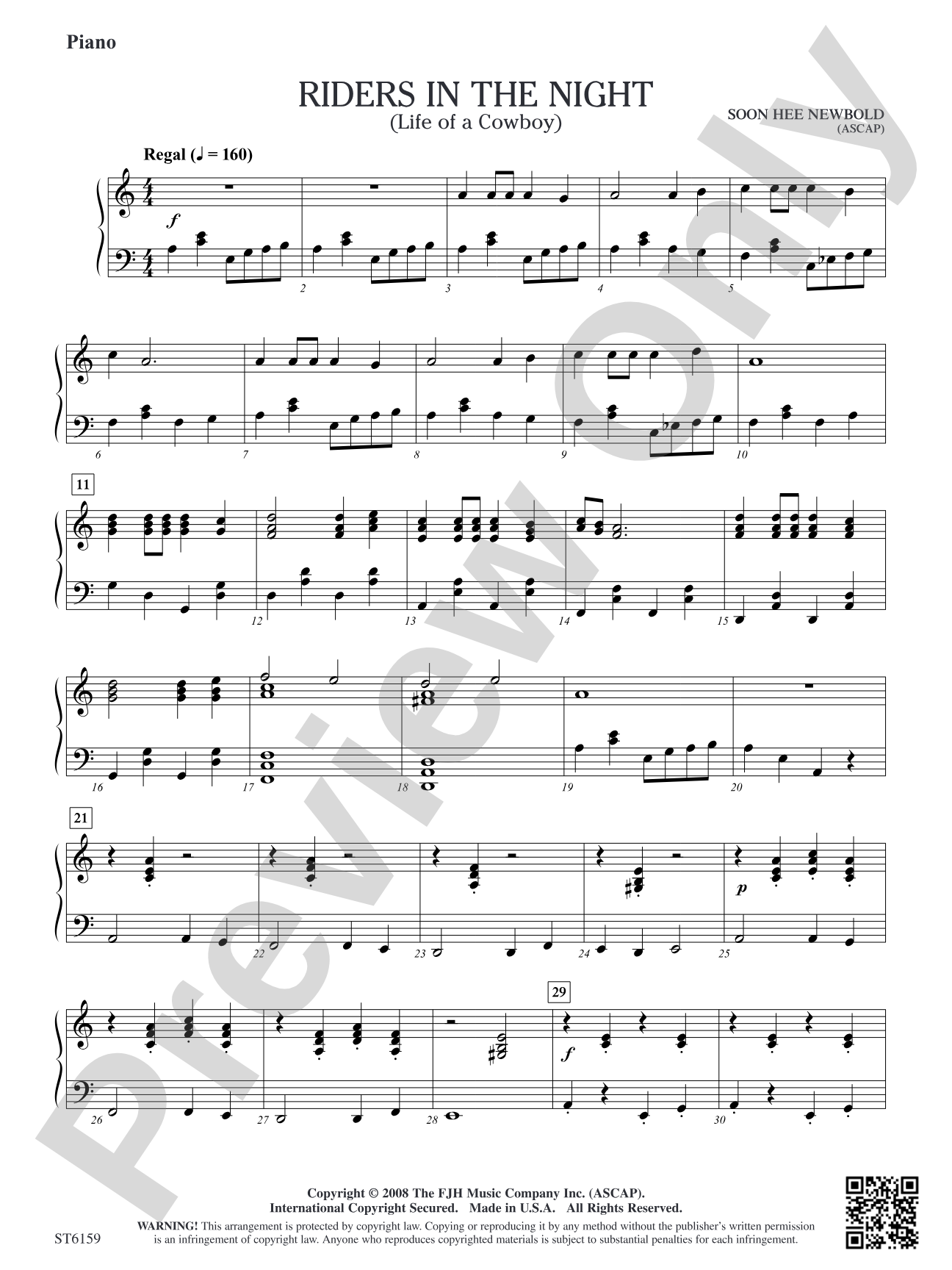
Riders in the Night (Life of a Cowboy): Piano Sheet Music Preview

Riders in the Night (Life of a Cowboy): Piano

Life of a Cowboy

By Soon Hee Newbold

Grade: 2

Item: 98-PC-DST6159_K

Digital Download
$7.00
Description
In the spirit of classic western songs, this haunting work depicts lonely cowboys on their long journeys across dangerous terrain while facing freezing temperatures, scorching heat, blizzards, rain, and late nights. With traditional rhythms in the lower strings and a fun groove in the violas (cued in other instruments), your students and audience will be sure to enjoy this cowboy saga!

Riders in the Night (Life of a Cowboy): Piano isn't in MakeMusic Cloud just yet...but it could be. Let us know you'd like to see it, and you'll help shape what comes next. In the meantime, start a free trial and dive into thousands of interactive titles your students can play along with today.

Sample Audio
0:00
0:00
Sample Video
Additional Details
Series: FJH Developing Strings
Publisher: The FJH Music Company, Inc.
SKU: 98-PC-DST6159_K

More about this title

About the Composer: Soon Hee Newbold

Soon Hee Newbold

Soon Hee Newbold brings a global perspective to every score she writes, drawing on musical traditions and cultural influences from her travels across the United States, Europe, Asia, and beyond. Her career spans decades as both a conductor and composer, beginning with early training in piano and violin that evolved into performances with professional ensembles worldwide and guest conducting posts across multiple continents.

Newbold's catalog reaches audiences at every level, from premiere orchestras at major halls like Carnegie Hall and Lincoln Center to beginning student ensembles in schools. Her work as a Hollywood film composer and her frequent role as a clinician and keynote speaker at major music education conferences demonstrate her commitment to the field beyond the page.

Why we love this

Newbold captures the visual storytelling of the American West without losing sight of what makes a Grade 2 piece genuinely engaging to play. The layering of a steady rhythmic foundation in the lower strings with a playful viola groove creates a piece that teaches ensemble balance naturally, and the programmatic arc gives students a reason to care about their individual lines beyond the notes themselves.

What to expect

Haunting and atmospheric, with the steady plod of weary travelers moving across endless landscape. The piece evokes both vulnerability and resilience as the cowboys face nature's harshness, creating moments of quiet introspection alongside the determined forward motion of their journey.

Who it's for

String orchestras at the Grade 2 level who want engaging, narrative-driven repertoire that challenges without overwhelming developing musicians. Directors seeking contest or festival repertoire will find a piece that demonstrates solid musicianship while remaining accessible enough for students still building fundamental skills.

How to get the most out of it

  • Establish the lower string rhythms as the backbone of your interpretation. Let cellists and basses lock in their pulse first, then layer the upper voices over this foundation.
  • Bring out the viola groove during rehearsal by temporarily cuing those lines in other instruments so the entire orchestra hears and feels the rhythmic character Newbold intended.
  • Connect the changing weather and conditions described in the program to dynamic choices and phrasing. Freezing and scorching temperatures, blizzards and rain all offer interpretive guidance for how to shape your phrases.

How to use it

Feature this as a programmatic centerpiece in a thematic concert exploring American music or the frontier experience. Its Grade 2 accessibility also makes it an ideal choice for contest season, where it stands out as thoughtfully composed rather than generic student fare.

Skills your students will build

  • Maintaining independent rhythmic patterns while listening to ensemble texture
  • Dynamic control and phrasing that responds to programmatic narrative
  • Reading and executing steady rhythmic patterns in lower string parts
  • Coordination between rhythmic foundation and melodic upper voices
  • Interpreting program music and using imagery to inform musical choices

You May Also Like