
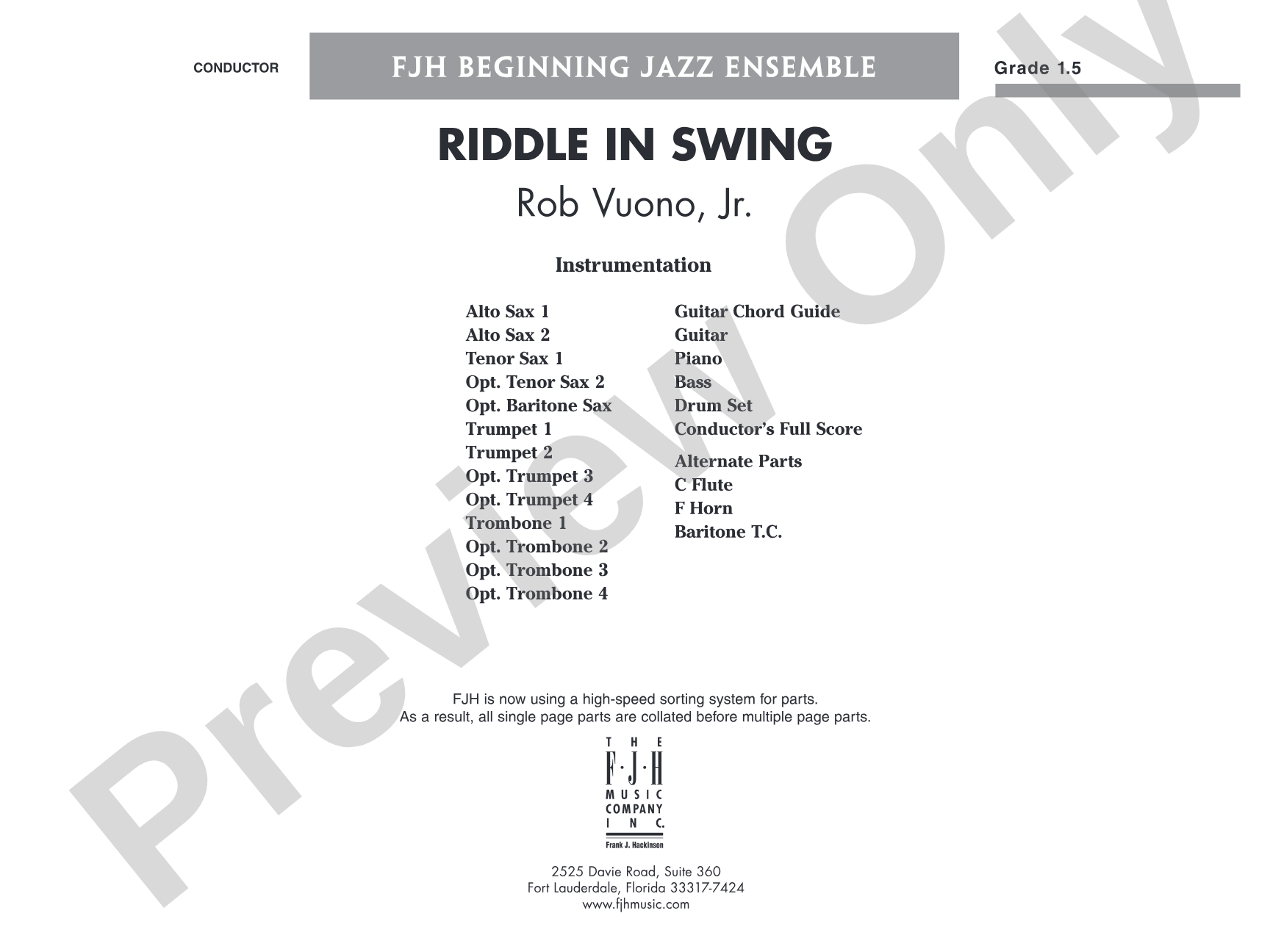
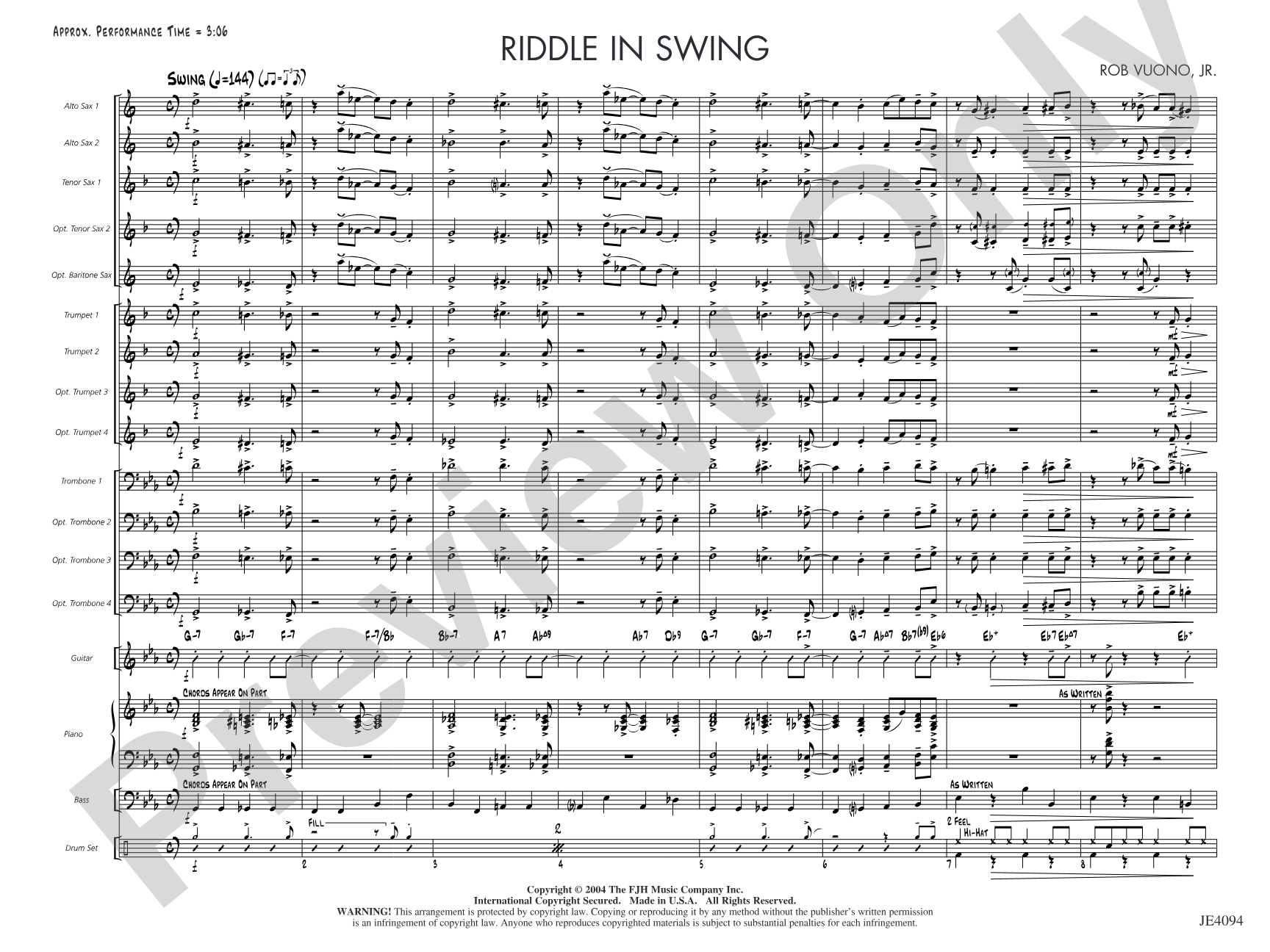
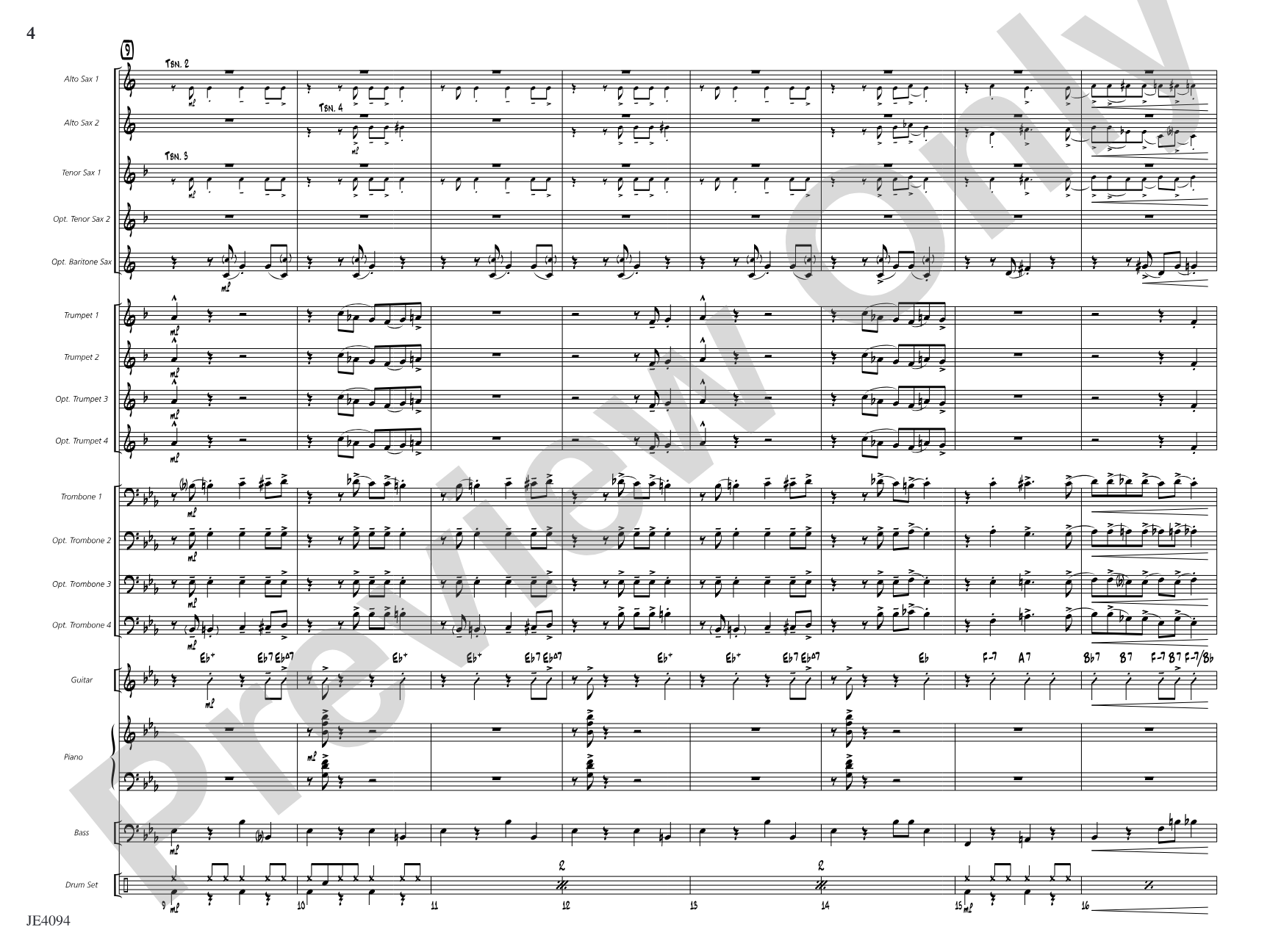
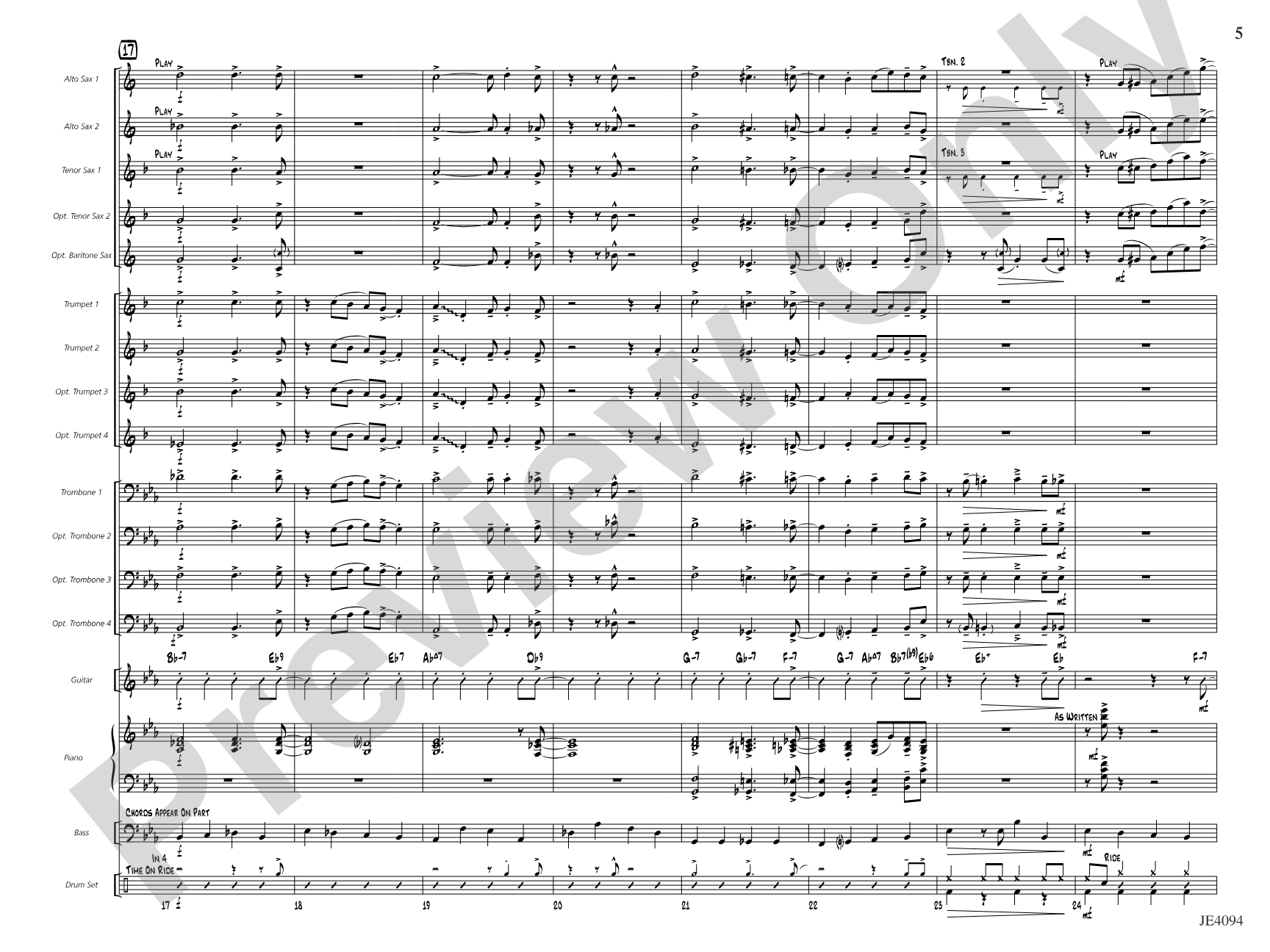
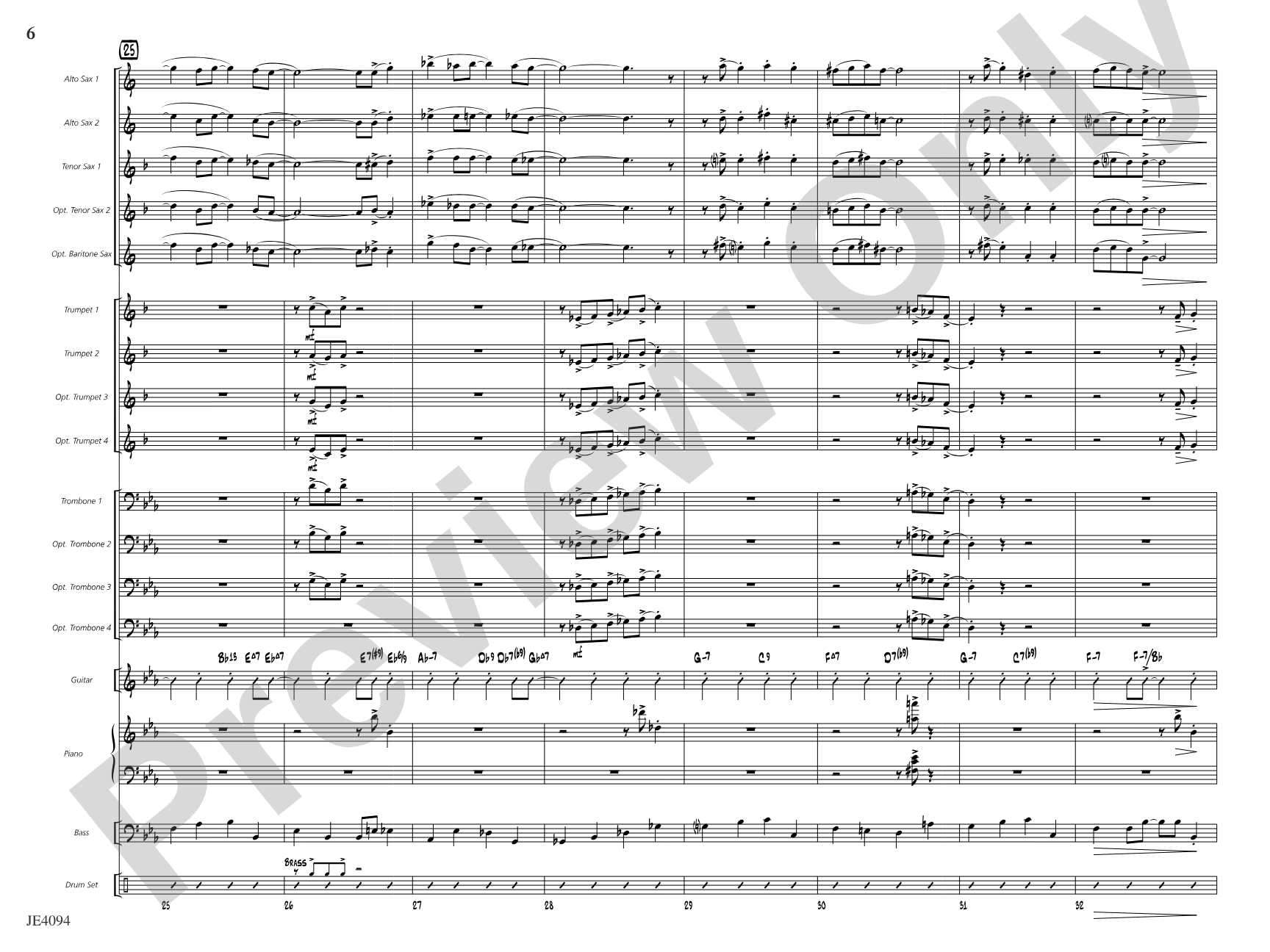
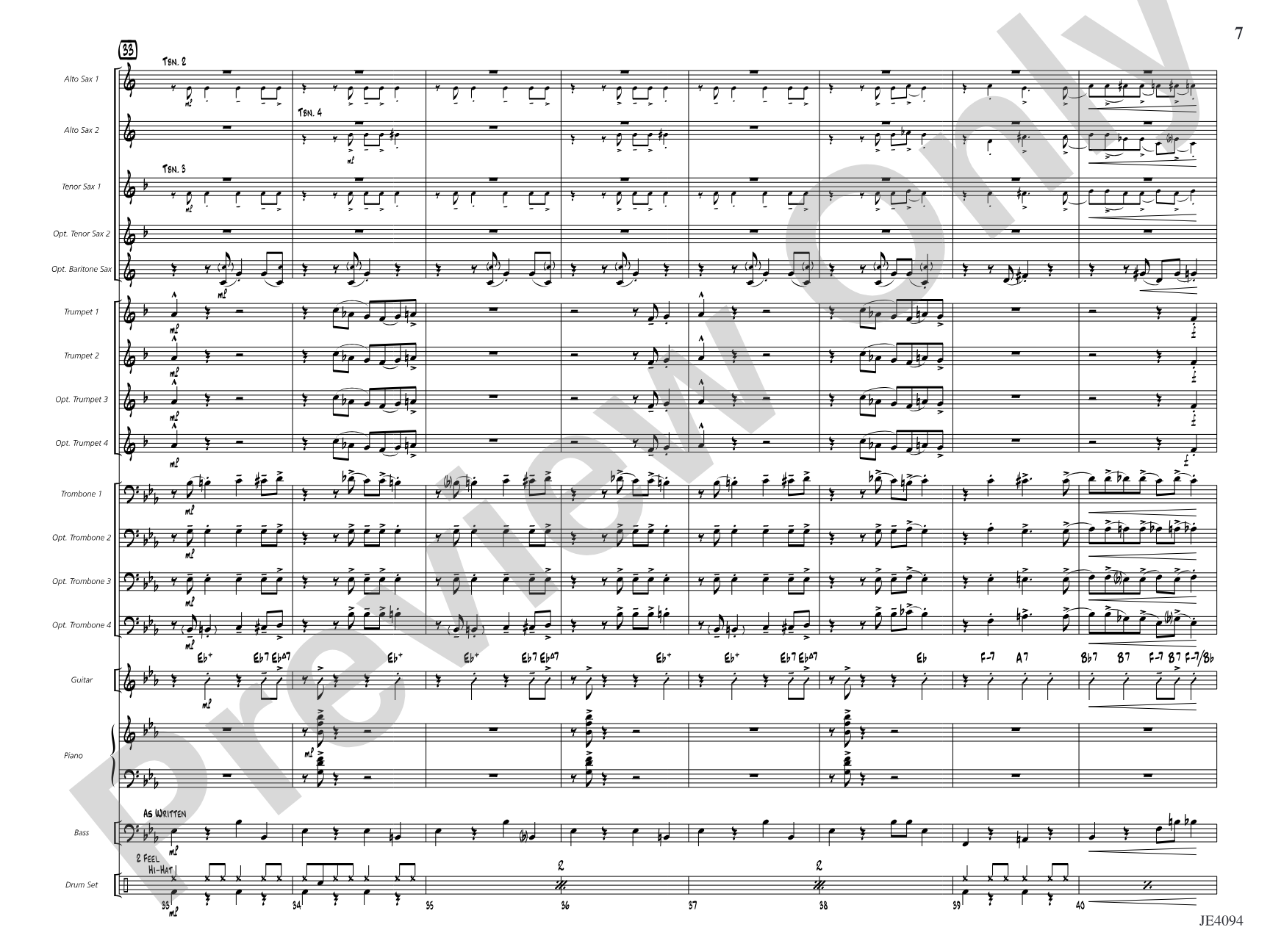
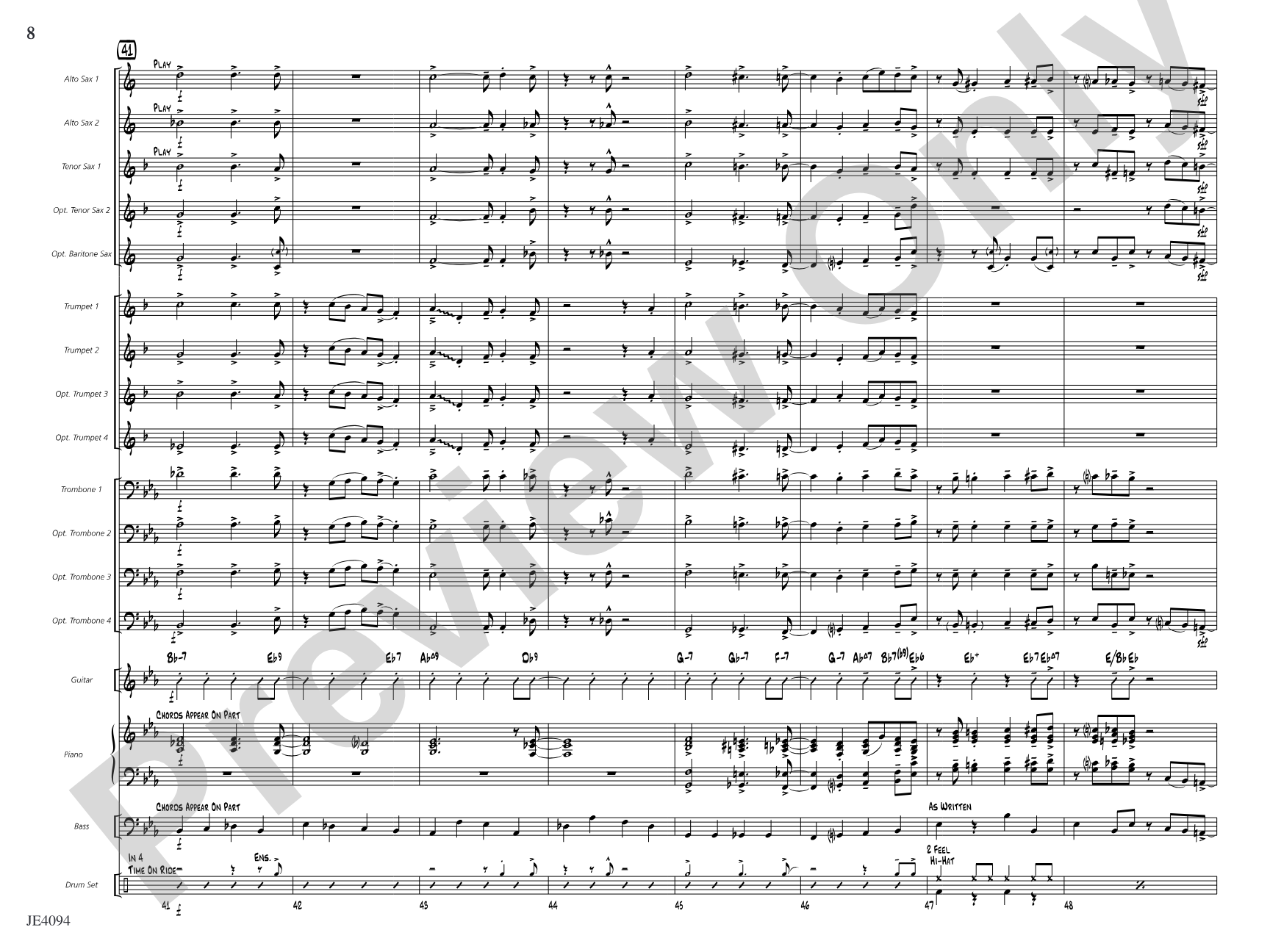
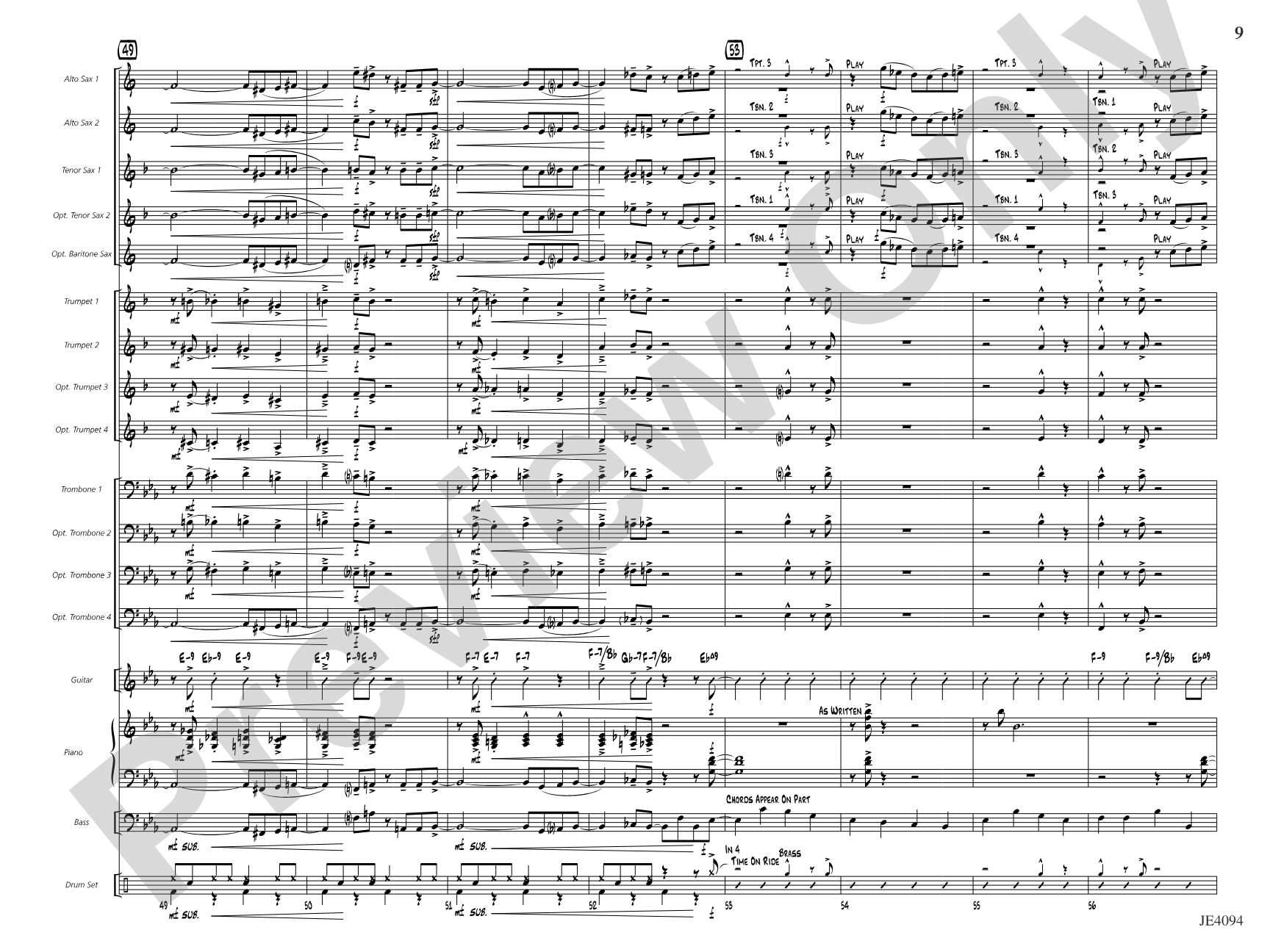
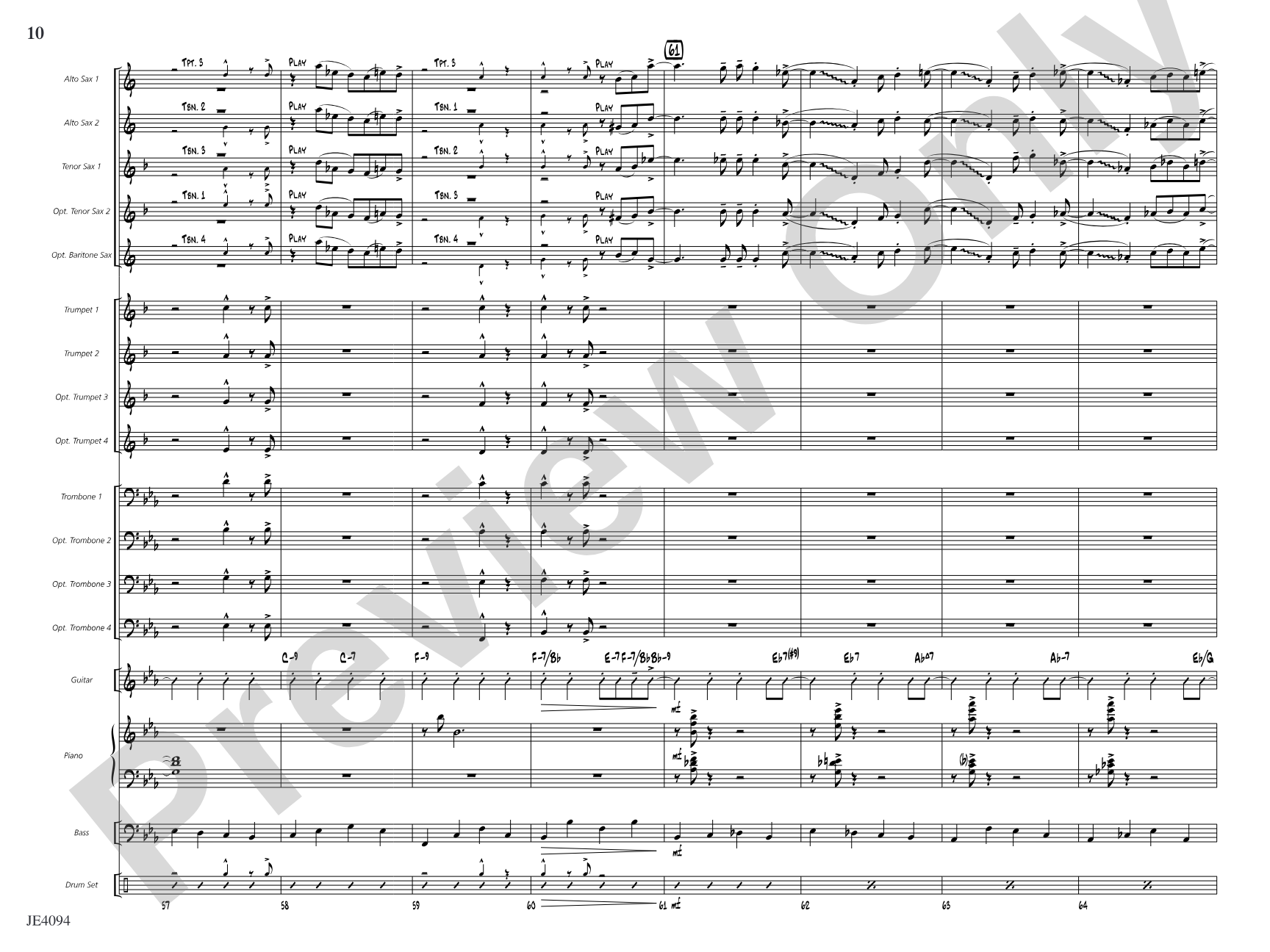
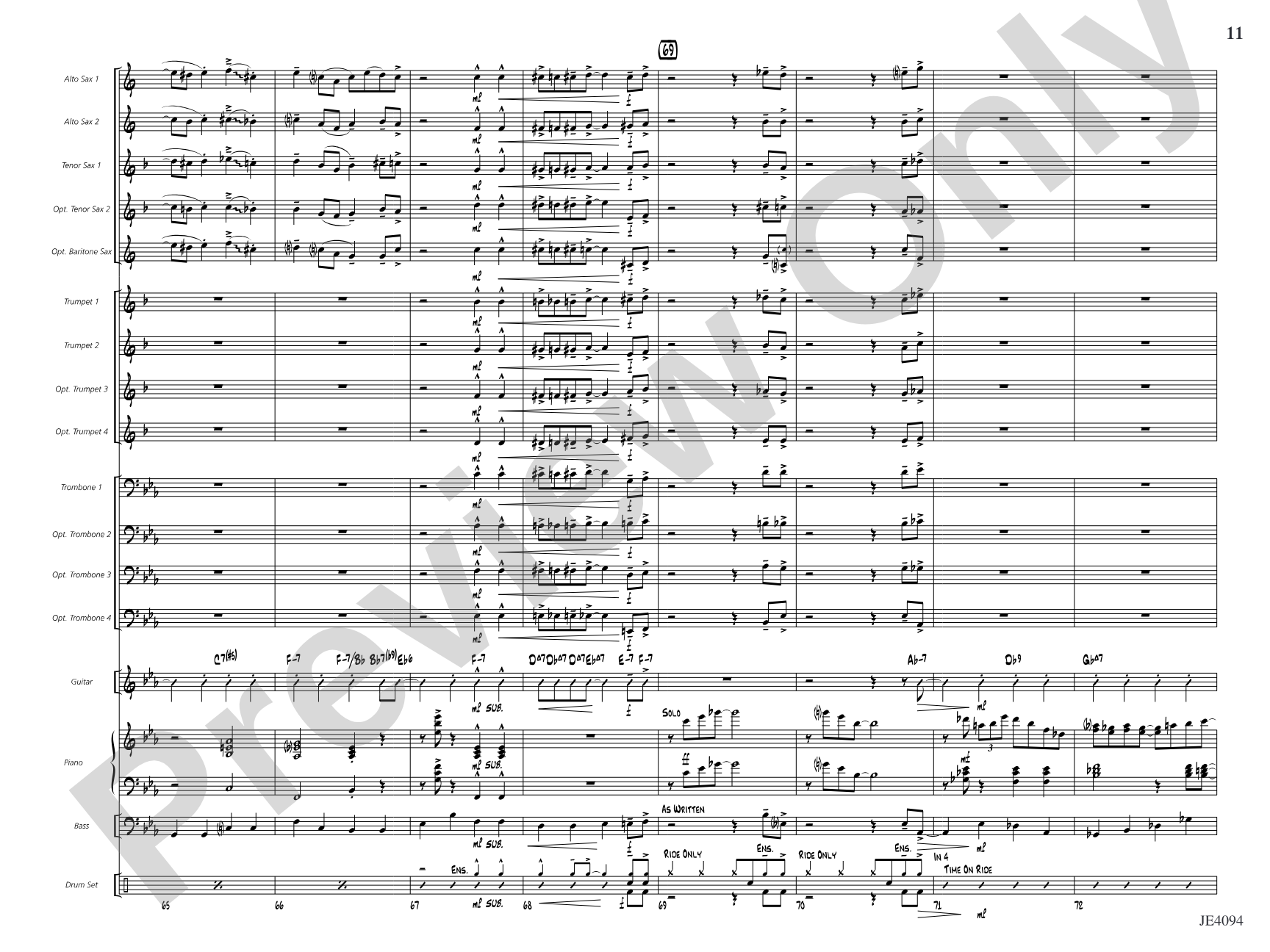
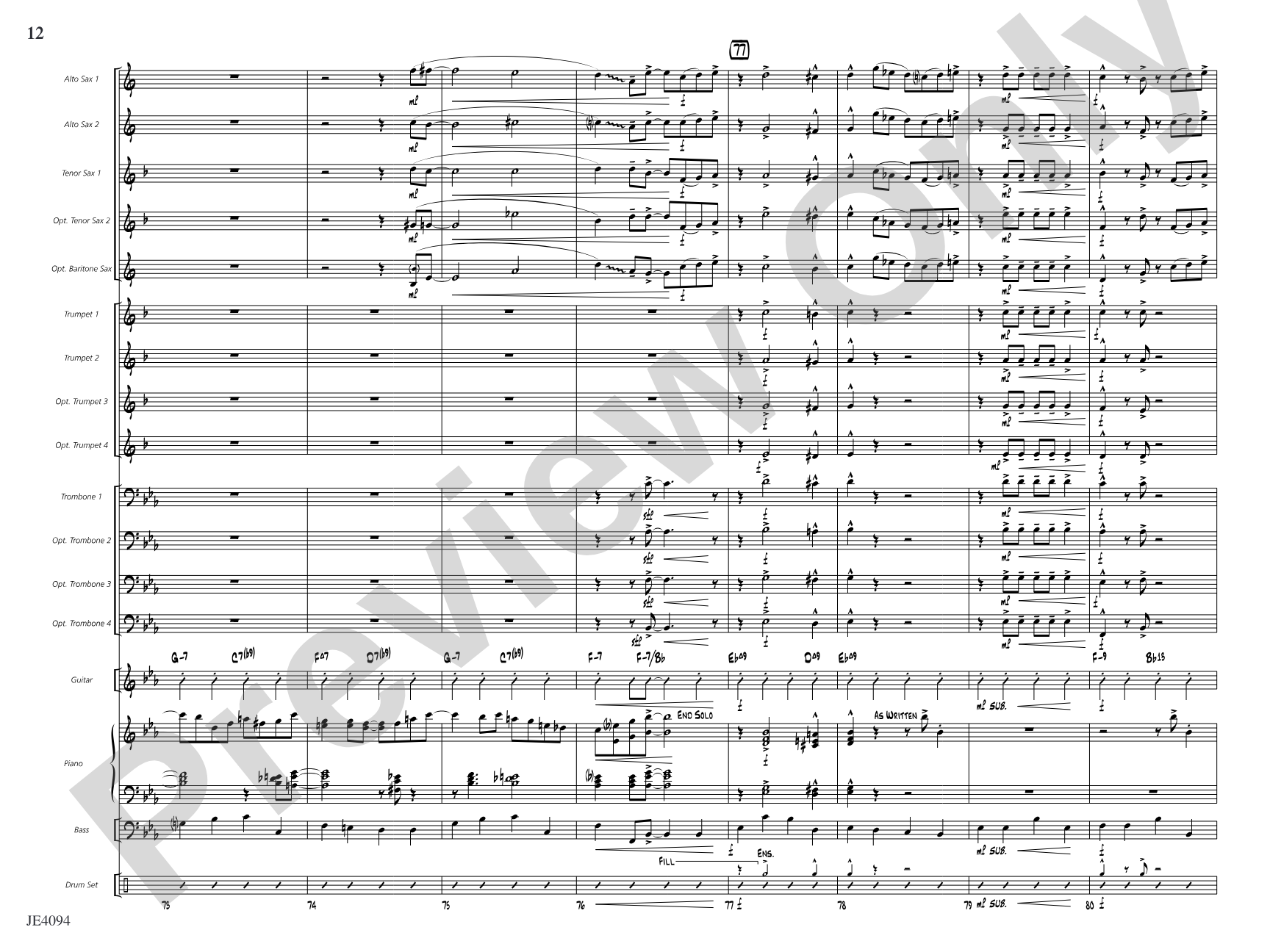
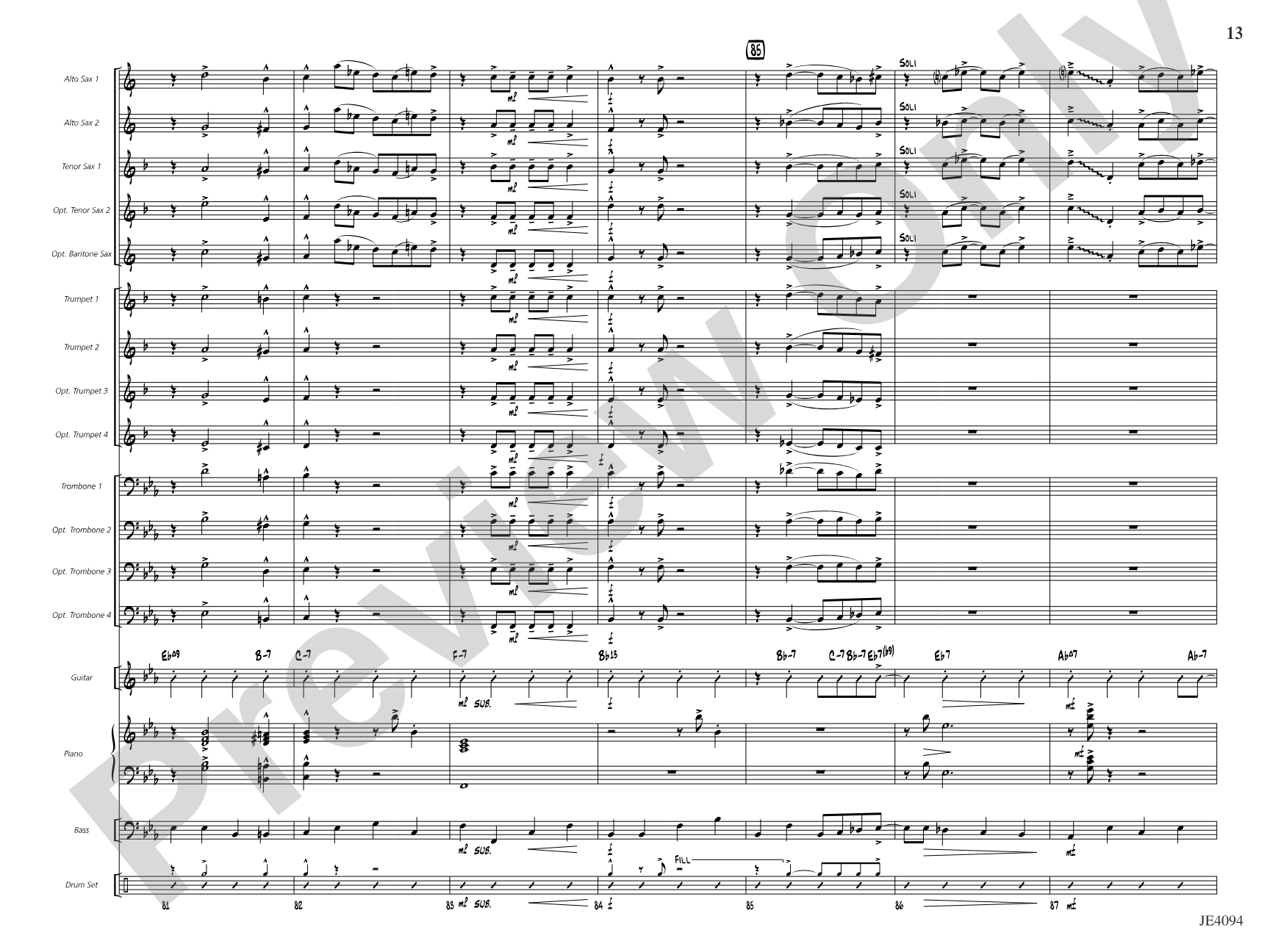
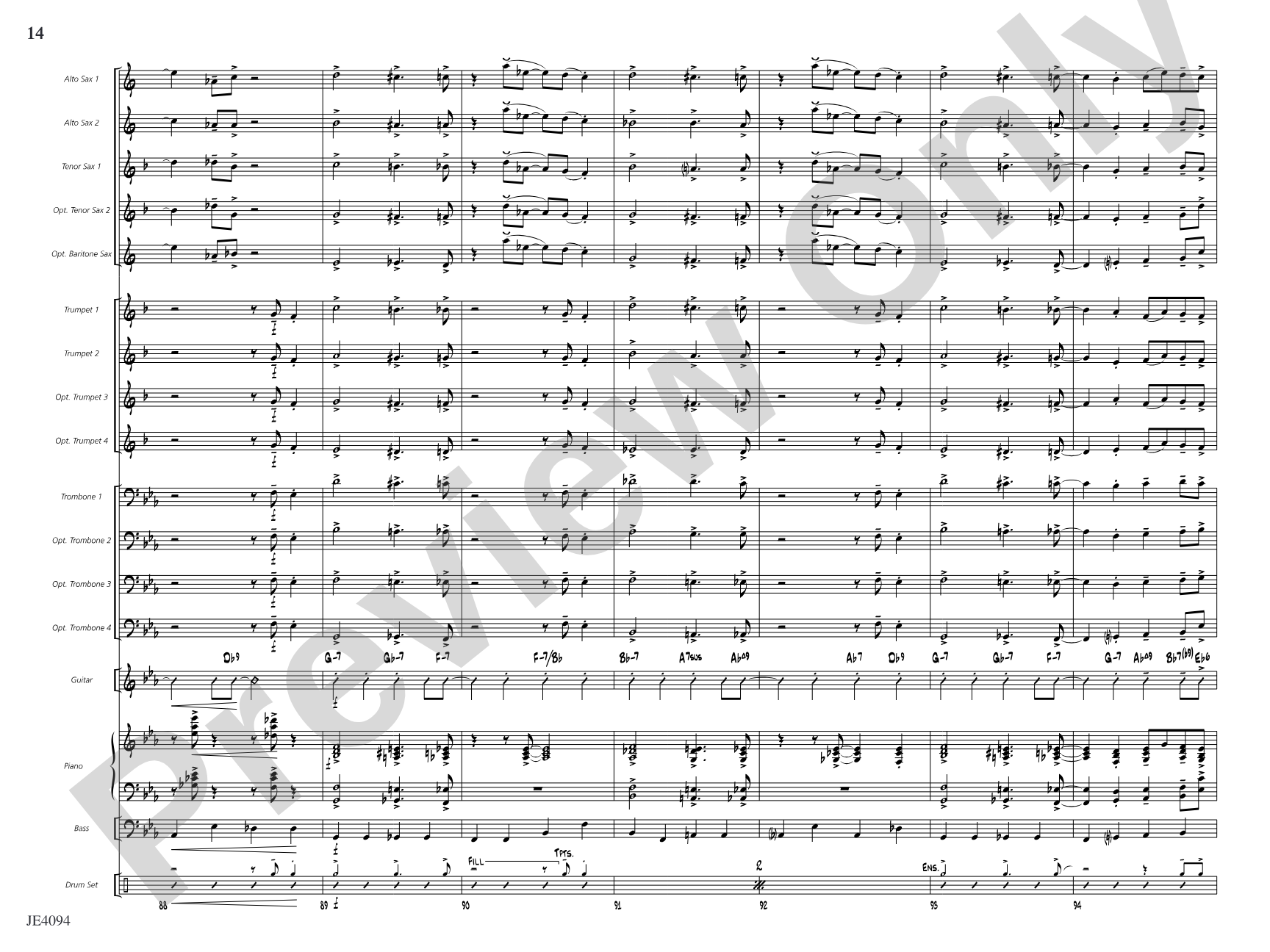
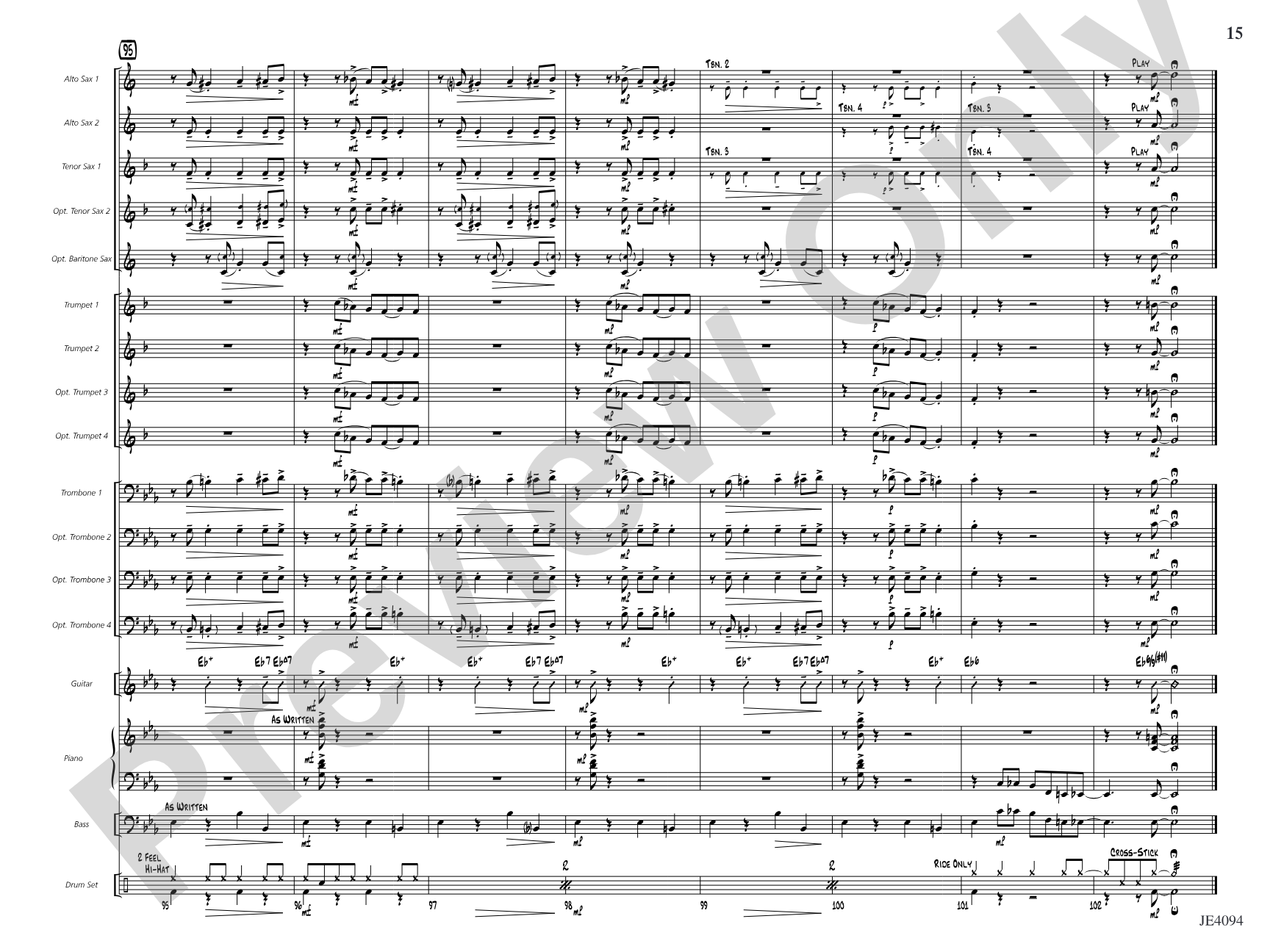

Riddle in Swing: Jazz Ensemble Conductor Score & Parts
By Rob Vuono Jr.
Grade: 1.5
Item: 98-DJE4094
$45.00
Pickup currently not available
Buy Extra Parts (Digital PDF Download)
| Product | Price | Quantity |
|---|---|---|
| Riddle in Swing: Score | $5.00 | |
| Riddle in Swing: Alto Sax 1 | $7.00 | |
| Riddle in Swing: Alto Sax 2 | $7.00 | |
| Riddle in Swing: Tenor Sax 1 | $7.00 | |
| Riddle in Swing: Opt. Tenor Sax 2 | $7.00 | |
| Riddle in Swing: Opt. Baritone Sax | $7.00 | |
| Riddle in Swing: Trumpet 1 | $7.00 | |
| Riddle in Swing: Trumpet 2 | $7.00 | |
| Riddle in Swing: Opt. Trumpet 3 | $7.00 | |
| Riddle in Swing: Opt. Trumpet 4 | $7.00 | |
| Riddle in Swing: Trombone 1 | $7.00 | |
| Riddle in Swing: Opt. Trombone 2 | $7.00 | |
| Riddle in Swing: Opt. Trombone 3 | $7.00 | |
| Riddle in Swing: Opt. Trombone 4 | $7.00 | |
| Riddle in Swing: Guitar Chord Guide | $7.00 | |
| Riddle in Swing: Guitar | $7.00 | |
| Riddle in Swing: Piano | $7.00 | |
| Riddle in Swing: Bass | $7.00 | |
| Riddle in Swing: Drum Set | $7.00 | |
| Riddle in Swing: C Flute (Alternate Part) | $7.00 | |
| Riddle in Swing: F Horn (Alternate Part) | $7.00 | |
| Riddle in Swing: Baritone T.C. (Alternate Part) | $7.00 |
Parts Added to Cart!
Description
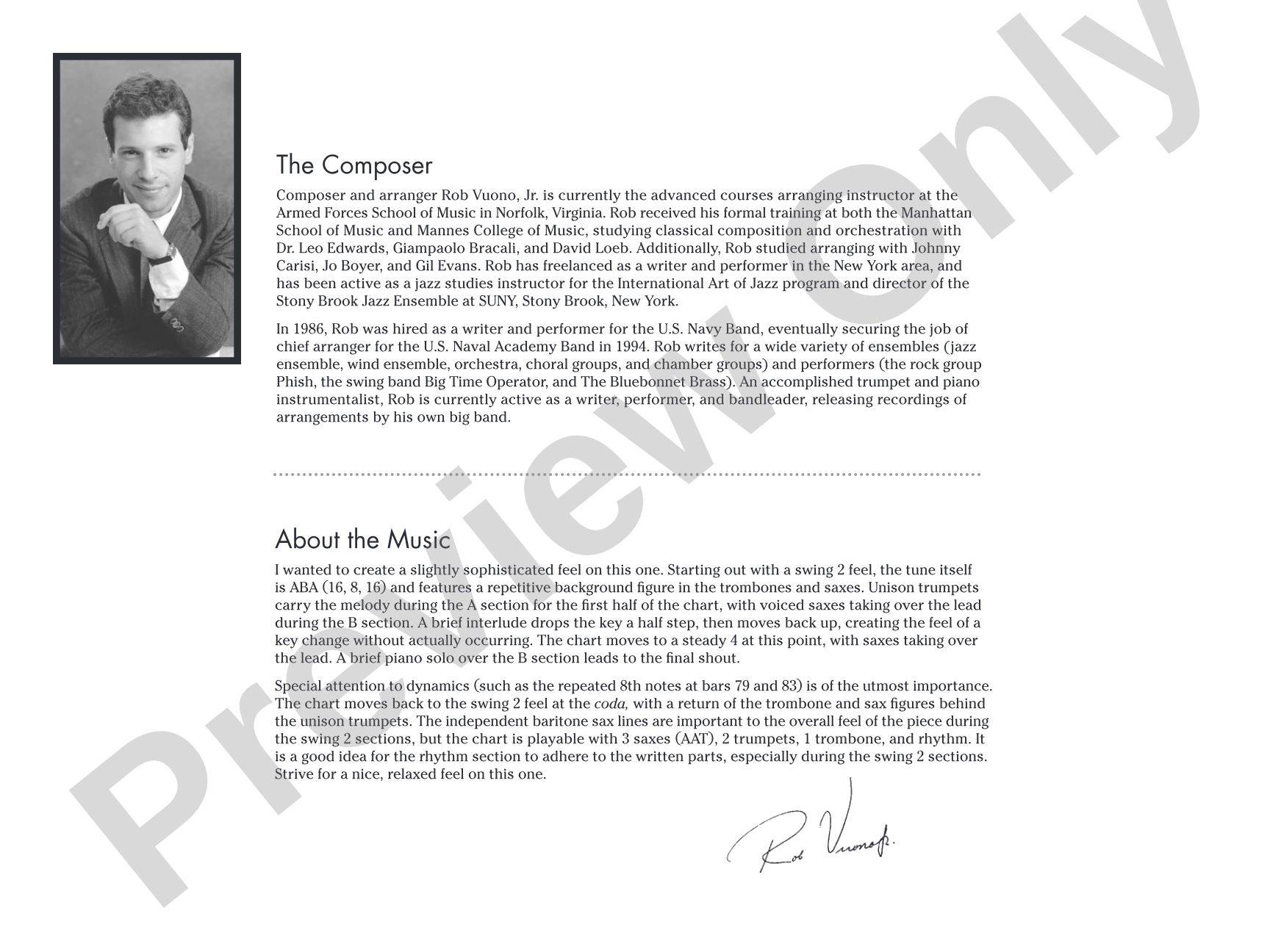
There's no riddle when it comes to the success of Rob Vuono's jazz charts! His ability to create a complex sounding chart that is extremely easy to play makes this one a guaranteed winner. Starting off with a simple swing 2 feel, the chart builds into a steady 4. A brief interlude drops the key down a half step before moving back up, creating the illusion of a key change without one ever occurring! Fabulous writing by one of the top jazz arrangers in the country!


Riddle in Swing: Jazz Ensemble Conductor Score & Parts isn't in MakeMusic Cloud just yet...but it could be. Let us know you'd like to see it, and you'll help shape what comes next. In the meantime, start a free trial and dive into thousands of interactive titles your students can play along with today.
Request This Title
Tell us you want it.
Start Your Free Trial
Explore everything that's ready to play right now.
Sample Audio
1
Audio File
--:--
0:00
0:00
Sample Video
No sample videos found.
Additional Details
Series:
FJH Beginning Jazz Ensemble
Publisher:
The FJH Music Company, Inc.
SKU:
98-DJE4094
More about this title
About the Composer: Rob Vuono Jr.
Rob Vuono Jr. has built a reputation as one of the most prolific and accessible arrangers for beginning and intermediate jazz ensembles. His approach prioritizes playability without sacrificing sophistication, making him a trusted voice for directors building jazz programs from the ground up. Vuono's charts consistently appear on festival setlists and in classroom libraries across the country, reflecting his deep understanding of what student musicians can accomplish when given clear, musical writing.
Why we love this
Vuono's gift for architectural economy shines here. He demonstrates that a chart can sound genuinely clever and complex without requiring advanced reading skills or technical facility from your section leaders. The half-step modulation without an actual key change is the kind of writing move that teaches young players how to listen for harmonic color and think beyond the page.
What to expect
Riddle in Swing rides on a relaxed, conversational swing feel that gradually builds momentum and confidence. The chart swings effortlessly, never rushing or straining, and the harmonic movement through the half-step interlude gives the piece a subtle sense of discovery without losing its cool, straightforward groove.
Who it's for
This chart belongs in the library of any director launching a new jazz ensemble or reinforcing fundamentals with experienced but newly formed groups. Soloists at the 1.5 grade level will find accessible passages that still allow for personal musicianship and interpretation.
How to get the most out of it
- Establish the swing 2 feel clearly in the opening section. Lock the rhythm section into a light, conversational pocket before the band enters; once everyone hears it, the transition to steady 4 will feel natural rather than abrupt.
- The half-step drop should feel like a gentle shift in color, not a dramatic wrench. Work with your pianist to shape the transition smoothly so the illusion works. Clarity matters more than flash.
- Balance the ensemble voicings during the build from 2 to 4. Keep the opening section intimate and tight, then gradually open up the sound as the rhythm tightens. This dynamic arc is what makes the chart work.
How to use it
Open a jazz concert with this piece to establish a comfortable, swinging energy. Its accessibility and clarity make it ideal early in the year as a building block for ensemble cohesion and phrasing, or use it mid-program as a palate-cleansing contrast to busier arrangements.
Skills your students will build
- Swing feel and rhythmic comping (2-feel to 4-feel transition)
- Listening for harmonic color changes without tonal landmarks
- Ensemble balance and blend across a dynamic build
- Soloing phrasing over clear, accessible changes