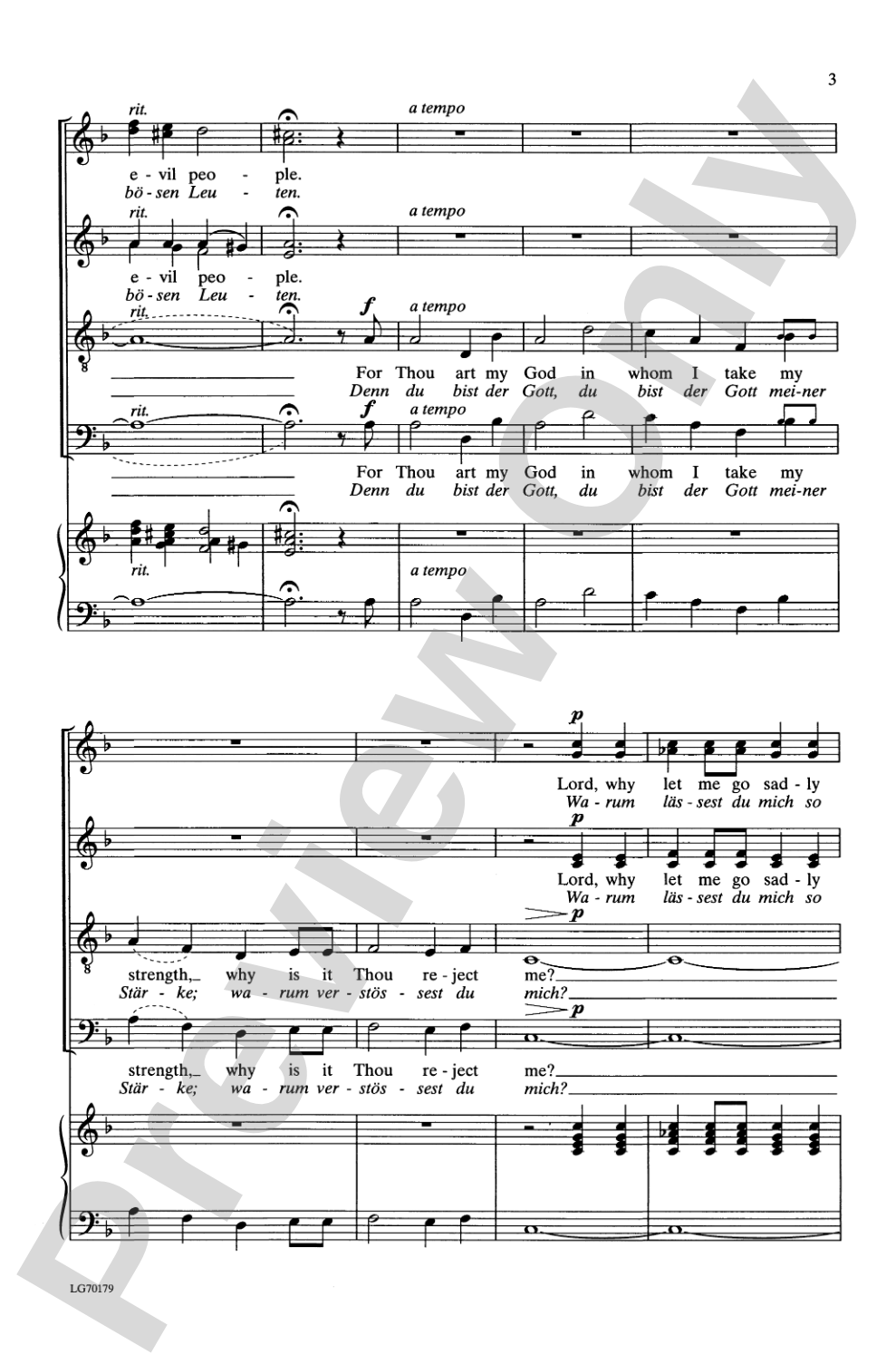
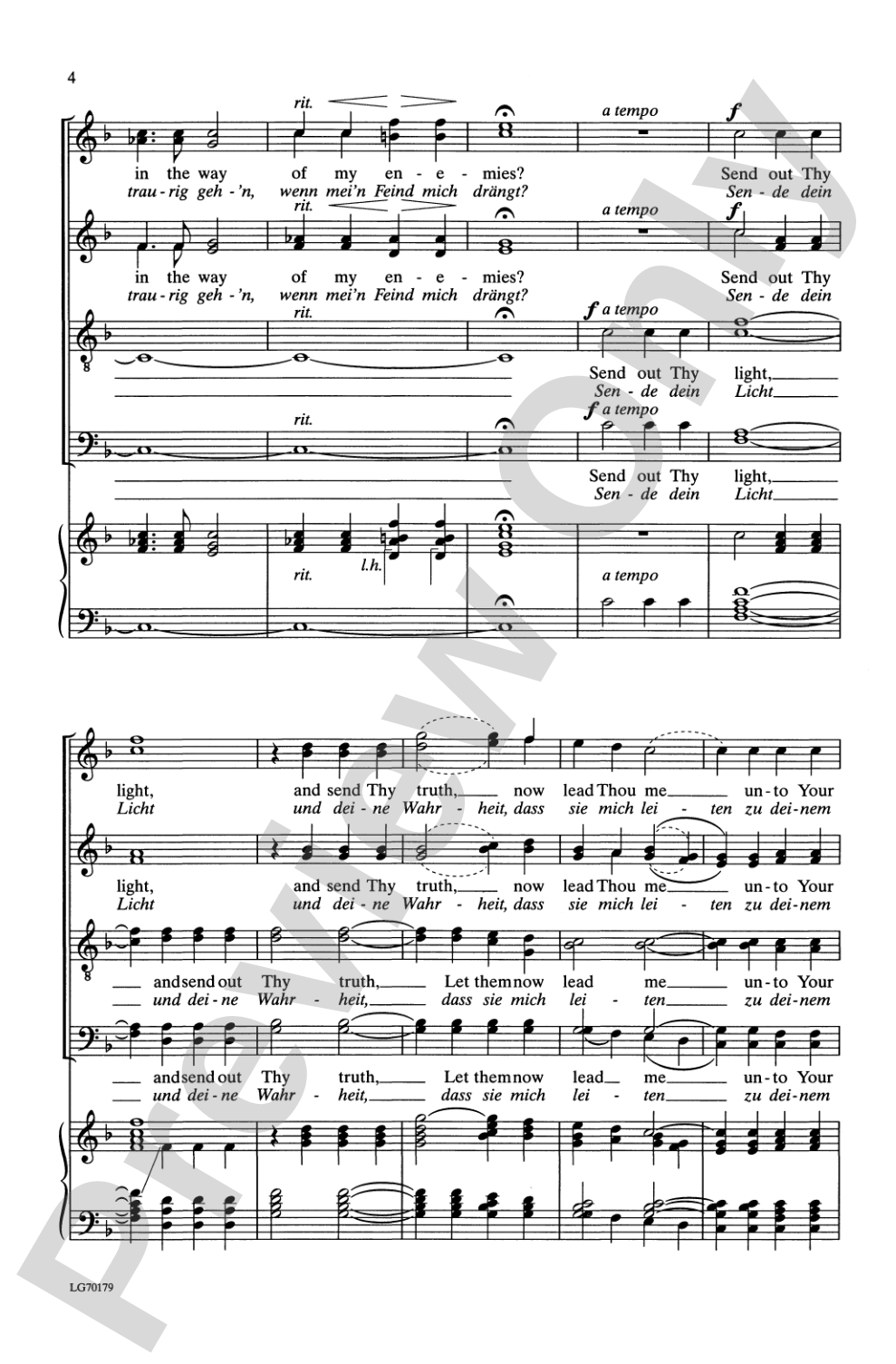
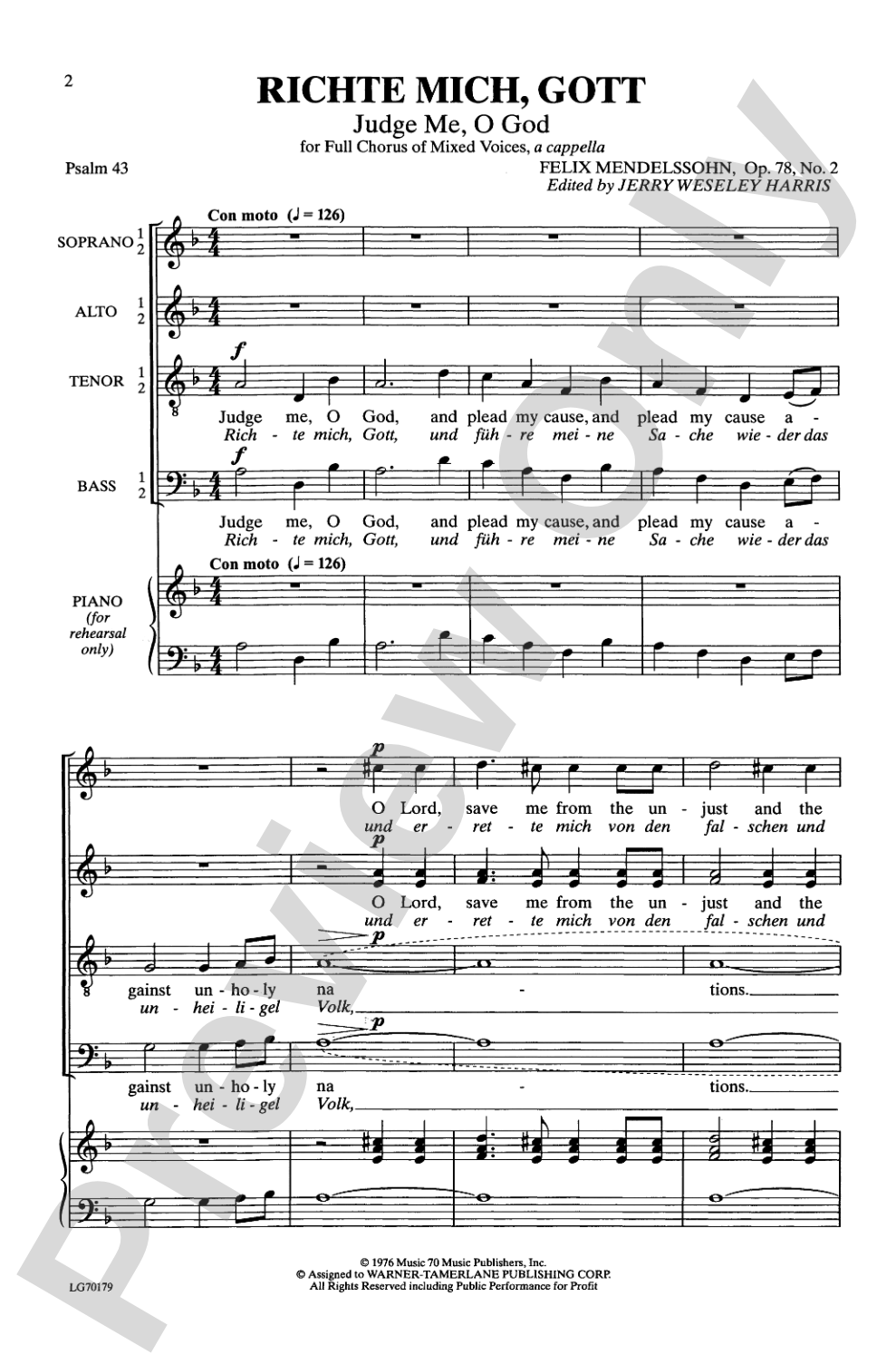
Richte Mich, Gott (Judge Me, O God) Sheet Music Preview

Richte Mich, Gott (Judge Me, O God): SATB, a cappella Choral Octavo

By Felix Mendelssohn / ed. Jerry Weseley Harris

Item: 00-PO-0003036

Digital Download
$2.25

Minimum order quantity: 20 copies

Description

Richte Mich, Gott (Judge Me, O God): SATB, a cappella Choral Octavo isn't in MakeMusic Cloud just yet...but it could be. Let us know you'd like to see it, and you'll help shape what comes next. In the meantime, start a free trial and dive into thousands of interactive titles your students can play along with today.

Sample Audio
No sample audio found.
Sample Video
Additional Details
Series: Alfred Archive Edition: Lawson-Gould Music Publishers
Publisher: Alfred Music
Page Count: 12
SKU: 00-PO-0003036

More about this title

About the Composer: Felix Mendelssohn

Felix Mendelssohn (1809-1847) was a German Romantic composer whose sacred choral works shaped the nineteenth-century repertoire. A virtuoso organist and conductor, he brought contrapuntal sophistication and emotional depth to both large-scale oratorios and intimate a cappella motets, establishing himself as one of the era's finest voices in sacred music.

Mendelssohn's approach to text setting was meticulous. He combined Lutheran musical traditions with Romantic harmonic language, creating works that feel both rooted in church music history and thoroughly modern for their time. His choral music remains essential repertoire for ensembles seeking masterworks that demand musical maturity and reward careful preparation.

Why we love this

This motet showcases Mendelssohn at his most refined: four-part writing that avoids homophony in favor of genuine independence, harmonic language that surprises without becoming obscure, and a text-driven structure that unfolds like a conversation between voices. The piece sits comfortably within the range of accomplished choirs while offering real substance for those ready to tackle genuine Renaissance-influenced counterpoint with Romantic sensibility.

What to expect

The piece unfolds with liturgical solemnity yet pulses with Romantic warmth. Mendelssohn's harmonies shift subtly, creating moments of brightness and shadow that give the psalm text room to resonate. There's an intimacy here despite the four-part texture; it feels like overhearing a prayer rather than witnessing a performance.

Who it's for

This octavo suits intermediate to advanced SATB choirs with secure intonation and comfort reading in multiple clefs. Conductors preparing a concert of Romantic sacred music or programming works by major composers will find it a central choice rather than a curiosity.

How to get the most out of it

  • Shape the harmonic progression carefully through awareness of voice leading. Each part has direction and purpose; resisting the urge to over-blend allows the inner voices to sing through without sacrificing blend.
  • Establish clear vowel placement on Latin text and maintain it across all four parts. Consistency in vowel space is what makes a cappella singing sound unified rather than scattered.
  • Guard against rushing in sections with longer note values. Slower harmonic rhythm requires discipline; let the weight of the vertical sonorities speak rather than filling silence with momentum.
  • Work the cadences separately. Mendelssohn's cadential voice leading is intricate and often chromatic; soloists or section leaders should trace each voice's path through these moments first.

How to use it

This works beautifully in a program of Romantic sacred music, either paired with Brahms motets or alongside other Mendelssohn choral works. It also serves as an excellent anchor piece in a concert built around Lutheran or Protestant choral traditions, offering substantive repertoire without requiring soloists or instrumental forces.

Skills your students will build

  • Independent voice leading within a four-part texture
  • Reading and sustaining chromatic harmonic language
  • Clarity of articulation in Latin text at various tempos
  • Intonation accuracy in close harmonic intervals
  • A cappella blend and balance without instrumental support

You May Also Like