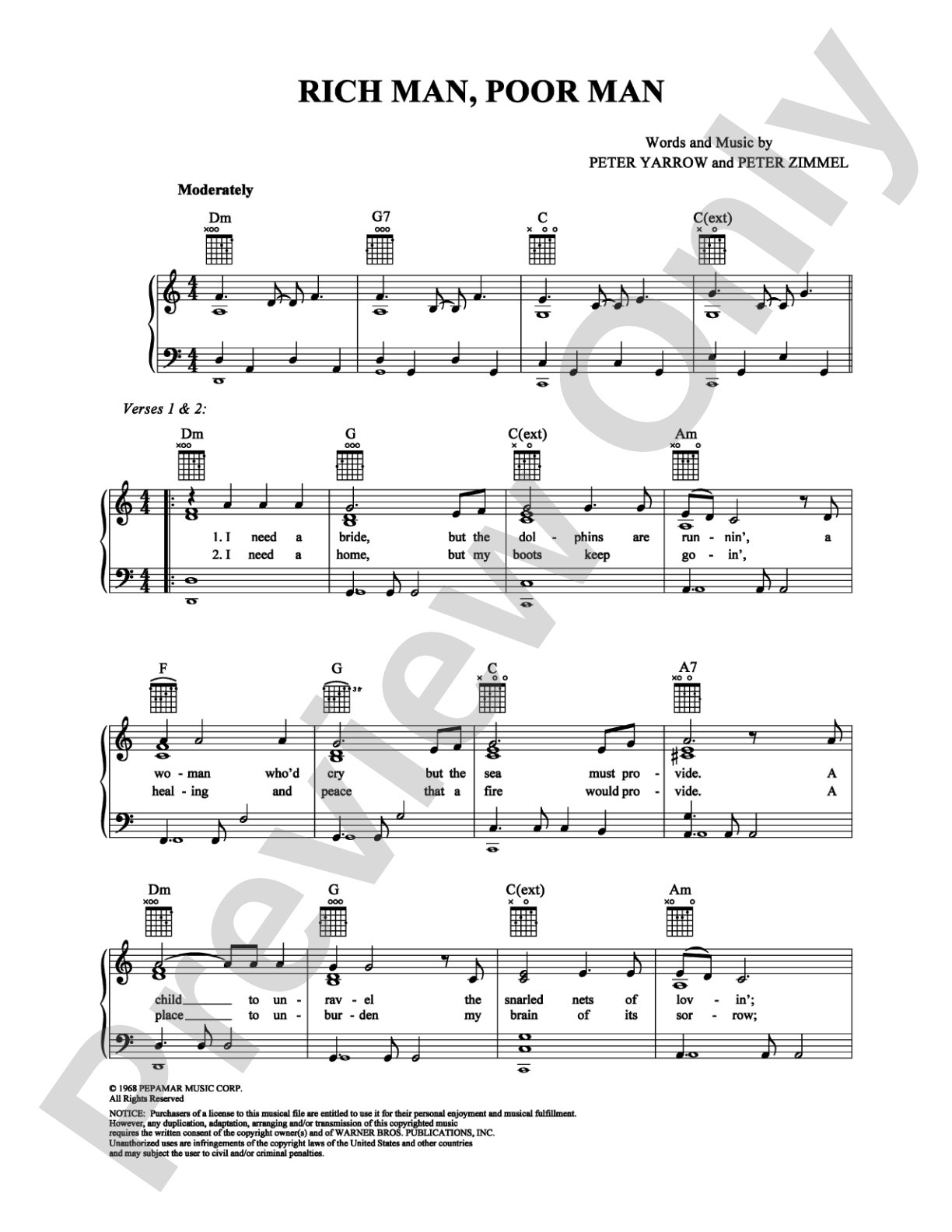
Rich Man, Poor Man: Piano/Vocal/Chords Digital Sheet Music

Rich Man, Poor Man: Piano/Vocal/Chords Digital Sheet Music

Peter Yarrow, Peter Paul & Mary, Peter Zimmel

Item: 00-PS-0009997

Digital Download
$3.99
Description

Rich Man, Poor Man: Piano/Vocal/Chords Digital Sheet Music isn't in MakeMusic Cloud just yet...but it could be. Let us know you'd like to see it, and you'll help shape what comes next. In the meantime, start a free trial and dive into thousands of interactive titles your students can play along with today.

Sample Audio
No sample audio found.
Sample Video
Additional Details
SKU: 00-PS-0009997

More about this title

About the Artist: Peter Paul & Mary

Peter, Paul and Mary emerged in the early 1960s as one of the defining voices of the folk revival, bringing acoustic-driven arrangements and socially conscious lyrics to mainstream audiences. The trio's seamless blend of three-part harmony, combined with their accessible yet thoughtful songwriting, made them influential figures in both folk and pop music education circles.

Why we love this

This arrangement captures the group's signature warmth and vocal blend while remaining manageable for pianists working with singers in a variety of settings. The folk-rooted melody and straightforward harmonic language make it approachable for intermediate players without sacrificing the emotional authenticity that made the original recording resonate across generations.

What to expect

The piece carries the contemplative, accessible warmth characteristic of 1960s folk music, with lyrics and melody that invite reflection without demanding virtuosity. Piano and voice sit together naturally, creating an intimate conversation rather than a showcase performance.

Who it's for

This arrangement works well for intermediate to advanced pianists who accompany singers in recital, studio, or classroom settings. Vocalists exploring folk-pop repertoire will find it both singable and musically satisfying, whether preparing for auditions or building a mixed repertoire program.

How to get the most out of it

  • Shape the vocal line with the natural speech rhythms of the lyric rather than forcing even, mechanical phrasing; the tune breathes most naturally when you follow the conversational quality of the narrative.
  • Balance the piano part so it supports rather than overshadows the voice; the chords should anchor the harmonic foundation while leaving the vocal melody as the clear focal point.
  • Maintain steady, unhurried tempos in the verses; rushing dilutes the storytelling quality that gives this piece its power.

How to use it

Include this in a recital exploring American folk-pop repertoire, or pair it with other era-appropriate pieces for a thematic program on social commentary in popular music. It works equally well as a standalone performance piece or as part of a singer's audition or concert set.

Skills your students will build

  • Accompanying a vocalist while maintaining independent line independence
  • Interpreting folk-influenced melody with lyrical sensitivity
  • Reading and realizing chord symbols in a popular music context
  • Balancing accompaniment texture to support rather than compete with vocal melody

You May Also Like