
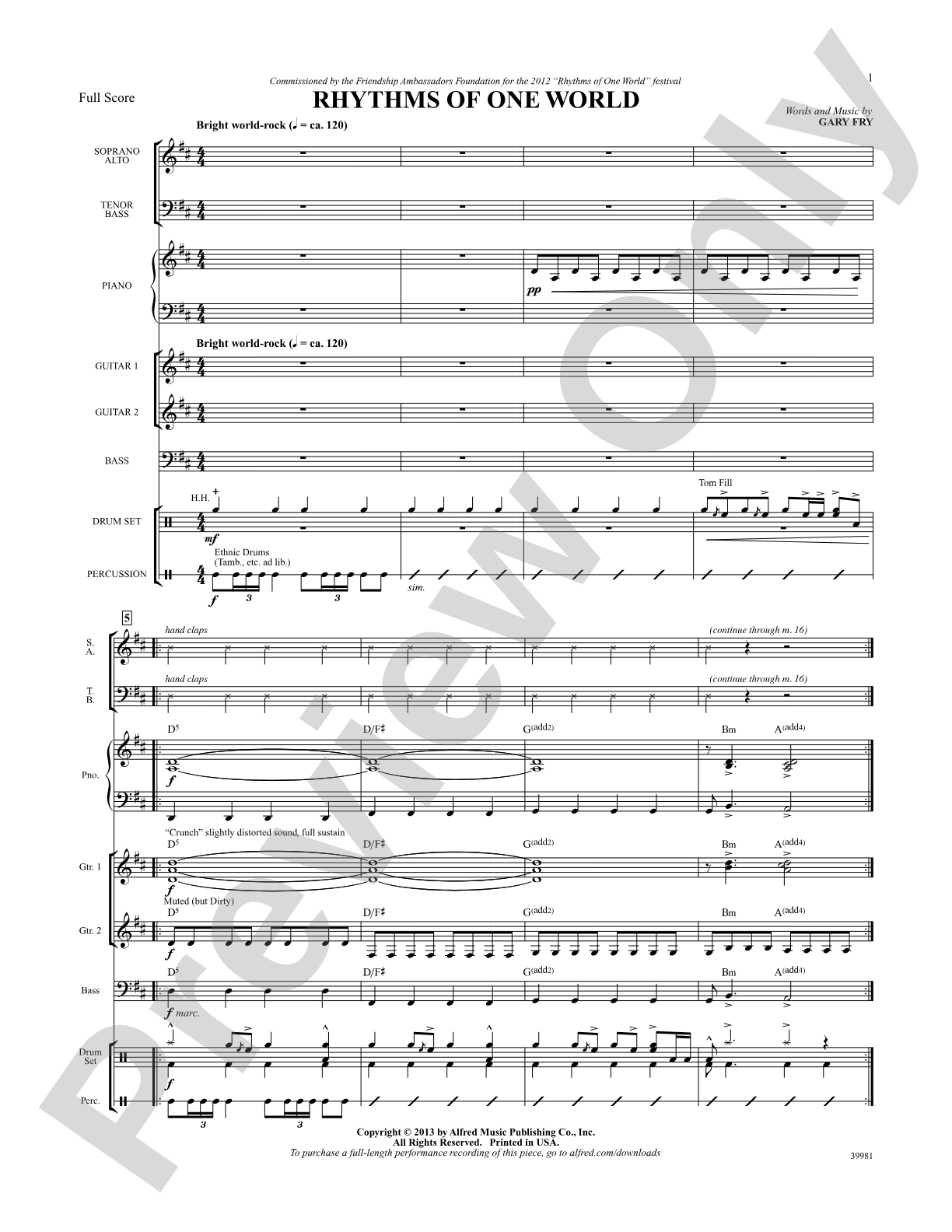
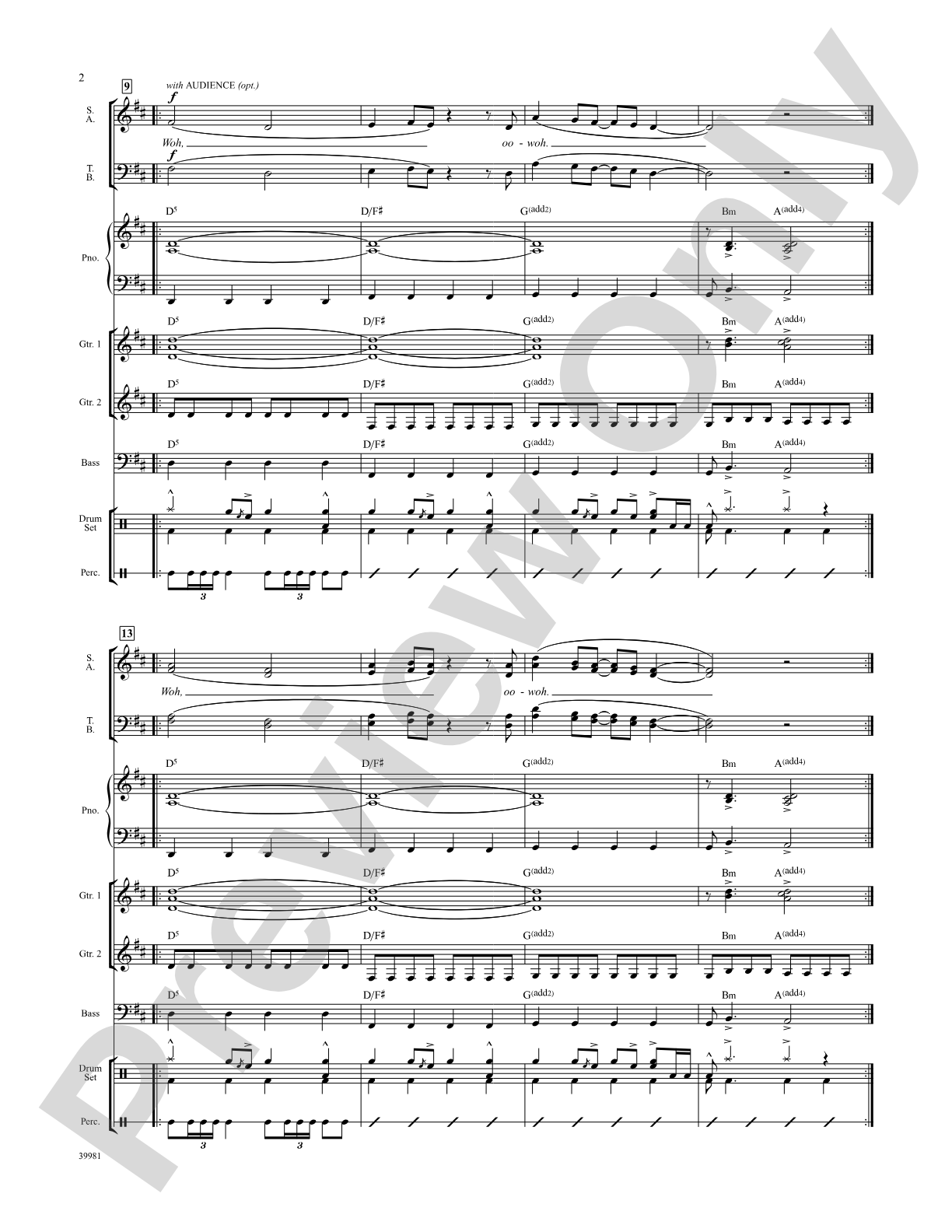
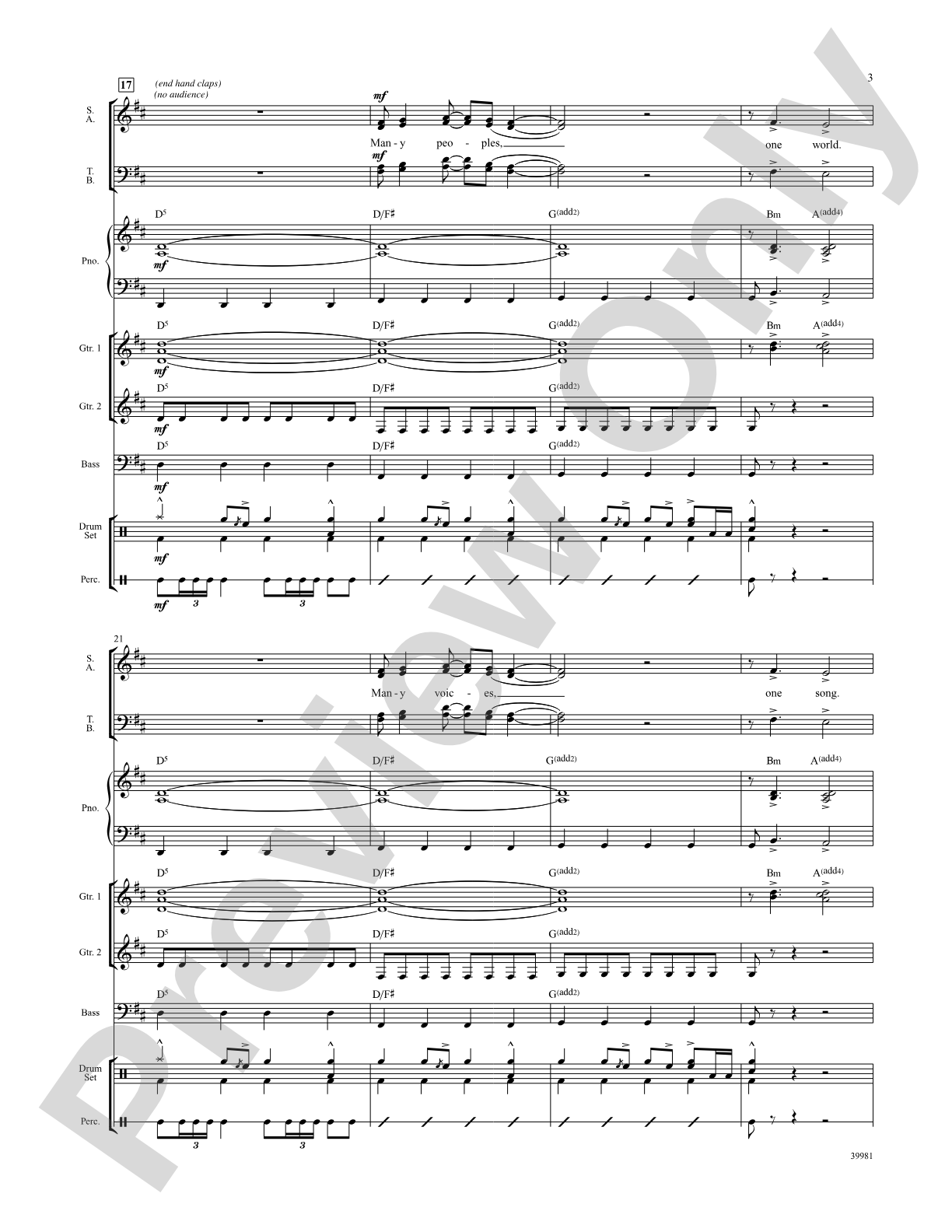
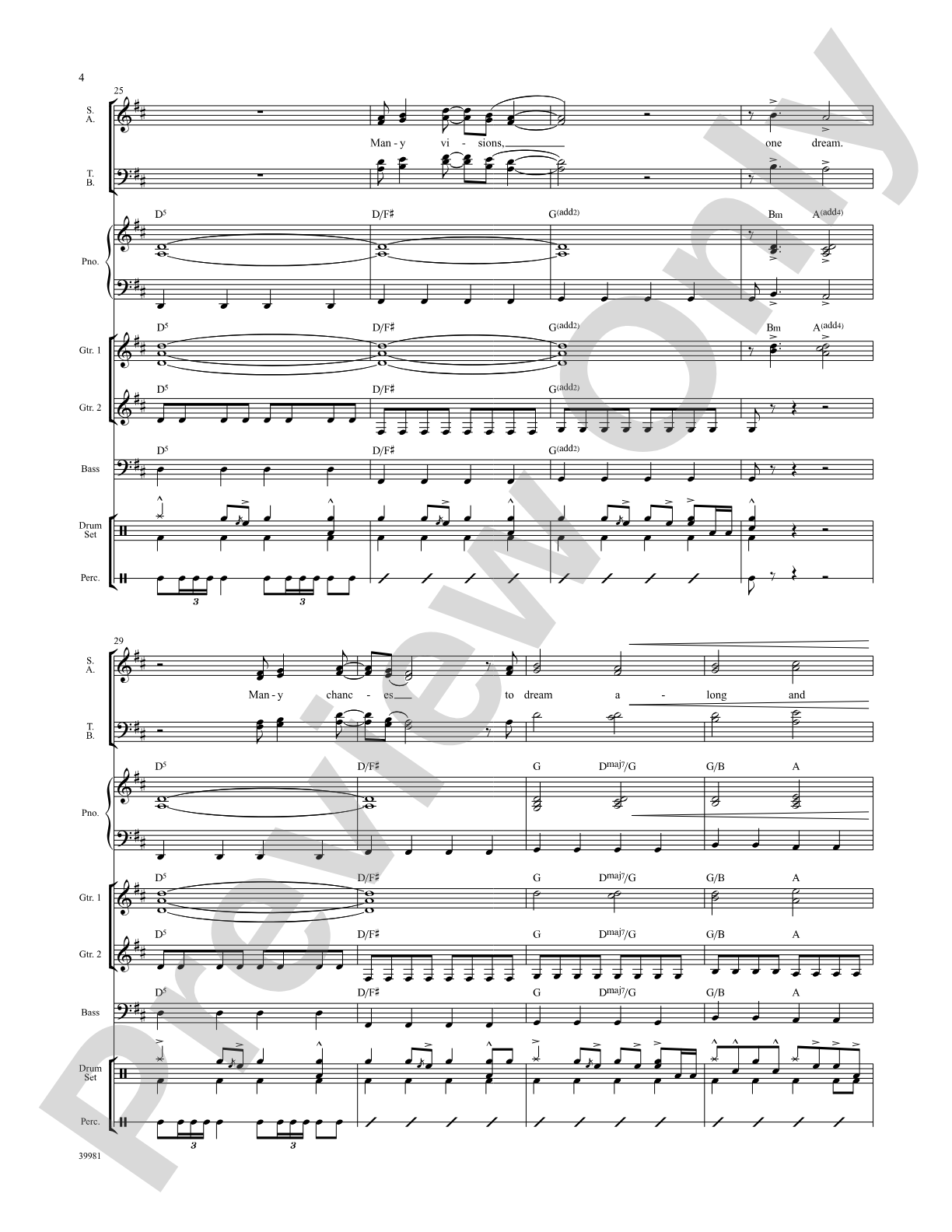
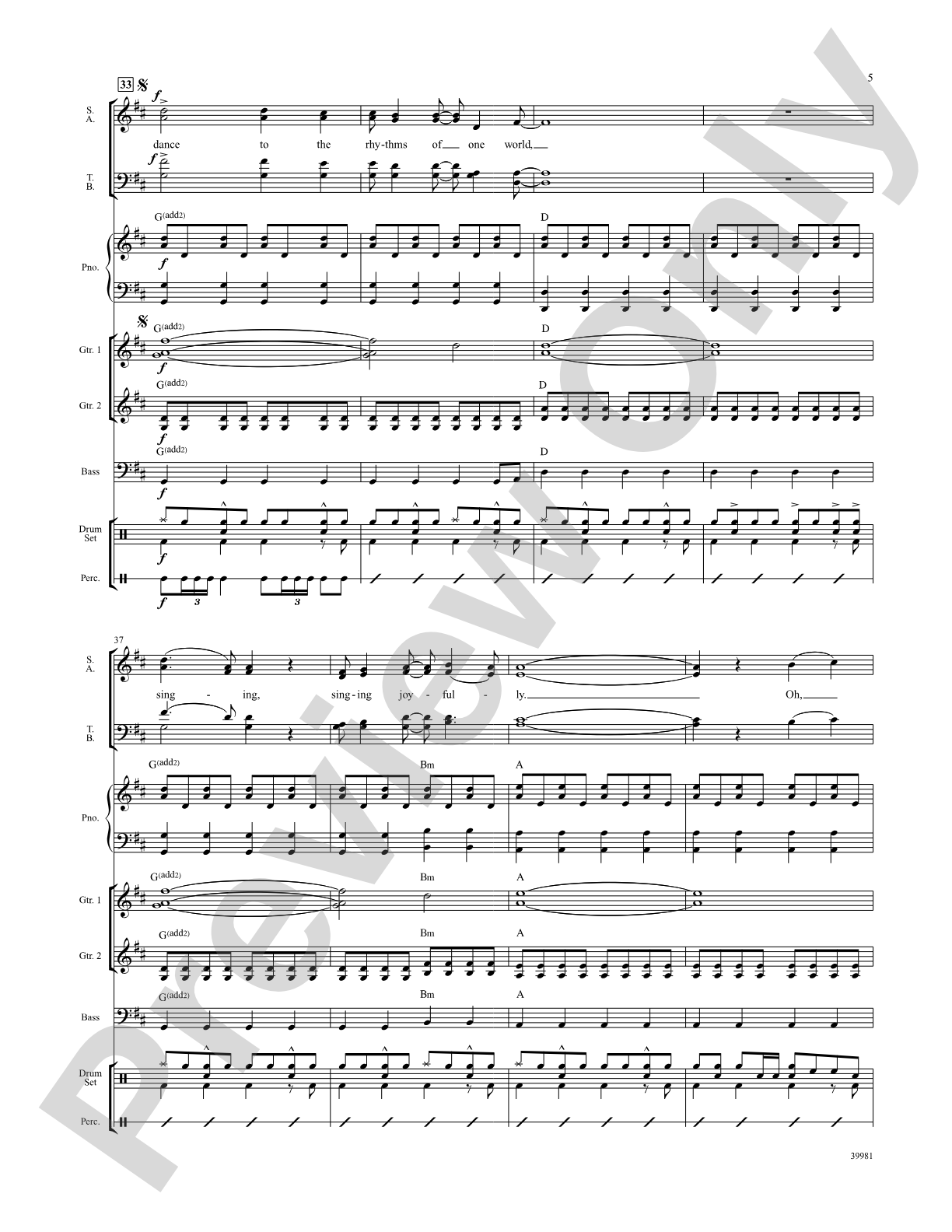
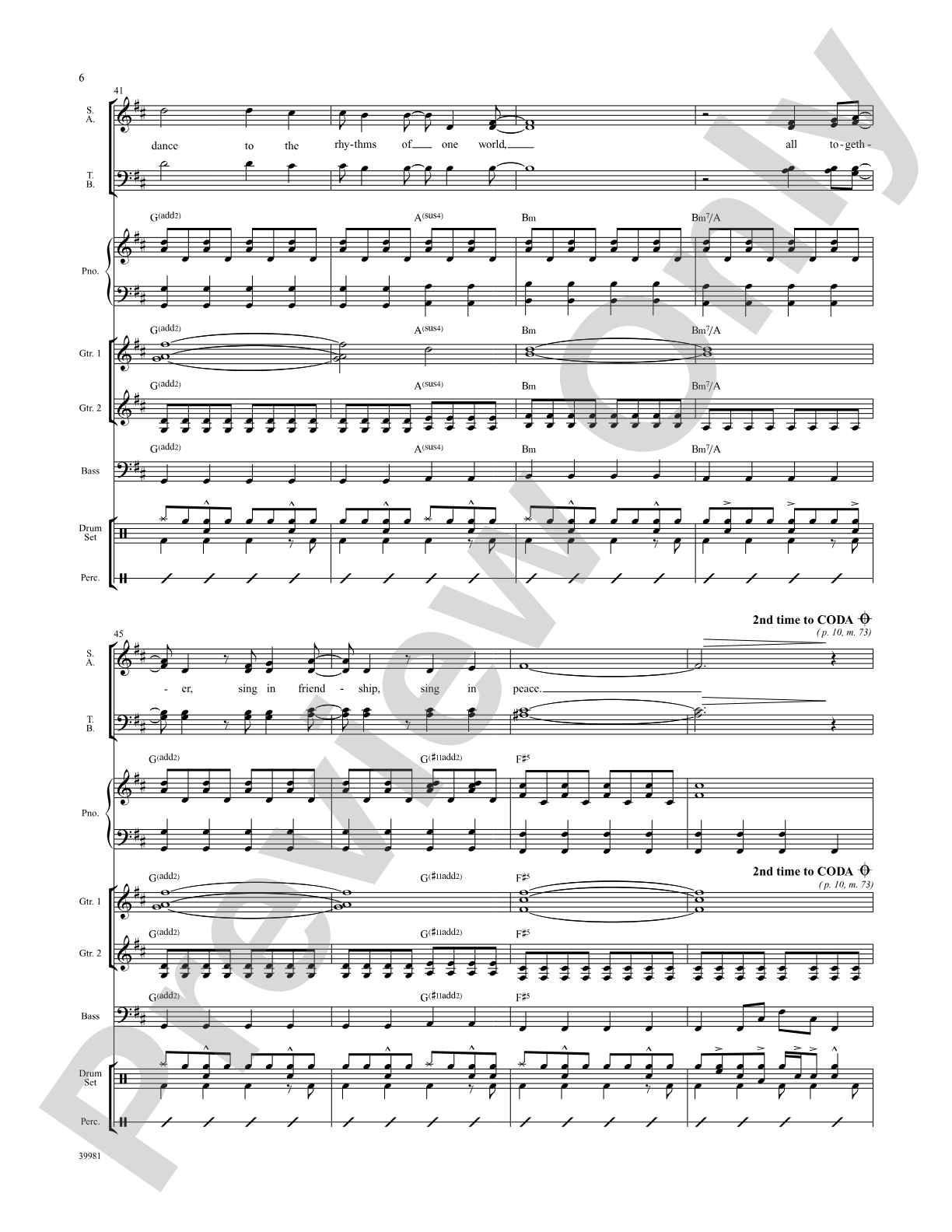
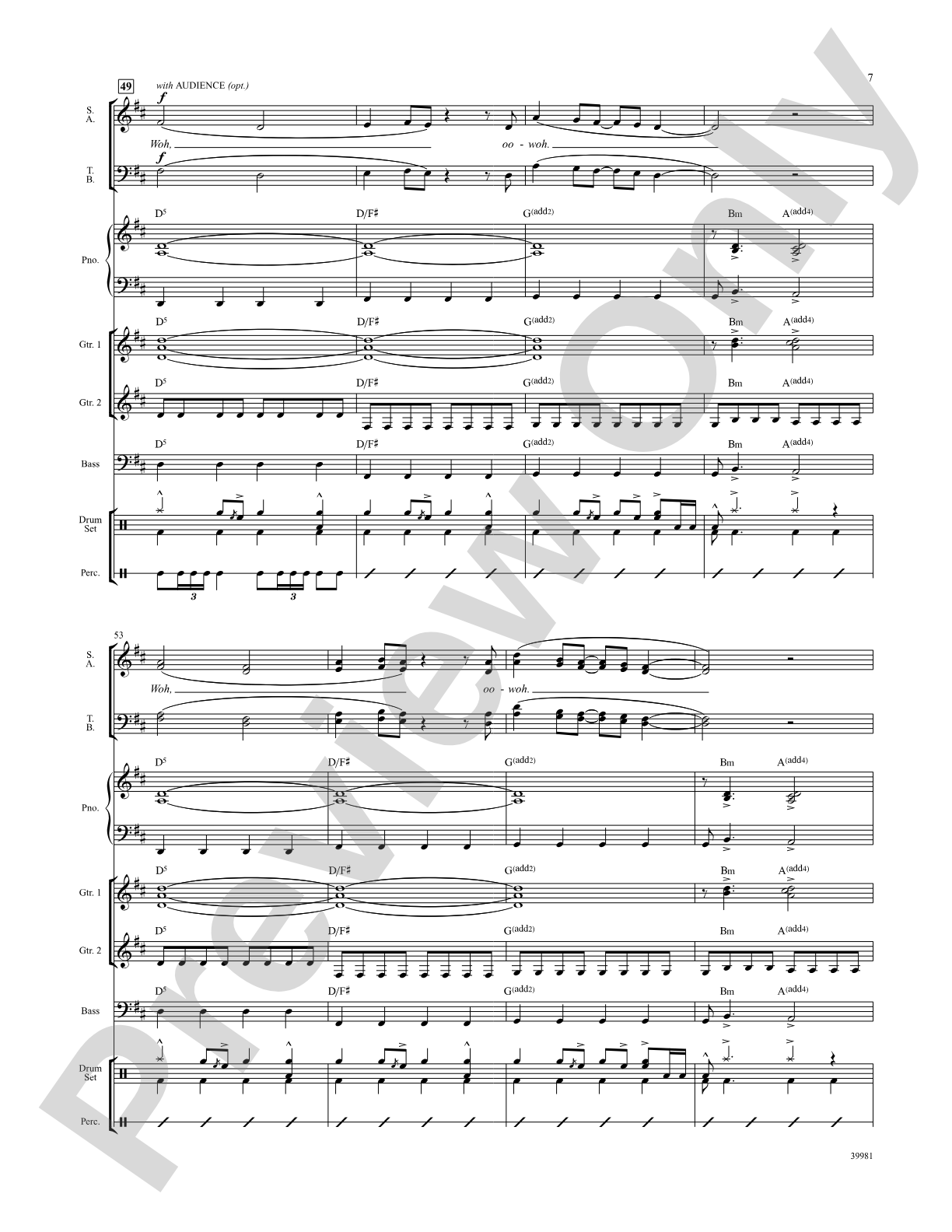
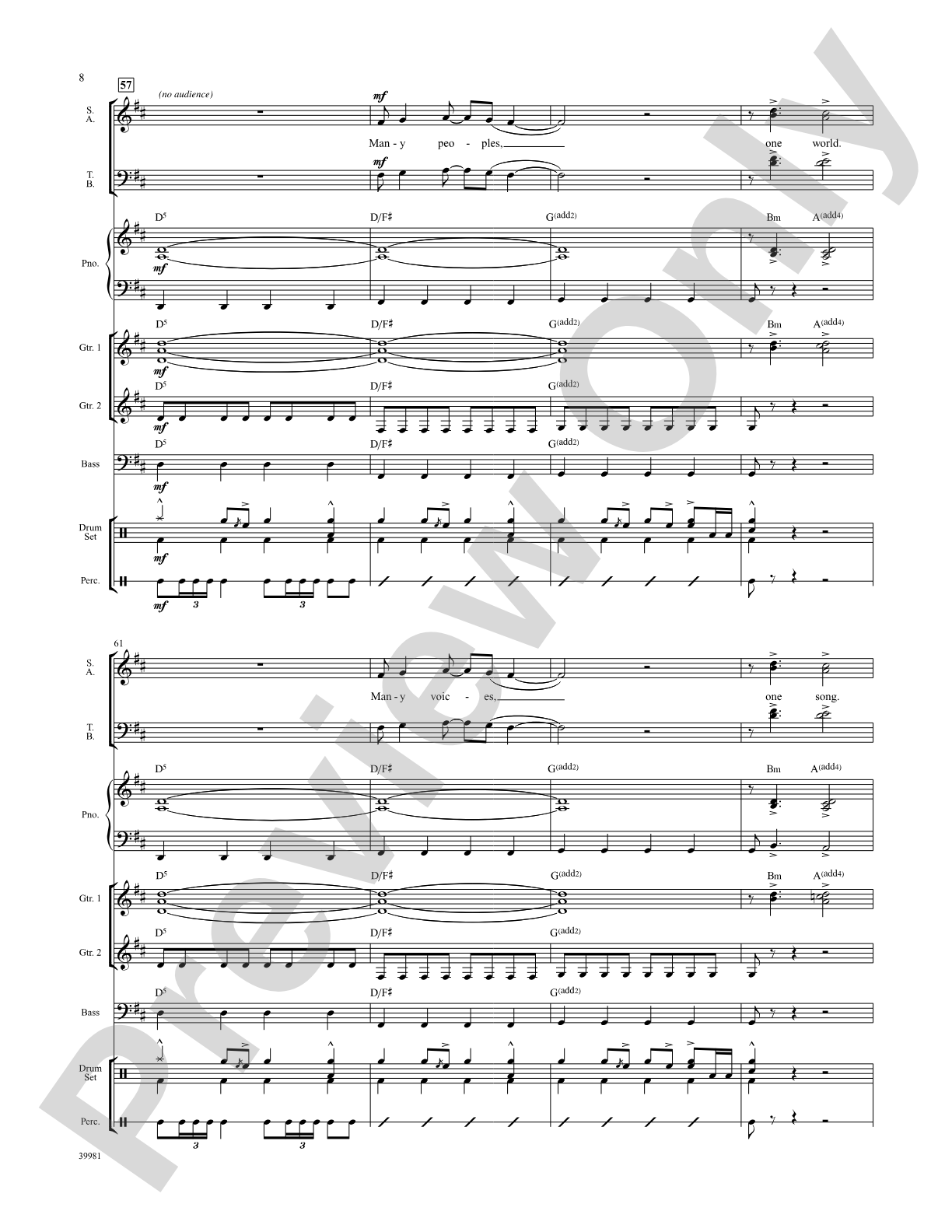
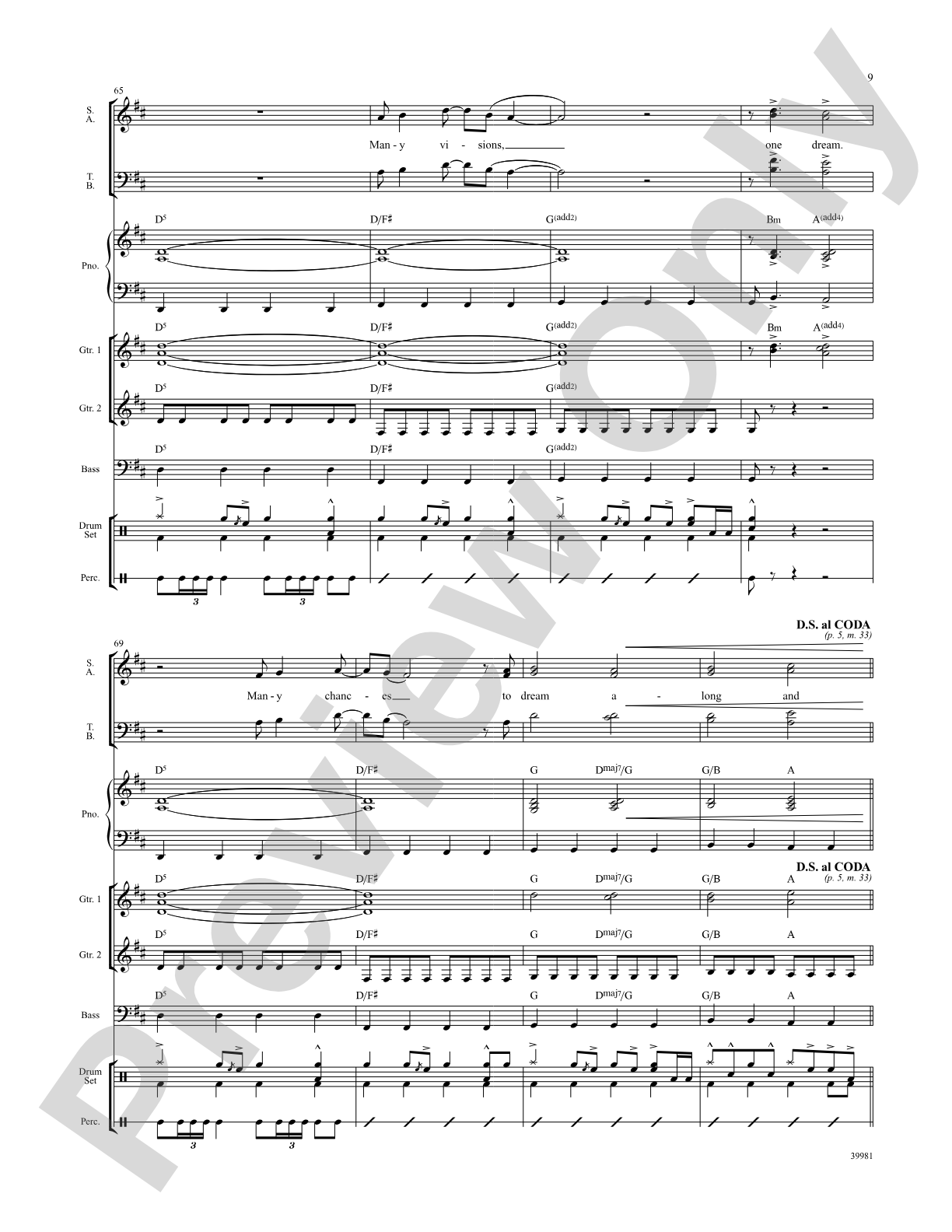
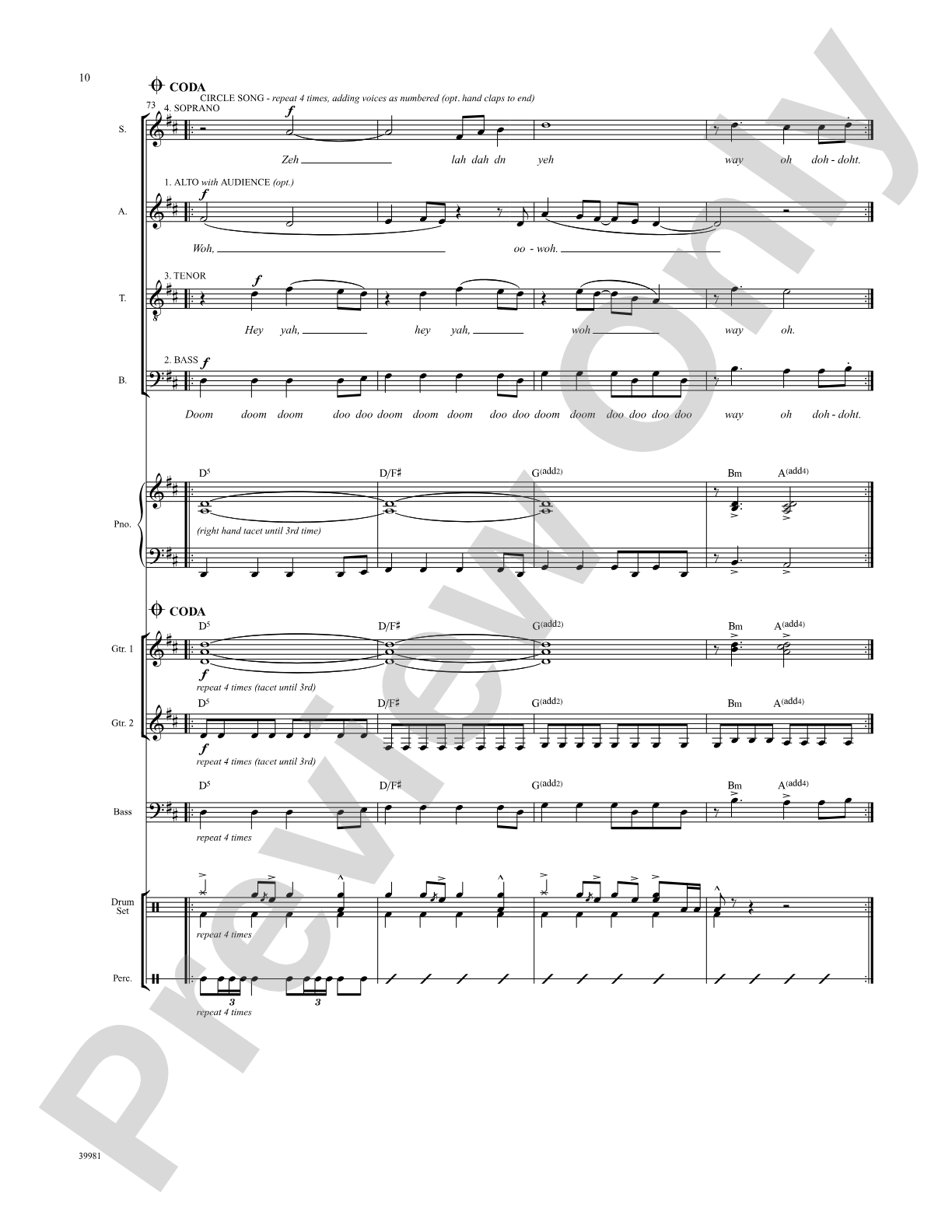
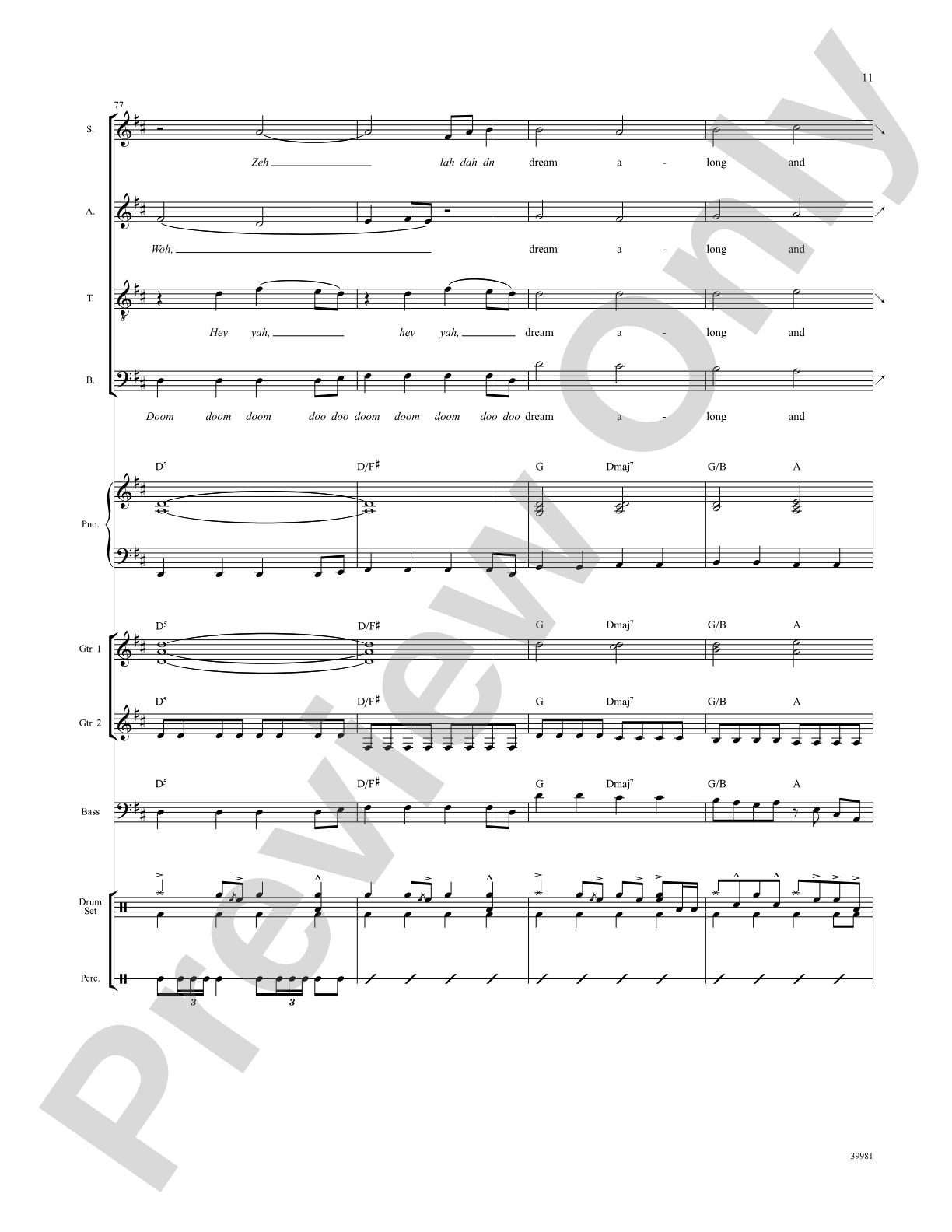
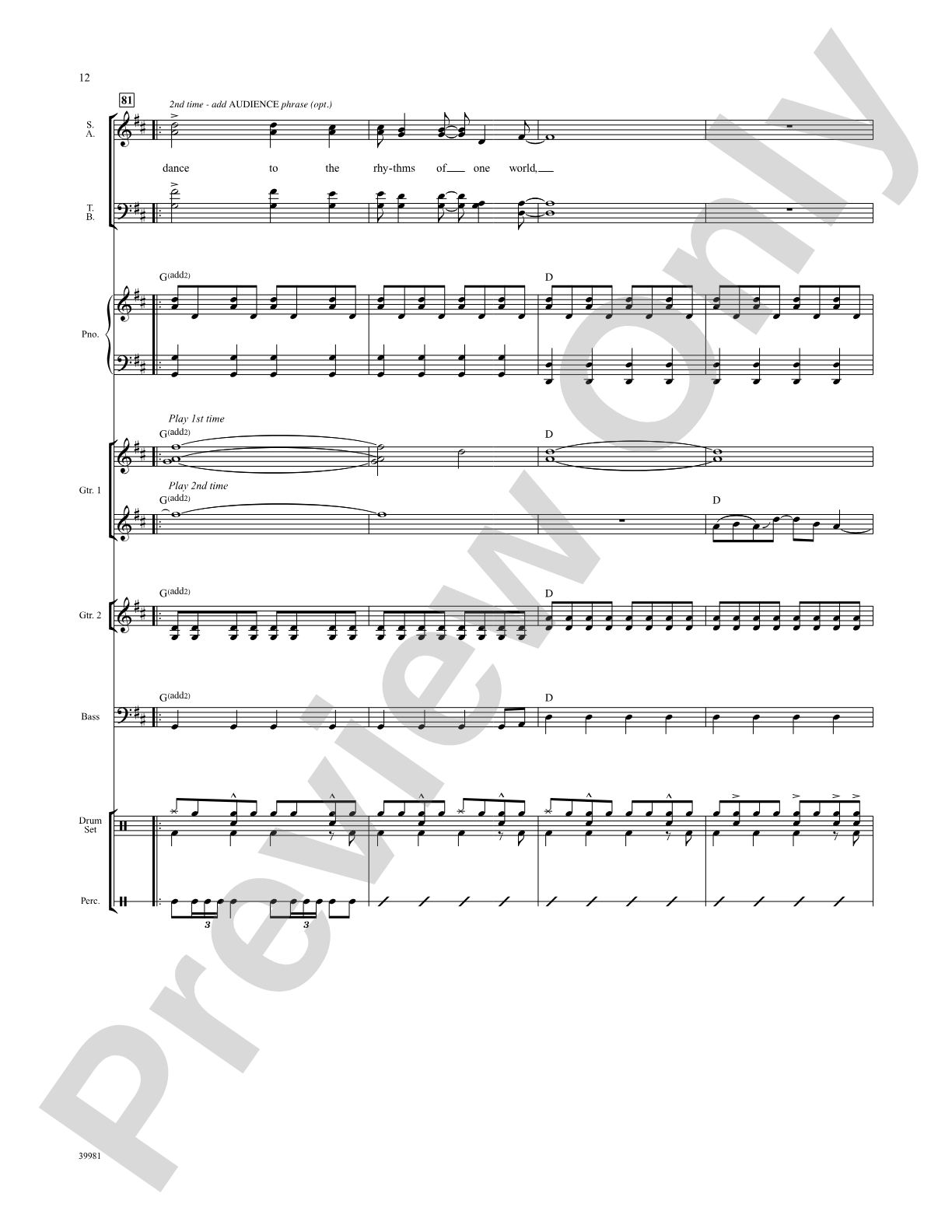
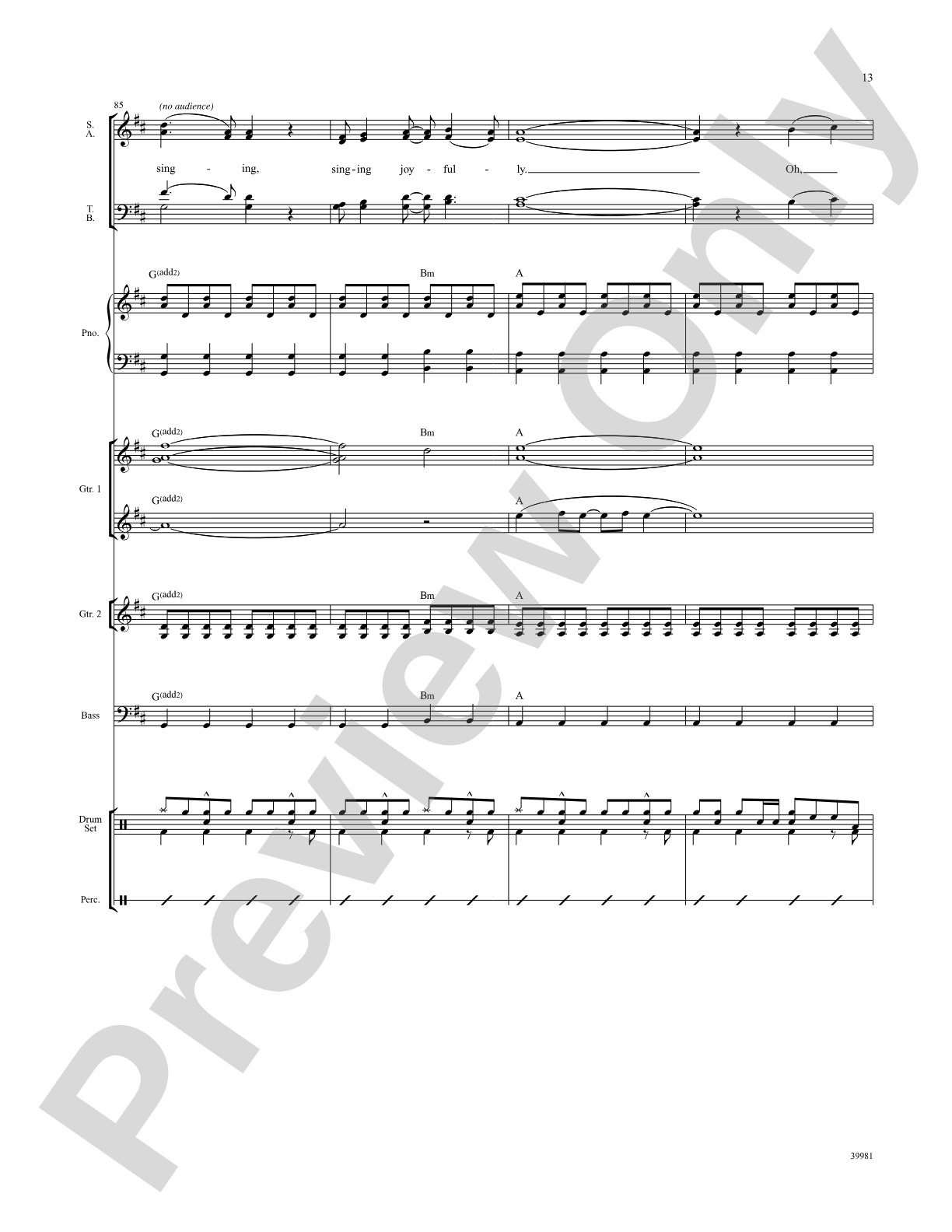
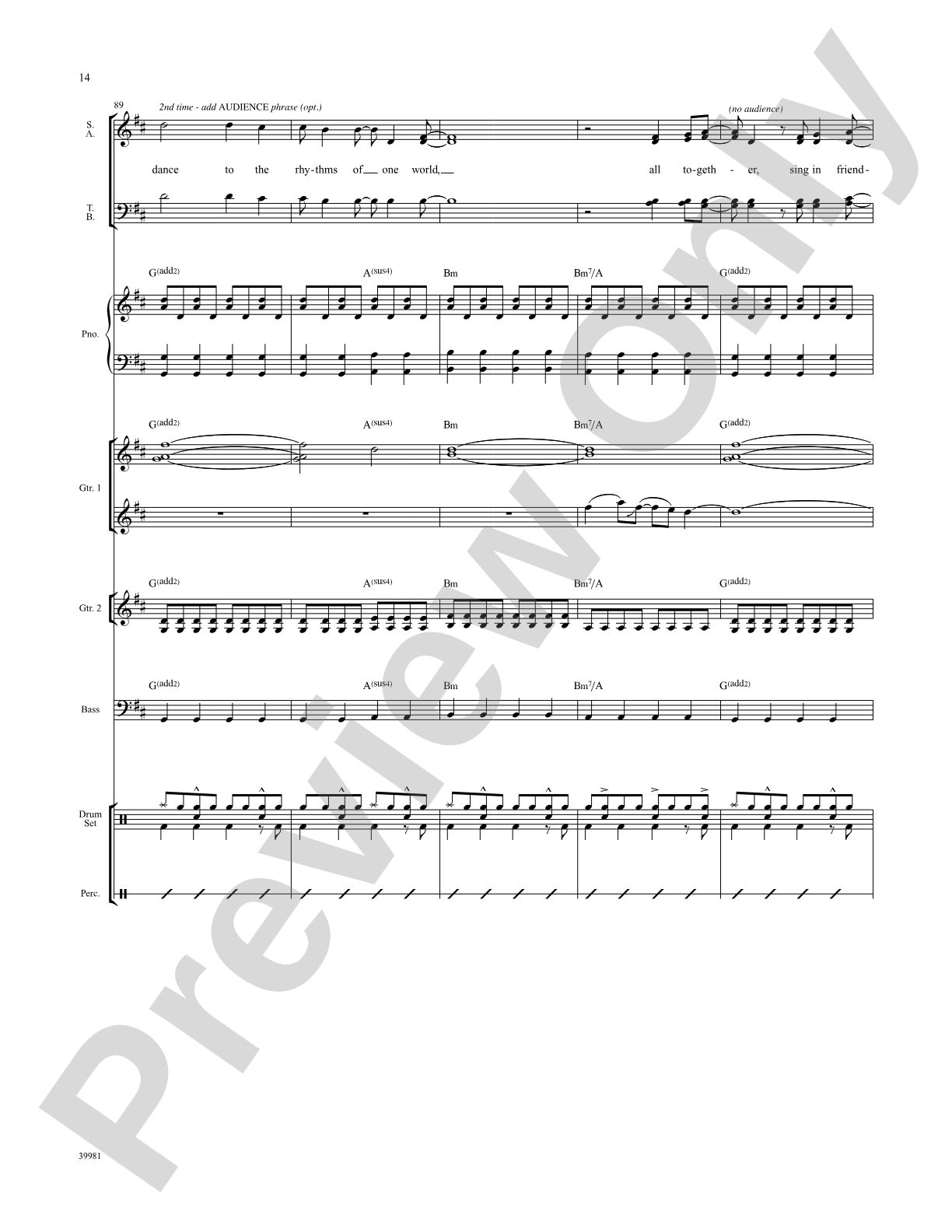
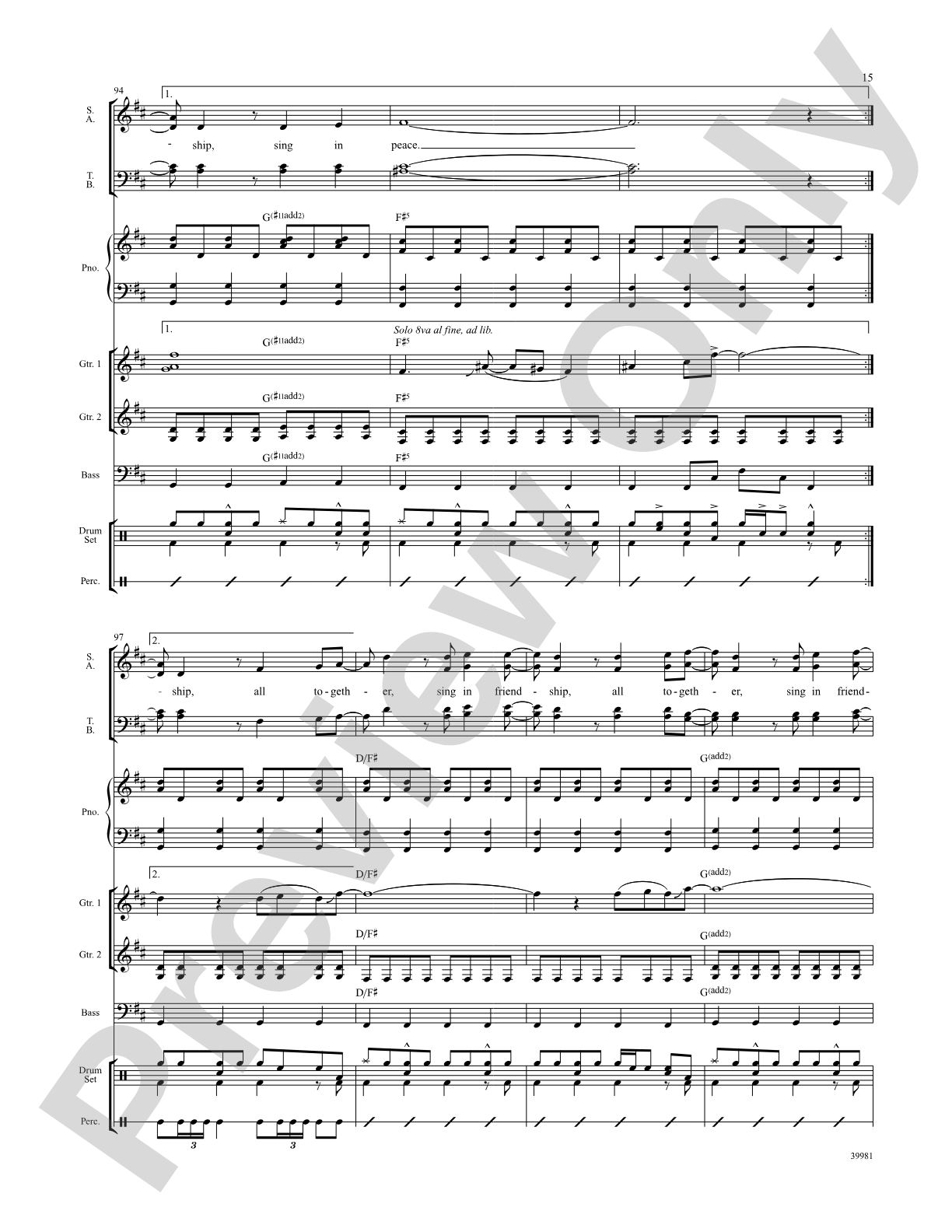
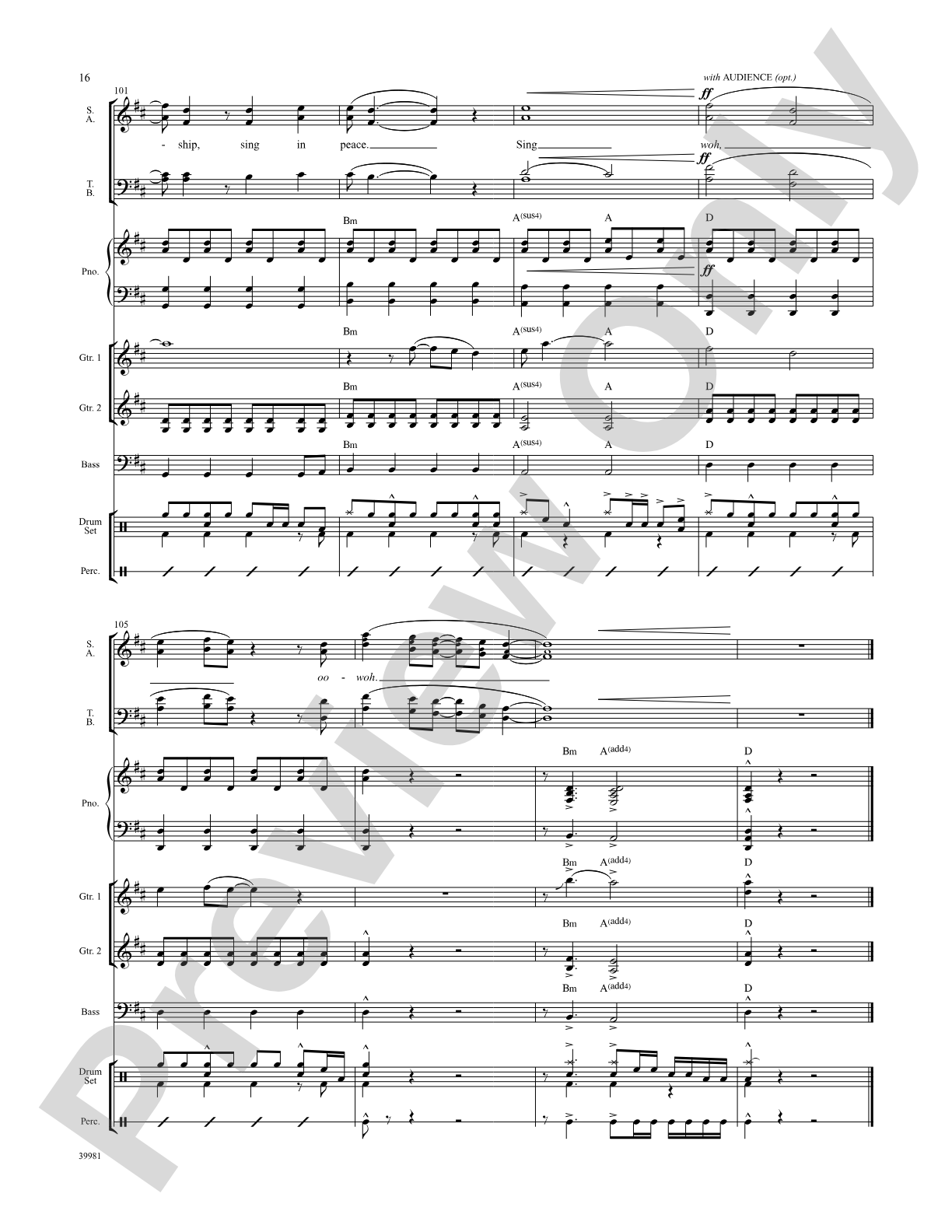

Rhythms of One World: Score
Words and music by Gary Fry
Item: 00-PR-0004525
$8.00
Pickup currently not available
Description
Invite your audience to clap and sing along with the signature phrase of this exciting world-rock feature! Complete with a "circle song" add-on in the middle. Check out the energy-charged SoundTrax CD or our rock combo SoundPax. Featured on "Reaching for the Stars" choral movement DVD 00-39928. Check this out! https://leapingbrain.com/modshop/product/?shop=9&product=5691


Don't just read it, hear it, play along with it, and watch your students grow with it. In MakeMusic Cloud, Rhythms of One World: Score comes alive with professional accompaniment, adjustable tempo, and built-in practice tools that turn solo practice into real progress.
Open in the Player
Jump straight in and assign it today.
Start Your Free Trial
Open this title and explore the full library in minutes.
Sample Audio
1
Audio File
--:--
0:00
0:00
Sample Video
No sample videos found.
Additional Details
Series:
Alfred Choral Designs
Publisher:
Alfred Music
Page Count:
20
SKU:
00-PR-0004525
More about this title
About the Composer: Gary Fry
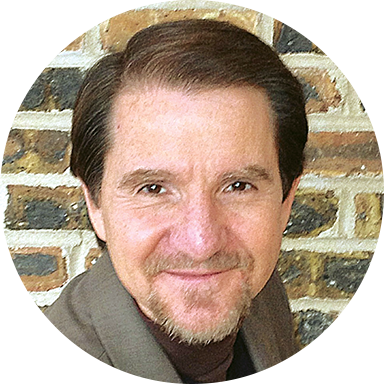
Gary Fry holds the distinction of being the most-performed living composer by the Chicago Symphony Orchestra and Chorus, a role he has maintained through 17 years as composer and arranger for their celebrated annual Welcome Yule! Christmas concerts. His catalog includes nearly one hundred works for major American orchestras including the Dallas, Colorado, Boston, Philadelphia, and New York pops orchestras, plus significant commissions from leading churches for sacred choral and orchestral works.
Beyond the concert hall, Fry has shaped American commercial music for decades, composing over 2500 radio and television advertisements for national brands and earning a 2006 Emmy Award for his television work with Chicago's CBS affiliate WBBM-TV. His influence extends to music education through faculty positions at the University of Miami, Northwestern University, and Midwest Young Artists, and he serves as artistic director and composer-in-residence for the annual Rhythms of One World multi-national choral festival at the United Nations in New York.
Why we love this
This piece captures the infectious energy Fry brings to choral design, built around a signature phrase your singers will lock onto immediately and your audience will want to join. The "circle song" add-on in the middle creates a structural surprise that transforms the piece from feature to participatory experience, giving your concert a memorable interactive moment that costs nothing to add but gains enormous impact.
What to expect
A celebration punctuated with infectious rhythm and global warmth. The world-rock styling gives it sophistication beyond typical "sing-along" fare, while the participatory elements invite genuine connection between stage and house. The middle "circle song" creates an intimate moment that resets the energy before the signature phrase returns with full force.
Who it's for
Choirs seeking a contemporary world-rock feature that energizes both singers and audiences alike. This arrangement works for middle school through adult choirs and community ensembles looking for repertoire that blends sophisticated arranging with genuine crowd appeal.
How to get the most out of it
- Teach the signature phrase thoroughly before adding layers; its catchiness only works if your ensemble owns it completely and can deliver it with confidence and rhythmic precision.
- Encourage singers to maintain eye contact with the audience during the clap-along sections; their comfort and invitation make the difference between an invitation accepted and one politely declined.
- If using the recorded accompaniment, rehearse with it early and often so the rock groove feels organic rather than imposed, especially during tempo transitions into and out of the "circle song" middle section.
- Block the staging intentionally around the movement cues; with 20 pages of material, pacing and physical clarity prevent the piece from feeling static or overwhelming.
How to use it
Program this as a concert closer or near-finale where audience participation feels earned rather than tacked on; the 20-page length and movement requirements suggest it needs breathing room on your program. It pairs naturally with other contemporary choral repertoire or world music selections, especially if you are building a concert theme around cultural connection or community engagement.
Skills your students will build
- Rhythmic precision in world-rock grooves and syncopated accompaniment patterns
- Layered part independence (background parts vs. featured melody)
- Vocal confidence and ensemble blend while executing movement and staging
- Audience communication and comfort with participatory performance
- Sustained energy and phrasing across a longer feature-length work