

Rhythm Song: 2-Part Choral Octavo
By Kirby Shaw
Item: 00-PO-0001133
$1.80
Minimum order quantity: 20 copies
Pickup currently not available
Description
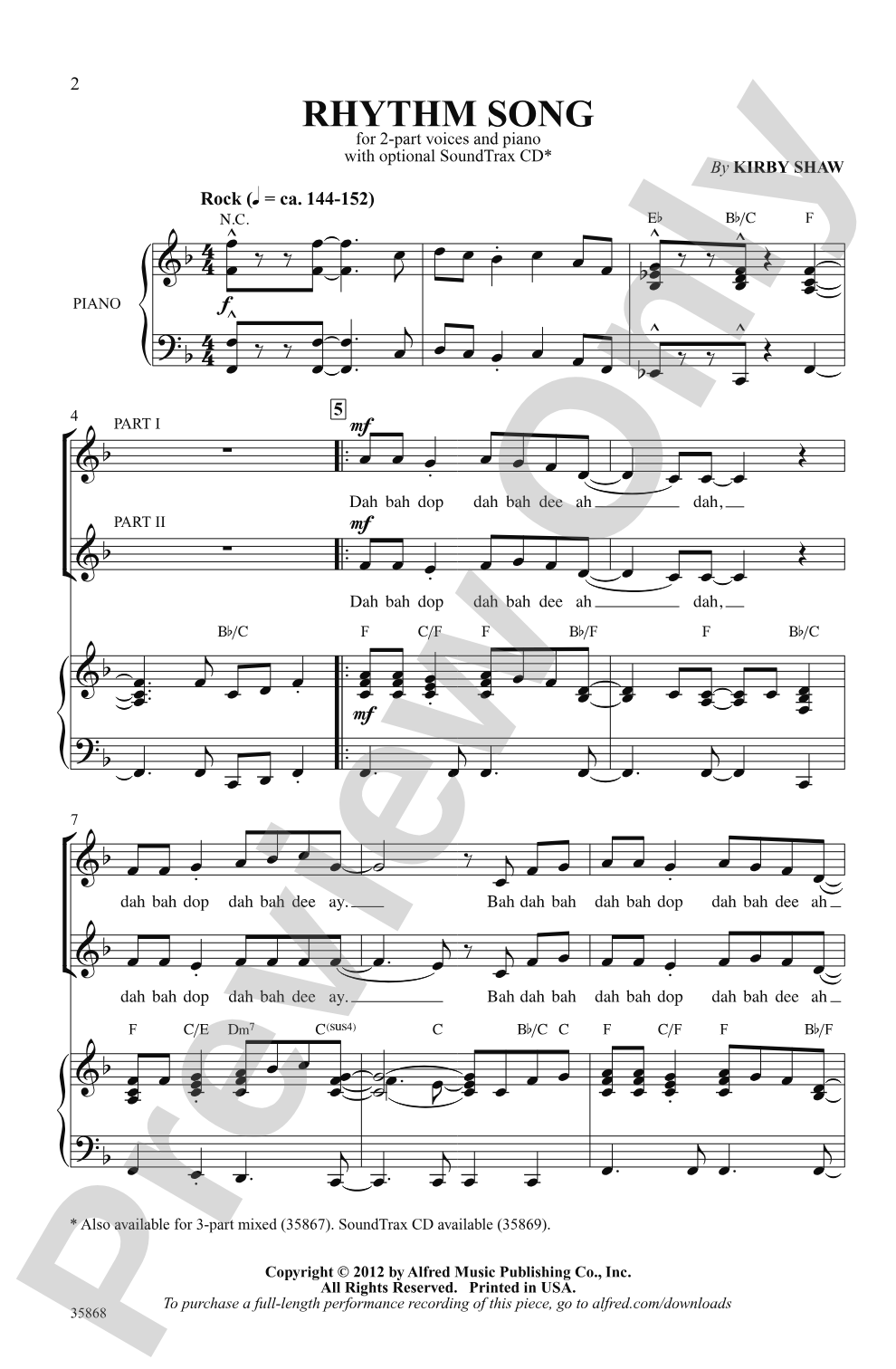
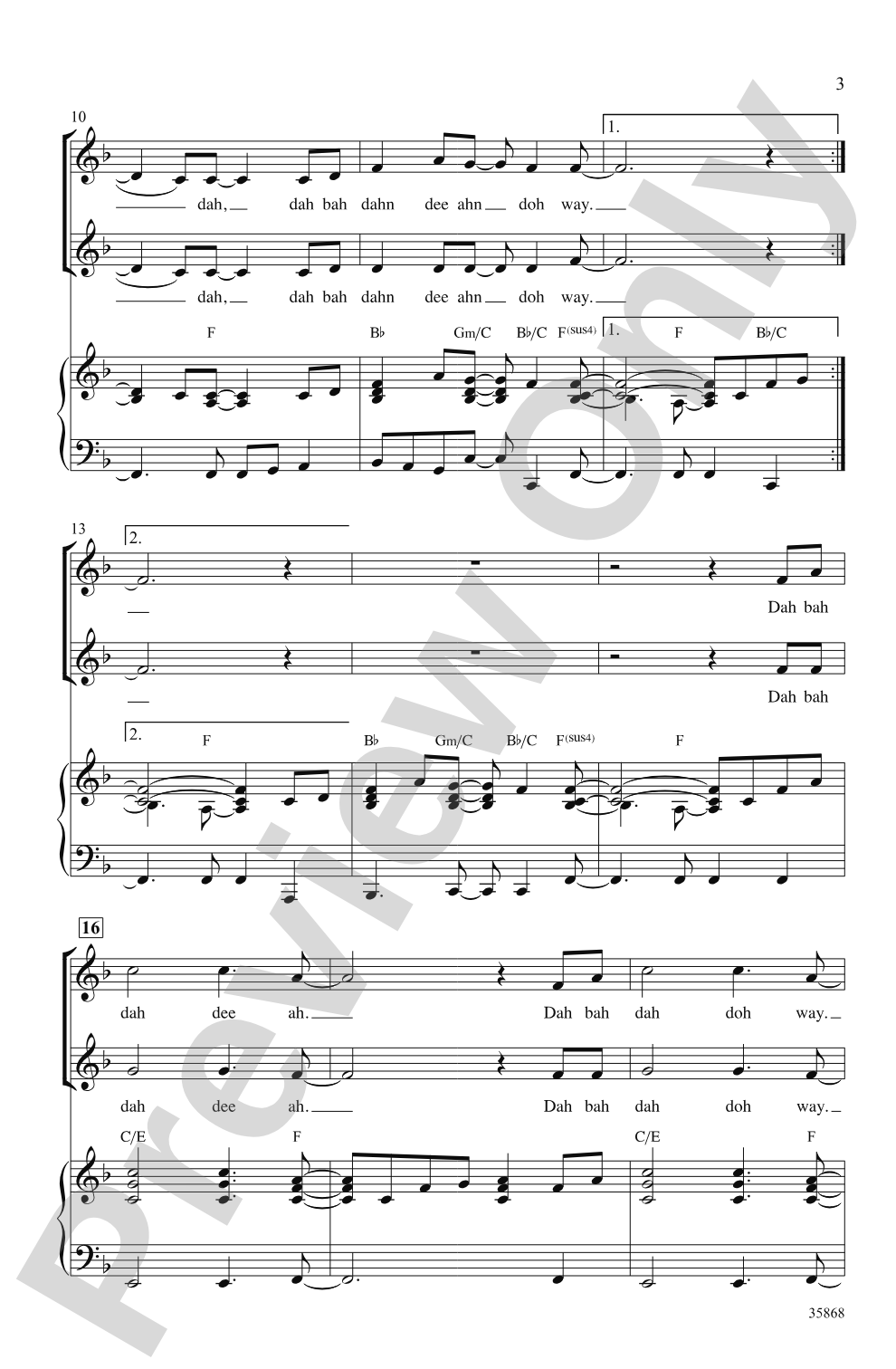
Kirby's hip style rocks from start to finish in this kickin' choral sung entirely on scat syllables. As the title suggests, the rhythm (often syncopated) is the focus, while the sonorities are intuitive.


Rhythm Song: 2-Part Choral Octavo isn't in MakeMusic Cloud just yet...but it could be. Let us know you'd like to see it, and you'll help shape what comes next. In the meantime, start a free trial and dive into thousands of interactive titles your students can play along with today.
Request This Title
Tell us you want it.
Start Your Free Trial
Explore everything that's ready to play right now.
Sample Audio
1
Audio File
--:--
0:00
0:00
Sample Video
No sample videos found.
Additional Details
Series:
Alfred Choral Designs
Publisher:
Alfred Music
Page Count:
8
SKU:
00-PO-0001133
More about this title
About the Composer: Kirby Shaw

Kirby Shaw brings decades of choral leadership across North America and Europe, holding degrees in Music Education and Choral Composition from San Jose State University and a DMA in Choral Conducting from the University of Washington. His career spans public school teaching, college ensemble direction at institutions including Colorado State University and the University of Missouri at Kansas City, and current work directing the Jefferson State Choral Coalition at Southern Oregon University. He founded and directed the acclaimed COS Vocal Jazz Ensemble and has mentored extensively in scat singing alongside artists like Bobby McFerrin, Mark Murphy, and Al Jarreau.
With over 2500 choral arrangements and compositions in print and nearly 20 million copies sold worldwide, Shaw has established himself as one of choral music's most prolific and performed creators. His work has earned multiple ASCAP awards, and his catalog spans educational recordings, college albums, and a cappella ensembles. Beyond composition, he co-authored the original musical Scroogical with his wife Markita, adapting Charles Dickens' A Christmas Carol for the stage.
Why we love this
Shaw's approach to scat choral writing strips away complexity to focus purely on rhythmic vitality and sonic fun. The syncopated rhythms and intuitive voicing make this accessible for singers at all sight-reading levels while maintaining the energy and personality that define his style. When you need a piece that energizes a rehearsal and reminds singers why they love ensemble singing, this delivers instantly.
What to expect
Kinetic and playful, this piece thrums with infectious groove and swagger. The scat syllables create pure percussive texture while syncopated rhythms keep singers engaged and moving, building momentum from start to finish without ever losing the sense that the music is meant to be joyful.
Who it's for
This piece works well for middle school through adult choirs seeking accessible, high-energy repertoire that doesn't require reading complex harmonies or carrying sustained vocal lines. Its straightforward 2-part voicing and scat-only text make it ideal for singers developing rhythmic independence and comfort with syncopation.
How to get the most out of it
- Establish the rhythmic foundation early in sectional rehearsals; lock the pulse in the rhythm section (bass and any percussion) before layering the scat parts.
- Experiment with tone color and articulation once rhythms are secure. Shaw's scat syllables offer freedom to explore different vowel shapes and attack styles.
- Use the recorded accompaniment to internalize the groove, then gradually reduce reliance on it so singers own the rhythmic confidence themselves.
- Consider adding light choreography or body percussion to reinforce syncopation and heighten the visual energy during performance.
How to use it
Program this as an opener or closer to shift energy and mood during a concert. It pairs well alongside jazz-influenced or contemporary secular pieces and works especially effectively when you want to showcase a choir's rhythmic vitality and sense of ensemble fun.
Skills your students will build
- Reading and performing syncopated rhythms in ensemble
- Rhythmic independence while maintaining ensemble unity
- Scat singing articulation and diction
- Groove-based ensemble cohesion