Rhode Island Is Famous For You (from Inside U.S.A.) Sheet Music Preview

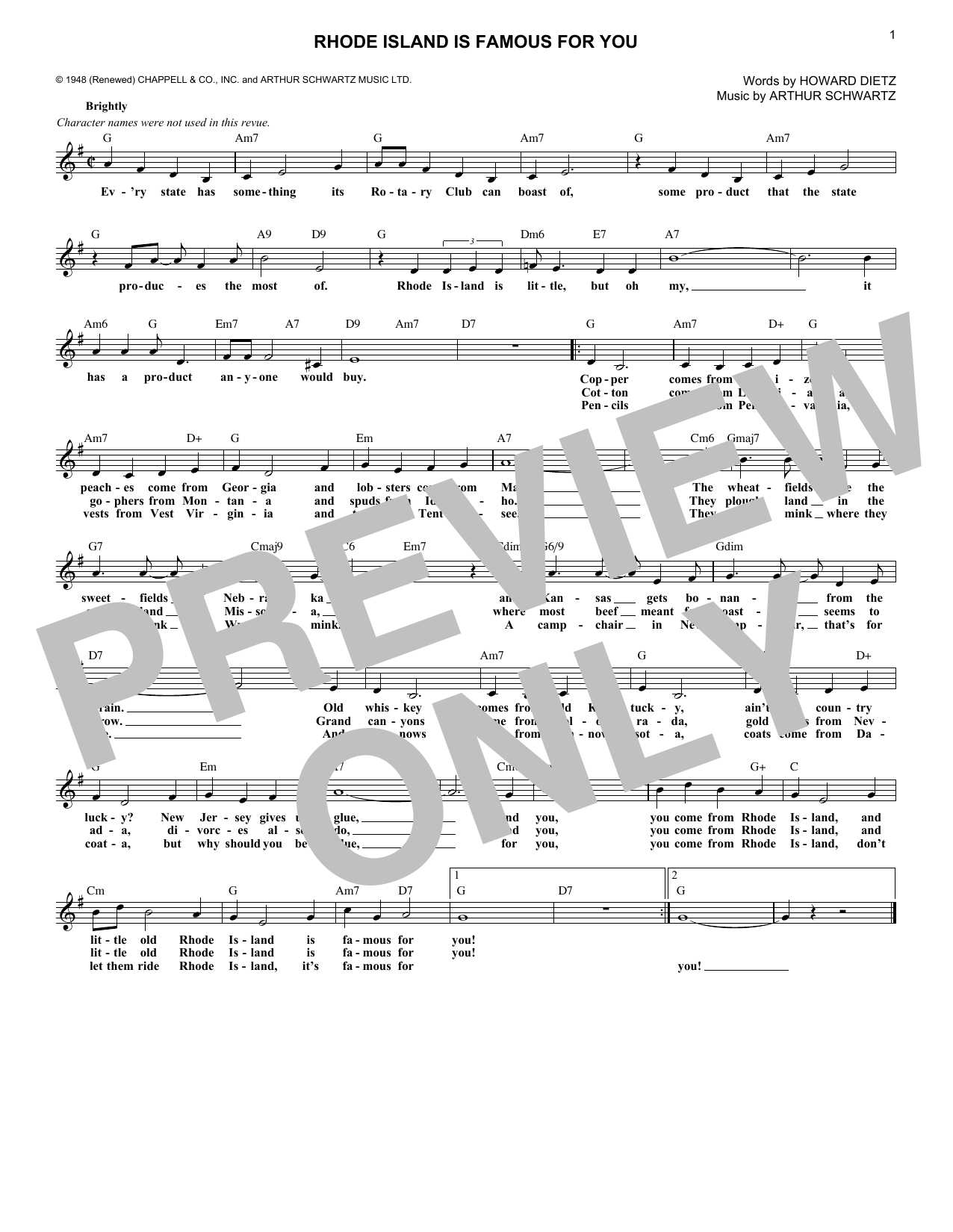
Rhode Island Is Famous For You (from Inside U.S.A.): Lead Sheet / Fake Book

As performed by Arthur Schwartz

Item: 35-DS00441636

Digital Download
$3.99
Description

Rhode Island Is Famous For You (from Inside U.S.A.): Lead Sheet / Fake Book isn't in MakeMusic Cloud just yet...but it could be. Let us know you'd like to see it, and you'll help shape what comes next. In the meantime, start a free trial and dive into thousands of interactive titles your students can play along with today.

Sample Audio
No sample audio found.
Sample Video
Additional Details
Publisher: Hal Leonard
Page Count: 1
SKU: 35-DS00441636

More about this title

About the Artist: Arthur Schwartz

Arthur Schwartz (1900–1984) composed some of Broadway's most durable standards, collaborating with lyricist Howard Dietz on a string of sophisticated musicals that defined the genre's Golden Age. His melodies combine harmonic wit with genuine singability; they sit naturally in the voice while offering pianists engaging accompaniment textures that reward close attention to Schwartz's orchestration concepts.

Why we love this

This is genuine Broadway repertoire with no concessions to nostalgia. The tune is immediately memorable but harmonically smart enough to hold interest through multiple rehearsals, and the lead sheet format lets singers own their own interpretive choices rather than adhering to a fixed arrangement.

What to expect

Charming and slightly tongue in cheek. The melody bounces along with the kind of affable warmth that made Schwartz's music permanent fixtures in nightclubs and concert halls alike.

Who it's for

Singers preparing for American songbook repertoire, jazz bands seeking accessible vocal standards, and pianists who want to expand beyond classical fake book material into the harmonic language of mid-century Broadway.

How to get the most out of it

  • Shape the phrase architecture around the lyric's wit. This song celebrates regional character, so let the melody's natural contours drive your phrasing rather than forcing rhythmic uniformity.
  • The chord changes in a Schwartz tune are there for a reason. Pianists should voice the changes fully rather than comp sparsely; the harmonic movement is part of the song's personality.
  • Tempo should feel conversational and unhurried. There's no need to rush; the humor lands when the lyric has room to breathe.

How to use it

Include this in a jazz or cabaret concert focused on American standards from the 1940s and 1950s. It pairs naturally with other Dietz and Schwartz material, or with vocal standards from contemporaries like Burton Lane and Johnny Mercer.

Skills your students will build

  • interpreting jazz chord notation and realizing it on keyboard
  • singing with idiomatic Broadway phrasing and stylistic flexibility
  • reading and performing from a lead sheet format
  • understanding harmonic function in popular song structure

You May Also Like