Rheinberger: Twelve Fughettas, Op. 123A Sheet Music Preview

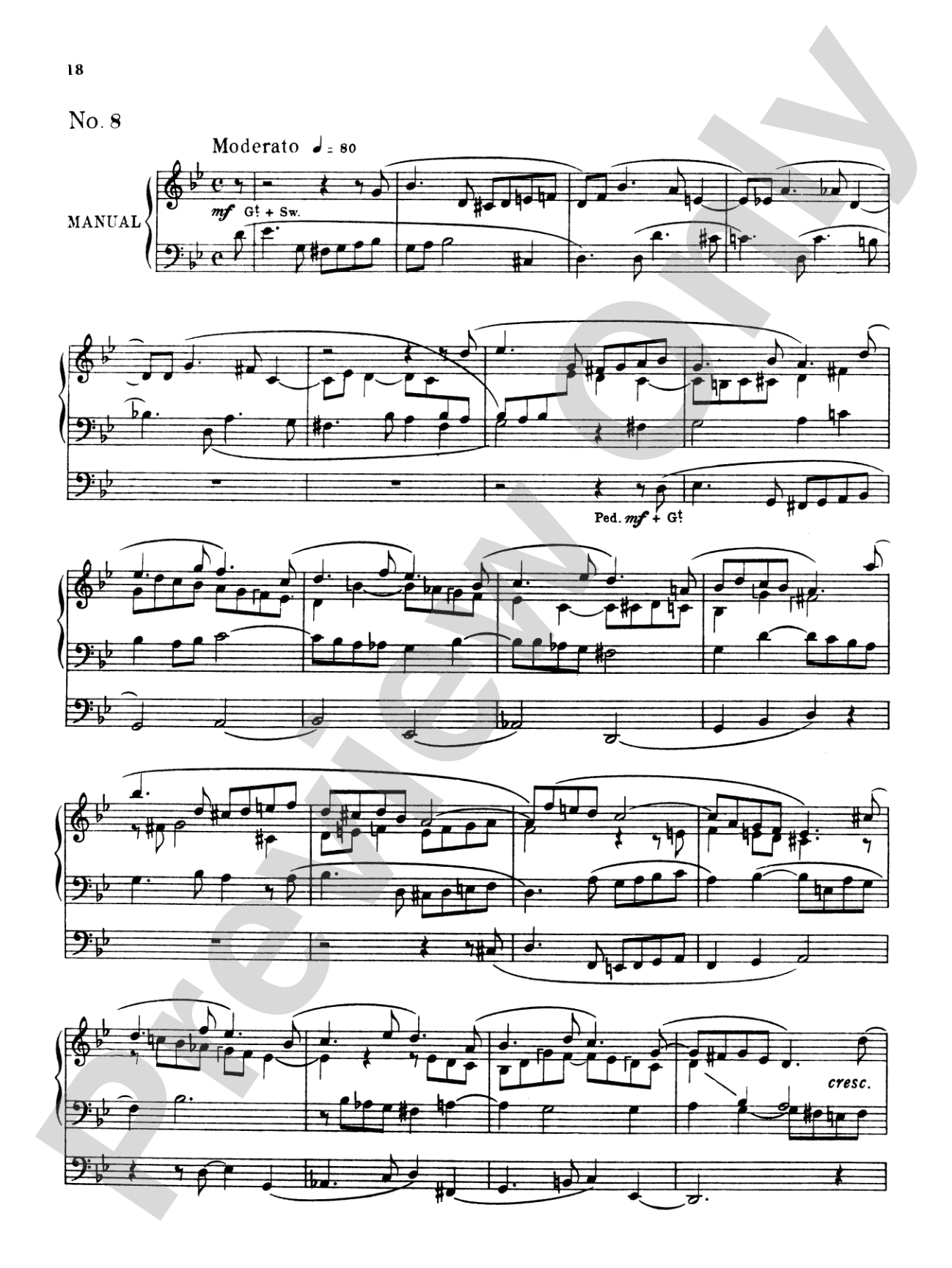
Rheinberger: Twelve Fughettas, Op. 123A

By Joseph Rheinberger

Item: 00-PC-0010630

Digital Download
$0.99
Description
A collection of exercises for Organ, composed by Joseph Rheinberger.

Don't just read it, hear it, play along with it, and watch your students grow with it. In MakeMusic Cloud, Rheinberger: Twelve Fughettas, Op. 123A comes alive with professional accompaniment, adjustable tempo, and built-in practice tools that turn solo practice into real progress.

Sample Audio
No sample audio found.
Sample Video
Additional Details
Series: Kalmus Edition
Publisher: Alfred Music
Page Count: 28
SKU: 00-PC-0010630

More about this title

About the Composer: Joseph Rheinberger

Joseph Rheinberger (1839-1901) was a Swiss composer and organist whose prolific output shaped Romantic organ literature. A professor at the Munich Conservatory for nearly five decades, he combined his deep knowledge of organ mechanics with rigorous compositional training, producing over 200 works that remain central to the organ pedagogue's library.

Rheinberger's writing for organ bridged the gap between technical study and artistic expression. His fughettas and fugues are known for their clarity of voice-leading, melodic invention, and practical demands on the player, making them indispensable tools for developing contrapuntal fluency at the keyboard.

Why we love this

These twelve pieces cut straight to the heart of what makes organ study rewarding: each fughetta is compact enough to master in a few weeks yet substantial enough to demand real musical maturity. Rheinberger avoids empty virtuosity in favor of transparent counterpoint and voice independence, which means students hear their own progress immediately.

What to expect

These pieces have the earnest clarity of a German academic tradition tempered with Romantic lyricism. Each line breathes with its own melodic shape, yet the harmonic language is warmly tonal and never austere. There's a satisfying balance between intellectual rigor and genuine musicality.

Who it's for

Organists at the intermediate to advanced amateur level will find systematic, rewarding material for building contrapuntal technique. Students preparing for conservatory exams or serious study benefit from Rheinberger's disciplined approach to voice-leading and organ registration.

How to get the most out of it

  • Establish a consistent registration from the start. Choose manuals and stops that allow each voice to sing independently; resist the temptation to reregister mid-piece unless the score explicitly calls for it.
  • Shape each line as if it were sung by a choir member. The contrapuntal clarity depends on sustaining phrasing across all voices, not just the melody.
  • Practice hands alone at first, then add pedal once the manual part is secure. Rheinberger's pedal writing is idiomatic but unforgiving of rhythmic sloppiness.
  • Work through the figured bass passages with attention to harmonic rhythm, particularly where voices move in close relationship. This builds the harmonic awareness that informs convincing musical choices in performance.

How to use it

Select individual fughettas as teaching pieces across an organ student's curriculum rather than programming them as a suite in concert. They also serve well in church service music contexts where a brief, well-crafted organ interlude suits the liturgy.

Skills your students will build

  • Voice independence and inner-part leading in contrapuntal textures
  • Sustaining melodic lines across the keyboard while maintaining rhythmic independence
  • Registration choices that support polyphonic clarity
  • Reading and executing complex rhythmic relationships across three or four independent lines
  • Pedal coordination and technical control in varied harmonic contexts

You May Also Like