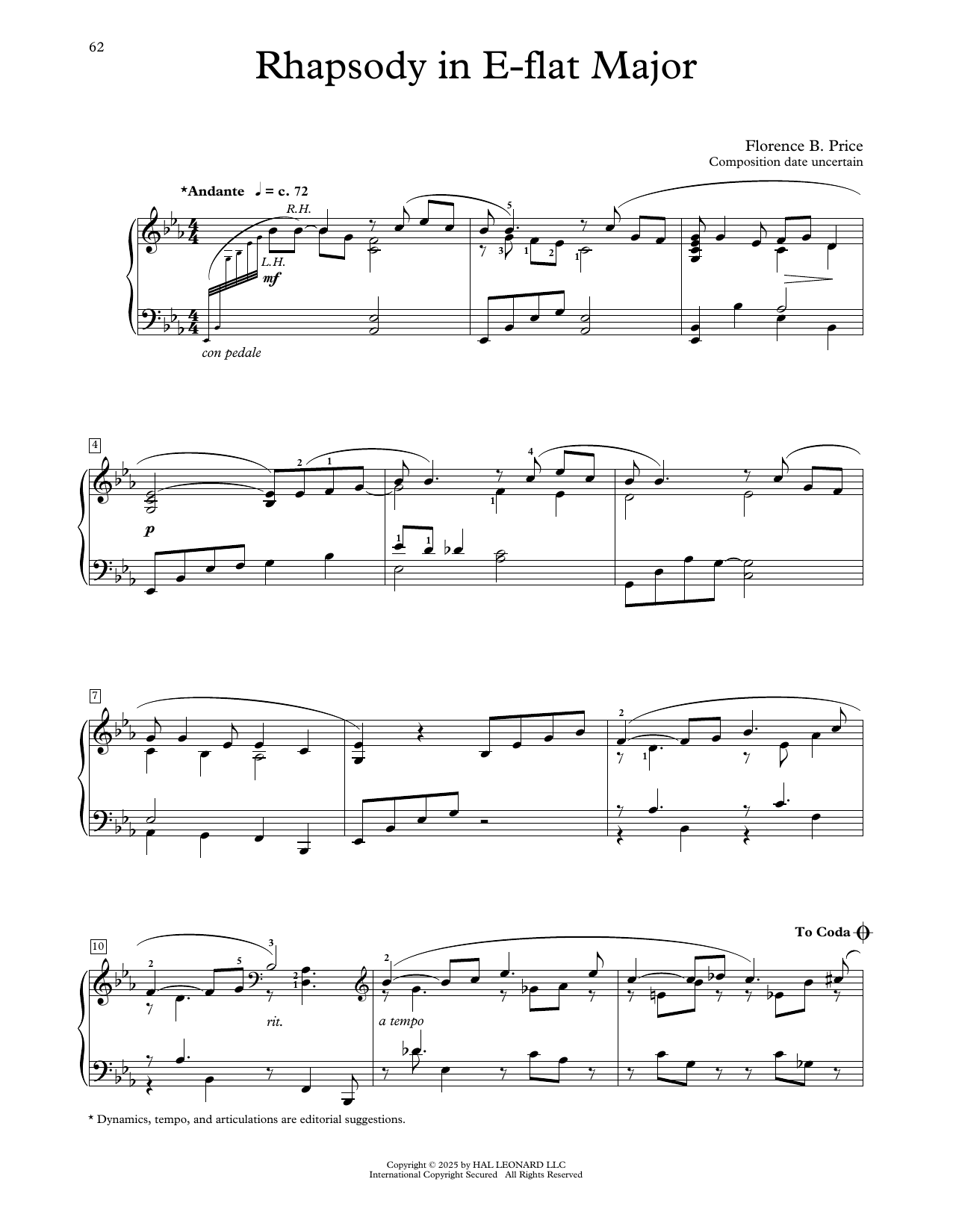
Florence Price (1887-1953) was the first Black woman to have a symphony performed by a major American orchestra. A pianist and composer of considerable technical skill, Price wrote across genres with particular distinction in art song, chamber music, and piano works that synthesized African American spirituals with European classical forms. Her music deserves a central place in any curriculum exploring American composers and the rich contributions of Black classical musicians.
Why we love this
Price's rhapsodic writing never sacrifices structural clarity for emotional depth. This piece rewards thoughtful interpretation without demanding virtuosic fireworks, making it ideal for advancing pianists who need music that engages both their musicianship and their growing technical resources. Programming her work signals to students that American classical music extends far beyond the usual canon.
What to expect
Introspective and graceful, with moments of lyrical warmth that feel both personal and universal. The E-flat Major key gives the piece a gentle luminosity, while Price's harmonic language adds subtle complexity that rewards close listening. There is dignity in the writing, a quiet confidence that never demands attention but commands respect.
Who it's for
Advanced intermediate to early advanced pianists who have developed secure technique and want to deepen their interpretive skills. Teachers seeking American repertoire that expands students' understanding of the classical tradition.
How to get the most out of it
Shape the opening melodic gesture with a long, singing line; resist the urge to articulate too crisply in the rubato passages.
Balance transparency in the harmonic accompaniment against the lyrical foreground. The supporting voices matter more than they appear at first glance.
Allow the key of E-flat Major to breathe through your pedal choices. Price's voice leading rewards color and resonance without muddying the texture.
Treat the rhapsodic sections as conversations between different musical voices rather than solo declarations. This approach honors the compositional sophistication underneath the improvisatory surface.
How to use it
Include this on a recital alongside other American composers to contextualize Price's voice within her era and after. The three-page length makes it substantial enough to stand as a solo piece without overwhelming a program, and it pairs naturally with spirituals, art songs, or other chamber works that celebrate African American classical traditions.
Skills your students will build
Sustaining lyrical phrasing across longer melodic lines with varied harmonic support
Balancing rubato and structural integrity in rhapsodic passages
Voicing thick tertian harmonies with clarity and color control
Interpreting impressionistic harmonic language with musical purpose
You May Also Like
Scan to Complete Your Purchase
Use your phone's camera to scan the code below
You'll log in on your phone and the order will be added to your account