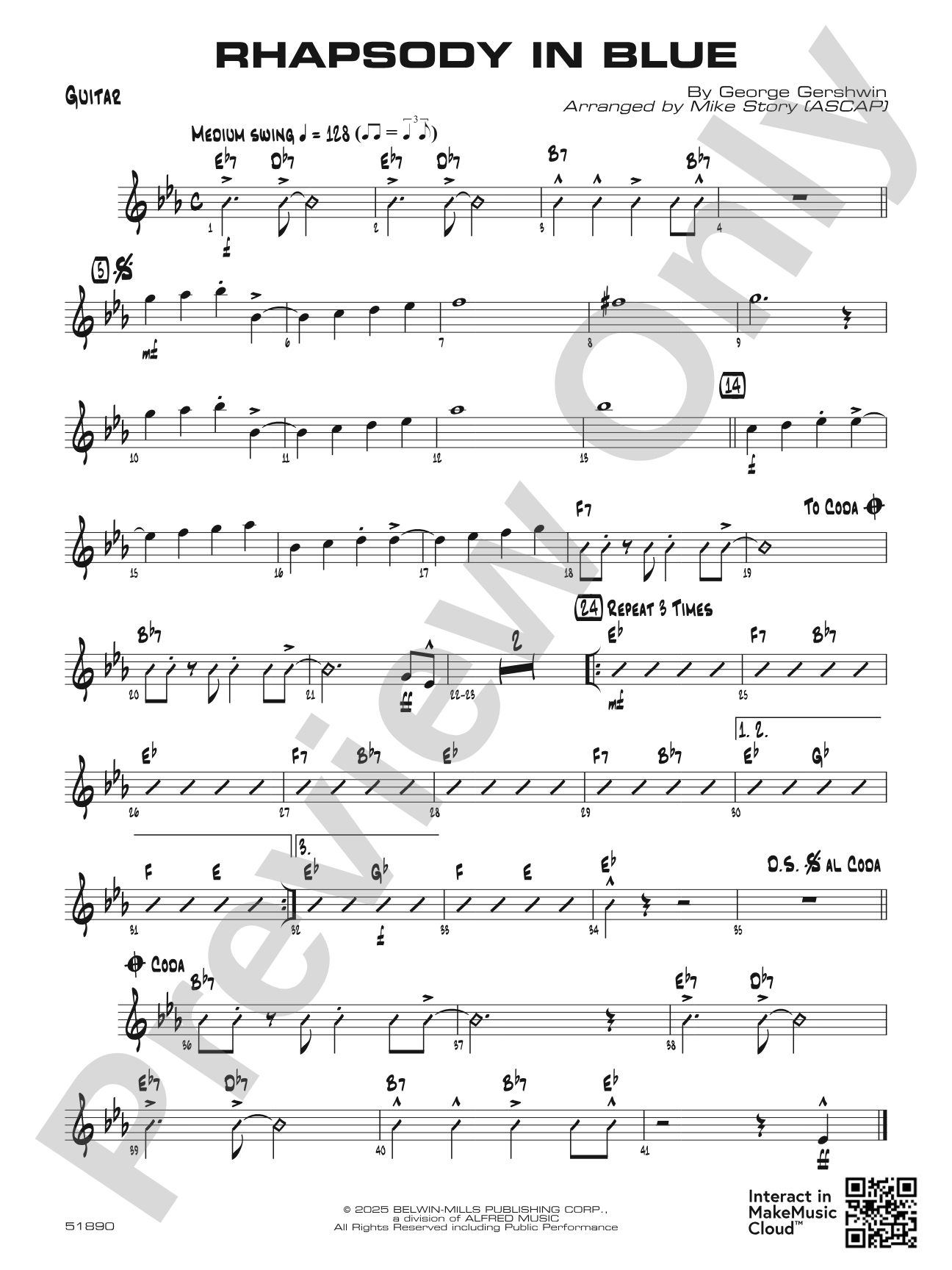
Rhapsody in Blue: Guitar
By George Gershwin / arr. Mike Story
Grade: 1
Item: 00-PC-0019585_G
Pickup currently not available
Description
Rhapsody in Blue: Guitar isn't in MakeMusic Cloud just yet...but it could be. Let us know you'd like to see it, and you'll help shape what comes next. In the meantime, start a free trial and dive into thousands of interactive titles your students can play along with today.
Tell us you want it.
Explore everything that's ready to play right now.
Sample Audio
Sample Video
Additional Details
More about this title
About the Composer: George Gershwin
George Gershwin (1898-1937) bridged classical and popular music in ways few composers have matched. Born in Brooklyn, he became a master of melody and orchestration, writing for Broadway, concert halls, and jazz ensembles with equal facility. Rhapsody in Blue, premiered in 1924, remains his most iconic work and a cornerstone of American classical music.
Gershwin's gift was making sophisticated harmony and extended form feel inevitable and singable. He understood jazz idioms deeply because he listened to them constantly on the streets of New York. His early death cut short a brilliant career, but his music continues to define what it means to write for American audiences.
Why we love this
This arrangement captures everything that makes Rhapsody in Blue endure: that unforgettable opening, the propulsive energy of the orchestration, and room for young soloists to shine. Mike Story's Grade 1 setting strips away complexity without losing the piece's character, making it genuinely playable for first-year jazz ensembles while keeping audiences absolutely engaged. It's the rare chart that feels like a real piece of music rather than a simplified exercise.
What to expect
Confident and swinging from the first measure. The piece has the sophisticated ease of a great melody that knows exactly what it is; there's no strain to the arrangement, just clarity and forward momentum. Solos feel like genuine musical statements rather than exercises, and the ensemble writing supports rather than overwhelms the featured voices.
Who it's for
First-year jazz ensemble directors who want their students to play a genuine masterwork, not a watered-down reduction. Conductors building programs that include repertoire with historical weight alongside contemporary charts will find this both musically and pedagogically rewarding. This works equally well for students encountering jazz ensemble for the first time and for seasoned players who benefit from the accessibility to focus on style and ensemble balance.
How to get the most out of it
- Balance the opening theme between lead alto and trumpet so the melody sings over the ensemble foundation; this isn't a unison statement.
- Let the written-out tenor sax solo breathe; it's not a battle to keep up with, but a conversation with the rhythm section.
- Shape the swing feel in the bridge by having the rhythm section push the pocket slightly rather than laying back; Gershwin's music wants forward motion.
- Use the optional vibraphone part to add shimmer during the solo sections; it lifts the texture without competing for attention.
How to use it
Open a concert with this to set an energetic, accessible tone while establishing your ensemble's musicality early. Place it alongside other Grade 1 charts in a jazz-focused program to show range within the level, or use it as a centerpiece for a concert celebrating American music. At 2:15, it's substantial enough to anchor a set without dominating it.
Skills your students will build
- Playing walking bass lines and comping figures that support soloist sections
- Reading and executing swing articulation and phrasing in a melody-driven context
- Balancing solo lines with ensemble accompaniment and listening across the section
- Managing accessible but varied brass ranges to maintain ensemble cohesion
- Interpreting a medium swing feel with appropriate rhythmic pocket and forward momentum