
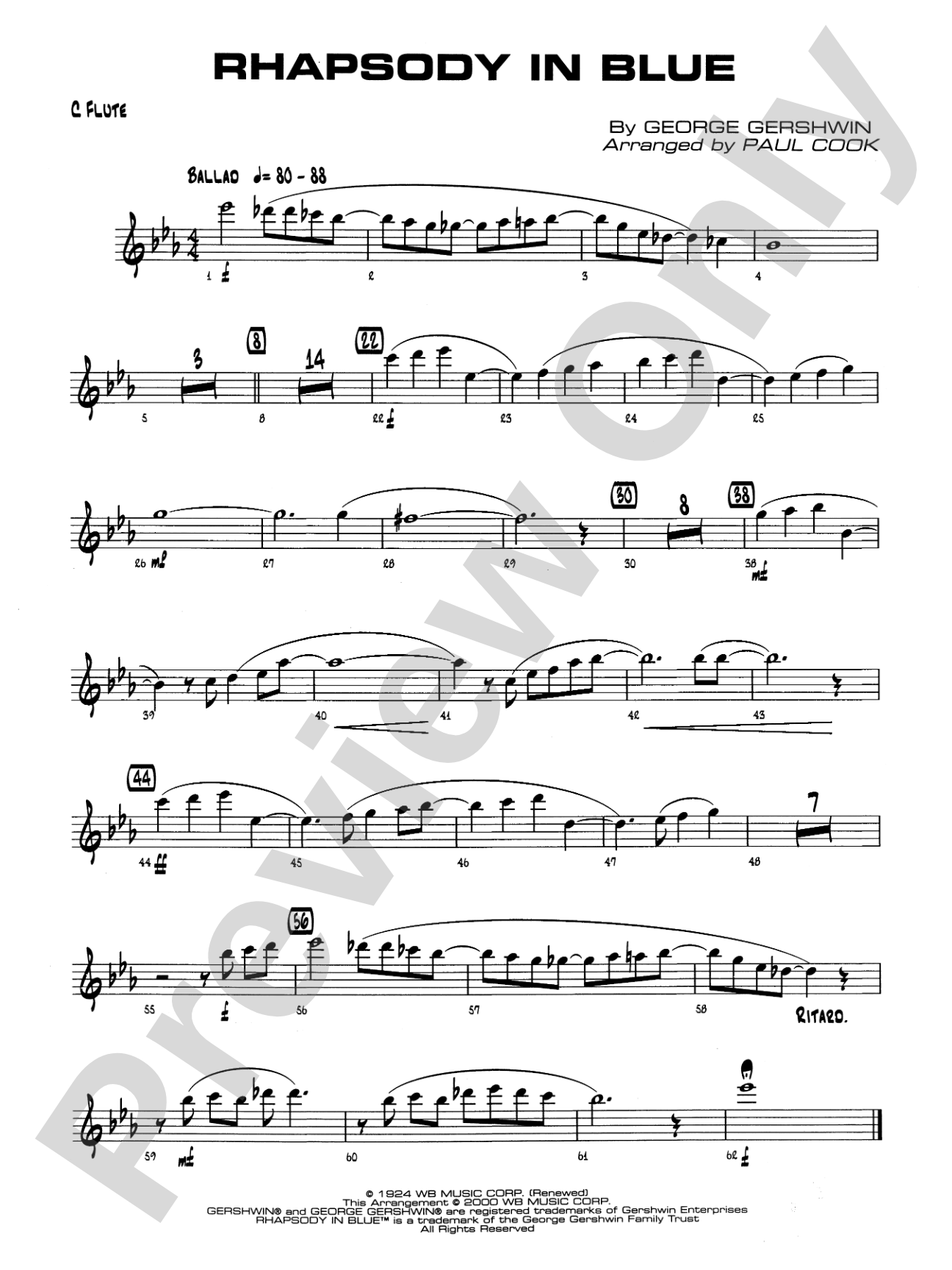

Rhapsody in Blue: Flute
By George Gershwin / arr. Paul Cook
Grade: 1 (Easy)
Item: 00-PC-0014717_F1
$3.00
Pickup currently not available
Description
Classic Gershwin, Rhapsody in Blue is music all students should have the opportunity to hear and enjoy. The history of this composition dates back to 1924. Since then, it's been recorded and performed countless times, and now it's your turn. Take notice that master arranger Paul Cook scores it for the younger band yet still captures the essence of this beautiful melody, all the color, and even the trademark counter-melody toward the end. With the exception of a brief tenor sax solo on the melody, it's all rich and full sounding ensemble, ideal for teaching phrasing. Flexible instrumentation along with easy brass demands and simple rhythms make this one a winner!


Don't just read it, hear it, play along with it, and watch your students grow with it. In MakeMusic Cloud, Rhapsody in Blue: Flute comes alive with professional accompaniment, adjustable tempo, and built-in practice tools that turn solo practice into real progress.
Open in the Player
Jump straight in and assign it today.
Start Your Free Trial
Open this title and explore the full library in minutes.
Sample Audio
1
Audio File
--:--
0:00
0:00
Sample Video
No sample videos found.
Additional Details
Series:
First Year Charts for Jazz Ensemble
Publisher:
Alfred Music
Page Count:
42
SKU:
00-PC-0014717_F1
More about this title
About the Composer: George Gershwin
George Gershwin (1898-1937) bridged the worlds of classical composition and American popular music with a facility that few composers have matched. He studied with some of the leading compositional voices of his era, yet his most enduring works draw directly from jazz idioms, blues inflections, and the vernacular soundscape of 1920s America. His influence on music education extends far beyond his lifetime; his works remain central to how we teach students that serious composition and popular forms are not opposing forces.
Rhapsody in Blue, premiered in 1924, stands as perhaps his most iconic achievement. Written when Gershwin was just 25 years old, it established him as a major voice in American music and continues to captivate audiences and inspire young musicians. The piece exemplifies his gift for melody and his instinctive understanding of how jazz vocabulary could enrich concert music.
Why we love this
Paul Cook's arrangement honors every essential element of this masterwork while making it genuinely playable for younger ensembles. The famous clarinet glissando opening and the soaring rhapsodic lines remain intact, yet the rhythmic simplicity and flexible instrumentation mean your students can focus entirely on singing the melody and understanding phrasing rather than wrestling with technical demands. Programming this piece signals to your audience and your students that jazz masterworks belong in every ensemble's repertoire.
What to expect
Rhapsody in Blue captures that restless, yearning energy of the Jazz Age, with soaring melodic lines that seem to float above the ensemble and moments of bluesy introspection that ground you in the music's emotional core. Playing this piece feels like stepping into American musical history while simultaneously discovering something immediate and personal in Gershwin's gift for melody. The combination of orchestral color and jazz swagger creates a sound that's both sophisticated and deeply accessible.
Who it's for
First-year and second-year jazz ensembles, or any developing ensemble ready to tackle a significant 20th-century masterwork without getting bogged down in technical complexity. The flexible instrumentation means you can use the musicians you have on hand. Even if your group has limited jazz experience, the Grade 1 level and straightforward rhythms put this within reach.
How to get the most out of it
- Shape the opening melody with genuine rubato in the first chorus. This isn't march time; allow the lead voice to breathe and linger on the blue notes before moving forward. The rhythm section can settle into a steadier pulse once the ensemble enters.
- Balance the tenor saxophone solo carefully against ensemble texture. That brief spotlight on the melody line should sing clearly without the rest of the band dropping in dynamic support. Let the rhythm section lock the groove while the soloist interprets the line.
- Bring out the counter-melody when it arrives near the end. Cook has orchestrated it to be heard, but student players often assume it's background texture. Mark parts clearly and rehearse it as a featured line so the full harmonic richness emerges.
- Use the recorded accompaniment to reinforce the swing feel and harmonic movement. Hearing how the changes sit underneath the melody helps students understand the relationship between the blues-based harmony and Gershwin's lyrical writing.
How to use it
Open a concert with this piece to signal quality and ambition. Alternatively, pair it with other American masterworks or contemporary jazz standards to build a program around 20th-century American musical vernacular. The piece works equally well as a festival or festival competition selection, where its combination of musical substance and clean ensemble writing demonstrates your group's musicality and range.
Skills your students will build
- Phrasing and rubato in a jazz context
- Balance between solo and ensemble texture
- Swing feel and rhythmic precision in jazz idiom
- Interpretation of blue notes and jazz articulation
- Harmonic understanding of blues-based changes
- Ensemble listening and blend in a heterogeneous jazz voicing