
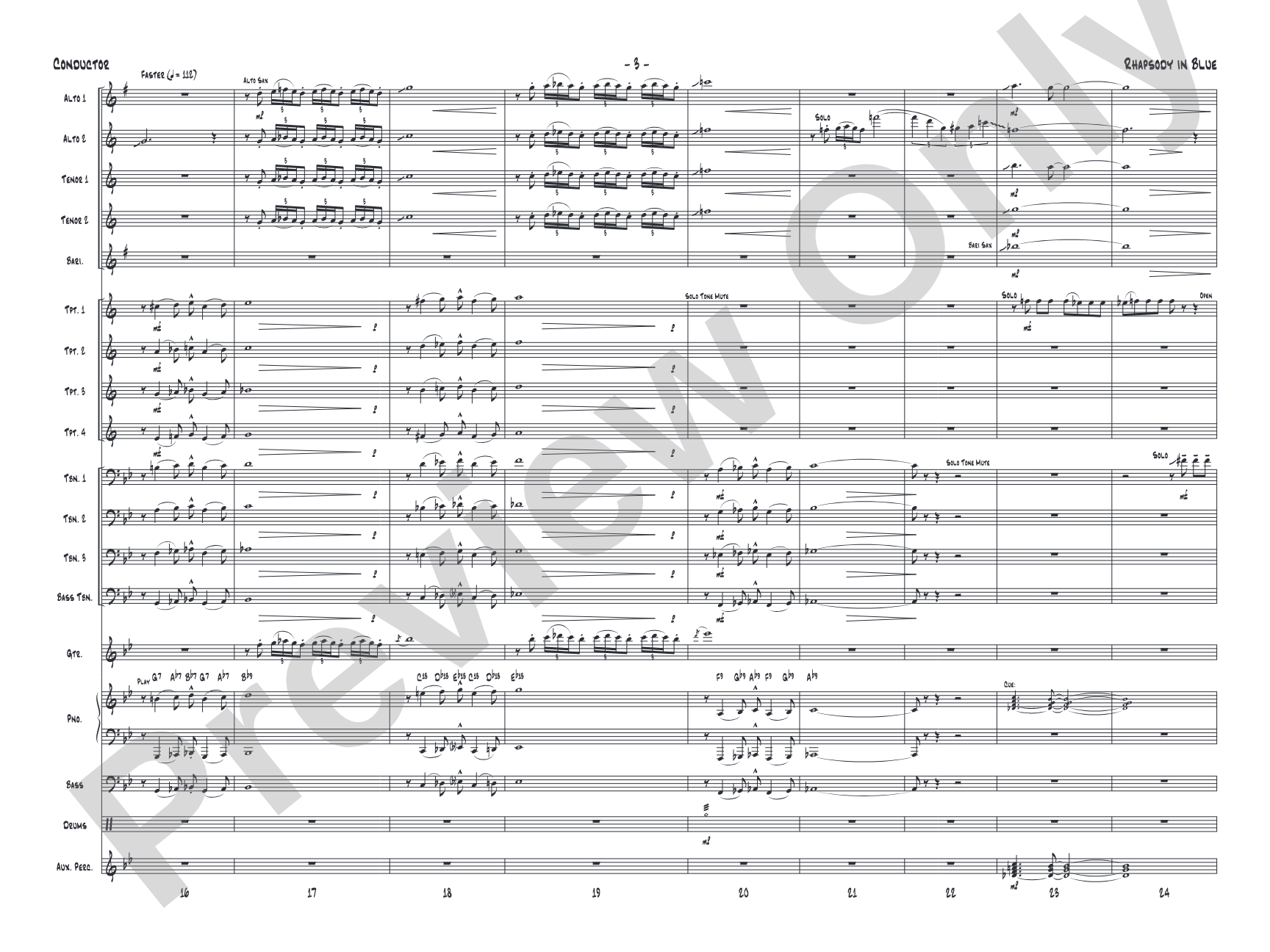
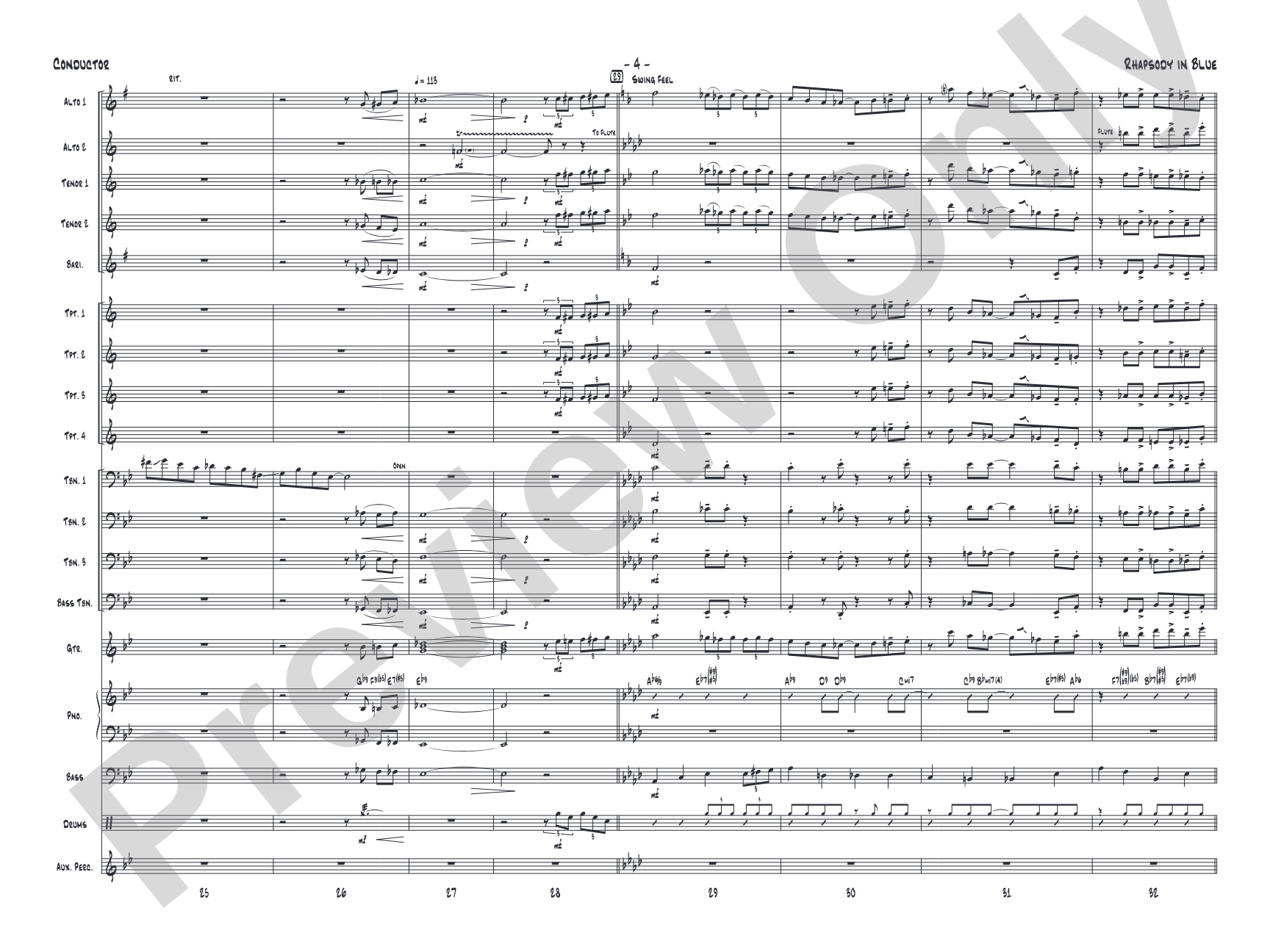
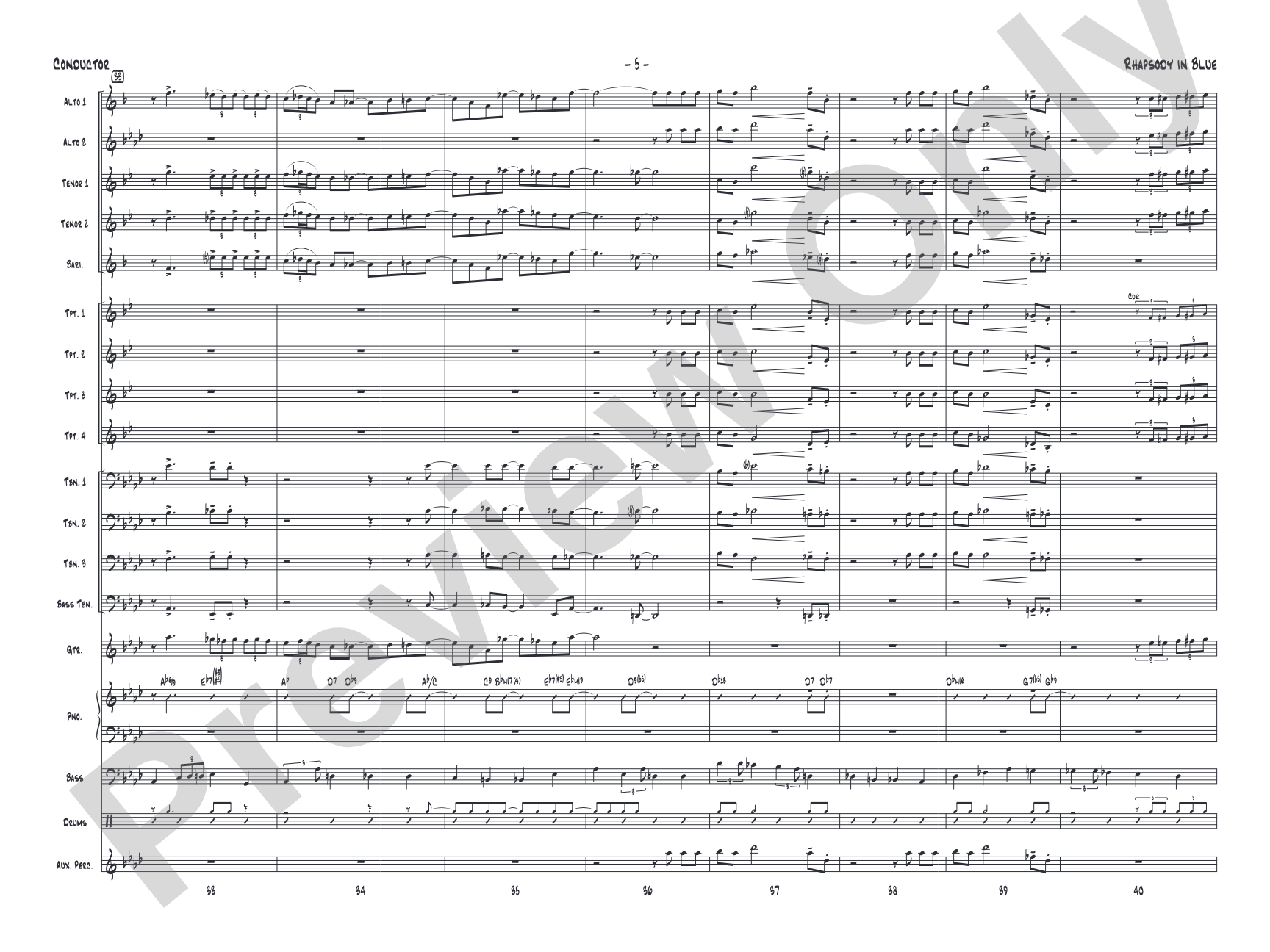
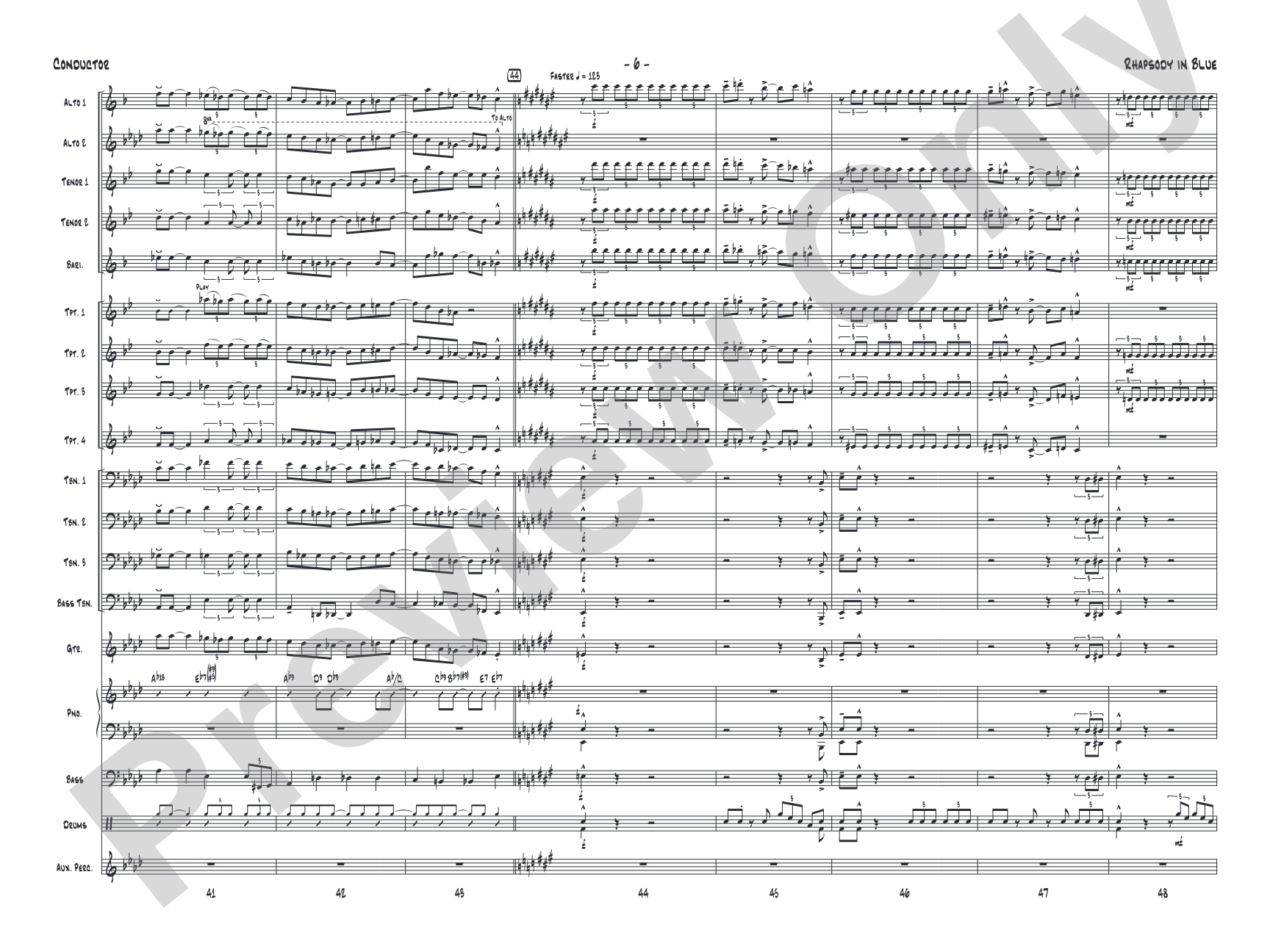
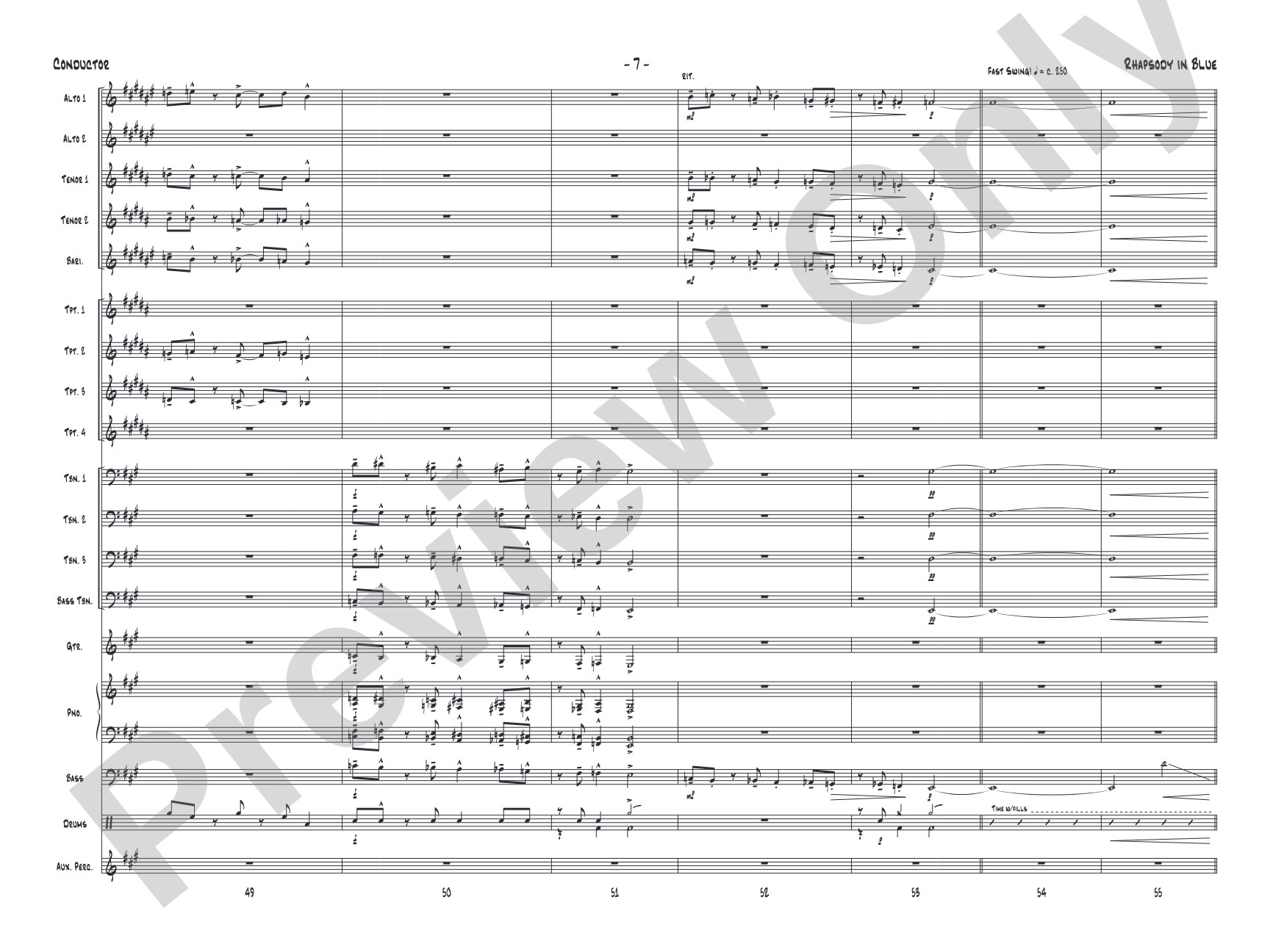
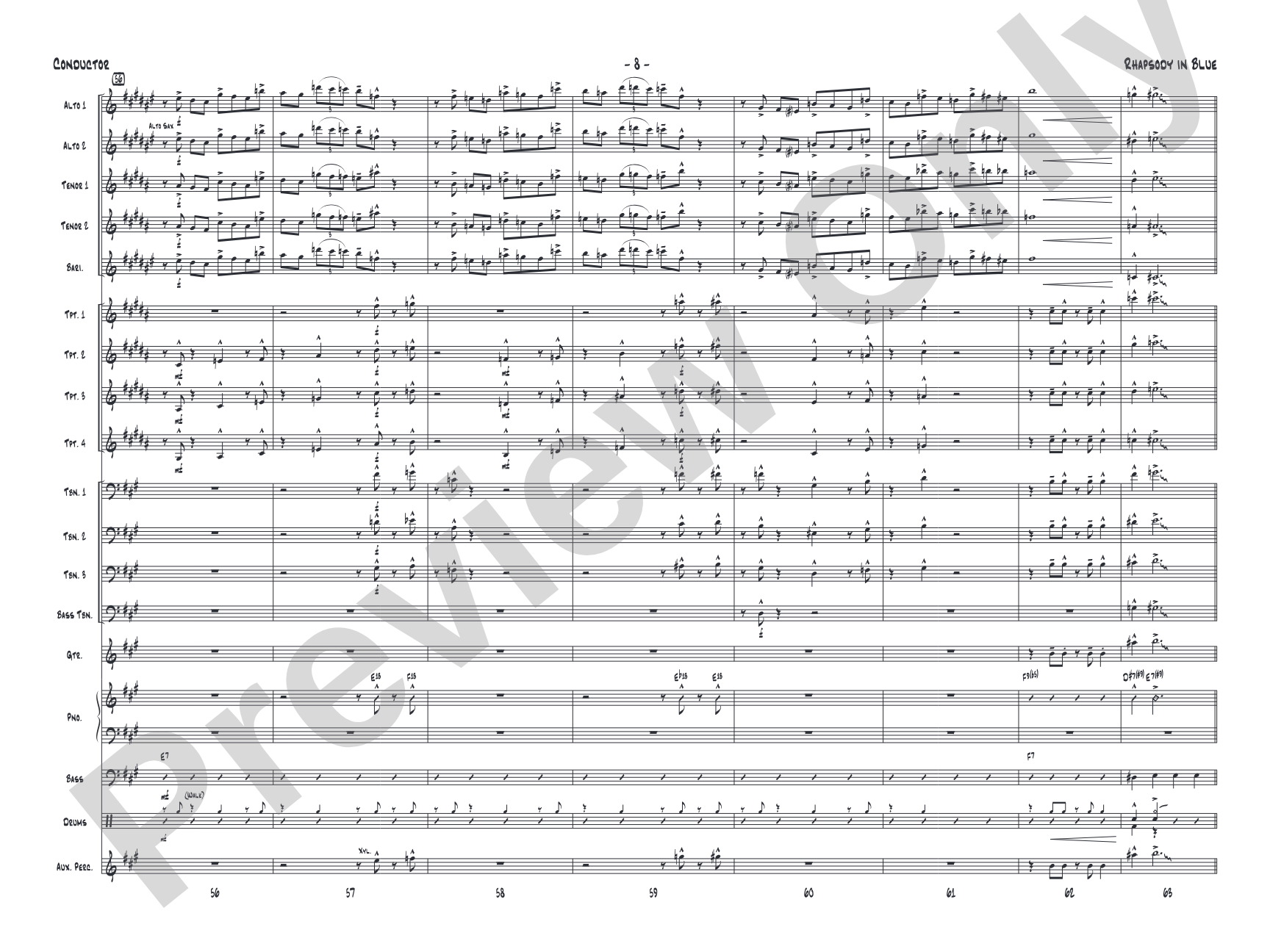
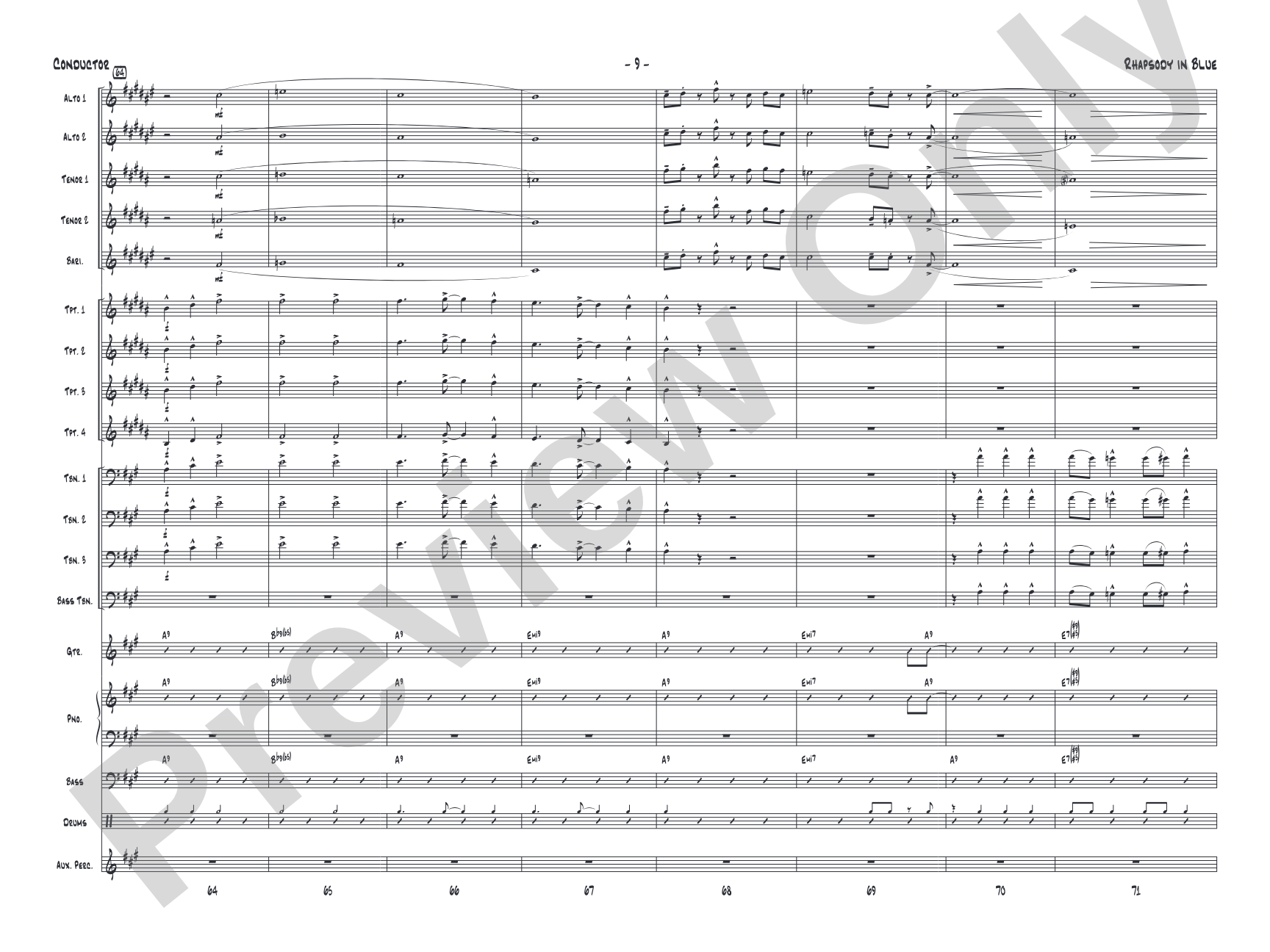
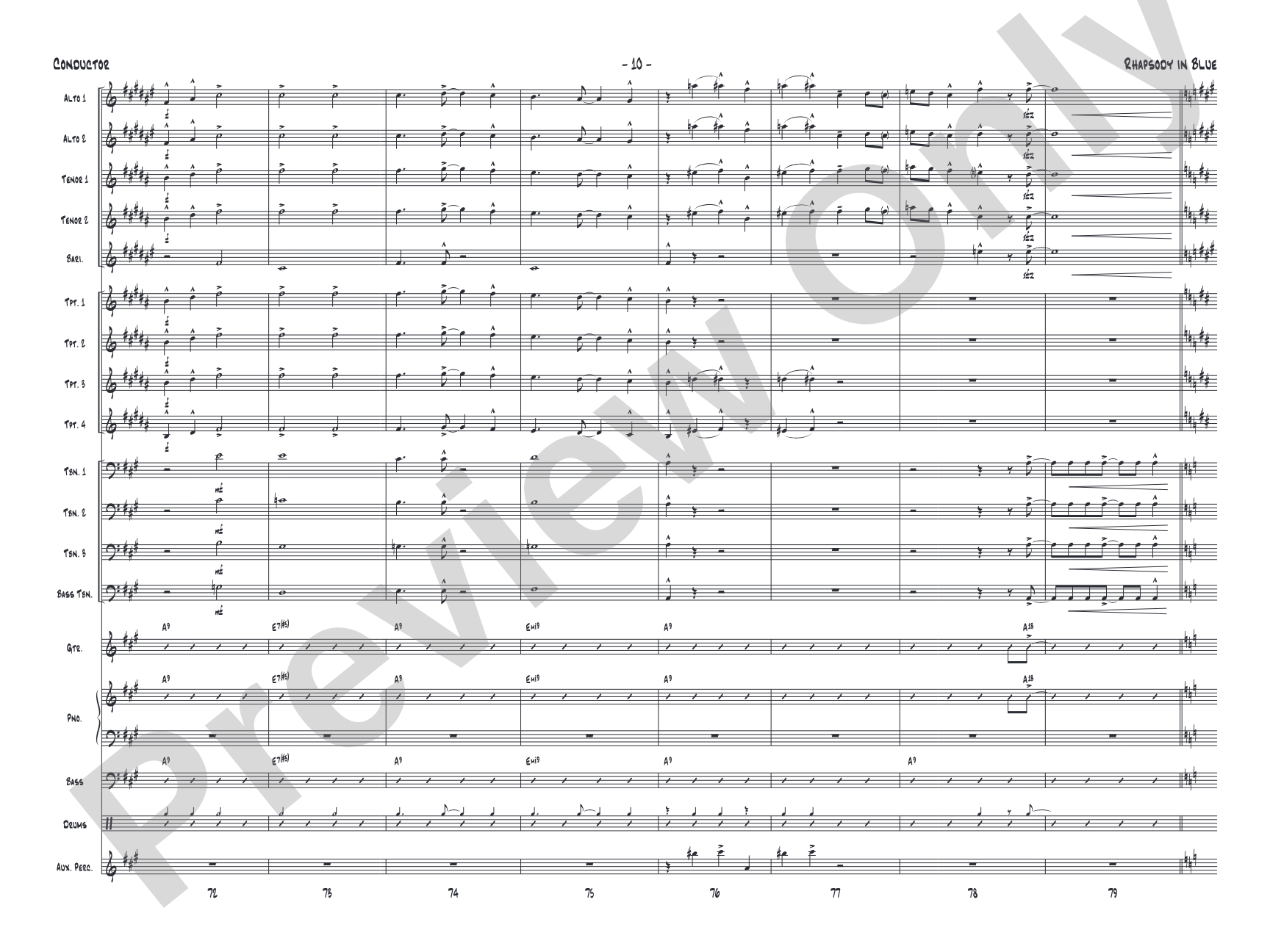
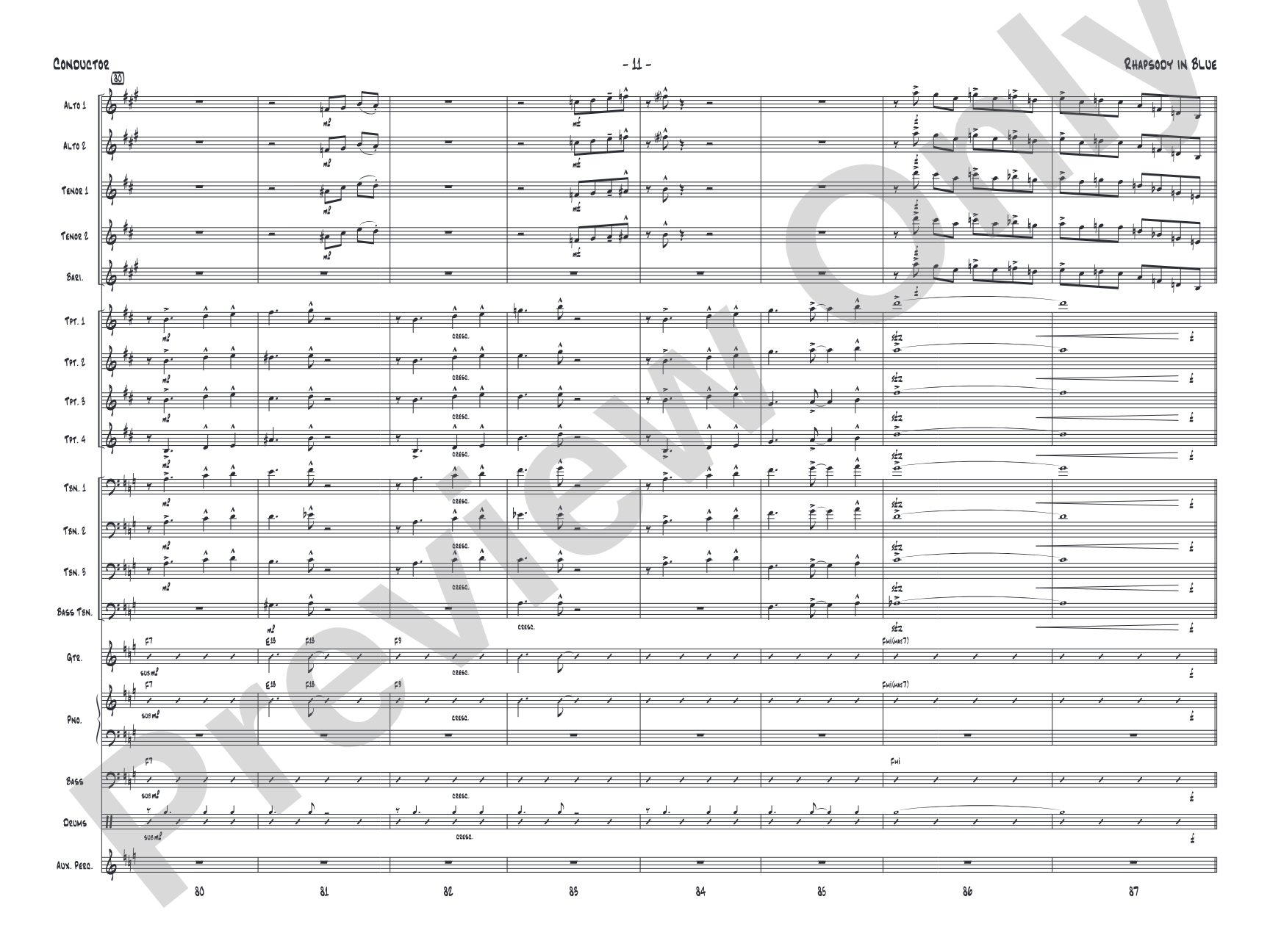
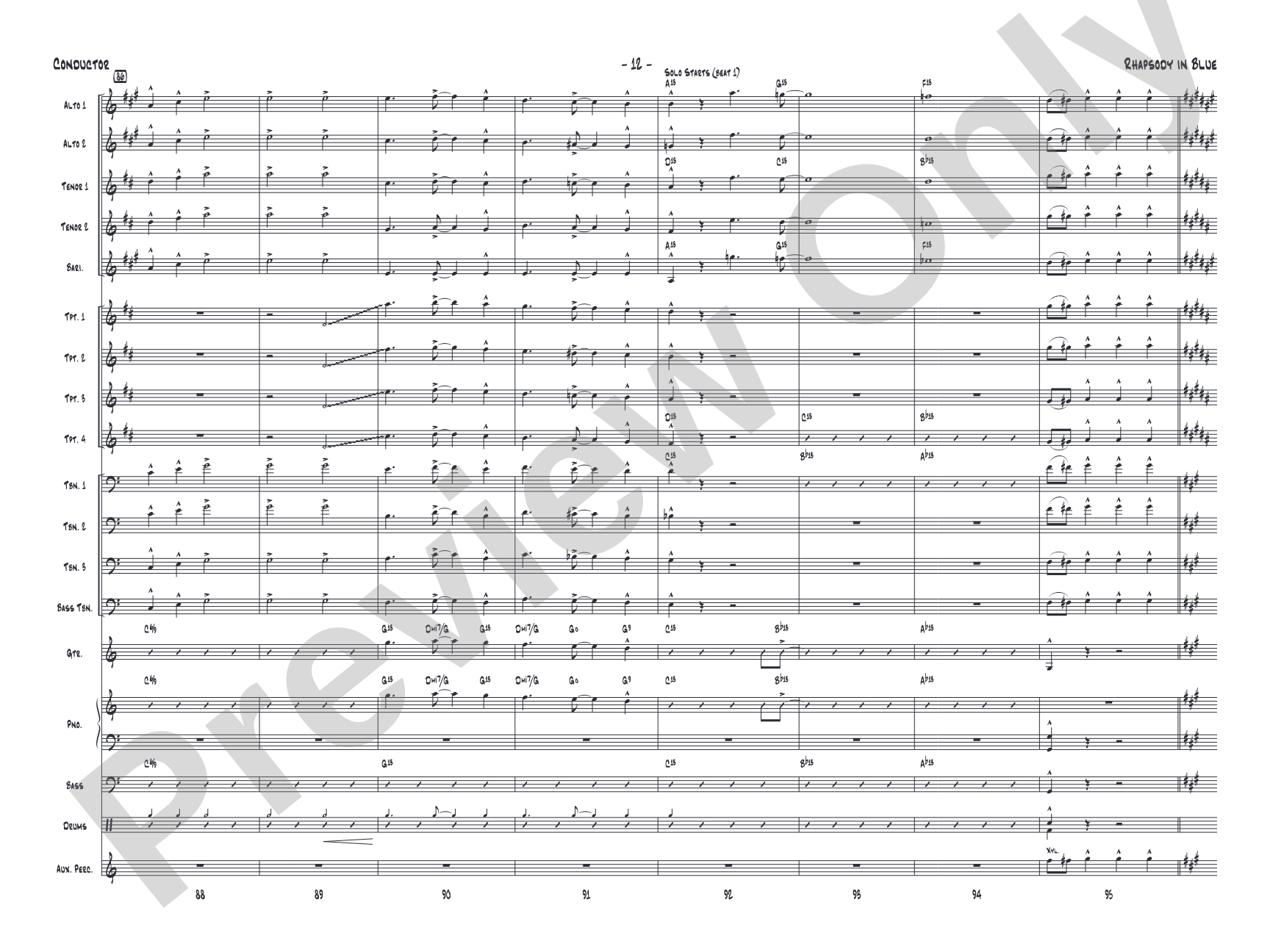
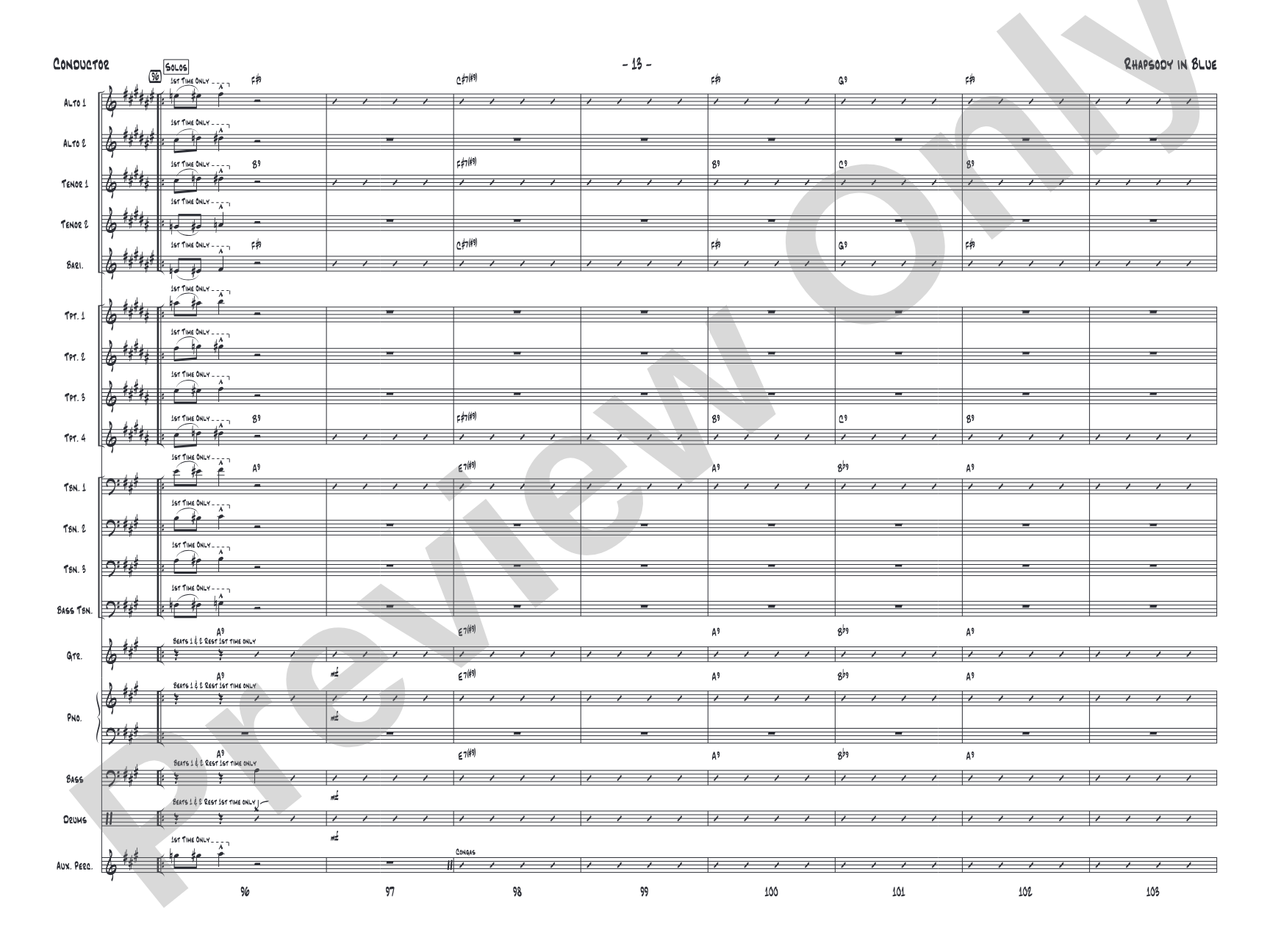
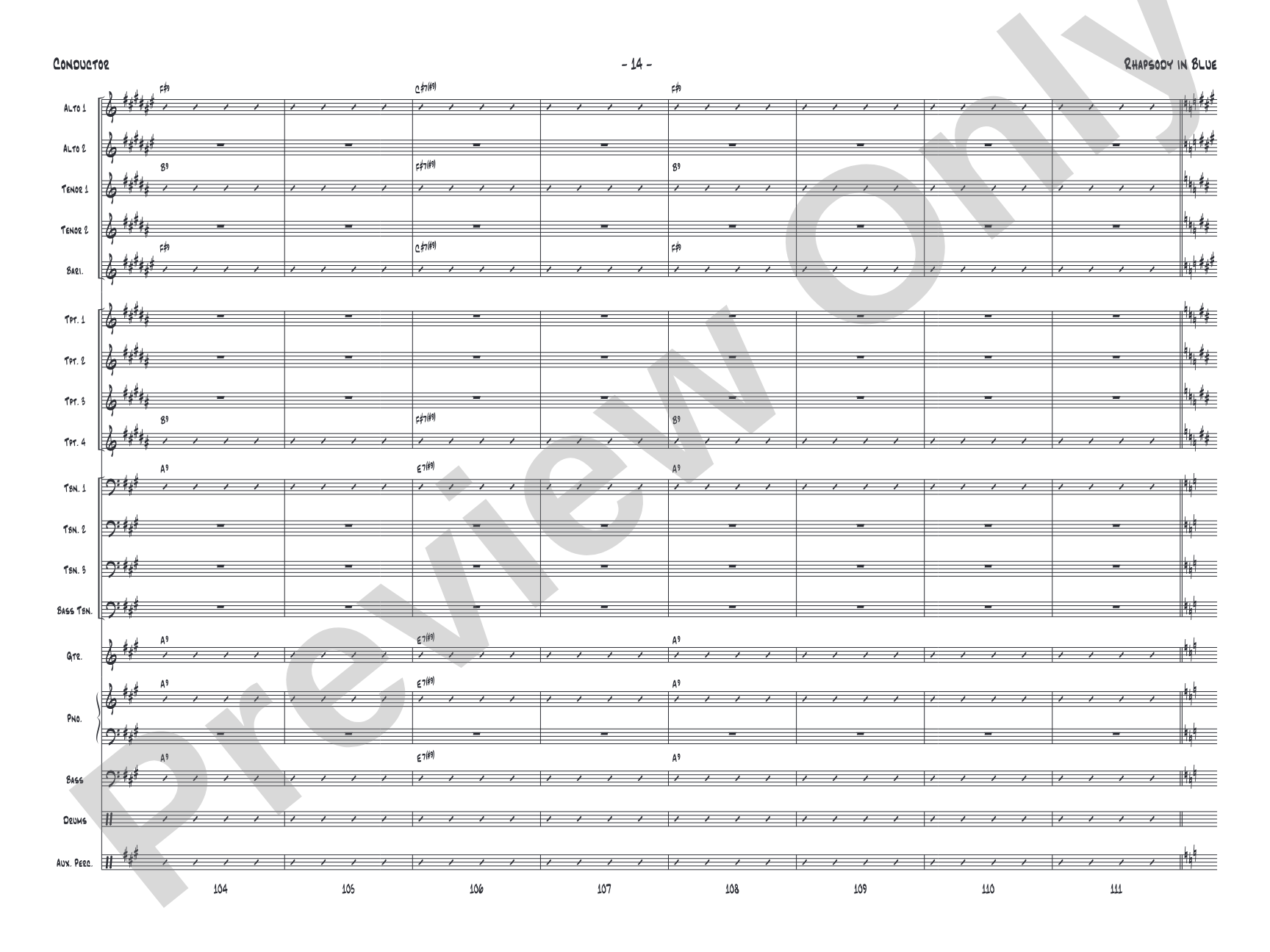
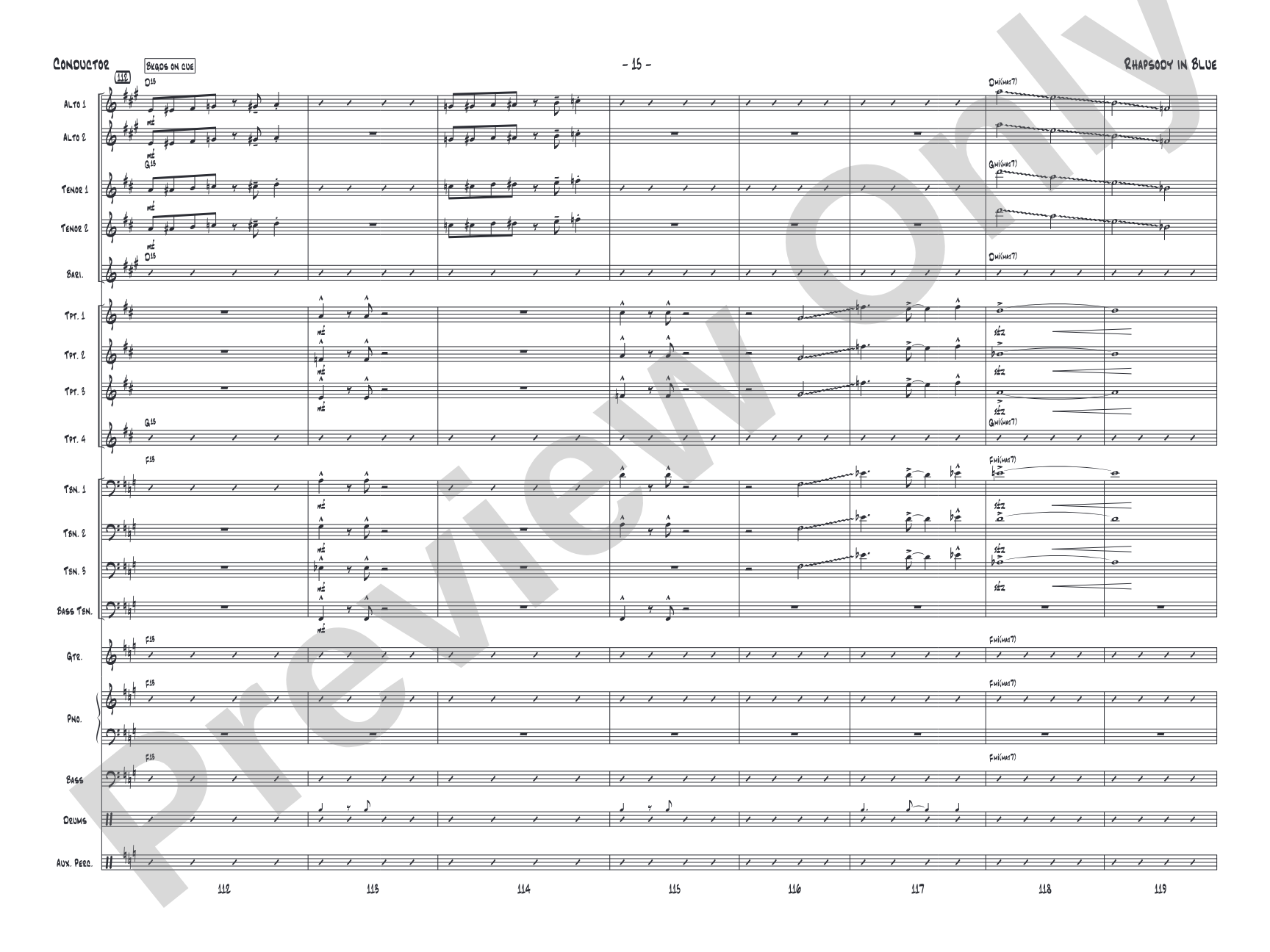
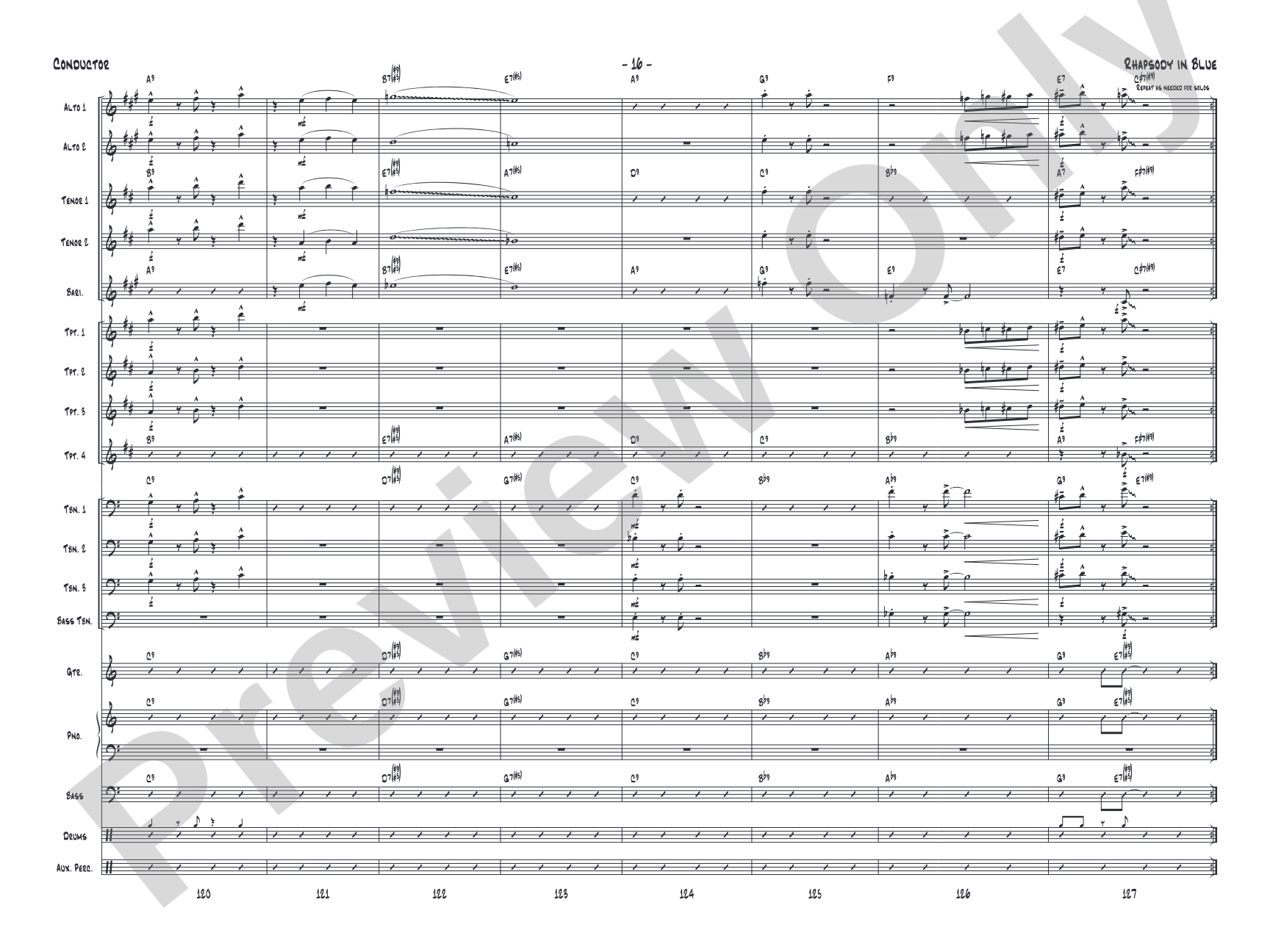
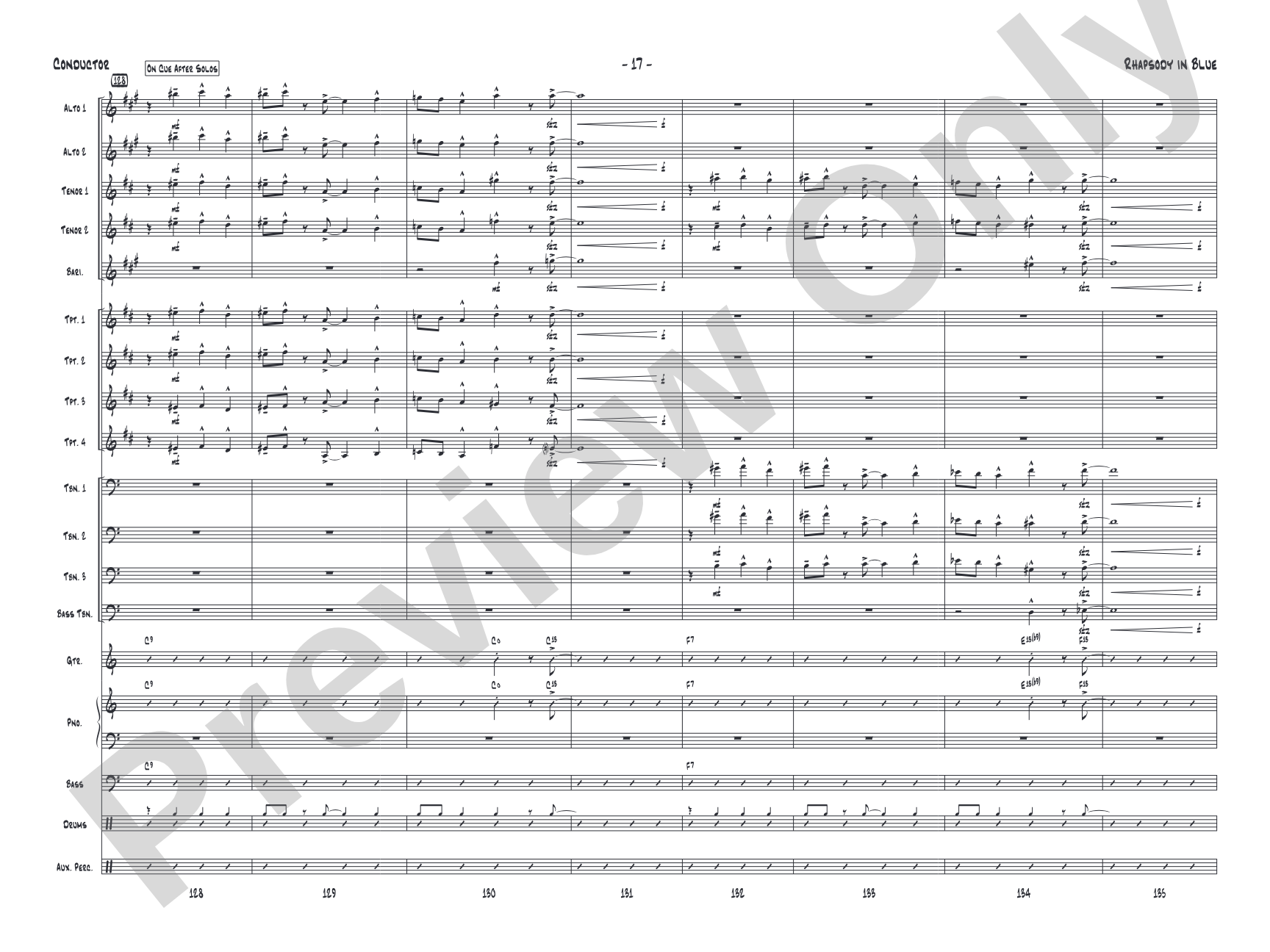
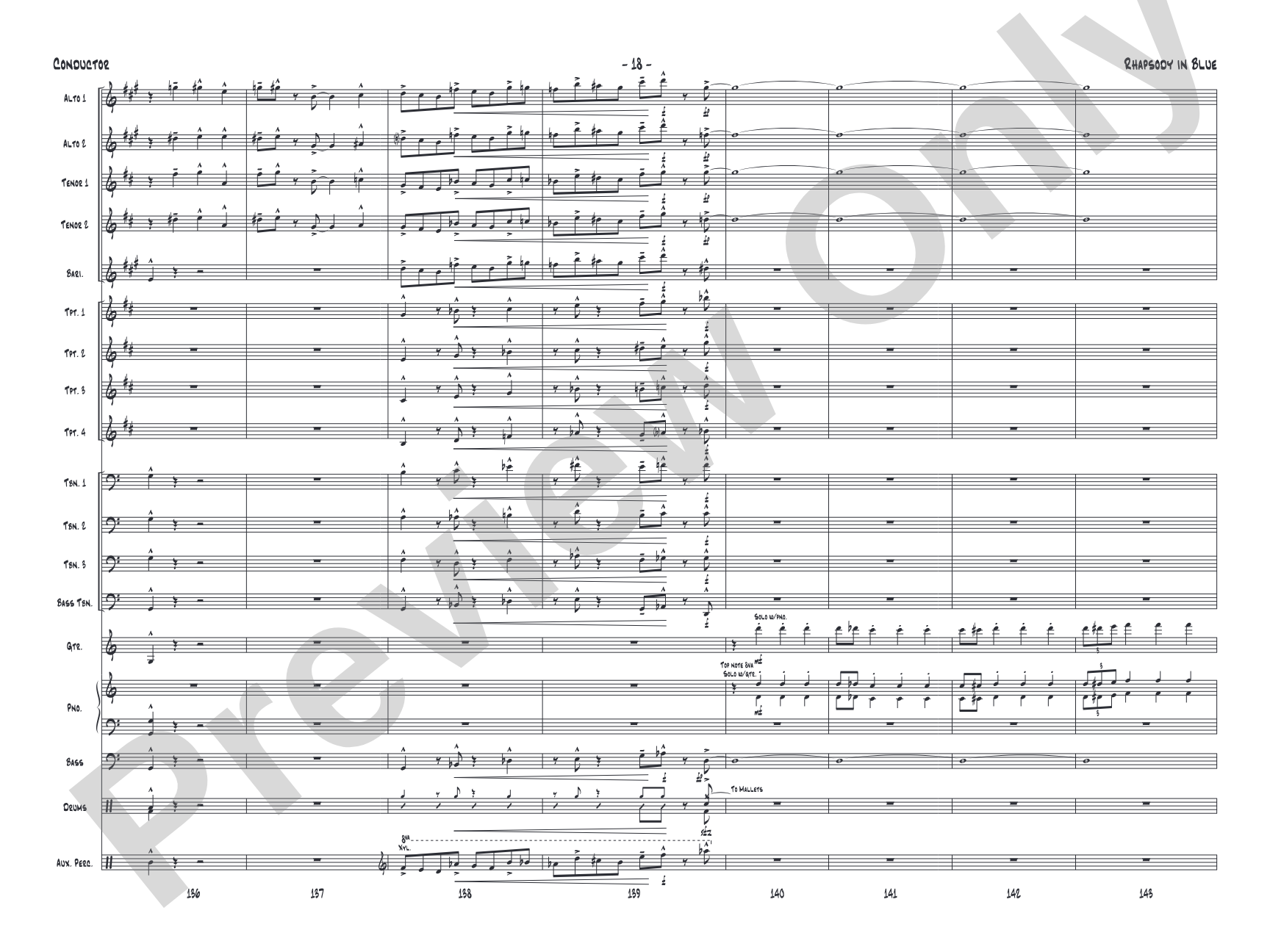
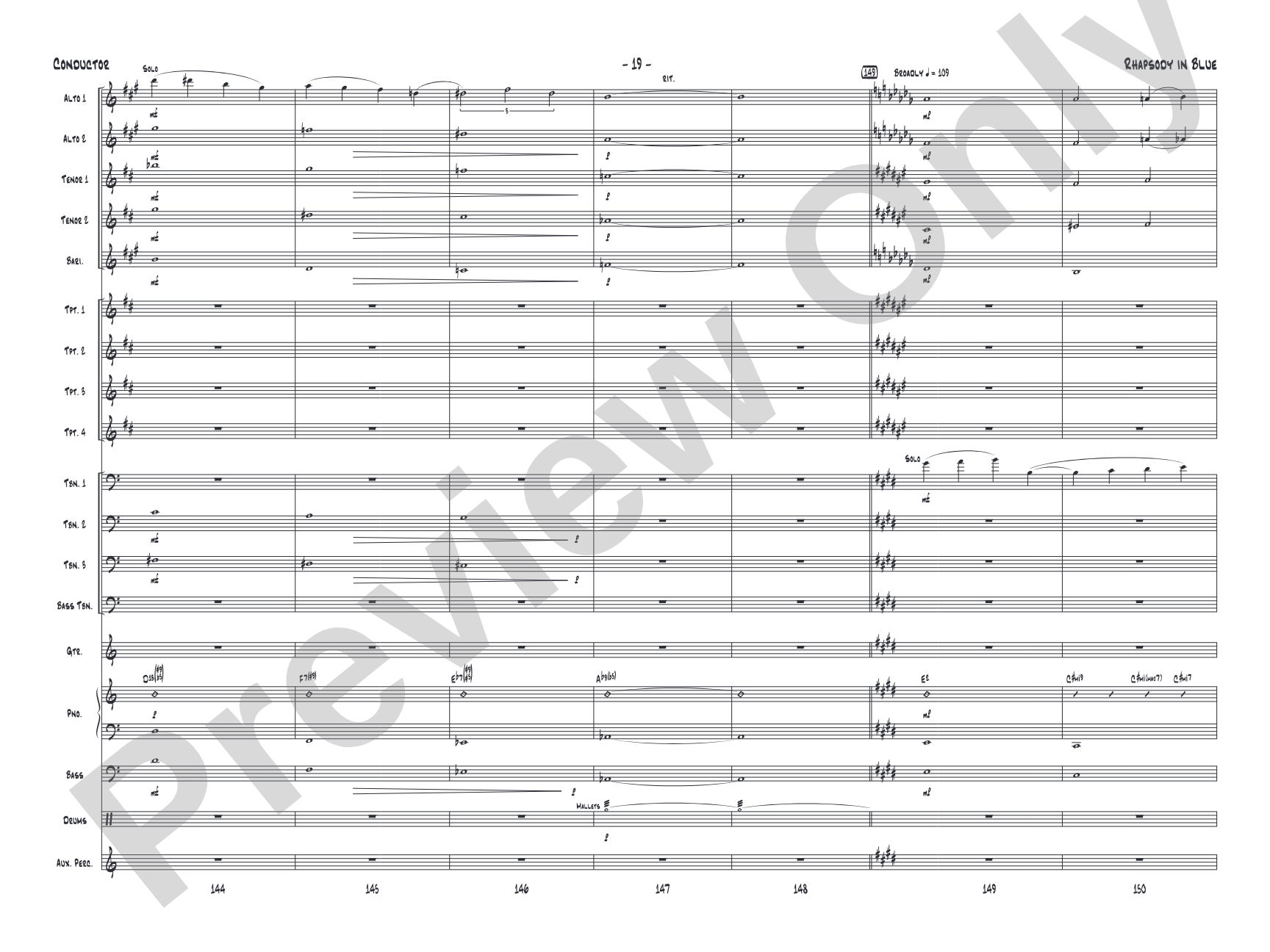
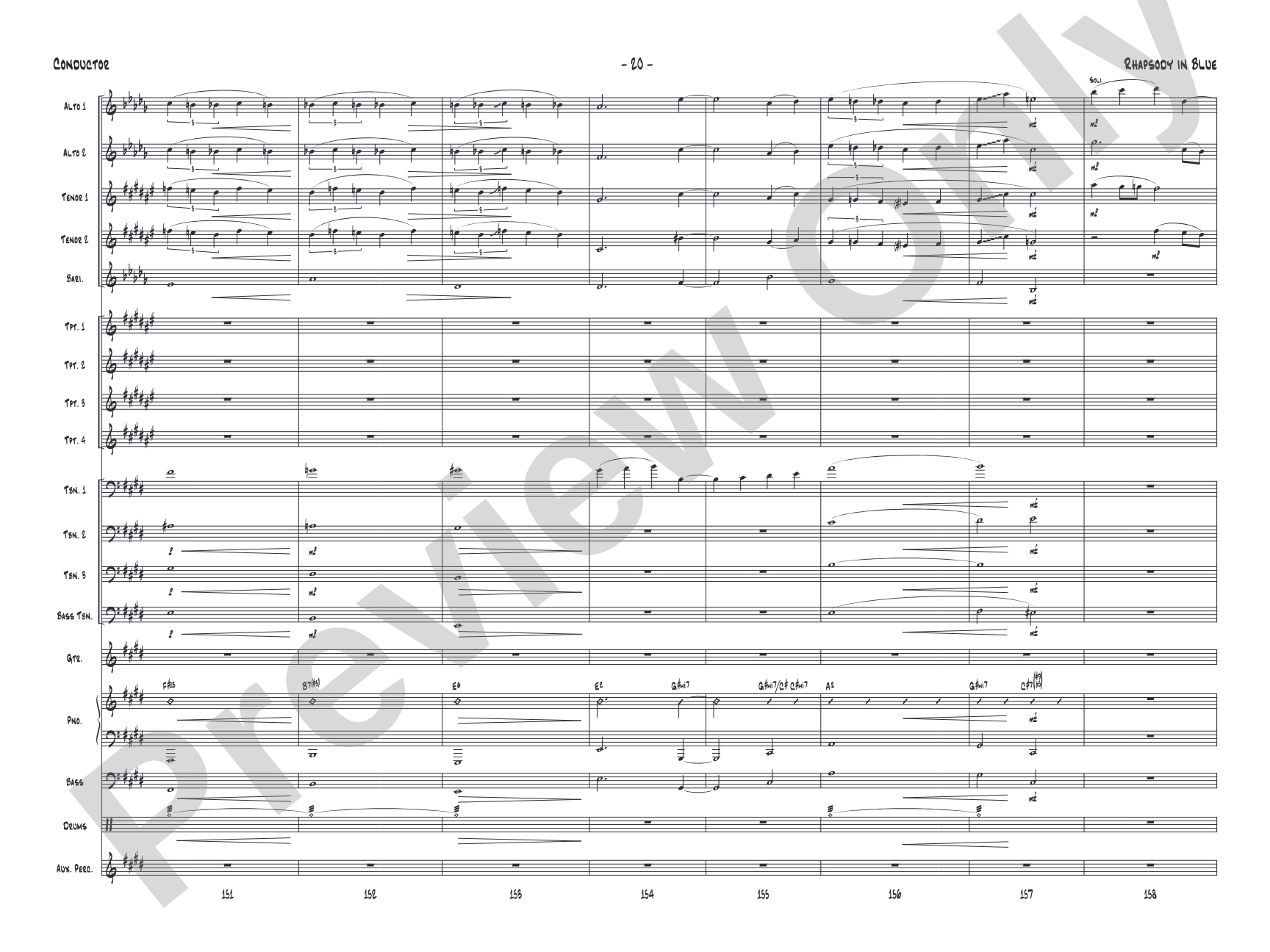
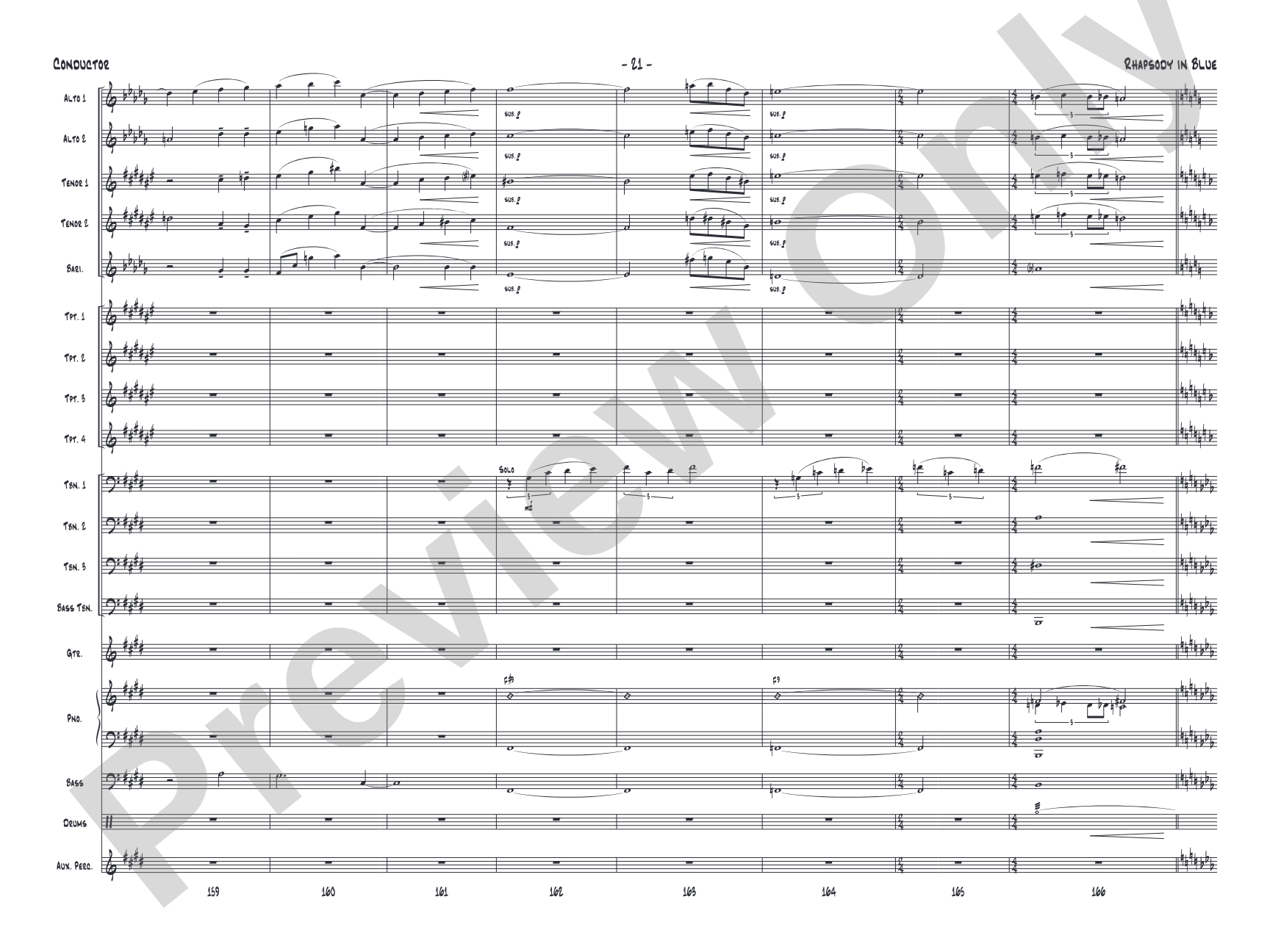
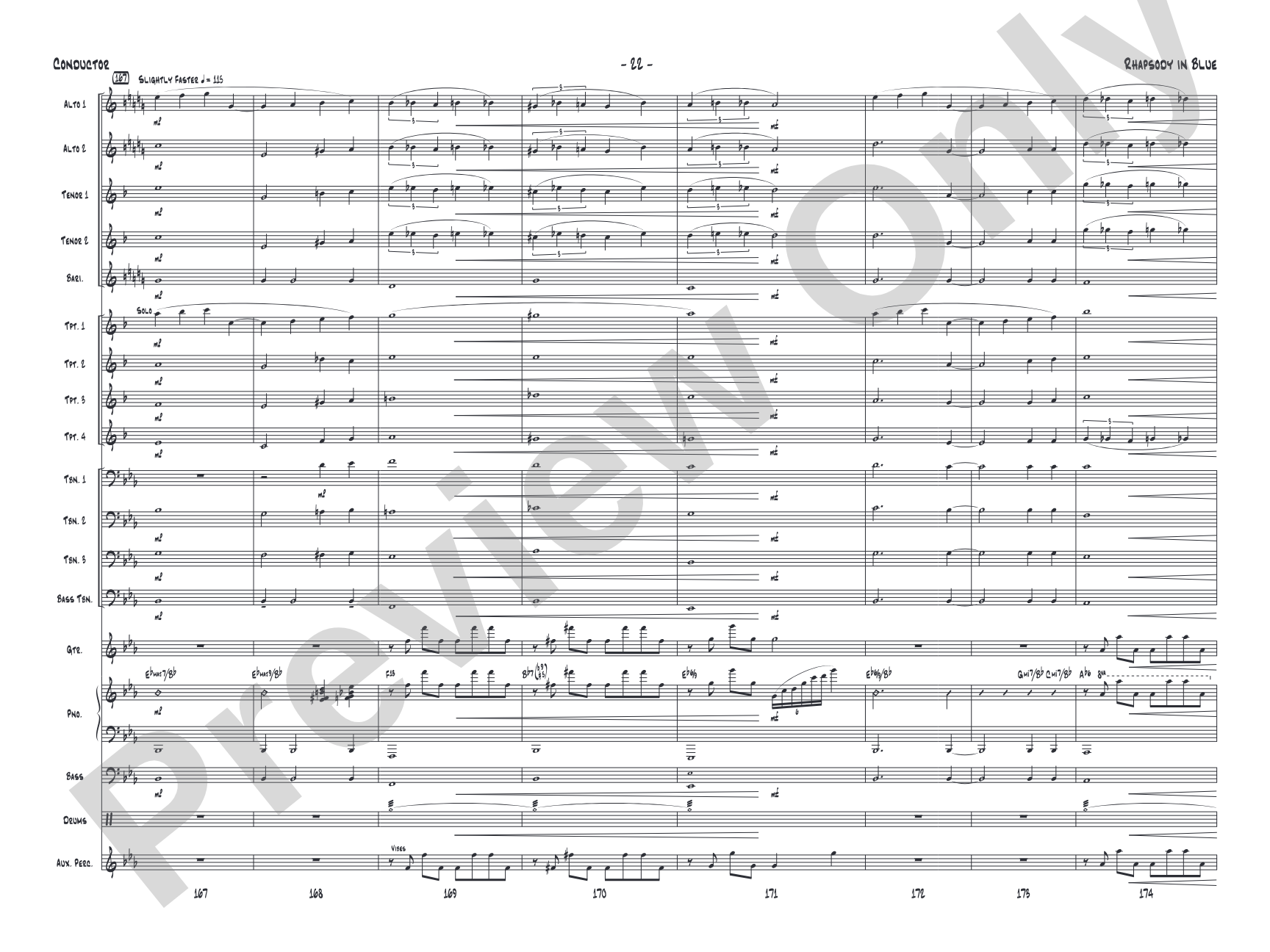
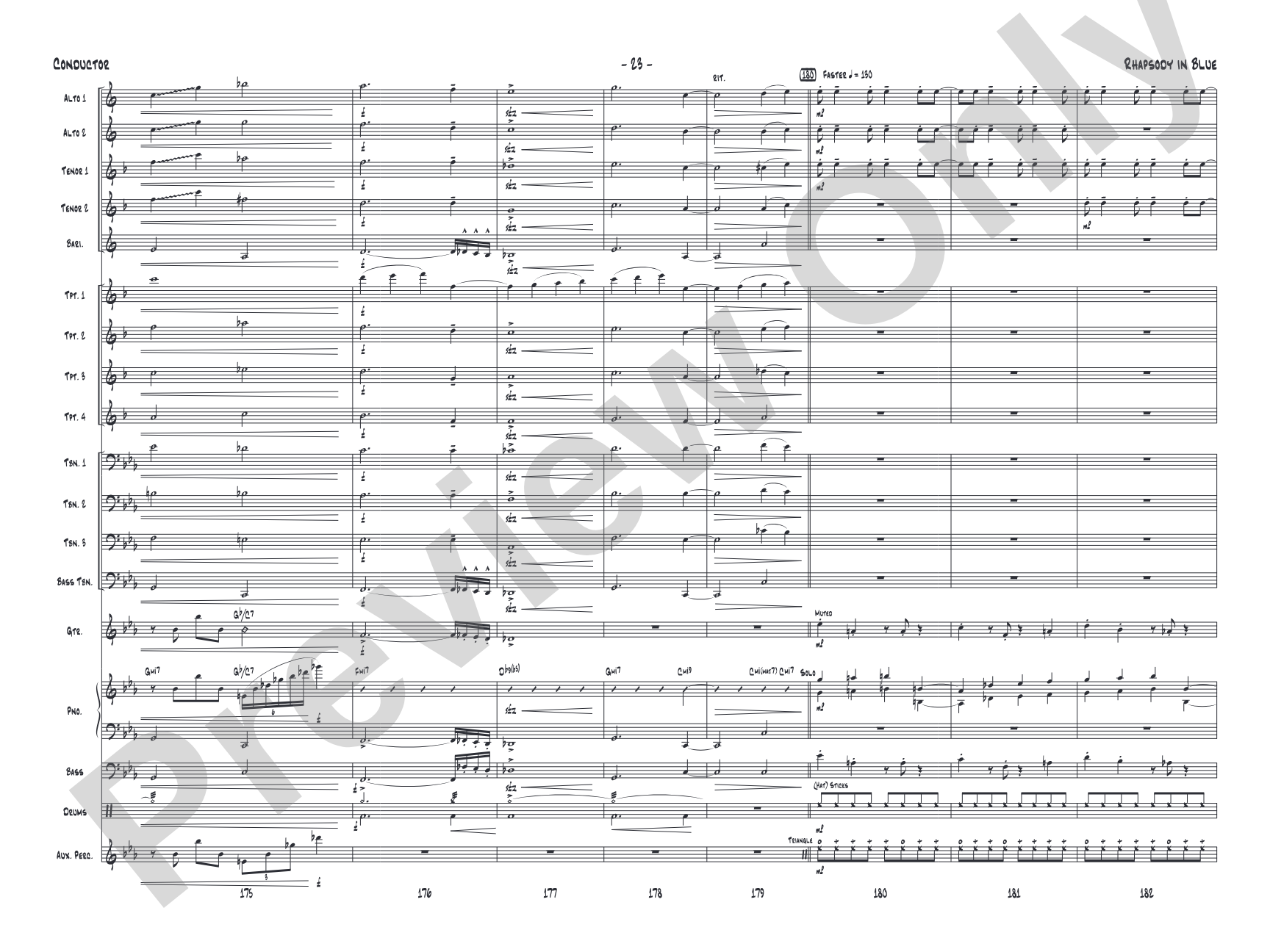
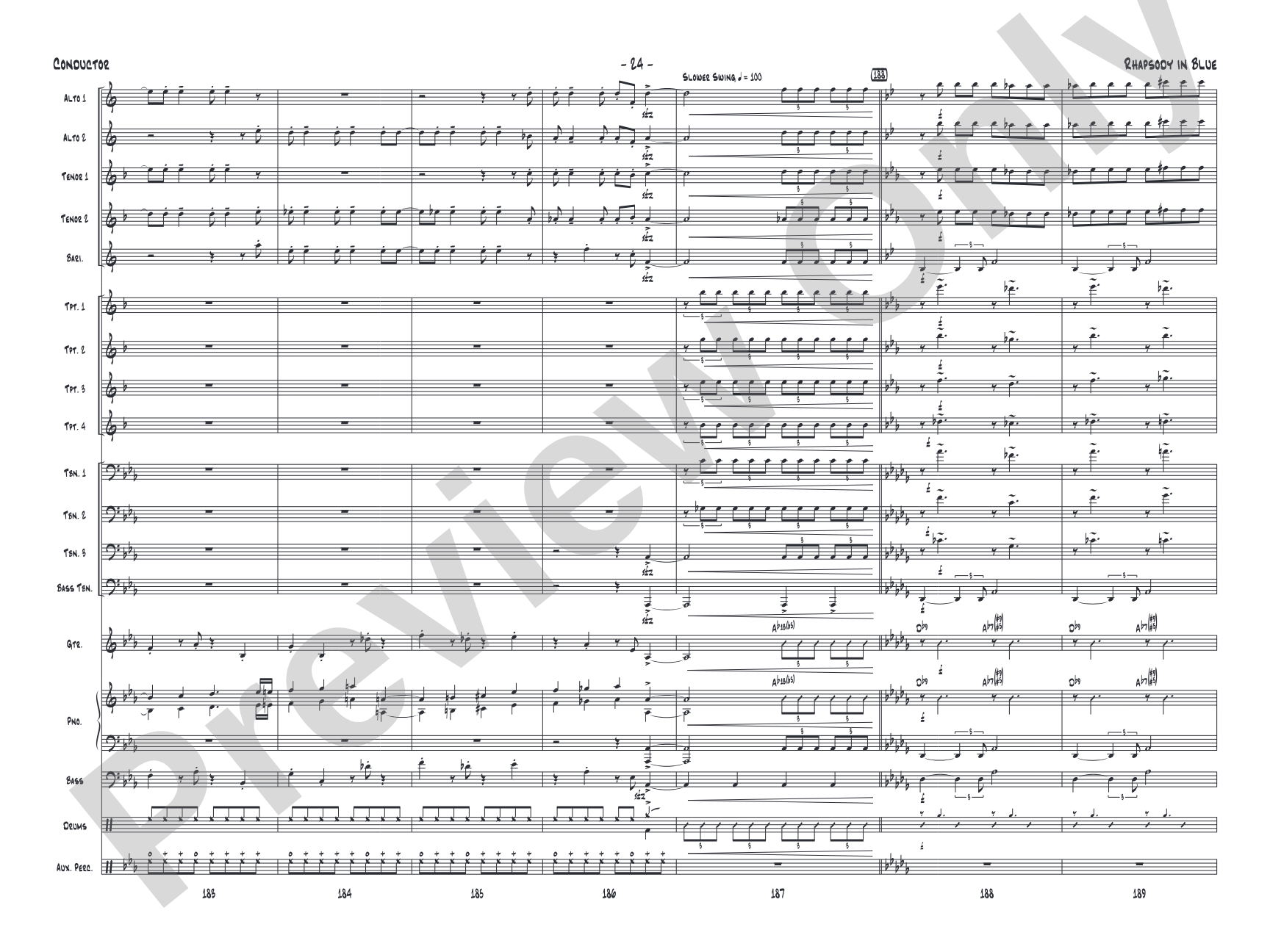
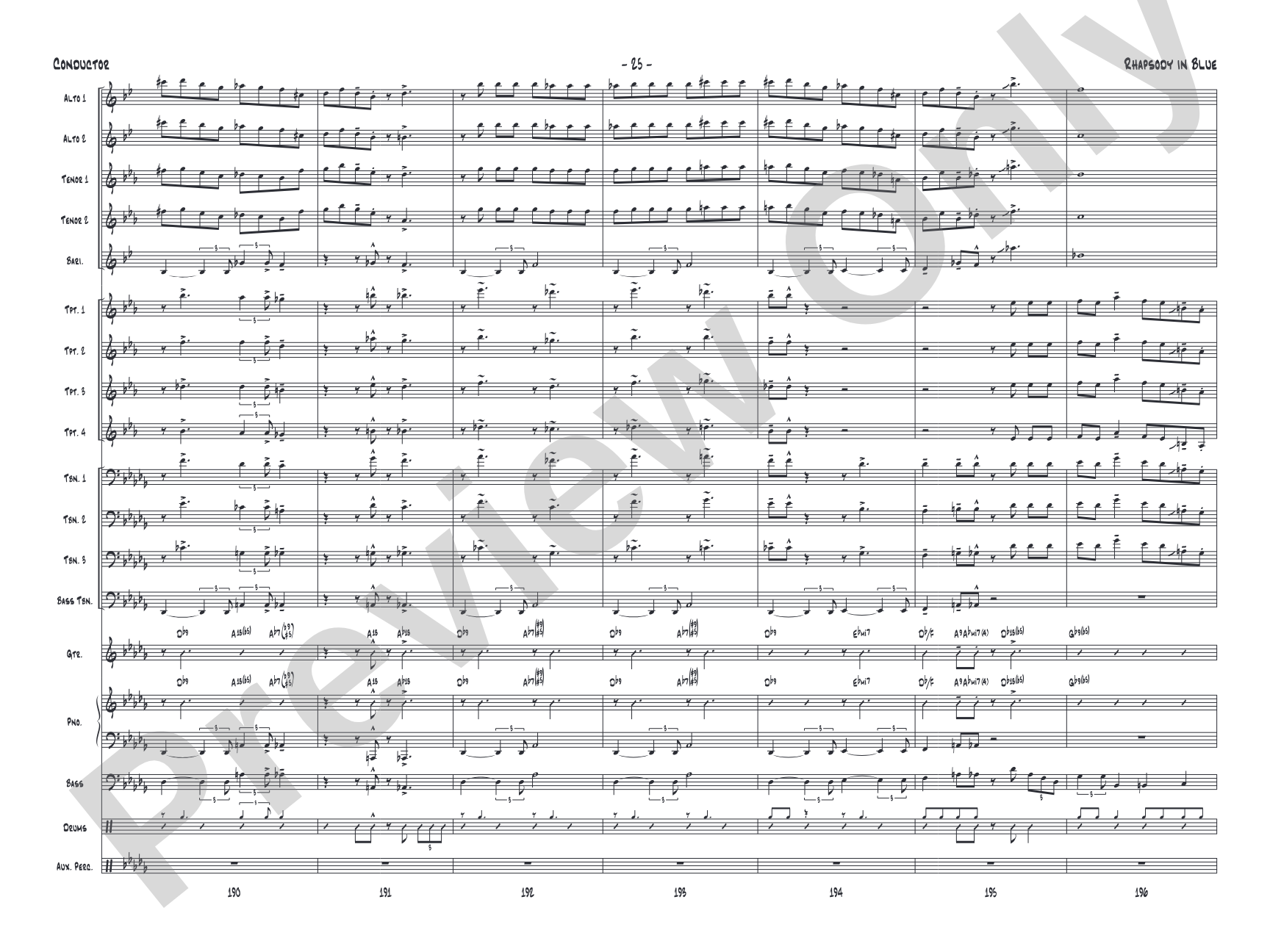
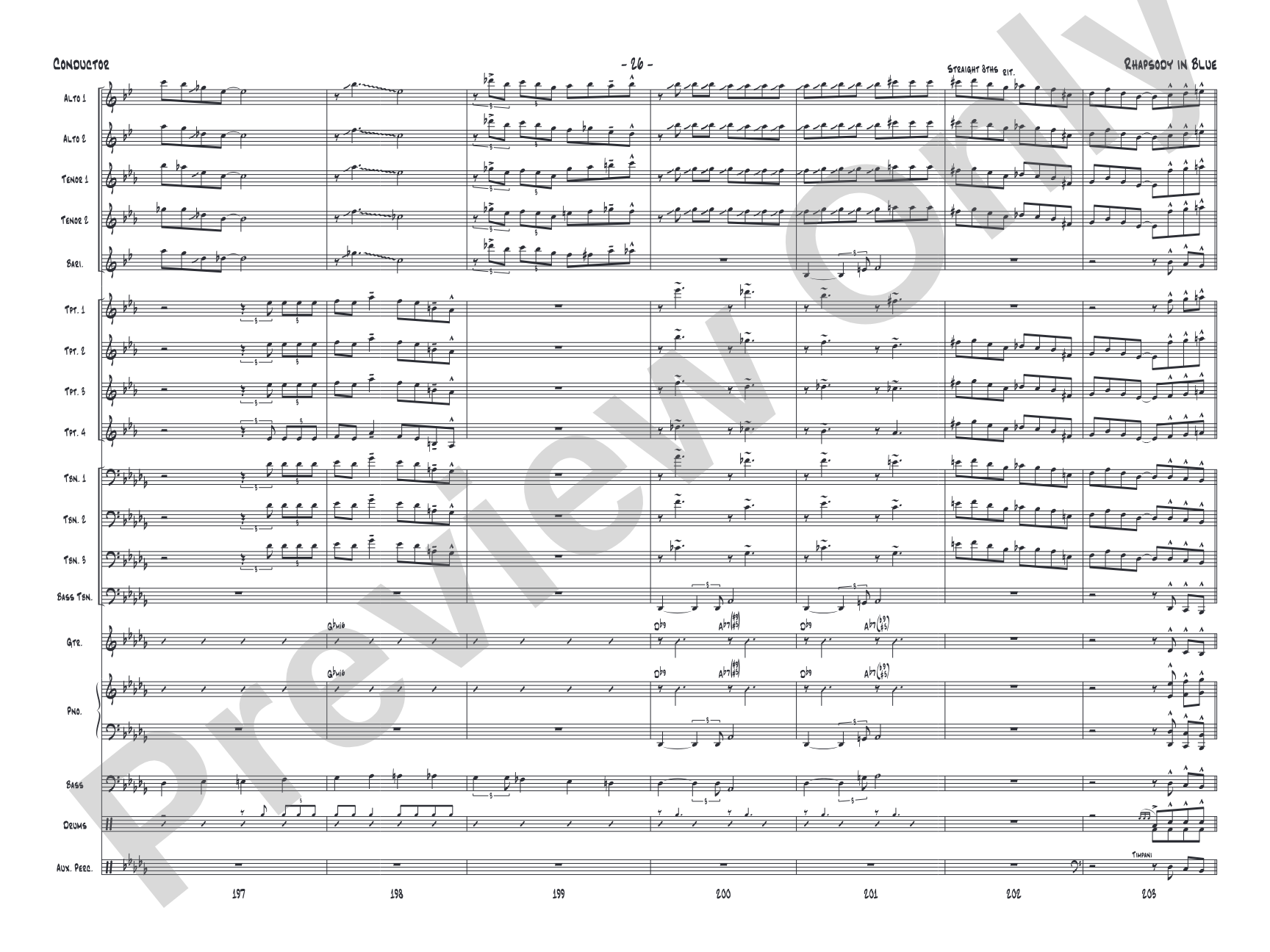

Rhapsody in Blue: Jazz Ensemble Conductor Score & Parts
By George Gershwin / arr. Gordon Goodwin
Grade: 6 (Professional / Very Advanced)
Item: 00-PK-0006934

$70.00
Pickup currently not available
Buy Extra Parts (Digital PDF Download)
Parts Added to Cart!
Description
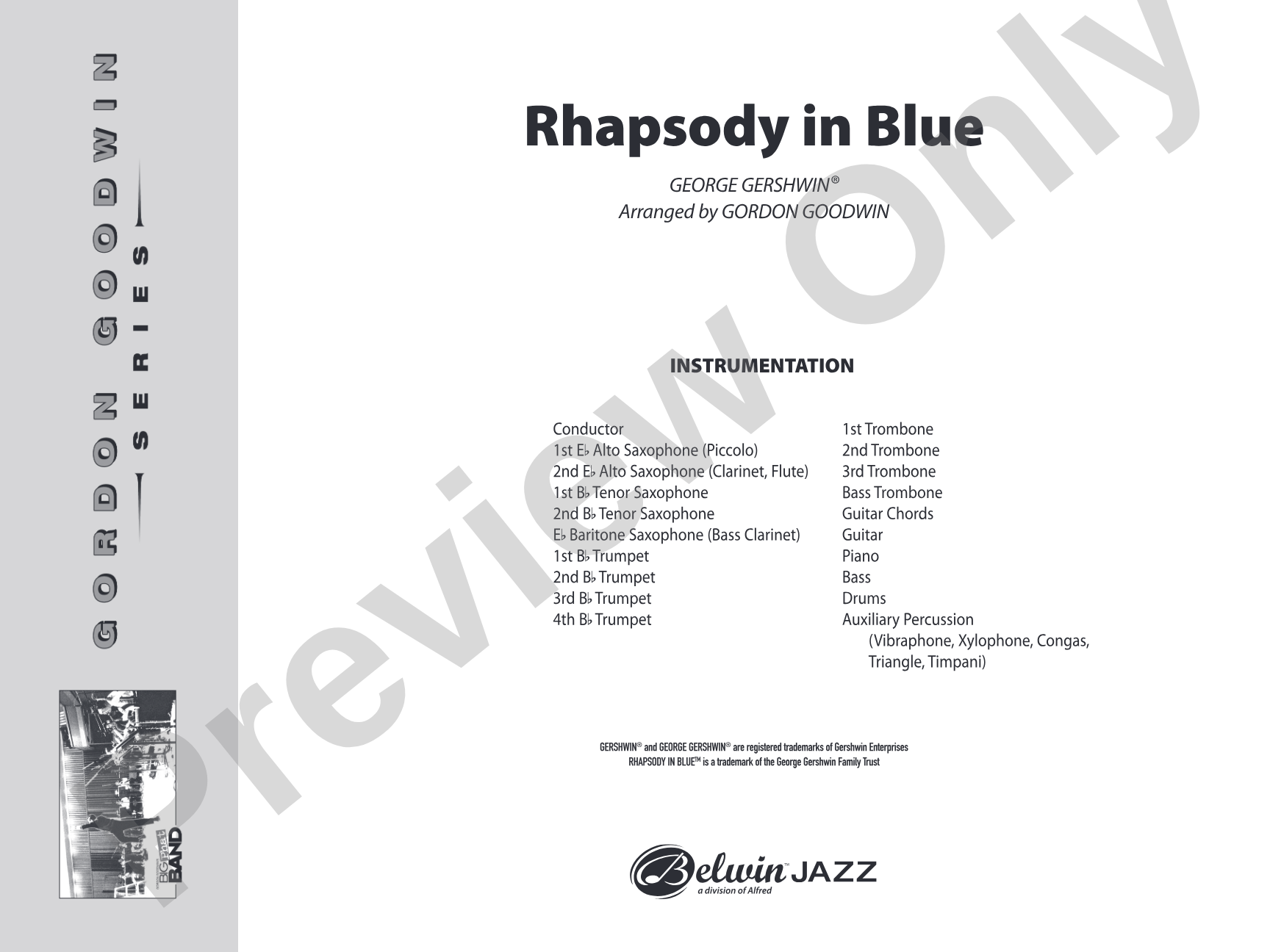
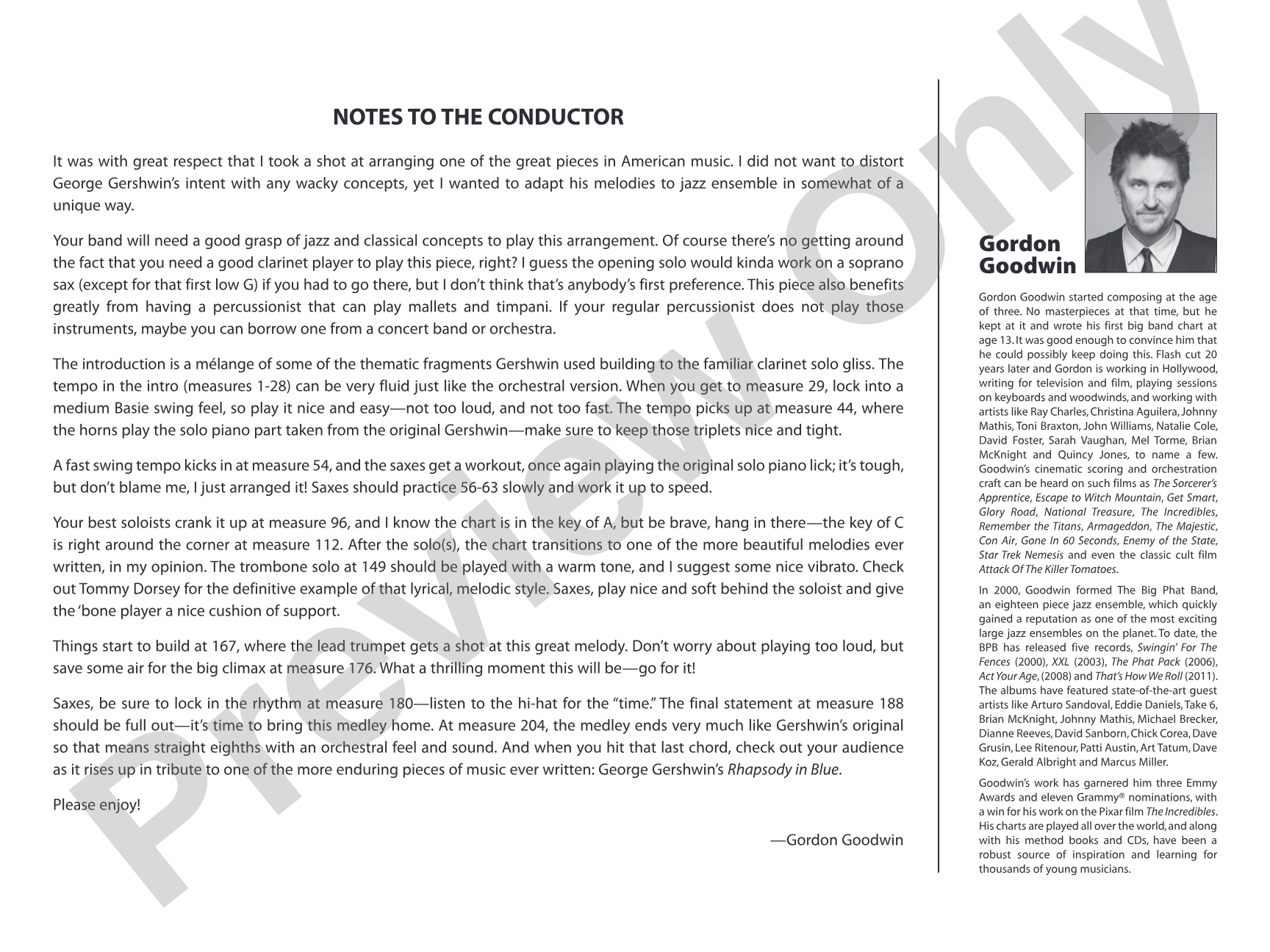
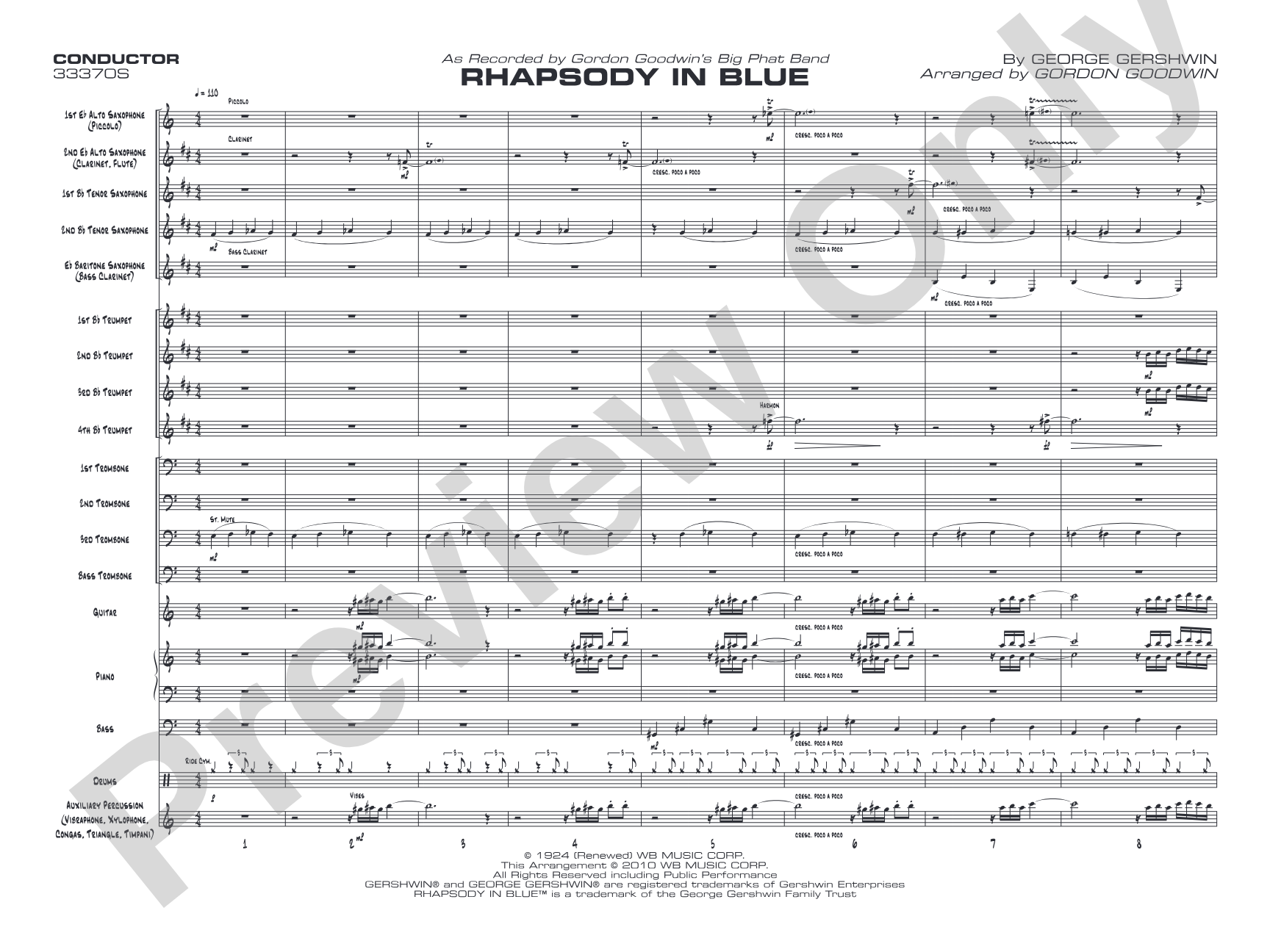
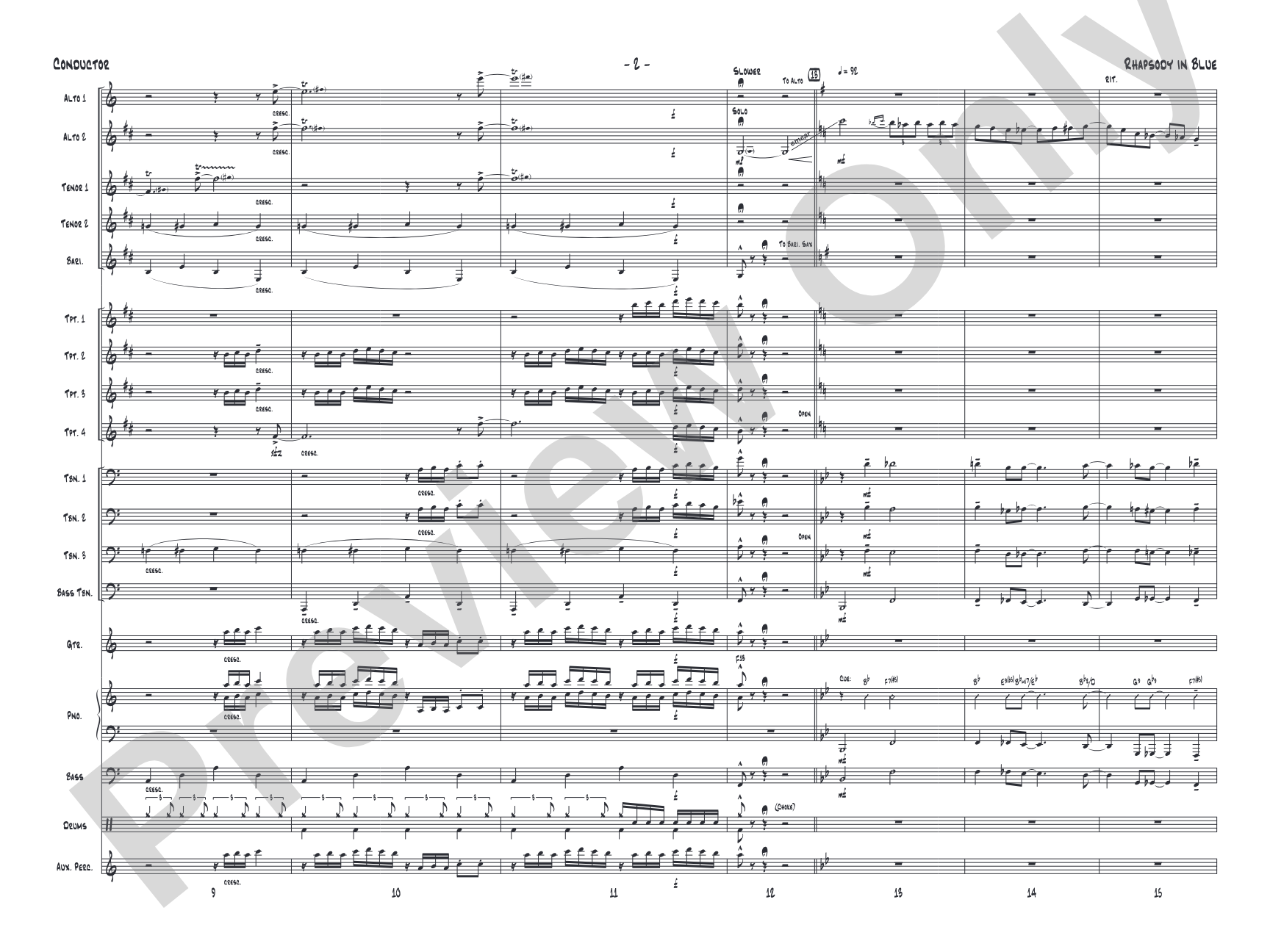
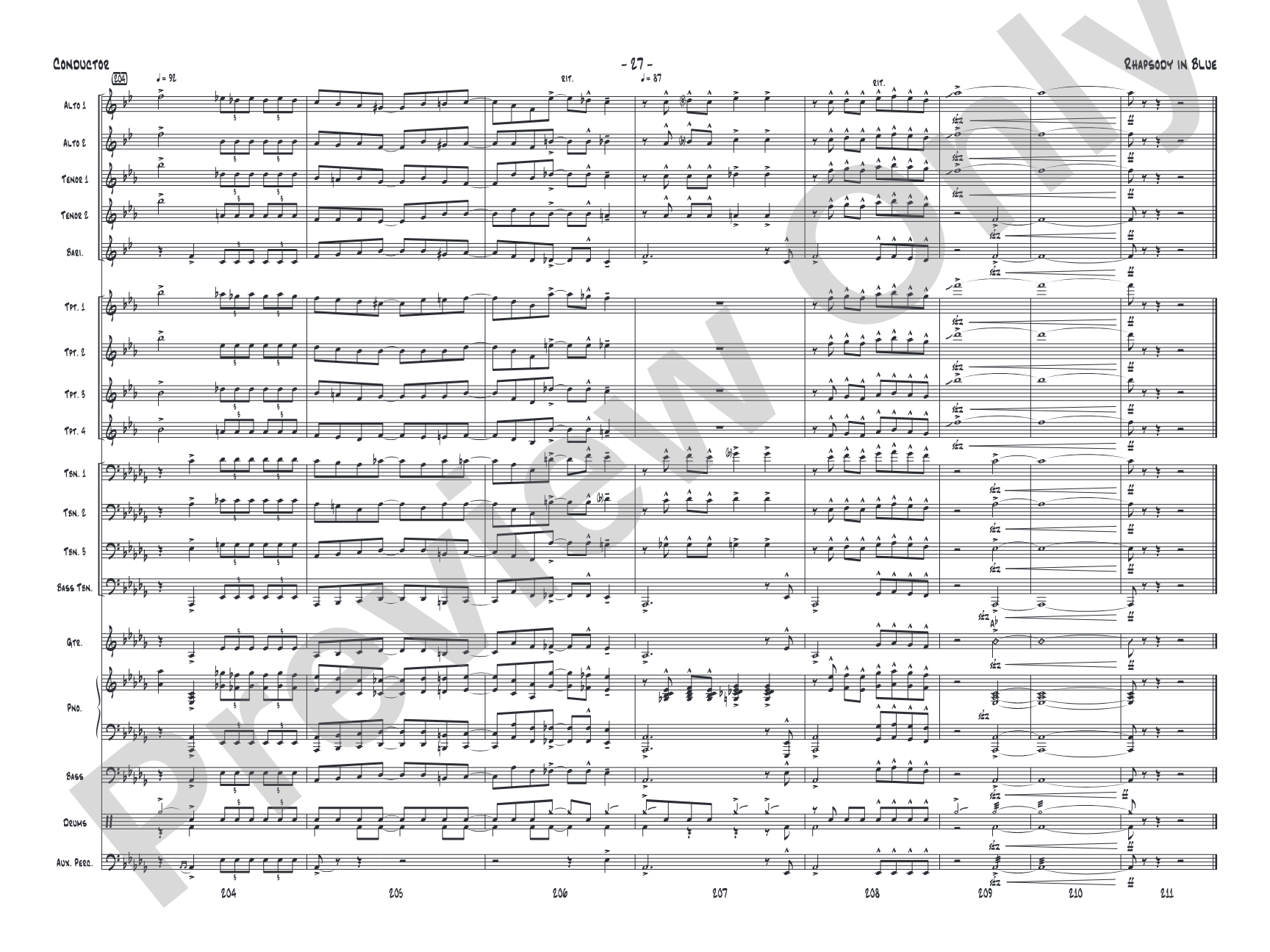
This is a tour-de-force, GRAMMY® Award-winning arrangement by Gordon Goodwin of Gershwin's masterpiece. The sax doubles call for piccolo (alto 1), clarinet/flute (alto 2) and bass clarinet (bari). The second alto part has the well-known clarinet solo. This chart has it all---the thematic material, swing, key changes, solo space for alto, tenor, bari, trumpet, and trombone; and lead trumpet range is to written high F. The percussion part calls for mallets and timpani. Overall, a grasp of both jazz and classical concepts will make this chart stand apart from anything else. As recorded by the Big Phat Band. (2:20)


Don't just read it, hear it, play along with it, and watch your students grow with it. In MakeMusic Cloud, Rhapsody in Blue: Jazz Ensemble Conductor Score & Parts comes alive with professional accompaniment, adjustable tempo, and built-in practice tools that turn solo practice into real progress.
Open in the Player
Jump straight in and assign it today.
Start Your Free Trial
Open this title and explore the full library in minutes.
Sample Audio
1
Audio File
--:--
0:00
0:00
Sample Video
Additional Details
Series:
Gordon Goodwin Series
Publisher:
Alfred Music
Page Count:
102
SKU:
00-PK-0006934
More about this title
About the Composer: George Gershwin
George Gershwin (1898-1937) bridged the concert hall and the jazz club in ways that few composers before or since have managed. He wrote for Broadway, composed symphonic works, and created music that felt equally at home in a dance hall or a concert venue. His ability to fuse vernacular American idioms with sophisticated harmonic language made him one of the most performed composers of the twentieth century.
Why we love this
Gordon Goodwin's arrangement captures the full architecture of Gershwin's masterpiece while delivering authentic big band energy and the kind of solo space that keeps every section engaged. The chart demands genuine musicianship from your ensemble; it won't work as background music, which is precisely what makes it so rewarding to conduct and hear night after night.
What to expect
Rhapsody in Blue walks a high wire between nostalgia and urgency. It opens with introspective yearning, pivots into rhythmic swagger, hands off brilliant solo moments to individual voices, and builds toward moments of genuine grandeur. The arrangement honors Gershwin's original ambitions while making space for your band's personality.
Who it's for
This score is built for jazz ensembles with players who read fluently and understand both swing phrasing and classical discipline. Your musicians need secure fundamentals; the range demands (lead trumpet to written high F, for instance) and the harmonic sophistication leave no room for approximation.
How to get the most out of it
- Balance the clarinet solo in the second alto part with careful dynamics so the melody cuts through without overwhelming the ensemble underneath.
- Lock the rhythm section early. The swing feel depends on committed pocket playing from drums and bass; rehearse them separately first.
- Shape the key changes deliberately. They're not surprises; they're structural moments that should feel inevitable and powerful.
- Give soloists room to breathe and phrase musically rather than mechanically hitting their entrance cues. This arrangement thrives on interpretive flexibility.
How to use it
This is a centerpiece work, not a filler. Program it as a concert anchor where it gets rehearsal time and audience attention. Its length (2:20) and musical weight make it ideal for jazz festival contests, end-of-year concerts, or standalone jazz evenings where it can breathe.
Skills your students will build
- Reading and executing swing phrasing across extended passages
- Balancing complex harmonic movement with strong ensemble sound
- Navigating written range demands while maintaining tone quality
- Responding to key modulations without losing pitch center
- Executing solo improvisation and ensemble playing within the same work
- Understanding arrangement techniques that layer classical form with jazz idiom