
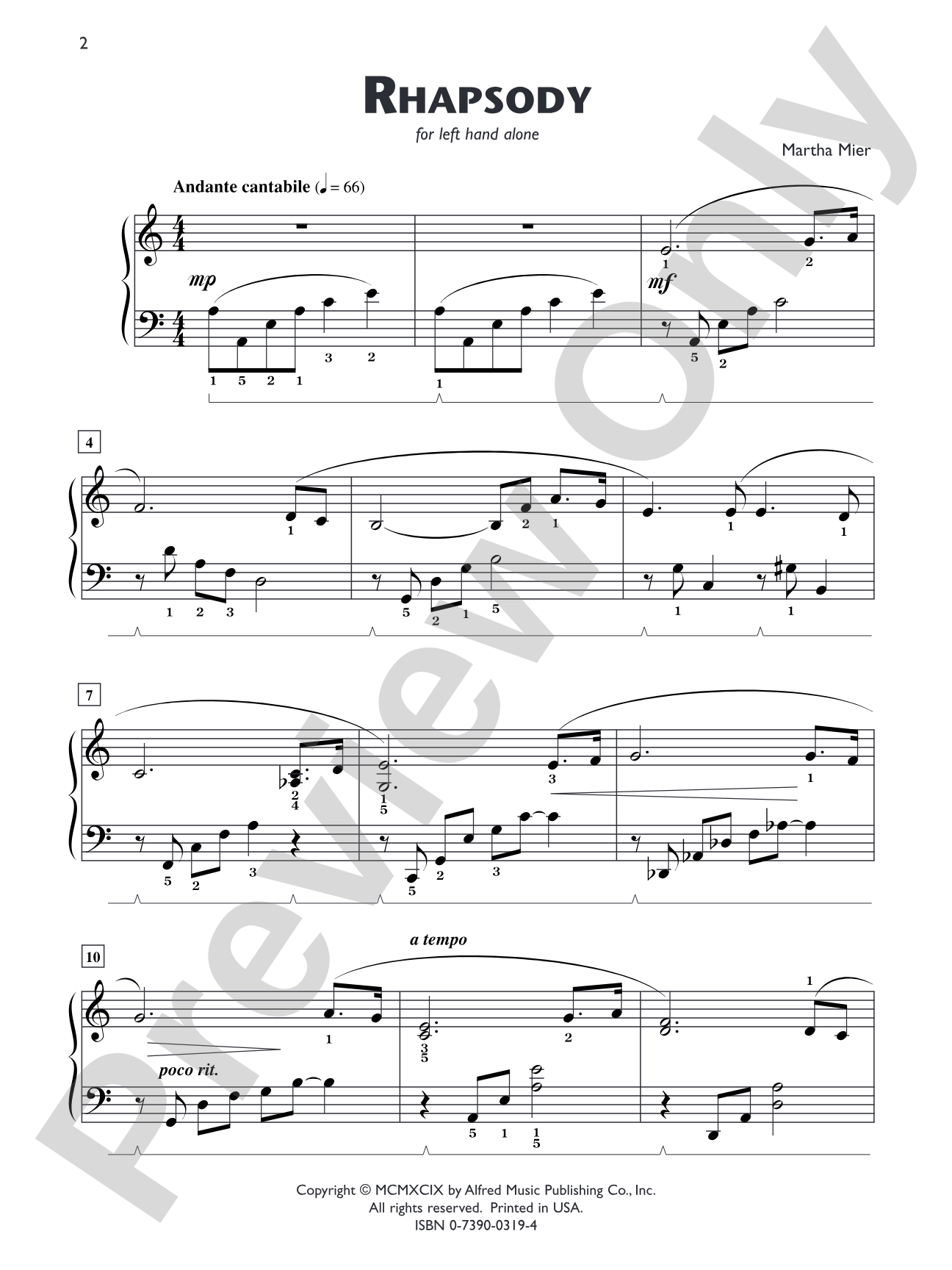

Rhapsody (for left hand alone) - Piano Solo: Piano
By Martha Mier
Level: Late Intermediate
Item: 00-PB-0000774
$3.50
Pickup currently not available
Related Items
Rhapsody (for left hand alone): Piano Sheet |
$3.50
|
View |
Description
The left hand plays both melody and accompaniment in this late intermediate piano solo for one hand. This dreamlike piece begins in the key of A minor and moves through various tonalities before ending on a C major arpeggio. A Federation Festivals 2016-2020 selection. A Federation Festivals 2020-2024 selection.


Rhapsody (for left hand alone) - Piano Solo: Piano isn't in MakeMusic Cloud just yet...but it could be. Let us know you'd like to see it, and you'll help shape what comes next. In the meantime, start a free trial and dive into thousands of interactive titles your students can play along with today.
Request This Title
Tell us you want it.
Start Your Free Trial
Explore everything that's ready to play right now.
Sample Audio
No sample audio found.
Sample Video
No sample videos found.
Additional Details
Series:
Signature Series
Publisher:
Alfred Music
Page Count:
4
SKU:
00-PB-0000774
More about this title
About the Composer: Martha Mier

Martha Mier has shaped piano pedagogy for decades through her prolific output of educational repertoire. Since joining Alfred Music Publishing in 1989, she has written more than 200 pieces and collections that span jazz, blues, romantic impressionism, and contemporary styles. Her work is distinguished by musical substance paired with accessibility, a balance that has made her music a staple in studios and festivals worldwide.
A Florida State University graduate and credentialed teacher through the Music Teachers National Association and National Guild of Piano Teachers, Mier brings classroom experience directly into her compositions. Her 25-year private studio in Lake City, Florida, alongside her active involvement in church music and professional accompaniment, grounded her understanding of what students need to play and what teachers need to teach. She serves as a frequent clinician and adjudicator, having led workshops internationally and presented at major pedagogical conferences including the World Piano Pedagogy Conference and MTNA conventions.
Why we love this
Mier captures the essence of what makes late intermediate students invest in a piece: technical challenge that feels musical rather than mechanical. The left hand work here demands real coordination and independence while the dreamlike quality keeps students emotionally engaged with what they're doing, not just grinding through mechanics. Its recognition across two Federation Festival cycles confirms what teachers already know: this piece holds up under repeated practice and performs beautifully in a recital setting.
What to expect
The piece inhabits a liminal space between waking and reverie. It opens softly in A minor with an introspective quality, then drifts through unexpected harmonic territories, creating a sense of wandering through half-remembered dreams. The final resolution into a C major arpeggio feels like returning to solid ground after a tonal journey.
Who it's for
Late intermediate pianists who are ready to tackle left hand independence and can navigate shifting tonalities without losing musical shape. This piece suits students comfortable with a four-page solo who want repertoire that challenges technique while honoring musicality. It's ideal for those preparing for festivals, recitals, or simply want to expand beyond traditional classical etudes.
How to get the most out of it
- Shape the melody in the left hand with dynamic intention from the start. The piece opens in A minor with an intimate character; bring out the singing line even as the left hand manages both roles.
- Explore the tonal shifts deliberately. As the piece moves through various keys before the C major arpeggio ending, resist the urge to rush these transitions. Let each key area settle.
- Balance independence and unity in your left hand work. The melody and accompaniment share the same hand, so listen for where they should blend and where the melody should emerge slightly forward.
- Use pedal sparingly and change it with harmonic shifts rather than on impulse. The dreamlike quality depends on clarity, especially when the hand is doing multiple things.
How to use it
Program this as a contrasting solo in a recital between more structured classical pieces or energetic contemporary works. Its four-page length makes it substantial without dominating a student's practice time during the competitive festival season. Pair it with a rhythmically driven piece to showcase the student's range of interpretive control.
Skills your students will build
- Left hand independence and coordination of melody and accompaniment in a single hand
- Voice leading across shifting tonalities and key areas
- Dynamic shaping and phrasing in an ambient, impressionistic harmonic context
- Pedal management in texturally complex passages
- Sustained legato and control at an intermediate tempo