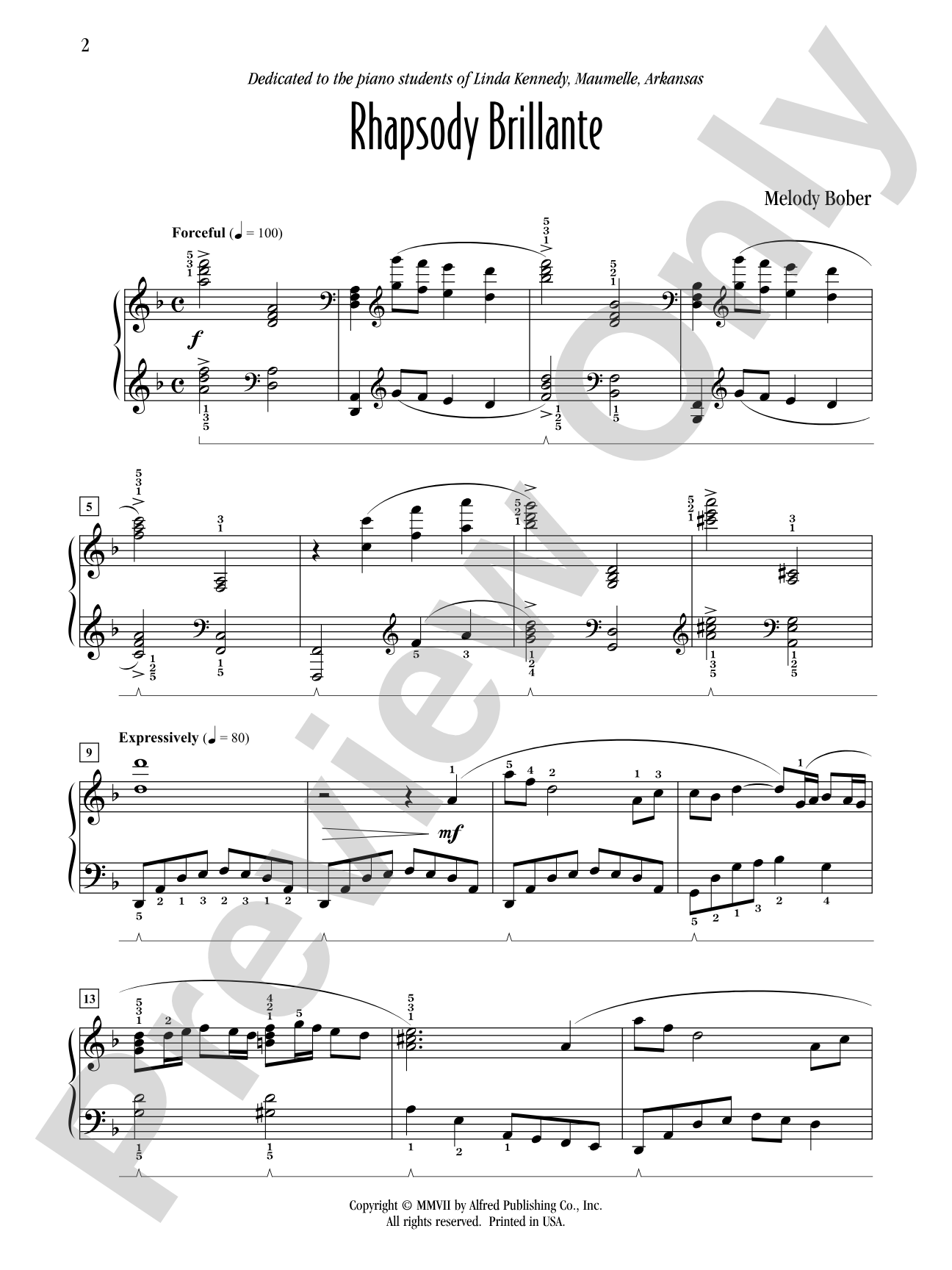
The romance and passion of a rhapsody are found in this expressive solo. Two keys, D minor and D major, are used in contrasting sections. D minor represents the passionate side while the D major section is more lyrical and romantic in nature. Technical facility is needed for the 16th-note passages found in both sections. Wide use of the keyboard makes this a virtuosic-sounding piece.
Discover MakeMusic Cloud: thousands of interactive titles your students can play along with today.
Melody Bober brings two decades of teaching experience to her composition work, having spent 20 years in public school settings followed by university-level instruction. She holds a bachelor's degree in music education from the University of Illinois at Champaign-Urbana (graduated summa cum laude) and earned a Master of Arts in piano performance from Minnesota State University, Moorhead.
Bober's creative voice emerges from deep study with respected mentors including pianists Joel Shapiro and Andrew Froelich, music educator Mary Hoffman, and jazz musician Tony Caramia. Active as a church pianist, accompanist, and private studio instructor, she has also served as a church music director. Her reputation as both a clinician and composer has made her a sought-after presenter at piano teacher conferences and workshops throughout North America.
Why we love this
Bober writes with genuine understanding of what late intermediate pianists can accomplish when given music that demands both technical precision and emotional maturity. The tonal contrast between D minor passion and D major lyricism gives students a concrete framework for exploring character through key relationships, while the demanding passagework ensures they earn the virtuosic sound without overshooting their level.
What to expect
Raw intensity gives way to tender reflection. The opening captures the fierce energy of a stormy minor key, all driving rhythms and sweeping figurations; then the music settles into the warmth of D major, where melody flows over accompaniment with an almost lyrical ease. The virtuosity never feels showy because it serves the emotional arc.
Who it's for
Late intermediate pianists ready to tackle a solo that blends technical fireworks with genuine musical expression. This piece rewards students who have developed solid finger technique and are beginning to understand how to shape longer musical narratives.
How to get the most out of it
Shape the D minor section with clear dynamic architecture. The passionate character depends on building tension through crescendos into the rapid 16th-note figures, then releasing that energy rather than playing with relentless intensity throughout.
Balance hand independence in the wider keyboard spans. Practice sections where the hands traverse the full range separately first, then combine them slowly to ensure clean execution before bringing tempo back up.
Let the D major section breathe with singing tone. The shift from passion to lyricism should feel like a genuine emotional pivot, not just a change of key; use the pedal thoughtfully to support the longer lines without muddying the harmonic clarity.
How to use it
Feature this as a recital solo when you want to showcase a student's technical growth without resorting to pure etudes or transcriptions. The eight-page length and clear two-section structure make it ideal for mid-year jury performances or spring studio recitals where you're looking for substantial but manageable repertoire.
Skills your students will build
Rapid 16th-note passages with evenness and clarity
Tonal contrast and character differentiation between minor and major keys
Wide keyboard navigation and hand independence across the full range
Dynamic shaping and phrasing across longer musical lines
Pedal control in both bright and resonant textures
You May Also Like
Scan to Complete Your Purchase
Use your phone's camera to scan the code below
You'll log in on your phone and the order will be added to your account