
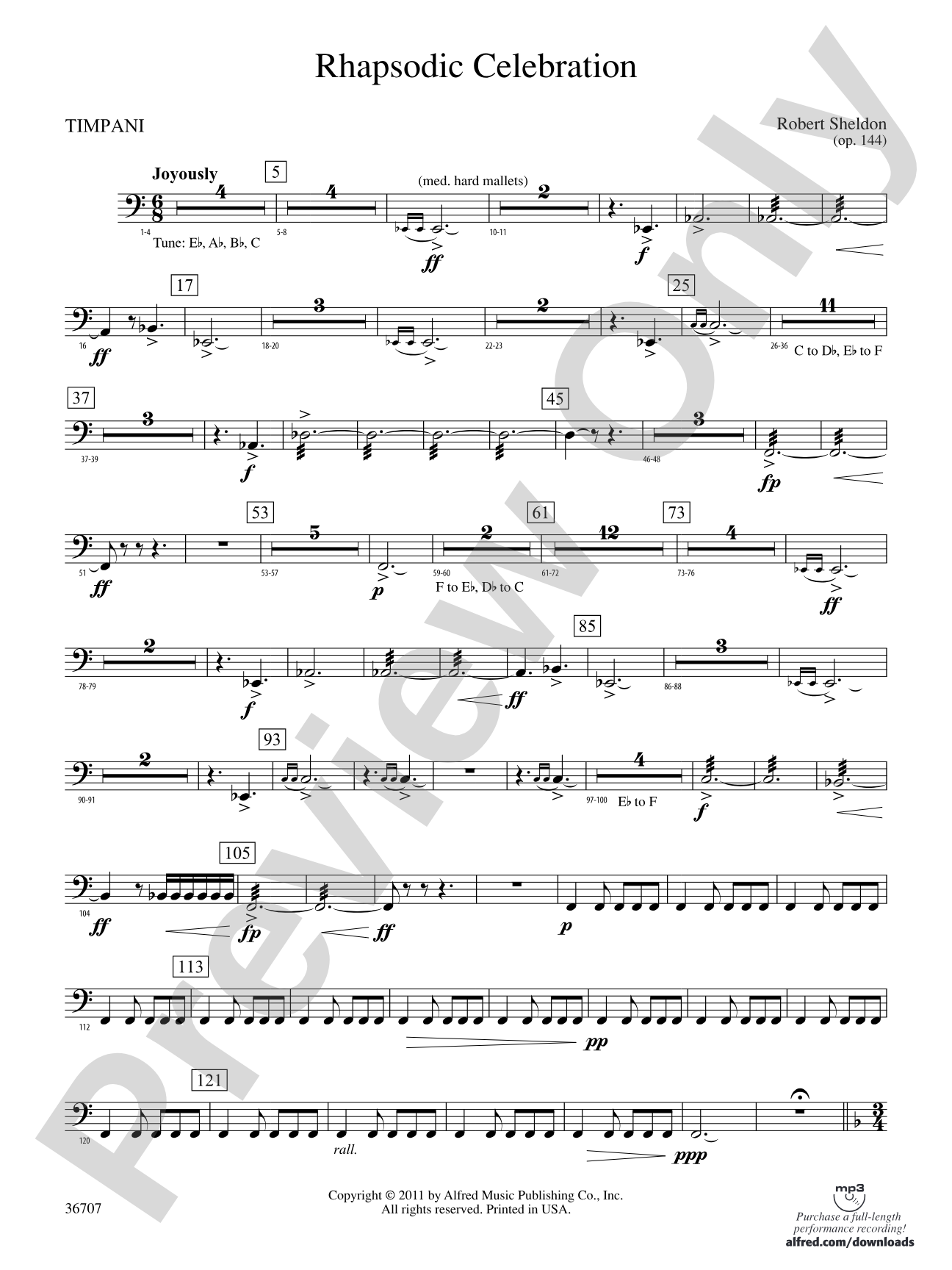

Rhapsodic Celebration: Timpani
By Robert Sheldon
Grade: 4.5 (Medium Difficult)
Item: 00-PC-0015135_TMP
$3.00
Pickup currently not available
Description
This multi-faceted work includes three brief connected and musical tableaus that each present their own distinct mood and style. The opening Intrada explores 6/8 time using an uplifting fanfare and rhythmical motifs. The slower Serenade provides contrast that begins with an alto saxophone solo, then utilizes the full ensemble to create warm, rich timbres in this gentle and lyrical movement. The closing Galop is as tuneful as it is technical, providing the ensemble with an energetic and fast-paced romp to conclude this delightful piece. This title is available in MakeMusic Cloud.


Don't just read it, hear it, play along with it, and watch your students grow with it. In MakeMusic Cloud, Rhapsodic Celebration: Timpani comes alive with professional accompaniment, adjustable tempo, and built-in practice tools that turn solo practice into real progress.
Open in the Player
Jump straight in and assign it today.
Start Your Free Trial
Open this title and explore the full library in minutes.
Sample Audio
1
Audio File
--:--
0:00
0:00
Sample Video
No sample videos found.
Additional Details
Series:
Alfred Concert Band
Publisher:
Alfred Music
Page Count:
272
SKU:
00-PC-0015135_TMP
More about this title
About the Composer: Robert Sheldon

Robert Sheldon's works appear on contest and concert programs across the globe with remarkable frequency, marking him as a defining voice in contemporary wind band literature. He has earned recognition from the American School Band Director's Association, Phi Beta Mu, and the American Society of Composers, Authors and Publishers, and his music spans from concert halls like Carnegie Hall and the Kennedy Center to regional honor bands and school festivals worldwide. Beyond composing, Sheldon leads the pedagogical vision behind Sound Innovations for Concert Band and regularly serves as guest conductor and clinician at state conferences, honor band residencies, and international music education forums.
Sheldon maintains an active commission schedule while producing new concert band publications annually. His conducting residencies have taken him across North America, Europe, Asia, and Australia, where he works directly with ensembles performing his own compositions. In 2020, VanderCook College of Music awarded him an honorary doctorate in recognition of his sustained contributions to wind band music and music education.
Why we love this
Sheldon structures this work as three distinct movements with genuine musical character rather than connected miniatures that feel tacked together. The progression from rhythmic fanfare to intimate serenade to virtuosic galop gives ensembles real interpretive ground and prevents the piece from feeling slight despite its accessible Grade 4.5 level.
What to expect
The piece unfolds as three distinct moods flowing naturally from one to the next. You begin with bright, rhythmic vitality that lifts the ensemble; the middle section settles into warm, lyrical introspection that showcases the band's ability to blend and balance; and the finale launches into a spirited, tuneful romp that sends audiences out energized.
Who it's for
Concert bands at the Grade 4.5 level seeking a substantial work that balances accessibility with real musical substance. Directors programming festival concerts or competitions will find this piece sits at that sweet spot where technical demands remain manageable but musical payoff is genuine.
How to get the most out of it
- Balance the rhythmical motifs in the Intrada so the 6/8 fanfare propels forward without rushing; this establishes the piece's character immediately.
- Feature the alto saxophone soloist in the Serenade with space and air; let the ensemble provide warm underpinning rather than overwhelming the line.
- Shape the Galop's technical passages with clear articulation in the woodwinds and crisp rhythmic precision in the rhythm section to maintain energy without sacrificing clarity.
How to use it
Program this as the anchor work on a concert that pairs lighter opening numbers with a substantial closer, since its three-movement arc gives it the weight of a full program statement. Alternatively, its contrasting moods allow it to stand alone as a concert highlight when you need a single piece that demonstrates ensemble range and musicality.
Skills your students will build
- Reading and maintaining 6/8 time with rhythmic accuracy and forward momentum
- Balancing melody and accompaniment textures across the ensemble
- Sustaining lyrical phrasing and blend in slower, exposed passages
- Technical articulation and precision in fast, rhythmically complex passages
- Following conductor cues across structural transitions between movements