Reverie: E-flat Baritone Saxophone Sheet Music Preview

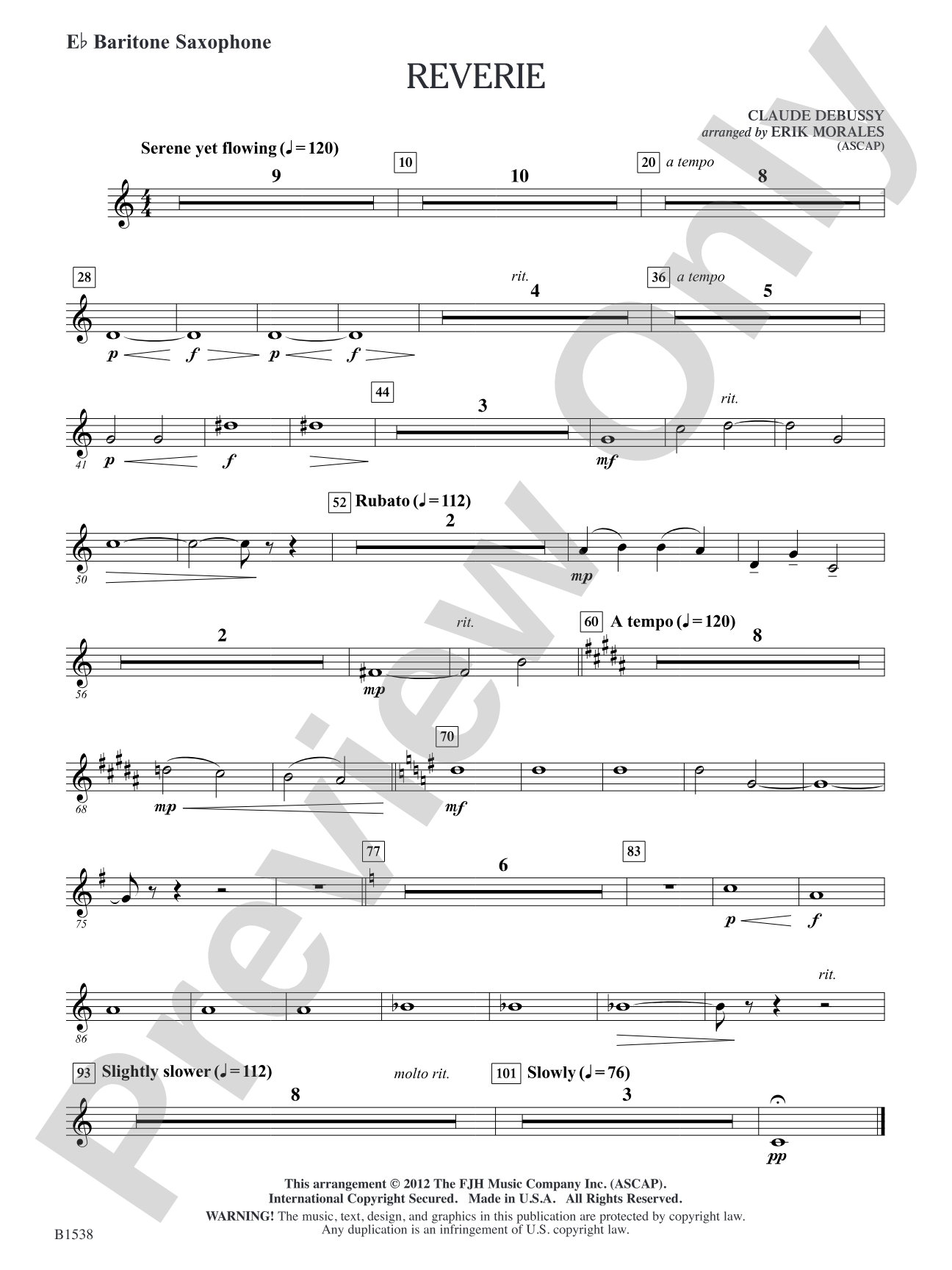
Reverie: E-flat Baritone Saxophone

By Claude Debussy / arr. Erik Morales

Grade: 3

Item: 98-PC-DB1538_BTX

Digital Download
$7.00
Description
The ethereal quality of French impressionist Claude Debussy is beautifully captured in this lyrical transcription that lets your woodwinds take center stage. From plaintive to powerful, the orchestration and melodic lines often make the music sound like an epic film score. A stunning work!

Reverie: E-flat Baritone Saxophone isn't in MakeMusic Cloud just yet...but it could be. Let us know you'd like to see it, and you'll help shape what comes next. In the meantime, start a free trial and dive into thousands of interactive titles your students can play along with today.

Sample Audio
0:00
0:00
Sample Video
Additional Details
Series: FJH Concert Band
Publisher: The FJH Music Company, Inc.
SKU: 98-PC-DB1538_BTX

More about this title

About the Composer: Claude Debussy

Claude Debussy (1862-1918) fundamentally transformed how composers approached melody, harmony, and orchestration in the late 19th century. His innovations in impressionistic music—using color, texture, and suggestion rather than traditional harmonic progressions—shaped modern classical music and influenced generations of composers across all genres.

Why we love this

Morales captures the shimmering, introspective quality of Debussy's original while tailoring the orchestration specifically for band voices. At Grade 3, it's accessible without sacrificing the sophisticated harmonic language that makes Debussy's music so rewarding to perform. Your ensemble will sound polished and mature, and audiences will recognize this beloved masterwork.

What to expect

Quiet, luminous, and dreamlike. The piece unfolds with gentle introspection, occasionally building to moments of quiet intensity before settling back into contemplative passages. There's an elegance and restraint throughout that rewards close listening.

Who it's for

Concert bands working at the intermediate level who want to program meaningful classical music without oversimplifying it. Directors seeking to introduce students to impressionistic harmony and orchestration in a manageable, band-specific arrangement.

How to get the most out of it

  • Shape long phrases with subtle dynamic swells rather than sharp accents; let the melody float naturally across your woodwind sections
  • Balance the inner voices carefully so underlying harmonies support the main melody without overwhelming it
  • Use the conductor score to track transitions between instrumental families; clarity here prevents the impressionistic writing from becoming muddy
  • Approach tempo flexibly within the marked sections, allowing time for the harmonic colors to breathe

How to use it

This works beautifully as a contrasting centerpiece in a concert, especially when programmed between more energetic works. Its lyrical, film-score quality appeals to general audiences while giving your band space to demonstrate musical maturity and control. Consider pairing it with folk song arrangements or other masterwork transcriptions to build a cohesive concert theme.

Skills your students will build

  • Balancing inner harmonies in impressionistic orchestration
  • Sustaining long melodic phrases with consistent tone quality
  • Responding to subtle dynamic shaping and conductor cues
  • Coordinating woodwind and brass transitions in lightly textured writing

You May Also Like