Revenge of the Electric Pencil Sharpeners: 2nd Percussion Sheet Music Preview

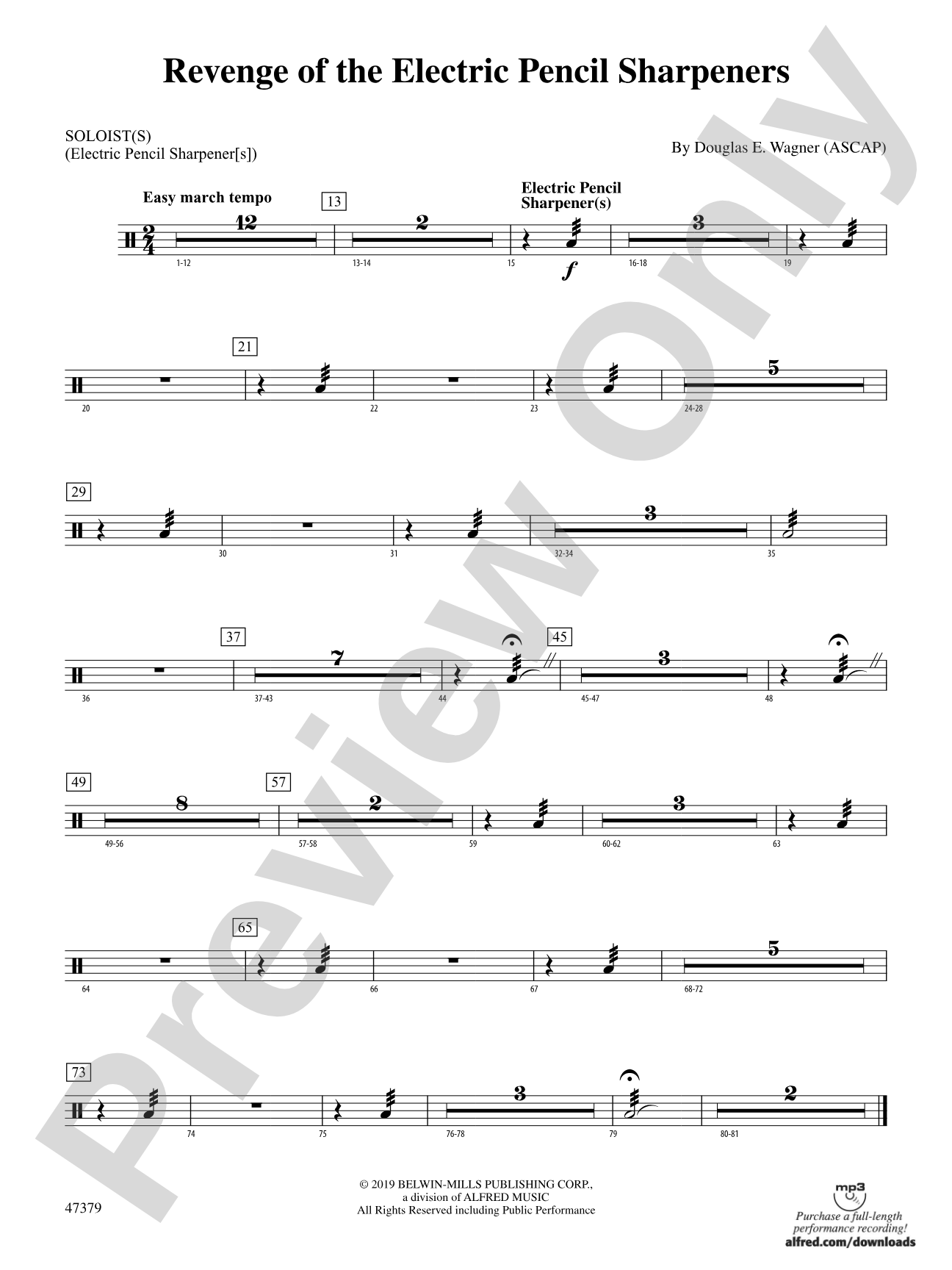
Revenge of the Electric Pencil Sharpeners: 2nd Percussion

By Douglas E. Wagner

Grade: 1 (Very Easy)

Item: 00-PC-0017913_PC2

Digital Download
$3.00
Description
A charismatic, easy-to-prepare piece for your beginners becomes pure entertainment for your audience, incorporating some naughty yet prominent guest soloists. Share our recording with your prospective sharpening artists to build their confidence. We can't wait to see the performance variations of this delightfully entertaining piece. A sure winner! (2:00)

Don't just read it, hear it, play along with it, and watch your students grow with it. In MakeMusic Cloud, Revenge of the Electric Pencil Sharpeners: 2nd Percussion comes alive with professional accompaniment, adjustable tempo, and built-in practice tools that turn solo practice into real progress.

Sample Audio
0:00
0:00
Sample Video
Additional Details
Series: Belwin Beginning Band
Publisher: Alfred Music
Page Count: 136
SKU: 00-PC-0017913_PC2

More about this title

About the Composer: Douglas E. Wagner

Douglas E. Wagner

Douglas E. Wagner studied composition and music education at Butler University, earning both undergraduate and graduate degrees. After three decades teaching and administering music programs in high schools, he transitioned to full-time composition, a decision that has proven remarkably productive: since 1973, over 3,500 of his works have been published across choral, band, orchestral, handbell, organ, piano, and vocal genres.

Wagner's music reaches far beyond the page. More than seventeen million copies of his compositions have been purchased worldwide, with performances documented in concert halls, television broadcasts, and radio programs across the United States and internationally. He currently lives in Indianapolis with his wife, Sandy.

Why we love this

Wagner nails the balance between musical substance and pure fun here. The piece gives your beginners something genuinely entertaining to play while the novelty concept (electric pencil sharpeners as guest soloists) creates a natural hook for recruitment and audience engagement without sacrificing musicianship. At Grade 1, it's immediately accessible, yet the compositional craft keeps it engaging for both players and listeners.

What to expect

Playful and mischievous, with a wink toward the audience. The addition of electric pencil sharpeners as percussion guests turns an ordinary rehearsal tool into a comedic character, creating an unexpectedly charming soundscape that feels like attending band rehearsal itself became the entertainment.

Who it's for

This score and parts set is designed for beginning concert bands seeking a short, easy-to-prepare opener or closer that generates genuine smiles without dumbing down the music. Directors often use it to introduce ensemble concepts to newer students while reassuring anxious players that band can be fun.

How to get the most out of it

  • Let the guest soloists (the pencil sharpeners) really shine; their prominence means timing and clarity matter. Use the provided recording as a reference for balancing the band texture around these featured sounds.
  • Commit fully to the character and humor of the piece during rehearsal. When your students see you enjoy the concept, they'll relax and play with the confidence needed to make the novelty work.
  • Vary dynamics and articulation across different sections to keep the energy fresh and prevent the piece from feeling one-dimensional despite its short length.

How to use it

Open a concert with this piece to set a warm, inclusive tone and immediately engage an audience unfamiliar with beginning band. Its two-minute length makes it ideal as a palate cleanser between longer, more serious works, or as a finale that sends audiences home smiling. Consider programming it at recruitment concerts where prospective students can witness that making music together is joyful.

Skills your students will build

  • Reading and executing simple articulation markings
  • Balancing individual voice lines within an ensemble texture
  • Responding to conductorial cues for dynamic and stylistic shifts
  • Maintaining steady rhythm and pulse in a short-form structure

You May Also Like