Reunion Blues Sheet Music Preview

Reunion Blues: Jazz Ensemble Conductor Score & Parts

As performed by Oscar Peterson / As performed by Milt Jackson / Arranged by Rick Stitzel

Grade: 1.5

Item: 35-PK00319304

Digital Download
$40.00

One moment…

Description
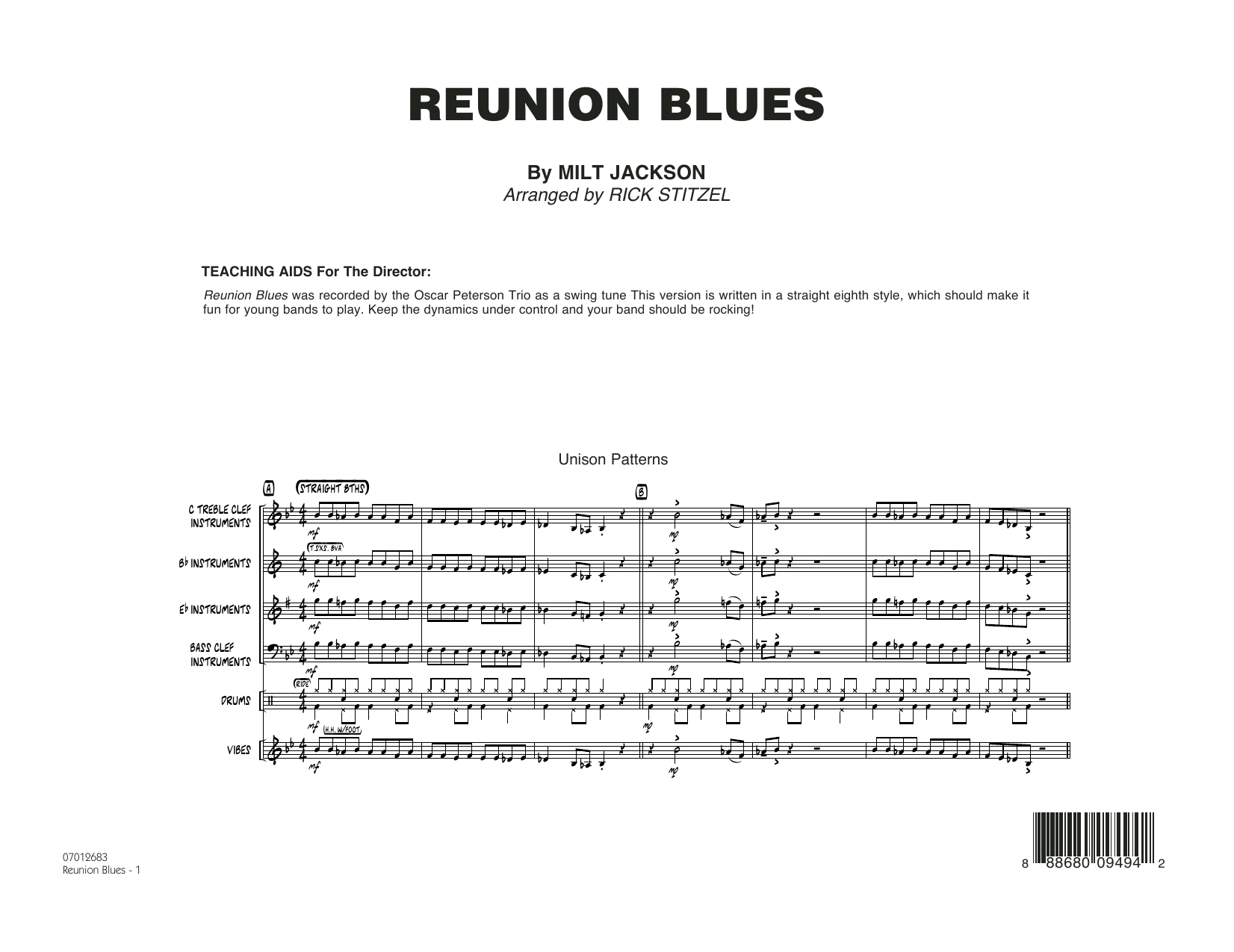
Milt Jackson recorded this classic jazz standard in 1971 with Oscar Peterson on an album by the same name, but over the years it been recorded by countless jazz artists. Set in a moderate straight 8th groove, this riff based blues tune is perfect for young players. Saxes are featured the first time through with answers provided by the brass. The solo section can be performed either as a trumpet section or by a single player. An easy ensemble tutti rounds things out in this attractive and well-written chart.

Reunion Blues: Jazz Ensemble Conductor Score & Parts isn't in MakeMusic Cloud just yet...but it could be. Let us know you'd like to see it, and you'll help shape what comes next. In the meantime, start a free trial and dive into thousands of interactive titles your students can play along with today.

Sample Audio
No sample audio found.
Sample Video
Additional Details
Publisher: Hal Leonard
SKU: 35-PK00319304

More about this title

About the Artist: Oscar Peterson

Oscar Peterson stands as one of the most technically commanding pianists in jazz history. His virtuosity, harmonic sophistication, and ability to swing at any tempo made him a first-call collaborator for decades, whether leading his own trios or accompanying vocalists and instrumentalists across multiple recording sessions.

Why we love this

Rick Stitzel's arrangement captures the essence of Peterson's original recording while making it genuinely playable for young ensembles. The call-and-response writing between saxes and brass creates natural phrasing opportunities, and the flexible solo section lets you showcase individual strengths without putting pressure on a single player.

What to expect

Relaxed and conversational. The riff-based melody stays accessible, but the steady groove and Peterson's harmonic language give it sophistication beyond the notation. It sounds like musicians talking to each other over a good beat.

Who it's for

Grade 1.5 jazz ensembles looking for a straightforward blues vehicle that teaches listening and section balance. This works equally well for students encountering small-group jazz voicings for the first time or for younger players building foundational swing mechanics.

How to get the most out of it

  • Keep the straight 8th feel crisp and even throughout; the groove lives in the pocket, not in rushing the subdivision.
  • Balance the sax section's opening statement with judicious brass answers so the dialogue feels like conversation, not competition.
  • Dial in the tempo with the rhythm section first (walking bass, comping piano, and drums), then layer in the horns to lock the ensemble.
  • If assigning the solo section to multiple trumpet players trading phrases, rehearse the handoffs in advance so the momentum never dips.

How to use it

Pair this with other Peterson era standards or embed it in a blues study unit where students compare traditional approaches with modern reharmonization. It's substantial enough to anchor a jazz concert set but short enough to program alongside a vocal or classical piece without overwhelming your timeline.

Skills your students will build

  • Reading and executing straight 8th rhythms in a jazz context
  • Listening and responding to section-to-section dialogue
  • Comping and rhythmic accuracy in piano and bass parts
  • Balancing blend and articulation within sax and brass sections
  • Trading solos and navigating form without written cues

You May Also Like