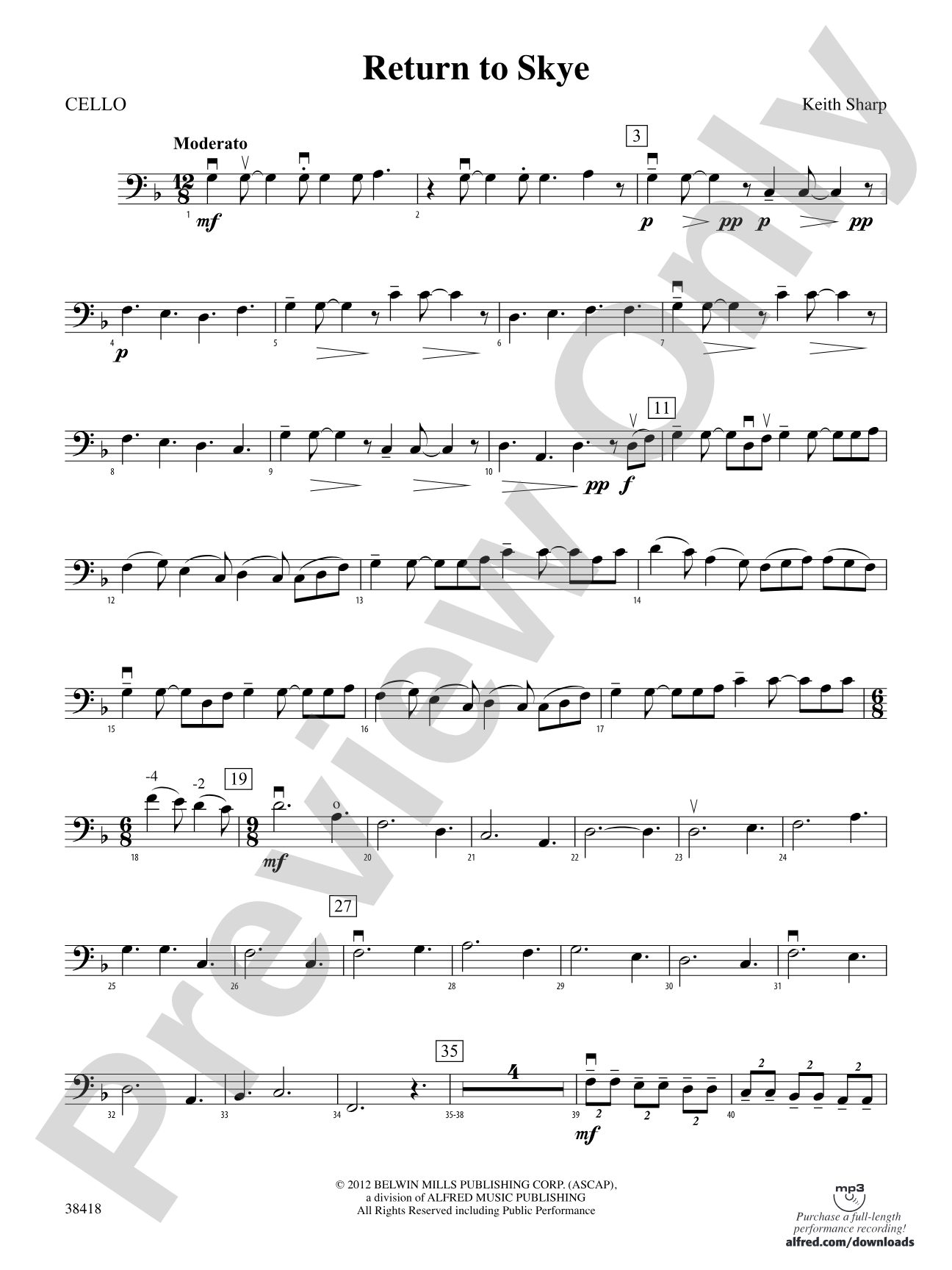
Return to Skye: Cello Sheet Music Preview

Return to Skye: Cello

By Keith Sharp

Grade: 3

Item: 00-PC-0015485_VC1

Digital Download
$5.99
Description
The sense of yearning associated with the return to one's homeland resonates through this charming Celtic-style folk fiddle tune. The varied meters will stretch the students, yet all parts remain in 1st position with the exception of some 2nd and 3rd position for the first violins. All sections take a turn with the melodies in a wide variety of bowing styles.

Don't just read it, hear it, play along with it, and watch your students grow with it. In MakeMusic Cloud, Return to Skye: Cello comes alive with professional accompaniment, adjustable tempo, and built-in practice tools that turn solo practice into real progress.

Sample Audio
0:00
0:00
Sample Video
Additional Details
Series: Belwin Intermediate String Orchestra
Publisher: Alfred Music
Page Count: 148
SKU: 00-PC-0015485_VC1

More about this title

About the Composer: Keith Sharp

Keith Sharp

Keith Sharp has shaped string education across Brisbane for nearly four decades, beginning his career in The Gap regional schools in 1985 before moving to Brisbane State High School in 2012, where he built a program centered on ensemble and group instruction. His gift for crafting engaging, pedagogically sound pieces for young string players has earned international recognition; his works appear in catalogs from Alfred Music and The FJH Music Company, and he has received multiple "Editor's Choice" honors in the J.W. Pepper Orchestral Music Catalog.

Sharp holds a Bachelor of Music Degree and a Graduate Diploma of Further Education, and his contributions to music education have been acknowledged through Ryan Recognition awards, the Campbell Newman "Can Do, Educator of the Year" honor, and the AUSTA State Award for Queensland. He serves regularly as a guest clinician, composer, and conductor at schools and music camps, and is co-author of the Encore on Strings—Music Maestros series.

Why we love this

Sharp builds rhythmic and positional confidence without overwhelming young players. The varied meters push ensemble reading skills while keeping all parts within a comfortable range, and the way he distributes melodic material across sections keeps every player engaged and invested in the performance.

What to expect

Warm and nostalgic, with the quiet longing of someone thinking of home. The varied meters create gentle rhythmic motion, and as the melody passes from one section to another, the tune unfolds like a conversation among friends remembering shared stories.

Who it's for

String orchestras at the Grade 3 level looking for accessible yet musically rewarding repertoire that offers a meaningful challenge without requiring extended technique. This works well for ensembles wanting to explore folk idioms and ensemble interplay while staying grounded in first-position fundamentals.

How to get the most out of it

  • Establish the meter changes early in rehearsals by counting aloud as a full ensemble before adding the tune; this helps students internalize the rhythmic shifts rather than simply reading them.
  • Highlight the bowing variety in your rehearsal planning. Sharp uses different articulations to shape the Celtic character, so have parts clearly marked and spend time on transitions between bowing styles.
  • Bring out each section's turn with the melody by adjusting the balance in rehearsal; when violas or cellos carry the tune, reduce first violin volume slightly to let the new voice shine through.

How to use it

Pair this with other Grade 3 folk-based works for a concert exploring cultural traditions, or use it as a bridge between classical and contemporary styles in a mixed program. Its moderate length and uplifting character make it an effective closer for a school concert or a strong anchor for a chamber strings showcase.

Skills your students will build

  • Reading mixed meters (particularly helpful for ensemble meter changes)
  • Distributing melodic leadership across multiple sections
  • Executing varied bowing articulations (legato, détaché, and other styles indicated by the composer)
  • Maintaining intonation in first, second, and third positions across all parts
  • Balancing within a section while tracking when the melody moves elsewhere

You May Also Like