
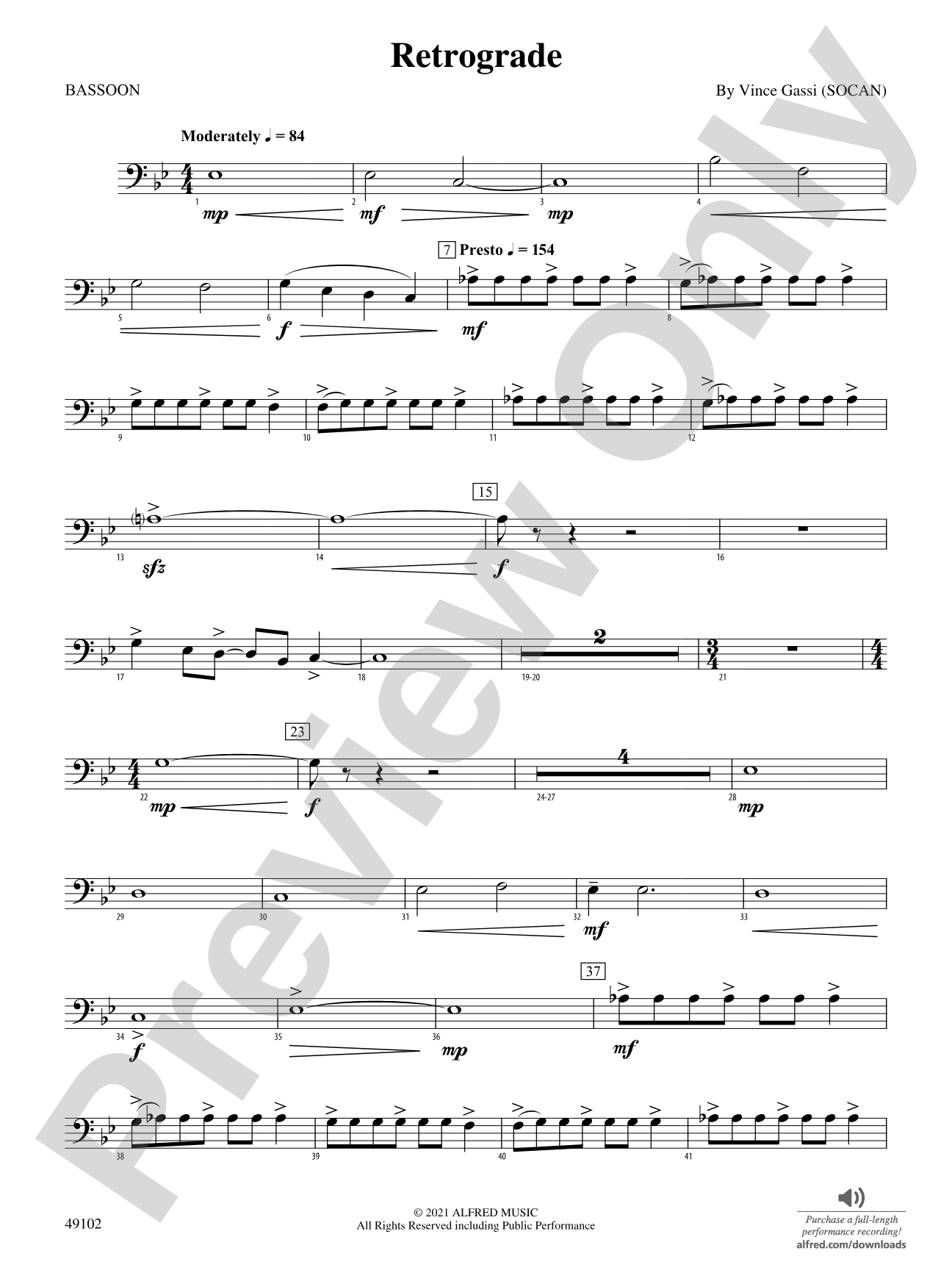

Retrograde: Bassoon
By Vince Gassi
Grade: 1.5 (Very Easy)
Item: 00-PC-0018676_B1
$3.00
Pickup currently not available
Description
Add one part catchy rhythm, two parts tuneful theme, a pinch of cilantro mixed with slow-simmered sweet onions and . . . oh sorry, wrong recipe. At any rate, not only is this piece fun to play, but your students will also love the additional challenge of discovering as many retrograde pitches and rhythms as possible, both in their own part and between parts. We don't even know how many there are! It's even more fun than Where's Waldo. Now get cookin', with Vince Gassi's Retrograde! (2:45) This title is available in MakeMusic Cloud.


Don't just read it, hear it, play along with it, and watch your students grow with it. In MakeMusic Cloud, Retrograde: Bassoon comes alive with professional accompaniment, adjustable tempo, and built-in practice tools that turn solo practice into real progress.
Open in the Player
Jump straight in and assign it today.
Start Your Free Trial
Open this title and explore the full library in minutes.
Sample Audio
1
Audio File
--:--
0:00
0:00
Sample Video
Additional Details
Series:
Challenger Band Series
Publisher:
Alfred Music
Page Count:
127
SKU:
00-PC-0018676_B1
More about this title
About the Composer: Vince Gassi
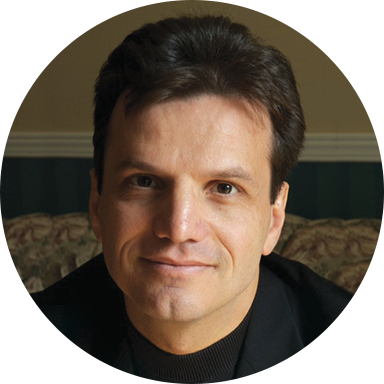
Vince Gassi has shaped young musicians for over twenty-five years through instrumental music instruction at the elementary and secondary levels. Since 2006, he has published more than 100 compositions and arrangements that balance accessibility with genuine musical substance, earning recognition on international concert and contest programs across North America, Europe, and Japan.
Gassi earned his Bachelor of Music from the University of Western Ontario and later refined his compositional craft at the Dick Grove School of Music in Los Angeles before completing a Ph.D. at York University in Toronto. As a guest conductor, adjudicator, and clinician, he leads seminars on creative engagement in music education and digital workflows for conductors. His work appears regularly at the Midwest Clinic in Chicago.
Why we love this
Retrograde works because it satisfies two competing needs: your ensemble plays something genuinely fun and easy to execute, while your students engage in active score detective work that sharpens their ear for pitch and rhythmic relationships. The novelty element doesn't overshadow solid musicianship. Contest adjudicators appreciate how Gassi builds musical literacy into the performance experience itself.
What to expect
Playful and energetic, with a kitchen-sink spirit that doesn't take itself seriously but takes musicianship seriously. The retrograde puzzle woven throughout gives the piece a winking quality, as if the composer is inviting your band into an inside joke about how music works.
Who it's for
Concert bands at the early middle school level or community bands seeking material that entertains while building analytical listening skills. Gassi's Grade 1.5 scoring keeps part-writing accessible, making this ideal for ensembles new to finding musical complexity within simple textures.
How to get the most out of it
- Assign different sections the job of identifying retrograde figures in their own parts before the first rehearsal. This transforms passive reading into ownership and builds buy-in from the ensemble.
- Balance the catchy rhythmic hook with the tuneful melodic line so neither overwhelms the other. Both deserve clarity and space.
- Use the 2:45 runtime strategically in festival programming. It sits perfectly between heavier concert pieces and gives your students a confidence boost.
How to use it
Place Retrograde early in a concert to establish an engaged, attentive atmosphere, or use it as a palate cleanser between weightier works. It functions equally well in a festival setting where judges appreciate clarity of execution and where the novelty element demonstrates that young musicians can handle structural sophistication with a light touch.
Skills your students will build
- Identifying retrograde pitch and rhythmic figures across ensemble parts
- Maintaining ensemble precision in catchy, syncopated rhythmic material
- Listening analytically to the relationship between melody and rhythm within a single work
- Performance technique at very easy technical levels with musicality intact