
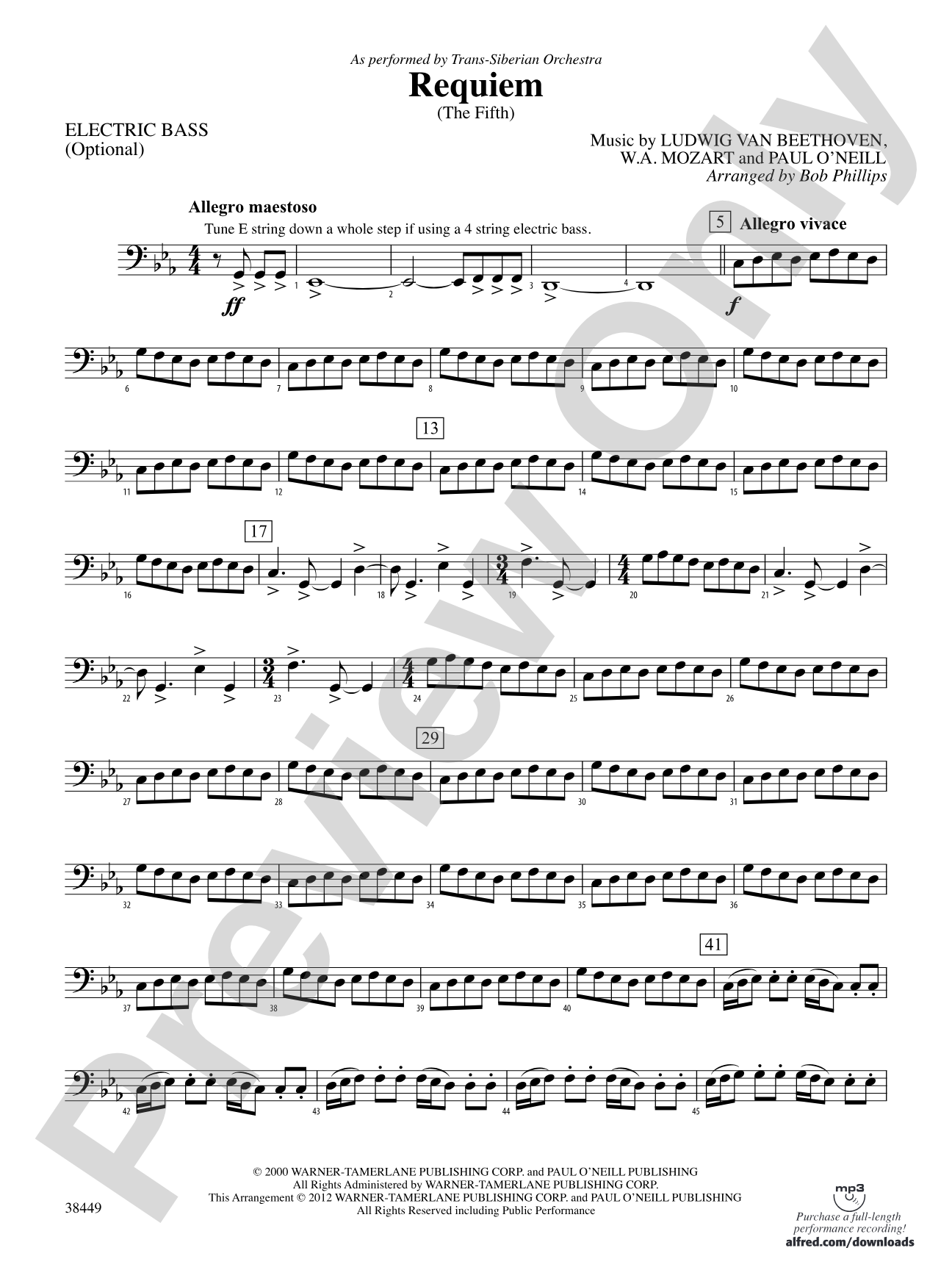

Requiem (The Fifth): Electric Bass
As Performed by Trans-Siberian Orchestra
Music by Ludwig van Beethoven, W. A. Mozart, and Paul O'Neill / arr. Bob Phillips
Grade: 3.5
Item: 00-PC-0015505_EB
$5.99
Pickup currently not available
Description
As performed in the fabulous Trans-Siberian Orchestra live concert tour titled Beethoven's Last Night, now your orchestra can play Beethoven and Mozart in a whole new way. Add the rhythm section for maximum impact. An optional electric violin/guitar part provides the perfect spot to feature an electric instrument. If you haven't seen TSO, check them out online and then share this one with your students. Perhaps include a field trip to see the band live with lights and effects.


Don't just read it, hear it, play along with it, and watch your students grow with it. In MakeMusic Cloud, Requiem (The Fifth): Electric Bass comes alive with professional accompaniment, adjustable tempo, and built-in practice tools that turn solo practice into real progress.
Open in the Player
Jump straight in and assign it today.
Start Your Free Trial
Open this title and explore the full library in minutes.
Sample Audio
1
Audio File
--:--
0:00
0:00
Sample Video
No sample videos found.
Additional Details
Series:
Pop Concert String Orchestra
Publisher:
Alfred Music
Page Count:
140
SKU:
00-PC-0015505_EB
More about this title
About the Composer: Ludwig van Beethoven
Ludwig van Beethoven (1770-1827) bridged the Classical and Romantic eras, expanding the symphonic form and deepening orchestral color in ways that transformed Western music. His late works, including the Requiem Mass on which this arrangement draws, showcase his mastery of counterpoint and harmonic innovation even as he composed while deaf. For music educators, Beethoven's structural clarity and emotional directness make his music accessible to developing orchestras while remaining endlessly rewarding to study.
Why we love this
This arrangement captures the dramatic storytelling of Beethoven and Mozart through a Trans-Siberian Orchestra lens, giving your orchestra a chance to experience classical masterworks reimagined with contemporary energy. The optional electric violin/guitar part creates a natural spotlight for your most engaged soloists while keeping the arrangement grounded in orchestral texture. It's a genuine bridge between the concert hall and the stage your students already know.
What to expect
The piece carries Beethoven's architectural gravitas but moves with a modern urgency and theatrical flair. Passages shift between introspective string writing and driving, rhythmic energy, creating emotional peaks that feel both intimate and grand.
Who it's for
This is ideal for intermediate to advancing string orchestras looking to program something with genuine artistic weight alongside contemporary appeal. Directors seeking repertoire that energizes students and audiences alike will find this especially valuable; it opens conversations about classical music outside traditional contexts and invites students to explore the Trans-Siberian Orchestra's full concert experience.
How to get the most out of it
- Balance the string texture against any added rhythm section carefully; the orchestration should feel enhanced, not overwhelmed. A light hand on dynamics across the ensemble prevents muddy sonority.
- If you're using the optional electric instrument part, rehearse it separately with your soloist first, then integrate it gradually into full rehearsals so the ensemble adjusts to the timbral shift.
- The harmonic language here honors both Beethoven's Classical underpinnings and the pop-influenced arrangement, so shape phrases with both architectural clarity and expressive sweep.
- Mark breathing points collectively in rehearsal; with 140 pages of material, synchronized articulation across the string sections creates cohesion and prevents the piece from feeling fragmented.
How to use it
This works beautifully on a concert that pairs classical repertoire with contemporary arrangements, signaling to your audience that classical music is living and evolving. It also functions as a gateway piece for younger students or community members less familiar with concert music; experiencing it alongside the Trans-Siberian Orchestra's visual spectacle (via video or a recommended live visit) deepens engagement and retention.
Skills your students will build
- Reading and interpreting modern orchestrations of classical material
- Balancing ensemble texture across added instrumental colors (rhythm section, electric instruments)
- Navigating contrasting musical styles within a single work (Classical structure with contemporary energy)
- Sustaining focus and intonation across extended 140-page scores
- Ensemble coordination in pieces that blend acoustic and amplified sound sources