
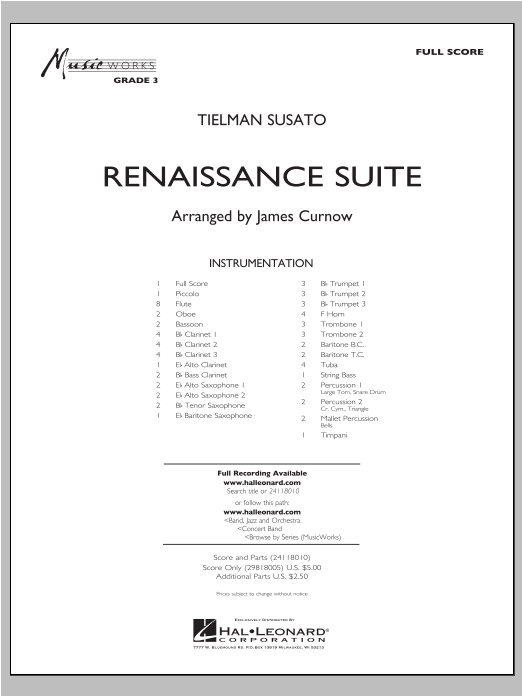

Renaissance Suite: Concert Band Conductor Score & Parts
Arranged by James Curnow
Grade: 3
Item: 35-PK00257333
$70.00
Pickup currently not available
Buy Extra Parts (Digital PDF Download)
Parts Added to Cart!
Description
Here's a superb way to introduce your band to the joys of early instrumental music. Jim Curnow's well-conceived transcription is based on three 16th-century dances by Susato: I. Las Mourisque (Basse Danse), II. Mille regretz (Pavane), and III. La bataille (Pavane). Dur: 6:15


Discover MakeMusic Cloud: thousands of interactive titles your students can play along with today.
Sample Audio
No sample audio found.
Sample Video
Additional Details
Publisher:
Hal Leonard
SKU:
35-PK00257333
More about this title
About the Arranger: James Curnow
James Curnow is a prolific composer and arranger whose catalog spans orchestral works, wind band literature, and educational pieces performed by ensembles worldwide. His transcriptions demonstrate a gift for preserving the essence of historical music while making it accessible to contemporary performers, balancing authenticity with practical instrumentation.
Why we love this
Curnow's arrangement opens a genuine window into Renaissance instrumental culture without requiring specialized period instruments or extensive historical knowledge from your students. The three contrasting dances give performers a real sense of how music functioned in 16th-century courts, and the Grade 3 scoring ensures your entire section can engage meaningfully with the material.
What to expect
Stepping into a 16th-century dance hall where music guides elegant courtly movement and rhythmic vitality shapes social gesture. The alternating moods of reverent pavanes and spirited basse danse create an arc that feels both historical and vividly alive.
Who it's for
Bands at the Grade 3 level ready to explore repertoire beyond contemporary idioms, including those preparing festival programs that value historical breadth. This works equally well for ensembles seeking quality shorter works to program alongside standard concert band fare or for music history units within the curriculum.
How to get the most out of it
- Attend to the dance character of each movement. Las Mourisque needs forward momentum despite its stately tempo; resist dragging the pulse. Mille regretz invites a more introspective approach with careful phrase shaping. La bataille thrives on rhythmic precision and articulation clarity.
- Balance the upper voices carrying the primary melodic material with steady harmonic support from the lower voices. Renaissance polyphony depends on hearing each line distinctly, so encourage your woodwinds to project without forcing volume.
- Use the score to identify which instrumental combinations feature throughout each dance. Highlight these transitions in rehearsal so the ensemble understands the textural changes and maintains continuity during shifts between groups.
How to use it
Pair this suite with other historical arrangements or transcriptions to build a concert section showcasing music's evolution across centuries. Its six-minute duration makes it a natural centerpiece for a themed program, or use individual dances as concert openers that set a distinctive tone before moving into modern works.
Skills your students will build
- Articulation control in Renaissance style (lighter tonguing, careful note separation)
- Balancing polyphonic lines and hearing multiple simultaneous melodic strands
- Distinguishing character between related dance forms (basse danse versus pavane)
- Maintaining rhythmic precision in moderate tempos without rushing
- Phrase shaping within limited dynamic range