



Remote Control: Score
By Richard Meyer
Grade: 2.5
Item: 00-PR-0001575
$9.00
Pickup currently not available
Description
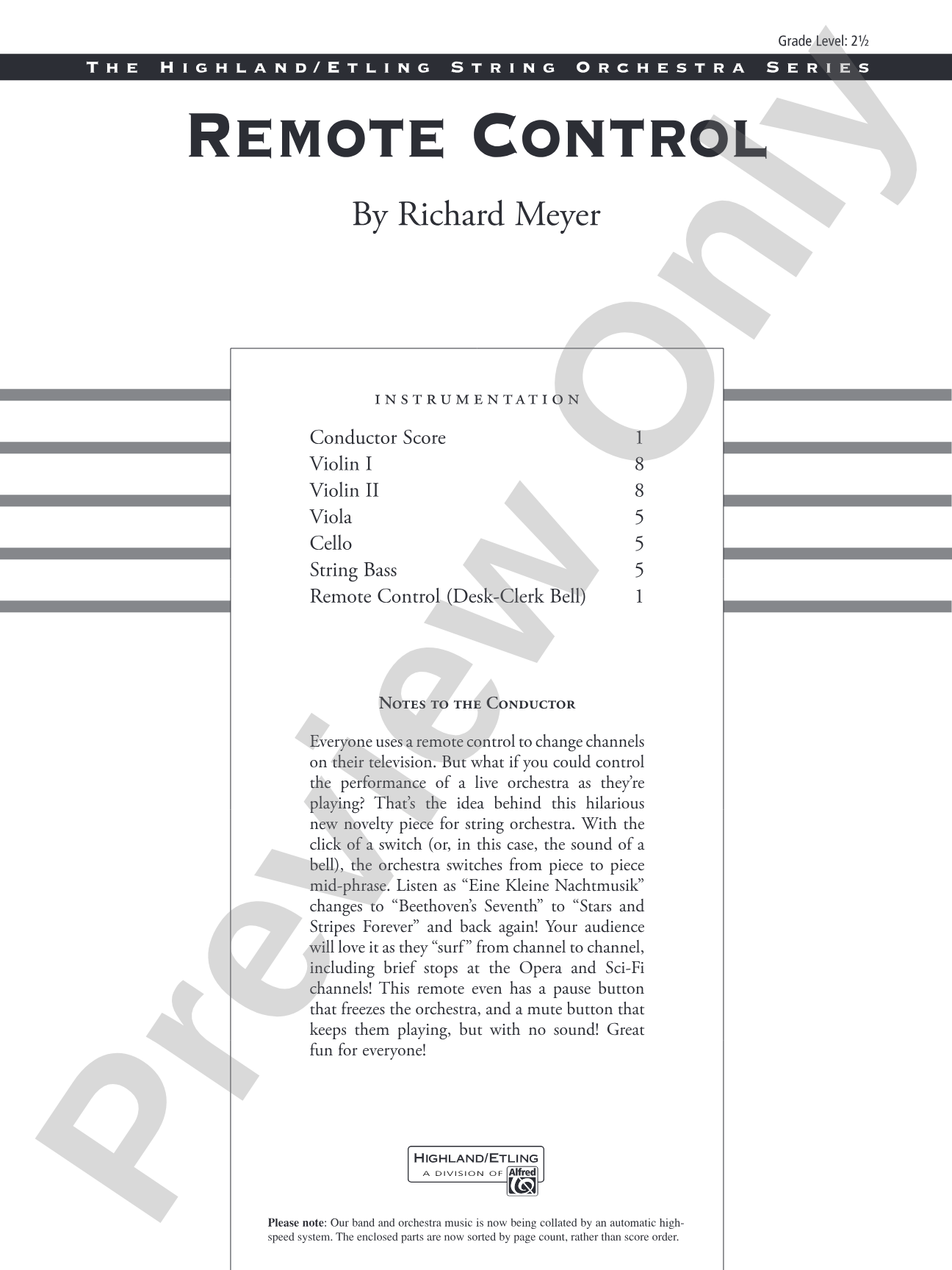
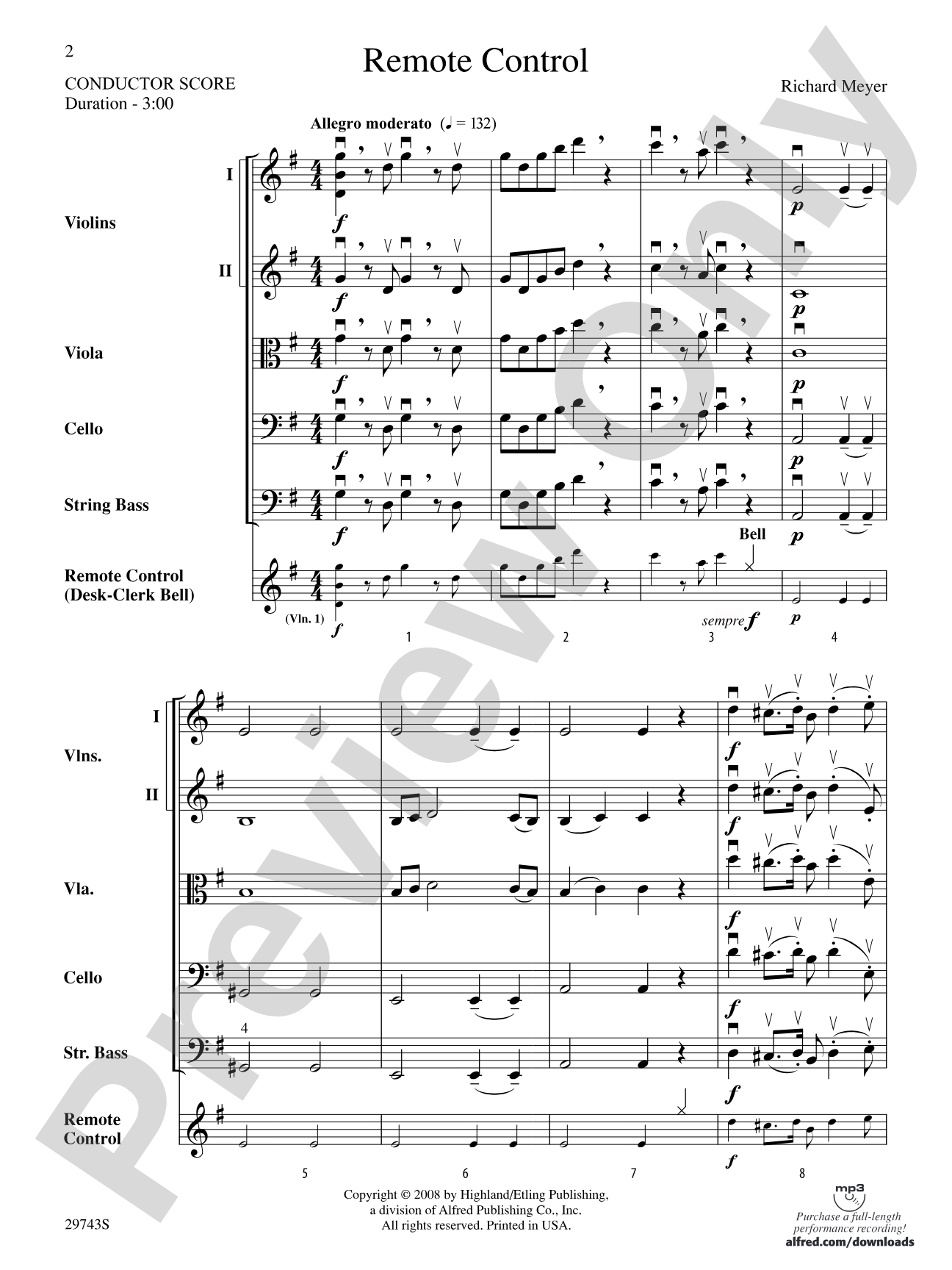
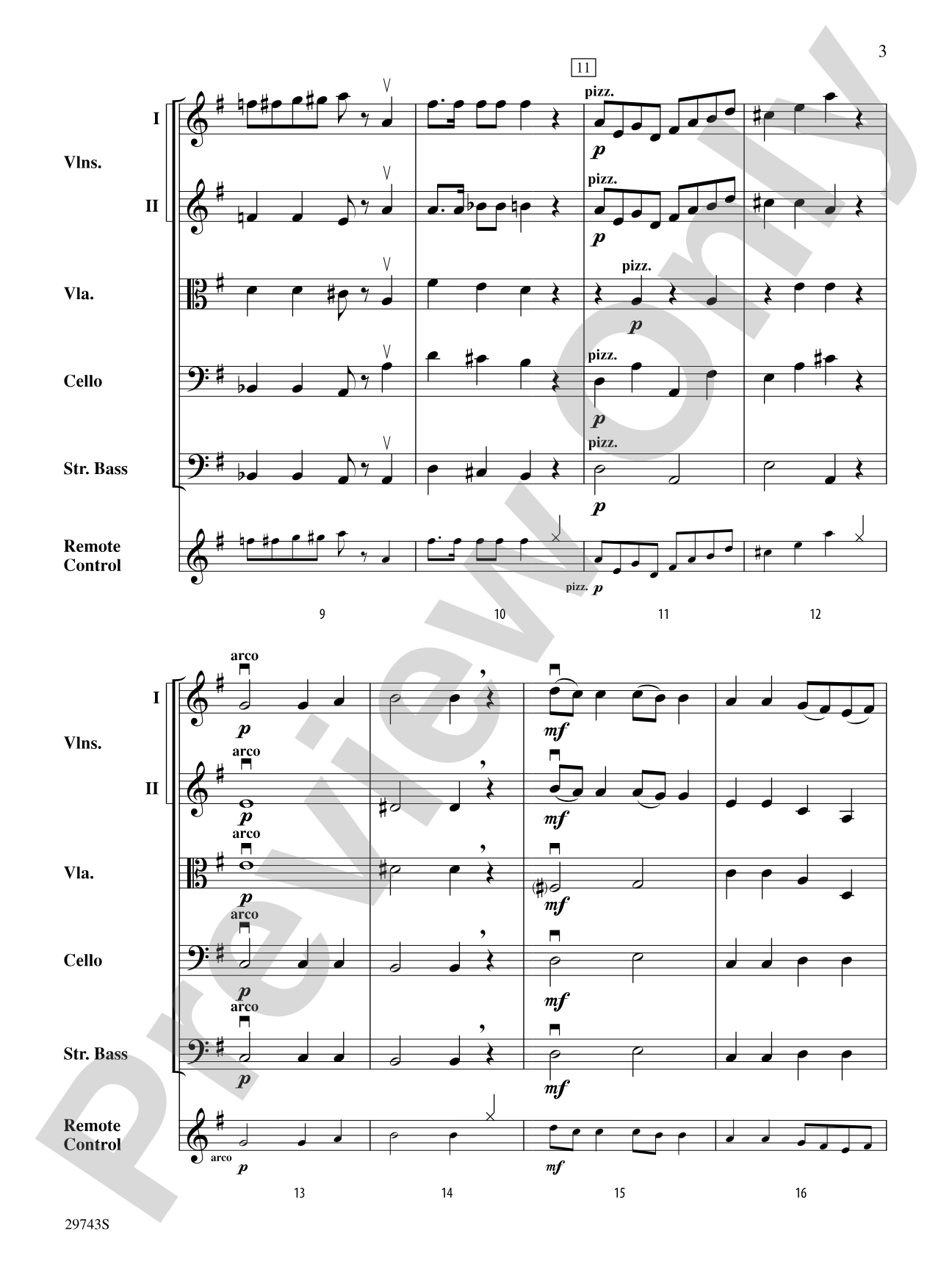
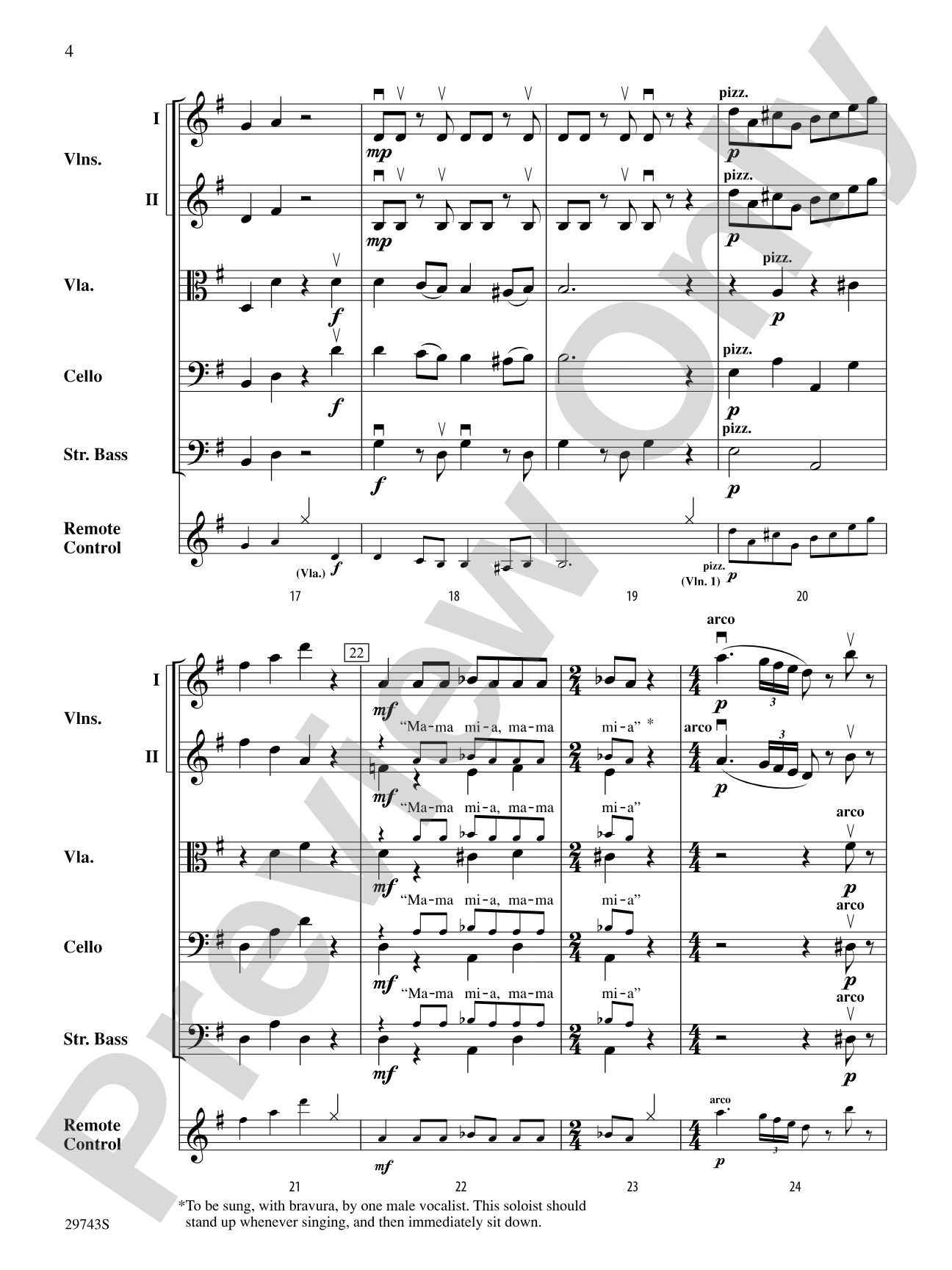
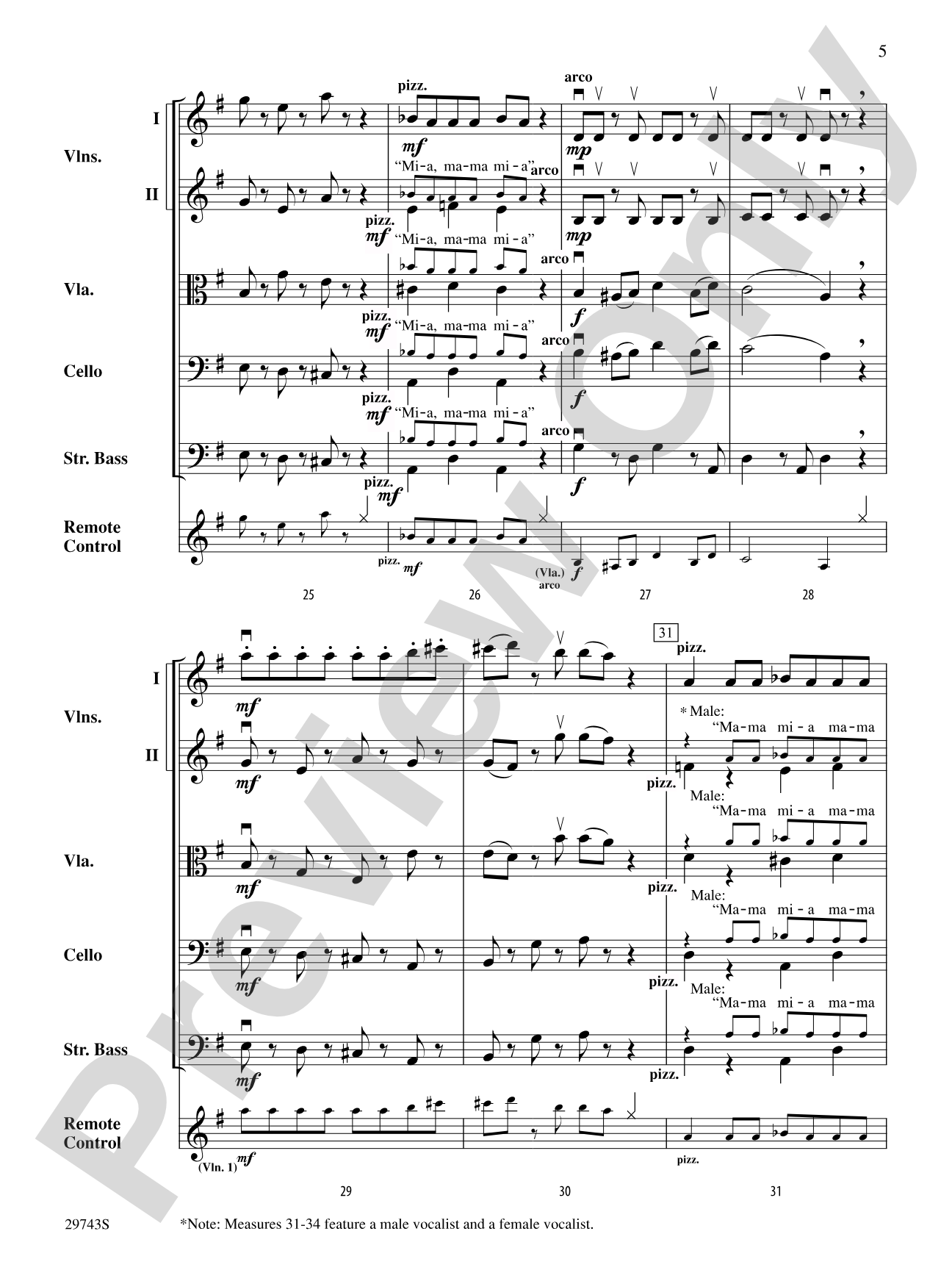
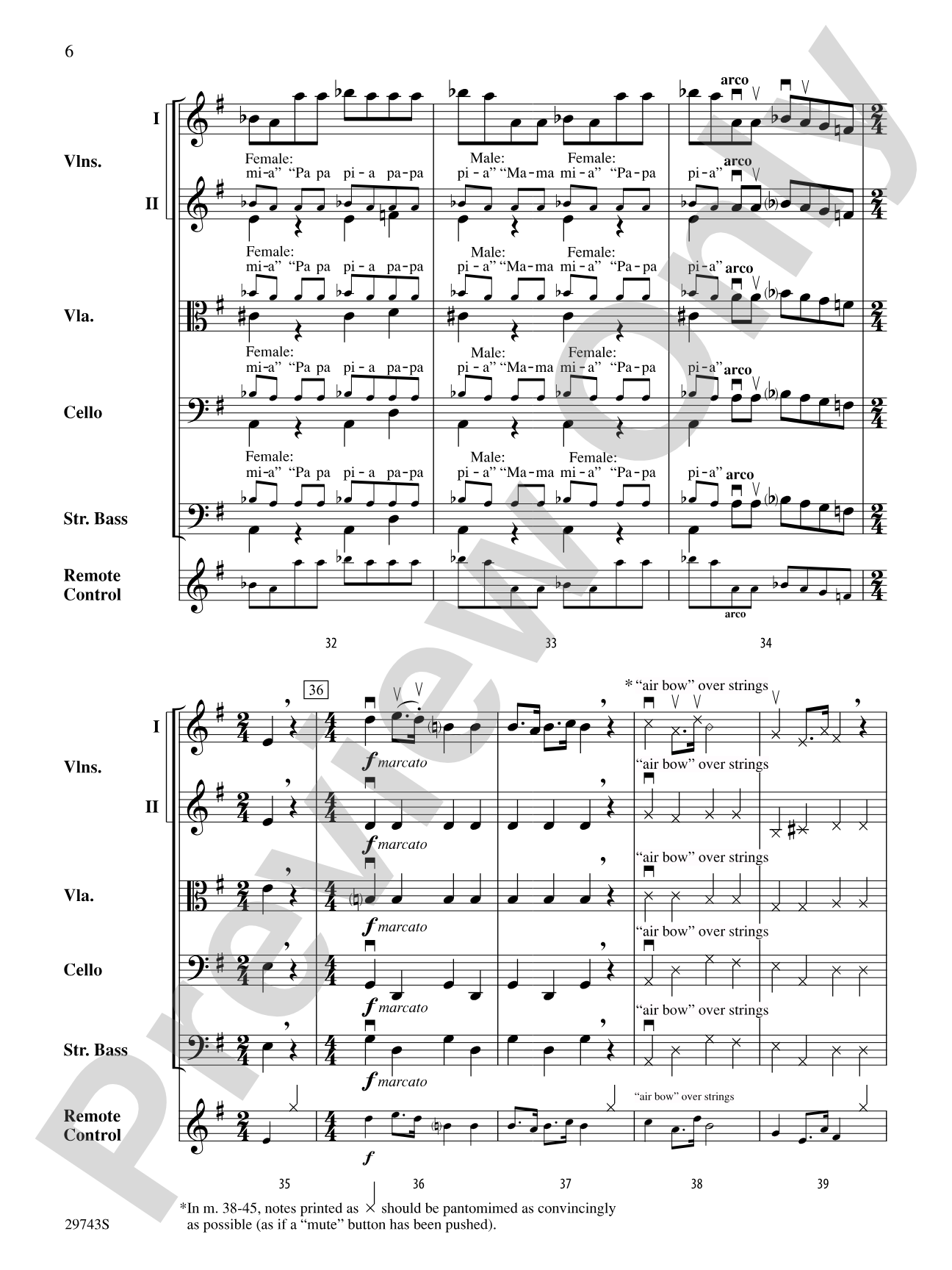
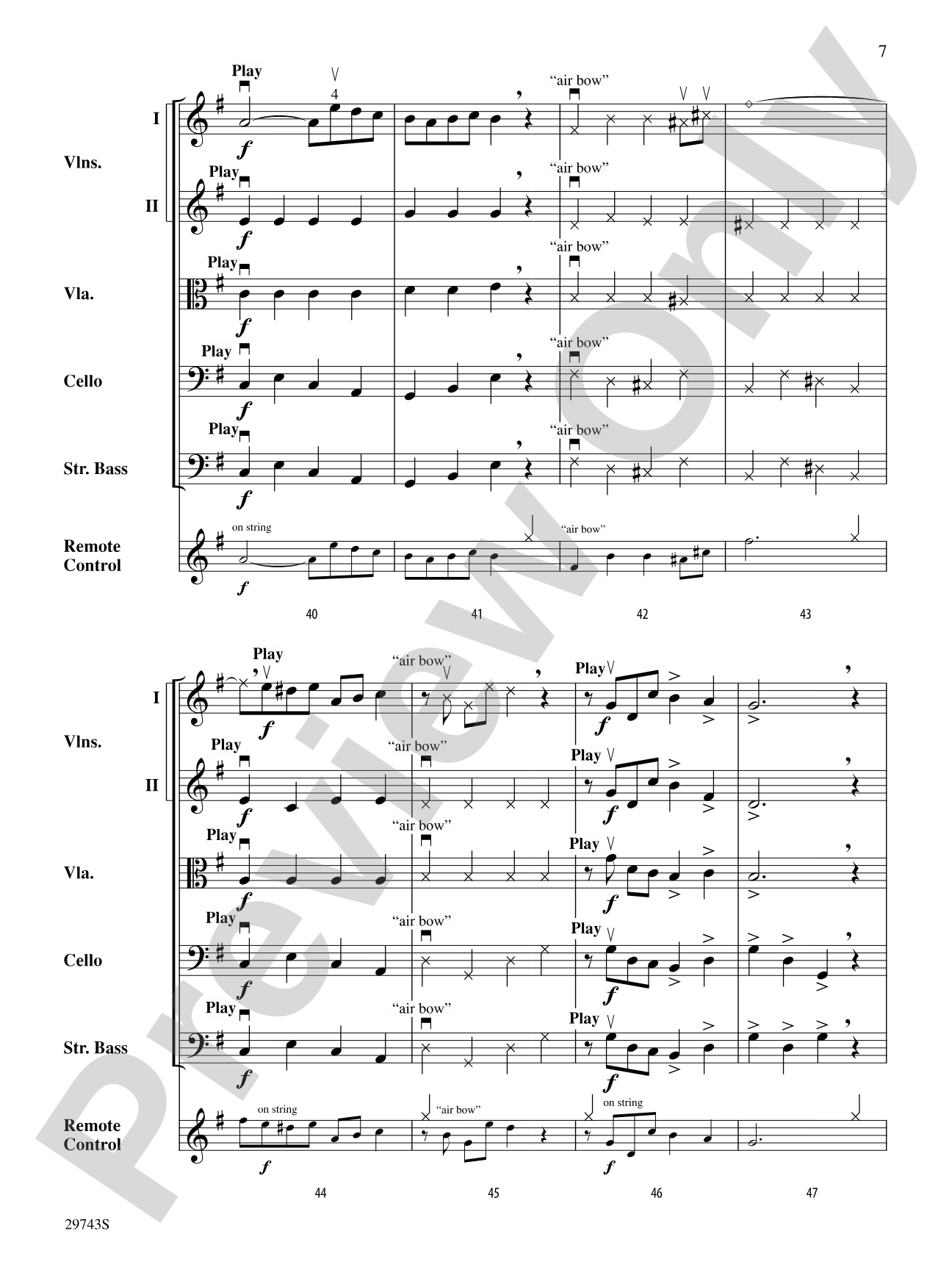
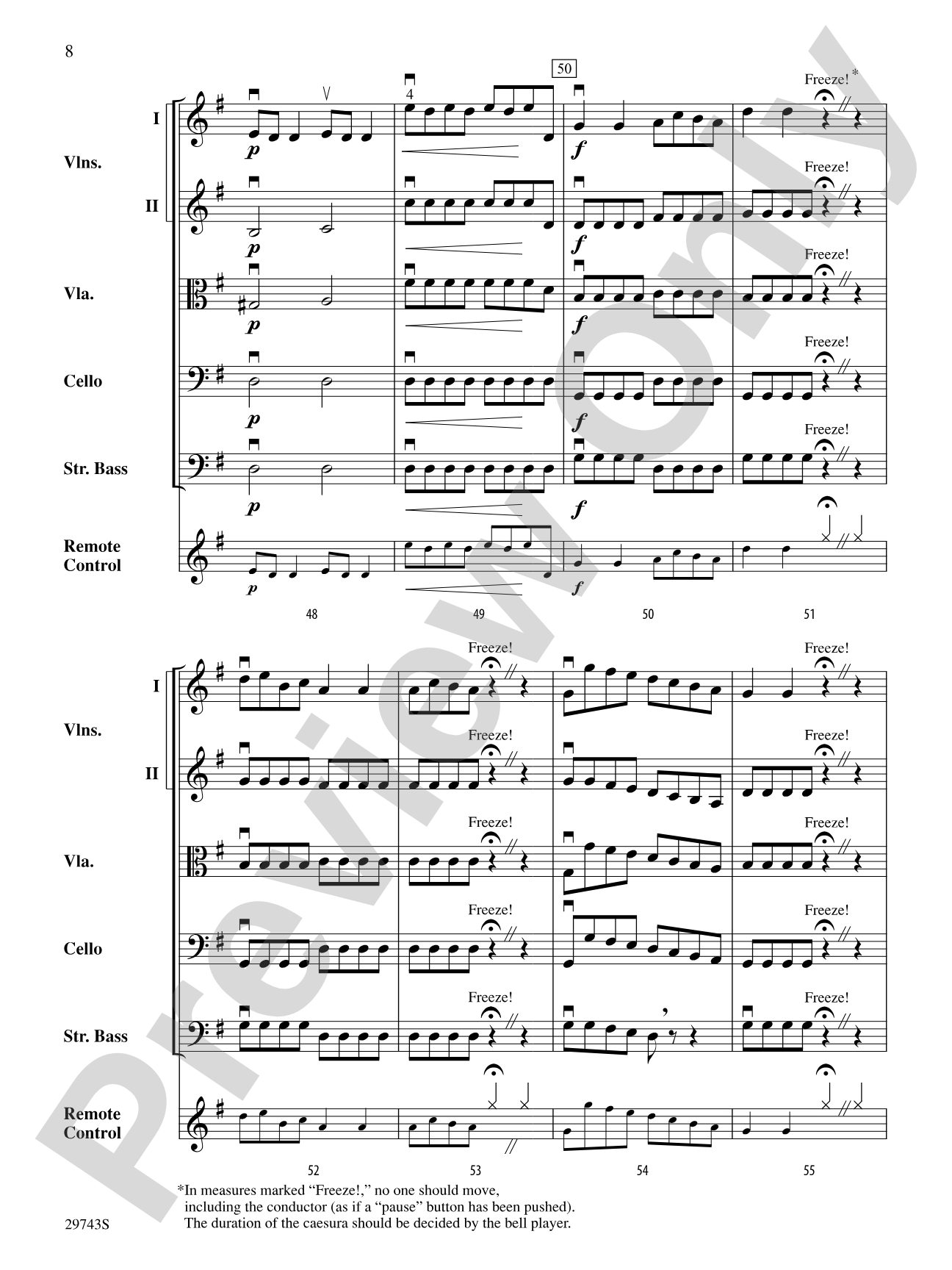
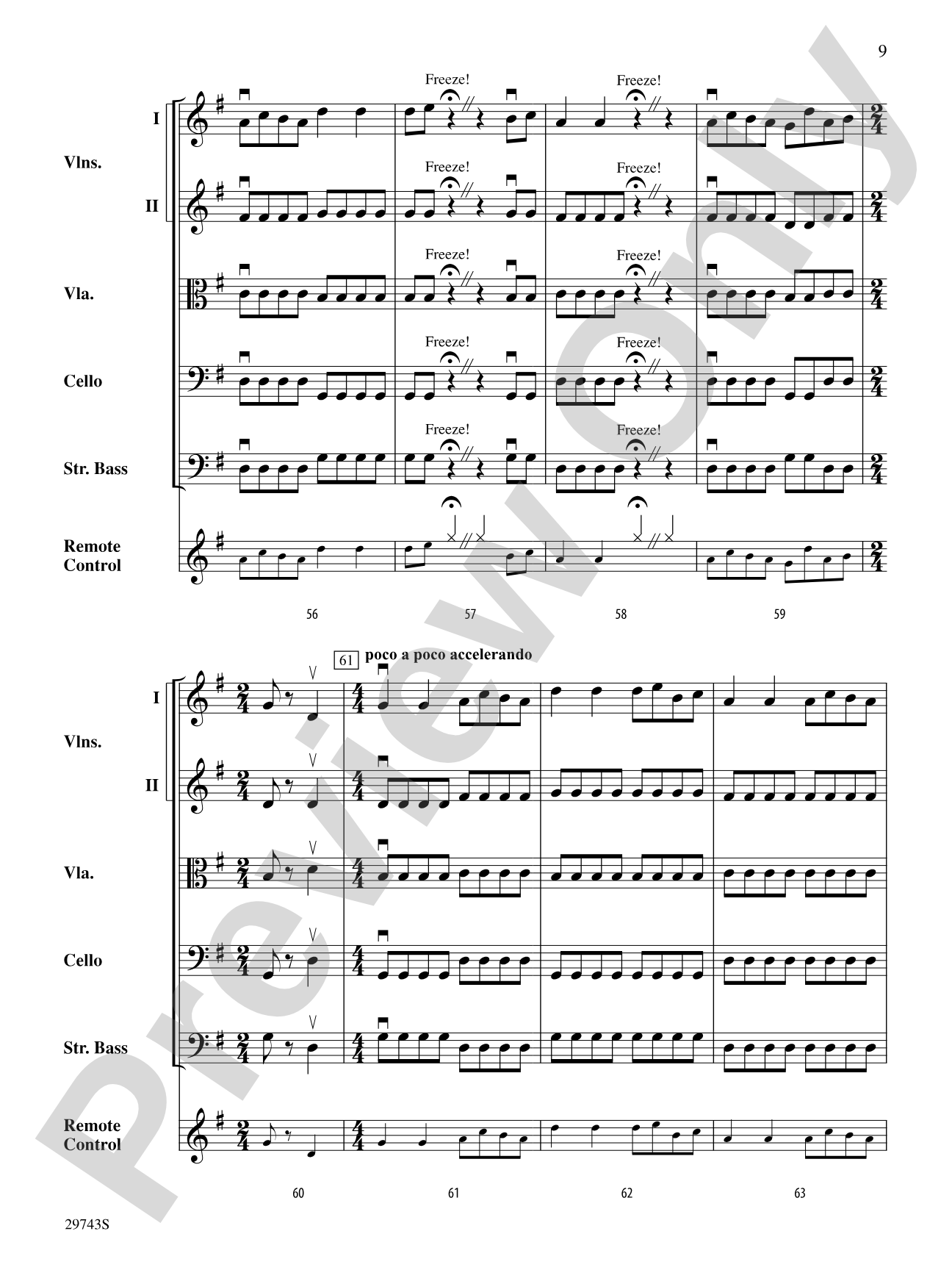
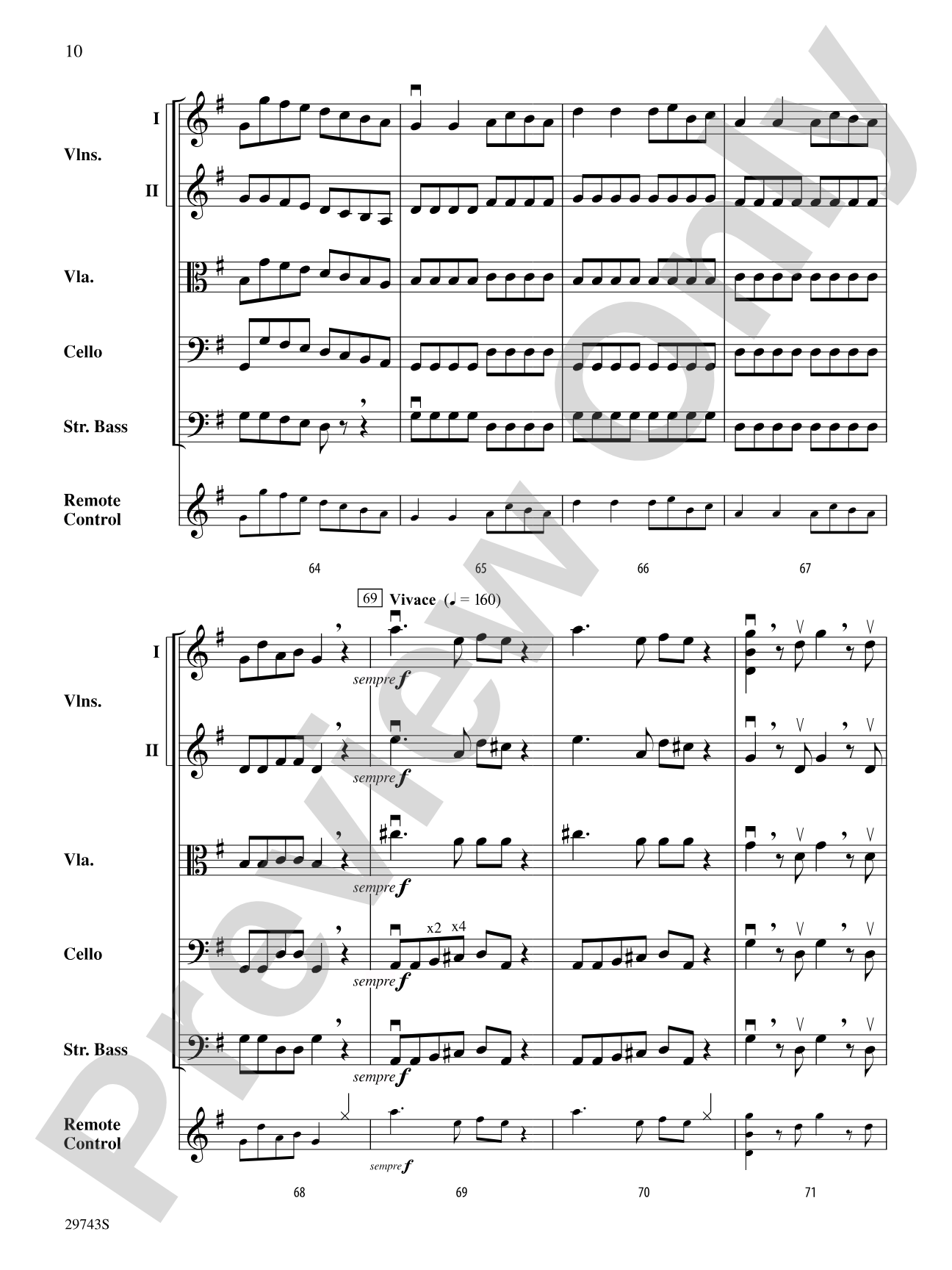
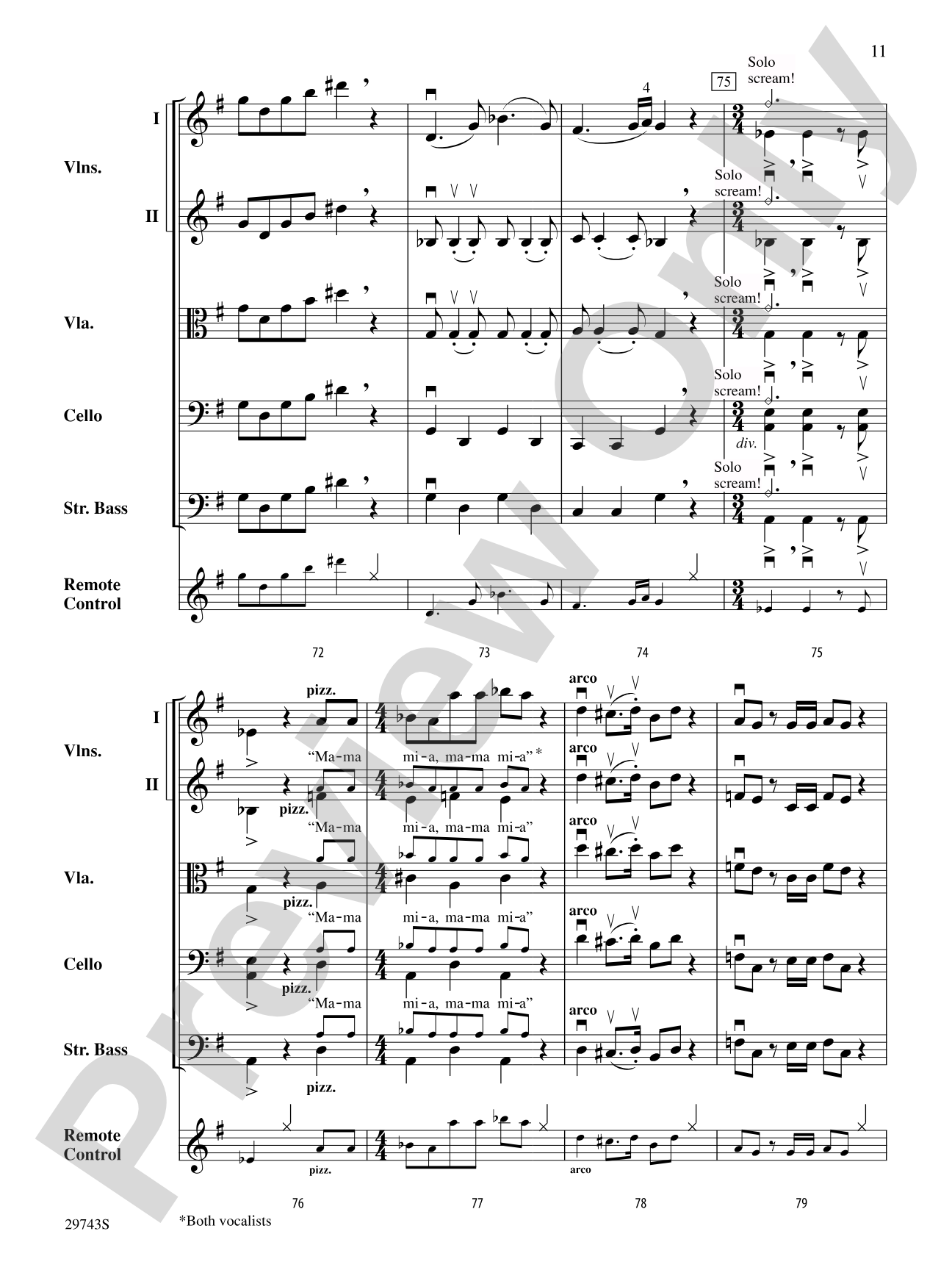
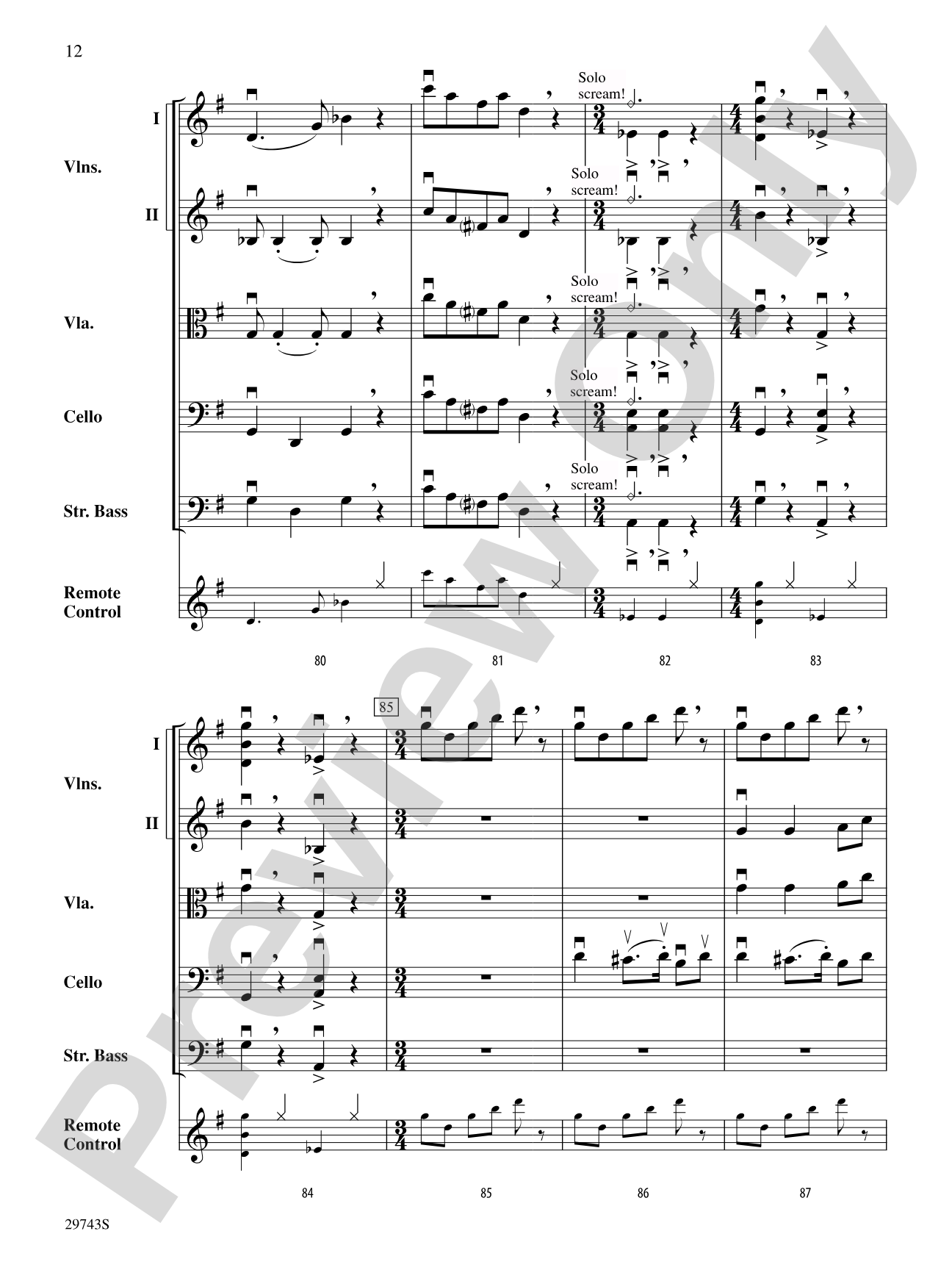
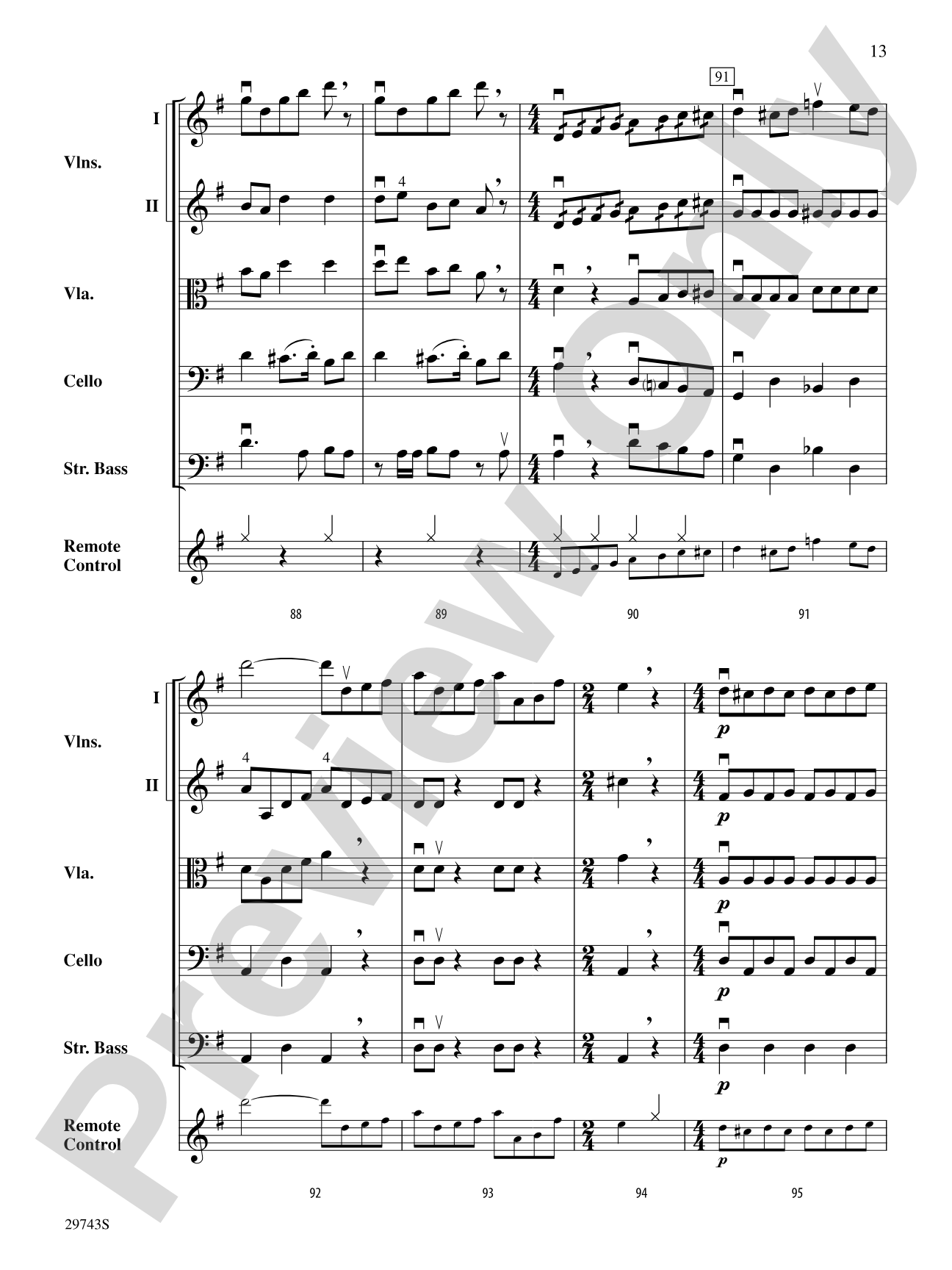
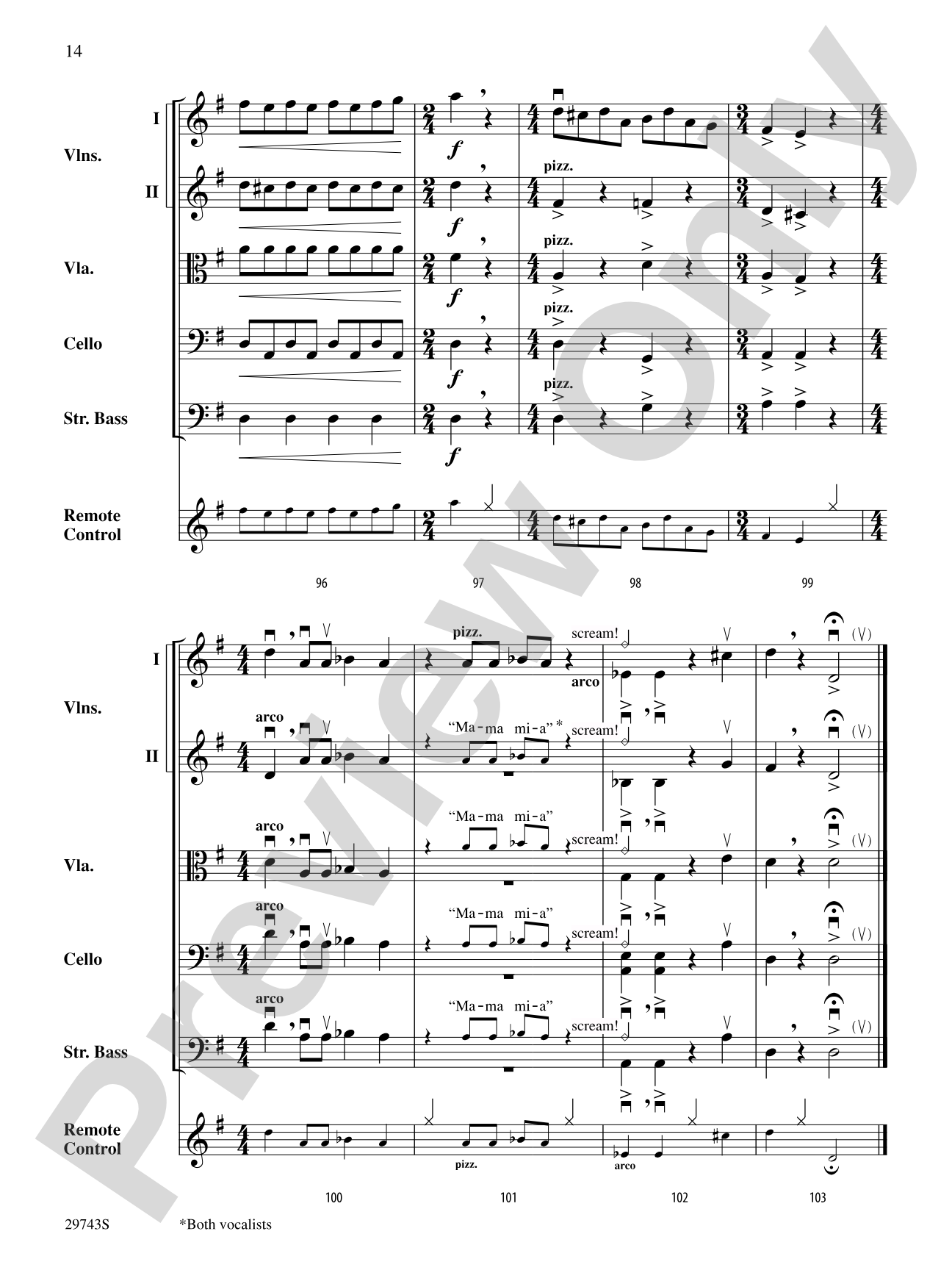
But what if you could control the performance of a live orchestra as they're playing with a remote control? That's the idea behind this hilarious new novelty piece. With the click of a switch (or, in this case, the sound of a bell), the orchestra switches from piece to piece in mid-phrase. Listen as "Eine Kleine Nachtmusik" changes to "Beethoven's Seventh" to "Stars and Stripes Forever" and back again! Your audience will love it as they "surf" from channel to channel, including brief stops at the "Opera" channel and the "Sci-Fi" channel! This remote even has a "pause" button that freezes the orchestra, and a "mute" button that keeps them playing, but with no sound! Great fun for everyone! (3:00)


Don't just read it, hear it, play along with it, and watch your students grow with it. In MakeMusic Cloud, Remote Control: Score comes alive with professional accompaniment, adjustable tempo, and built-in practice tools that turn solo practice into real progress.
Open in the Player
Jump straight in and assign it today.
Start Your Free Trial
Open this title and explore the full library in minutes.
Sample Audio
1
Audio File
--:--
0:00
0:00
Sample Video
No sample videos found.
Additional Details
Series:
Highland/Etling String Orchestra
Publisher:
Alfred Music
Page Count:
128
SKU:
00-PR-0001575
More about this title
About the Composer: Richard Meyer

Richard Meyer brings three decades of string teaching experience to his composition work, having built a middle school orchestra program from 29 students to 200 during his tenure in Temple City, California. His reputation extends beyond the classroom: he spent 16 years conducting the Pasadena Youth Symphony Orchestra in performances across North America, Europe, and Australia, and has served as a clinician at major conferences including the A.S.T.A. National Conference and the Texas Orchestra Directors' Association. Meyer is also known for implementing the "Giving Bach" program, which uses interactive concerts to reach special needs and underserved students throughout Southern California.
As a composer and arranger, Meyer has published over 190 works and spent 16 years as string editor for Alfred Publishing Company. He co-authored the String Explorer Series and other widely used string method resources, making him equally comfortable writing for students encountering their first notes and for ensembles performing at a high level. He lives in Sierra Madre, California with his wife, Rose.
Why we love this
Meyer understands what gets students invested in rehearsal: a piece that makes them laugh while they're learning. The novelty premise is genuinely inventive without requiring elaborate staging or special effects, and the compositional writing respects the Grade 2.5 level while keeping the energy high. Your orchestra will play it with enthusiasm, and the audience will recognize the famous melodies woven throughout, creating a shared moment of joy that justifies its place in any spring concert.
What to expect
Imagine flipping through a television remote during a concert: the orchestra morphs from the delicate elegance of Mozart into the triumphant power of Beethoven, then suddenly marches forth with Sousa's patriotic flair. The piece captures the absurdist humor of total control and loss of control, complete with moments where the orchestra freezes mid-bow or plays on silently like a muted television set. It's joyful, unpretentious, and designed to make both musicians and listeners smile.
Who it's for
String orchestras at the Grade 2.5 level looking for a concert piece that combines musical substance with theatrical fun. This works equally well for middle school programs building confidence and engagement or for community youth orchestras that want the audience laughing alongside the players.
How to get the most out of it
- Clarify the "remote control" cues (bell sounds or visual signals) with your orchestra before rehearsing passages, so the sudden key changes and style shifts land as surprises for the audience, not the ensemble.
- Lean into the comedy of the "pause" and "mute" moments by holding the frozen sections slightly longer than feels comfortable; the awkward silence is the joke.
- Use the famous melodies as anchors for intonation and style work in each "channel"; students will lock onto "Eine Kleine Nachtmusik" differently than "Stars and Stripes Forever," giving you natural targets for tonal adjustment.
- Keep tempo relationships clear between sections so transitions feel like smooth "channel surfing" rather than rough edits; a slight ritardando into each new style helps the ear adjust.
How to use it
Perfect for a closing slot in a spring concert or a lighter second half after more serious repertoire. The piece's 3-minute length and obvious appeal to families make it an ideal program bridge that resets the room's energy and reminds audiences why orchestral music should be fun. It also works well as a encore or as a standalone "pops" concert centerpiece paired with other light works.
Skills your students will build
- Quick style transitions between contrasting musical periods (Classical, Romantic, American march)
- Responding to precise conducting cues for simultaneous ensemble entries
- Maintaining intonation and ensemble cohesion through key changes
- Executing rhythmic holds and sudden dynamic shifts on conductor signal
- Performing with character and awareness of famous melodic material