
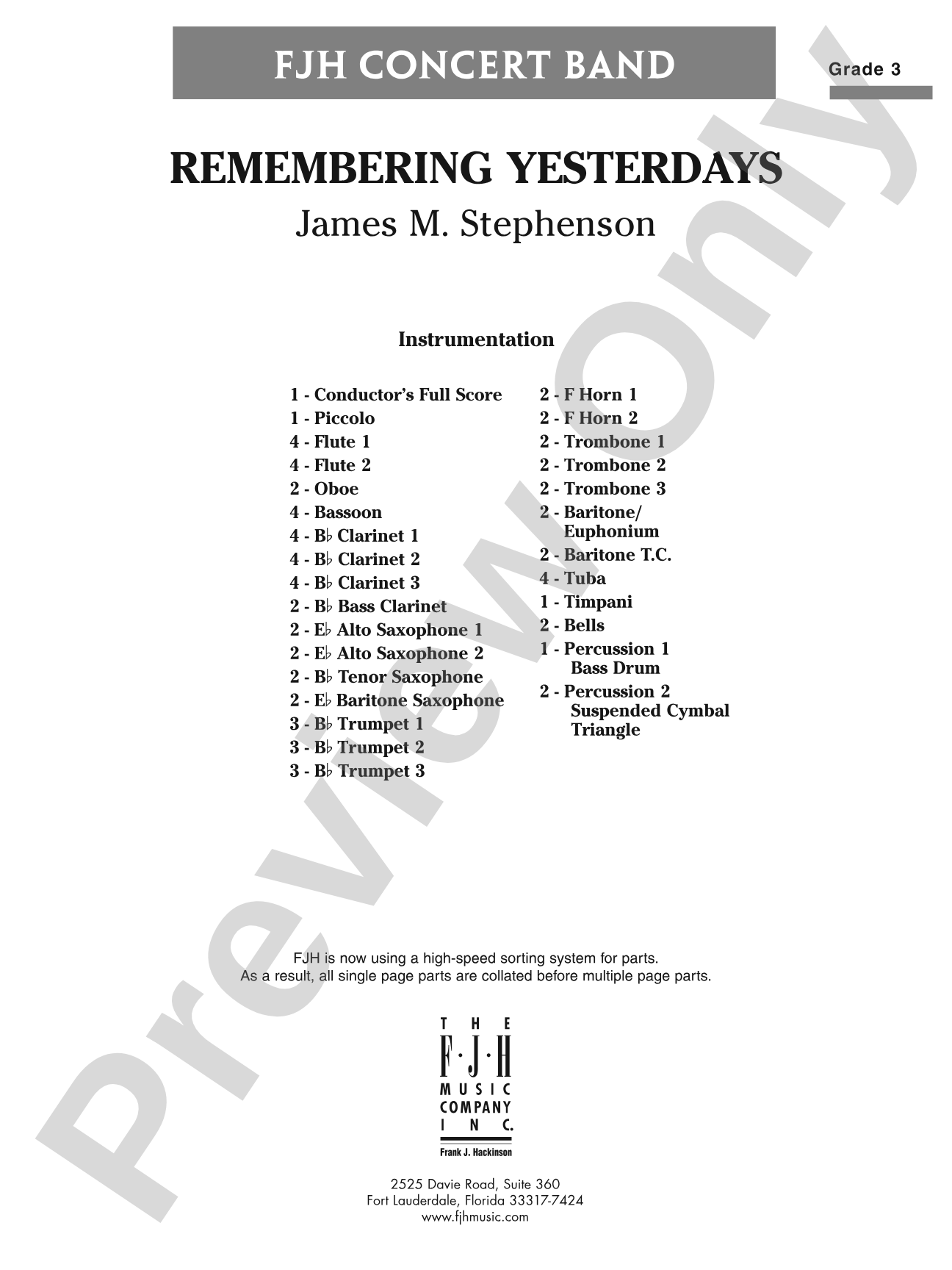
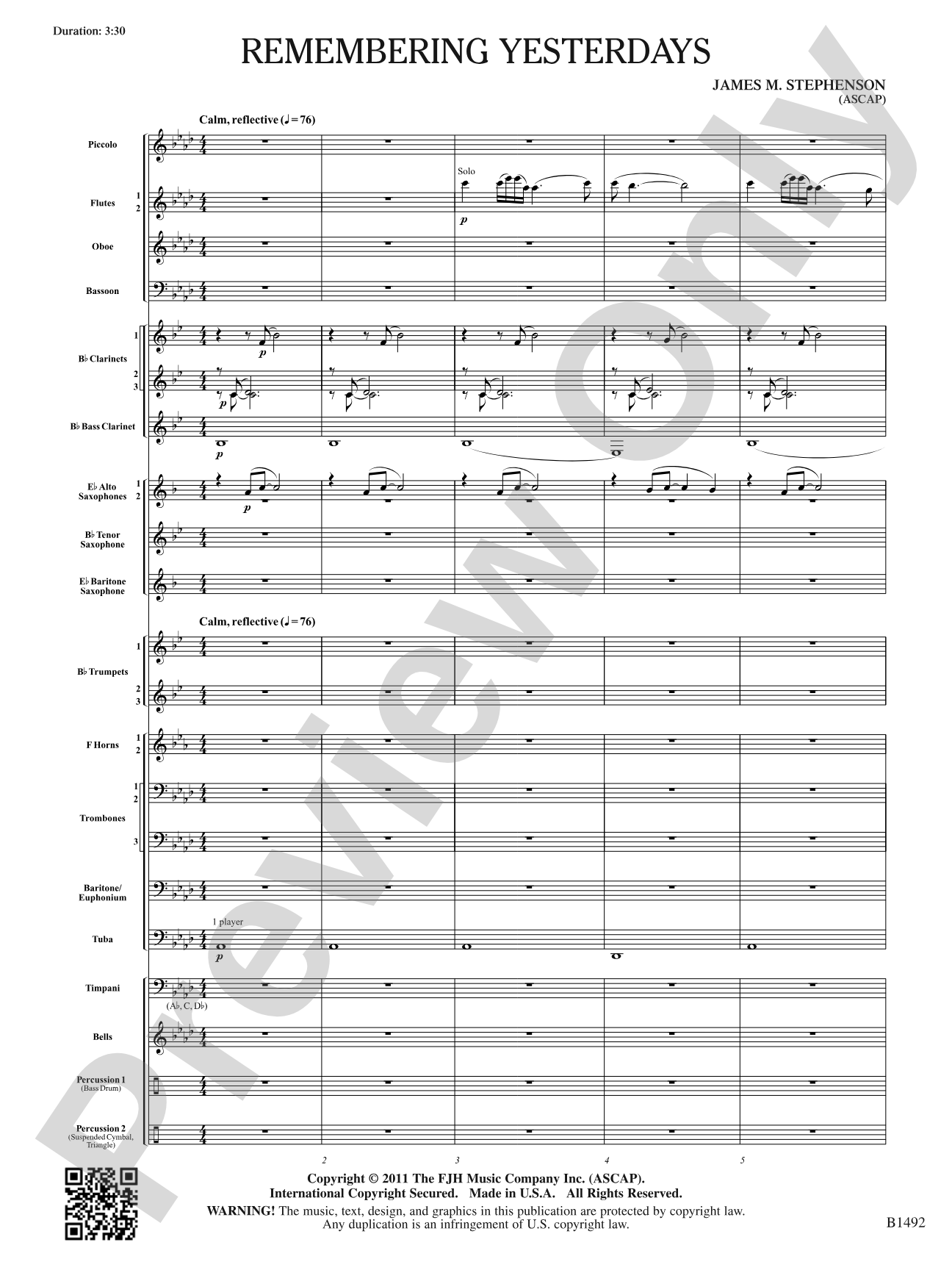
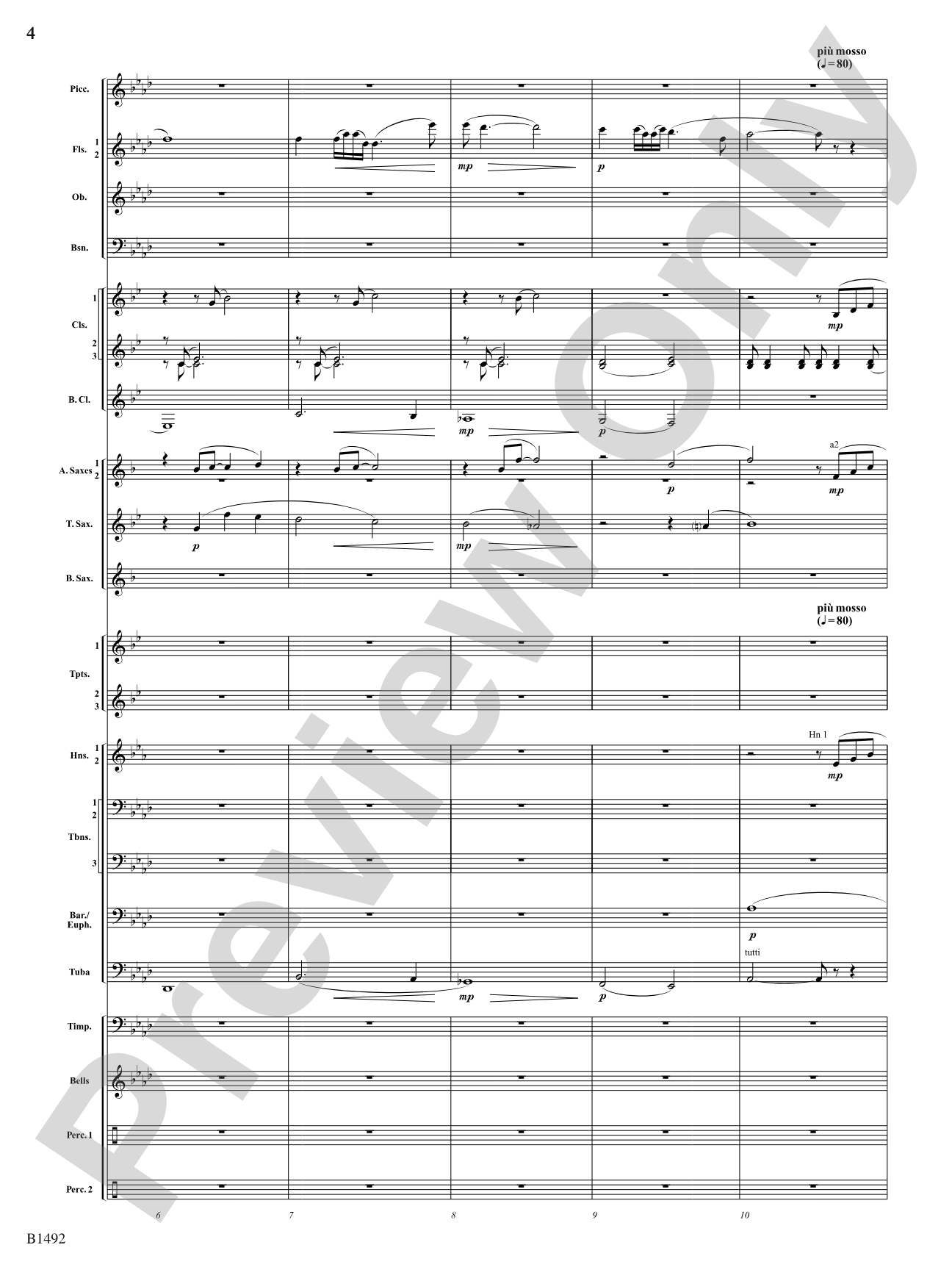
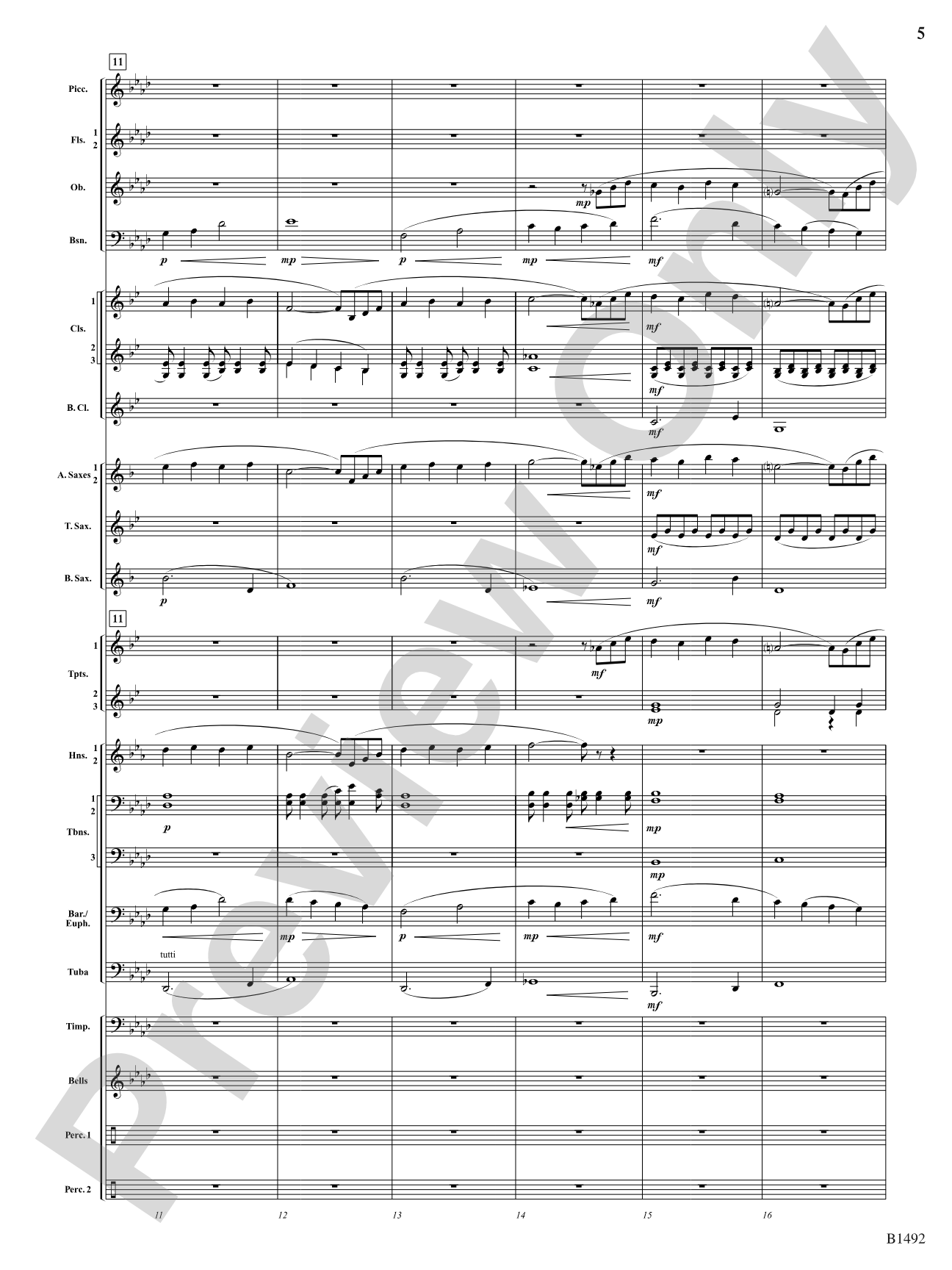
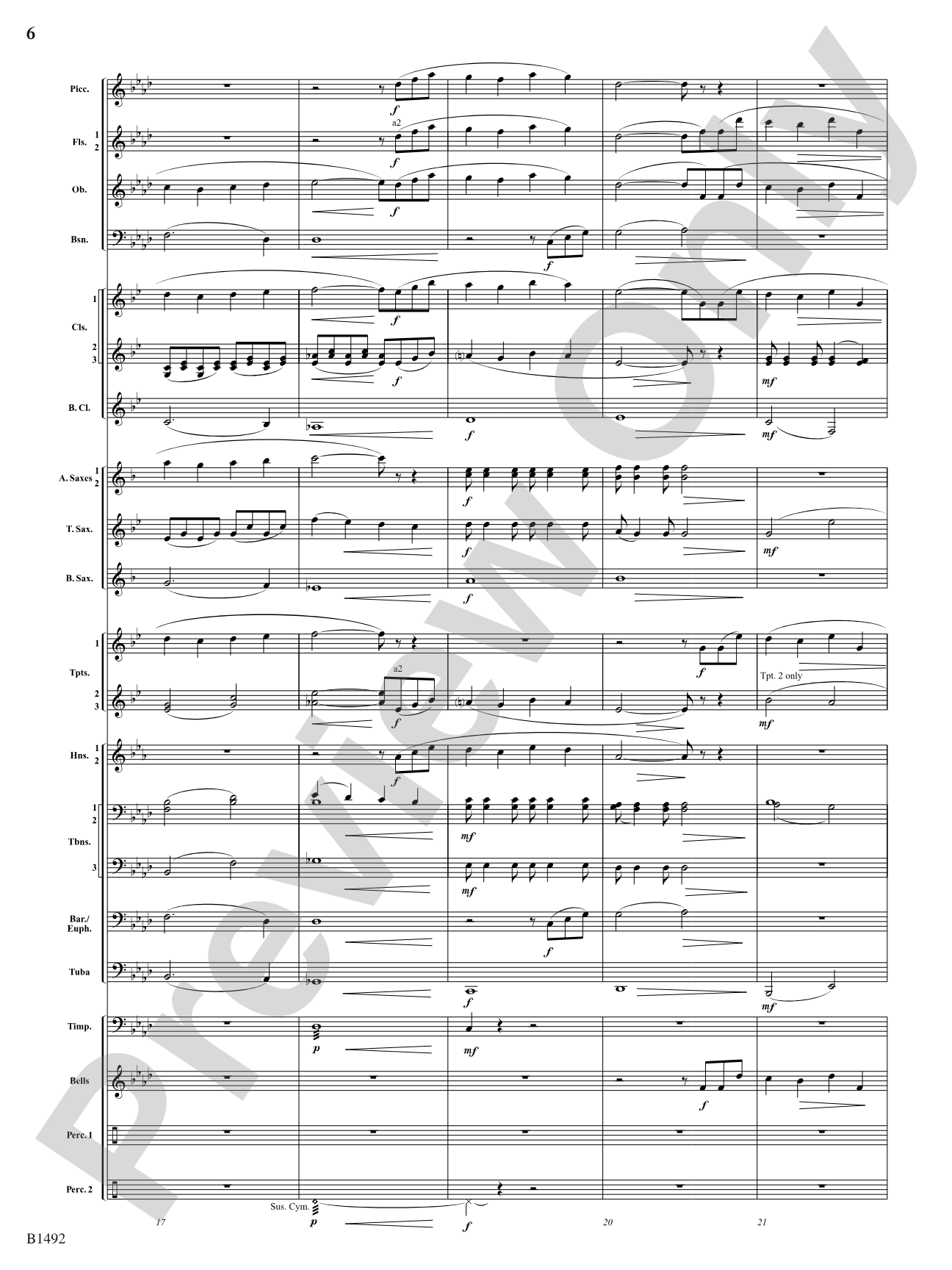
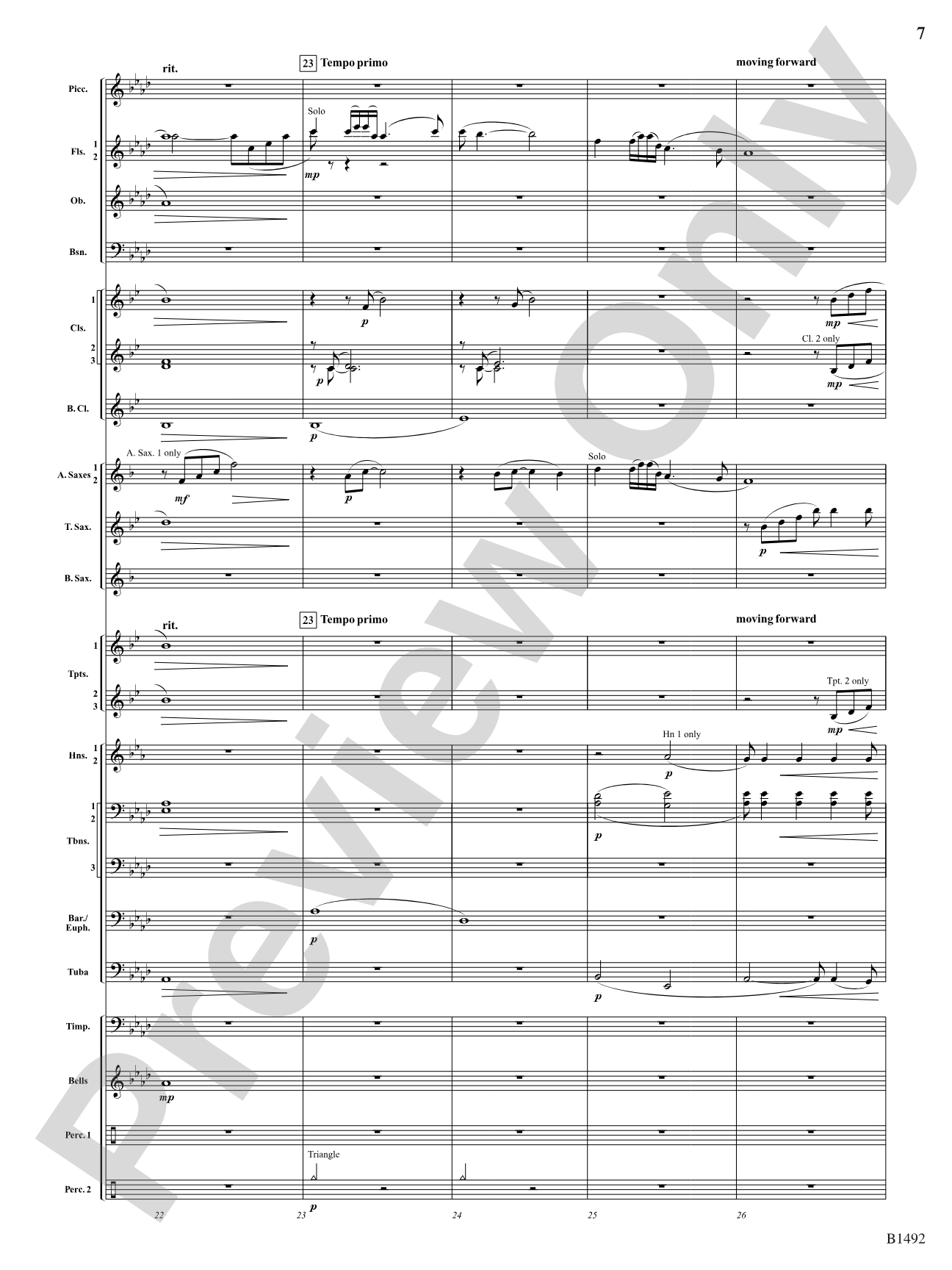
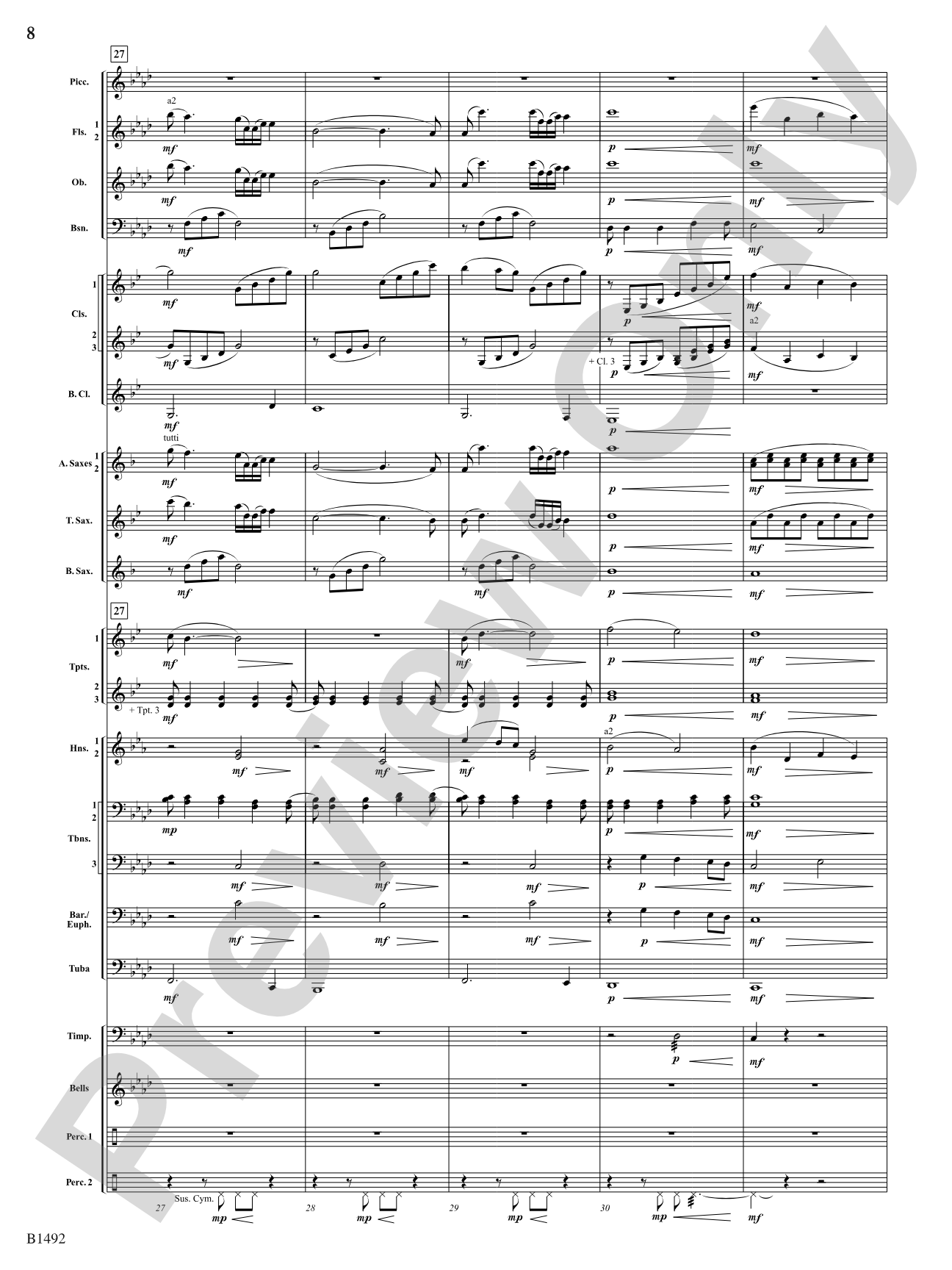
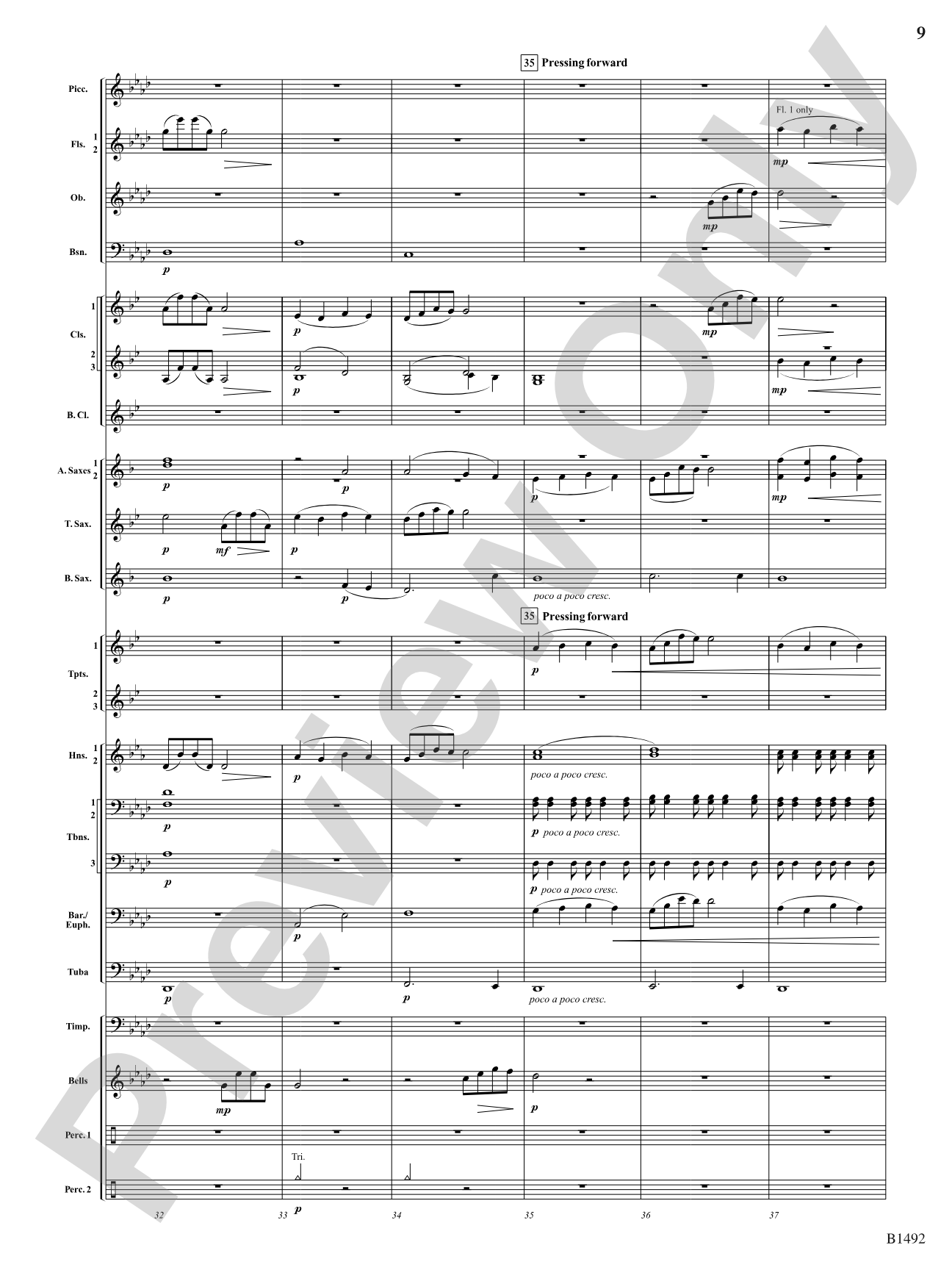
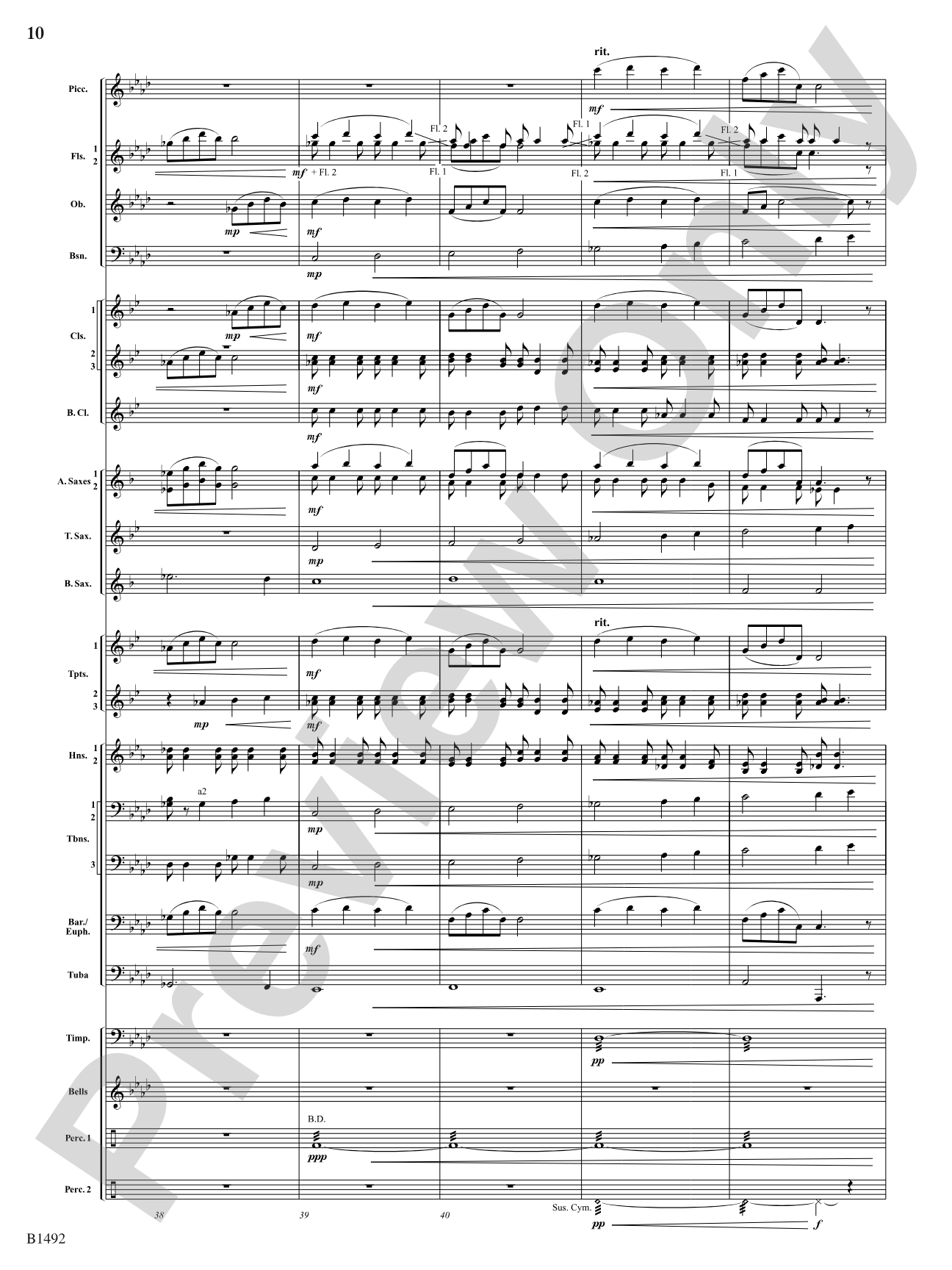
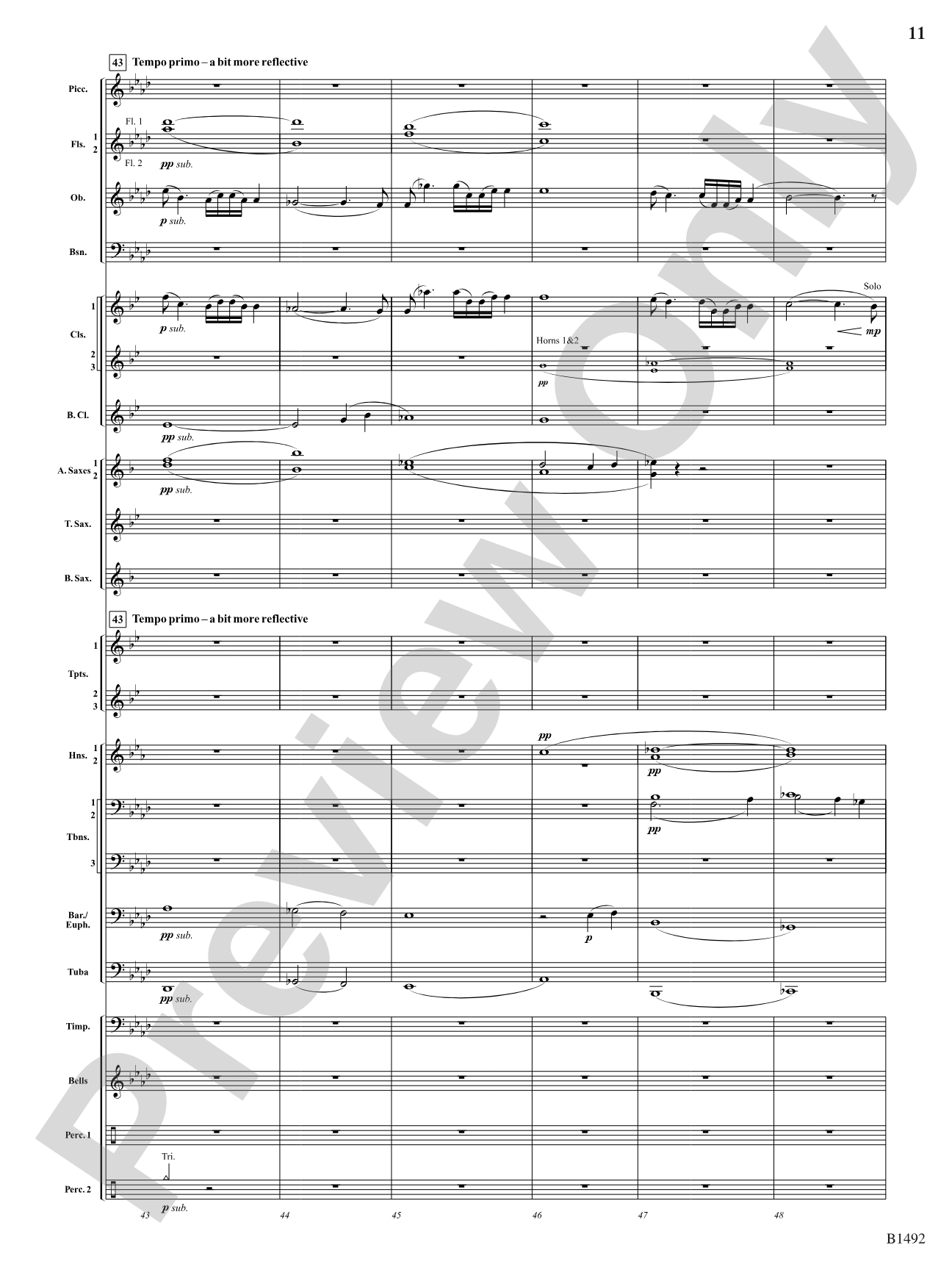
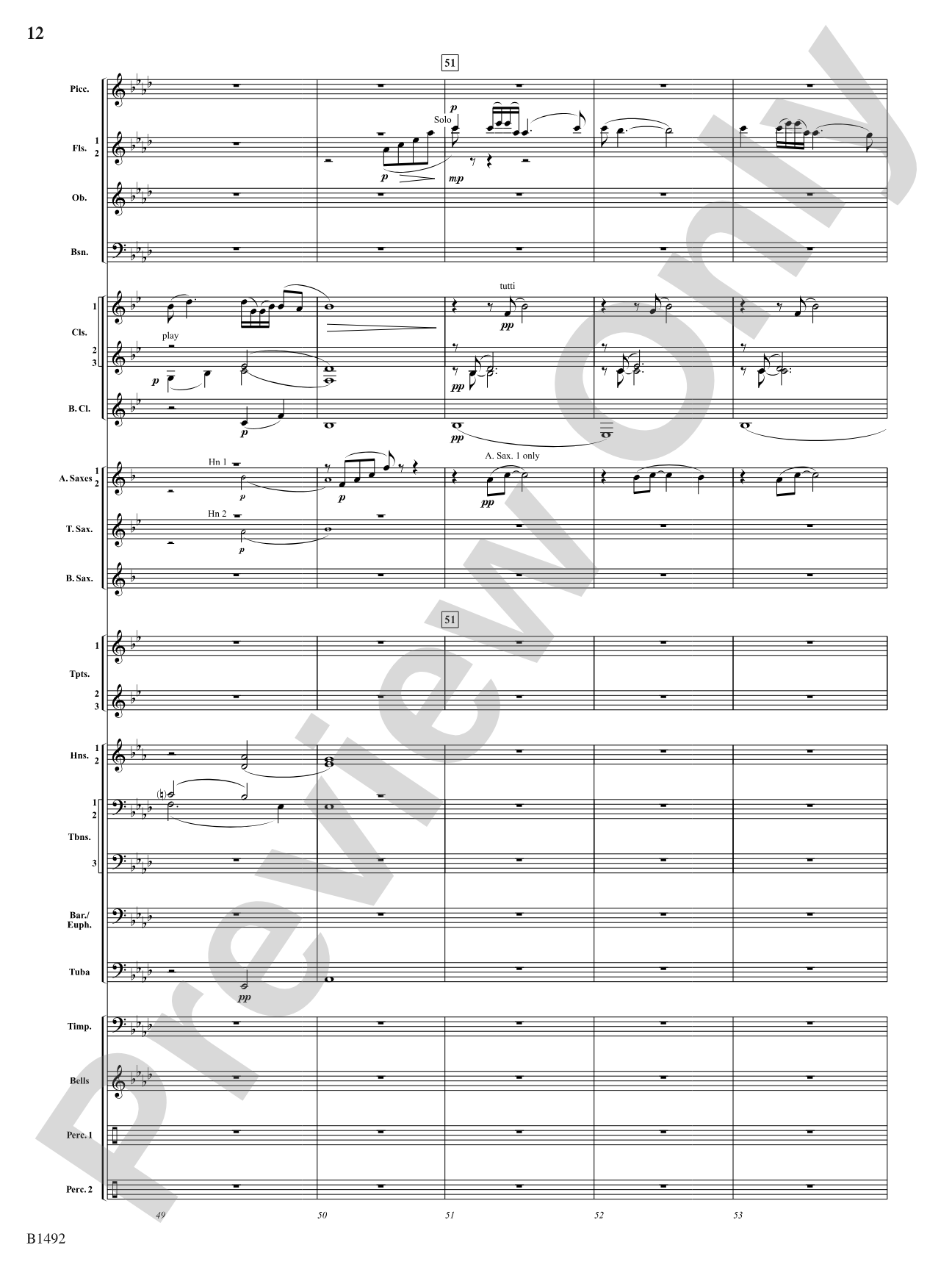
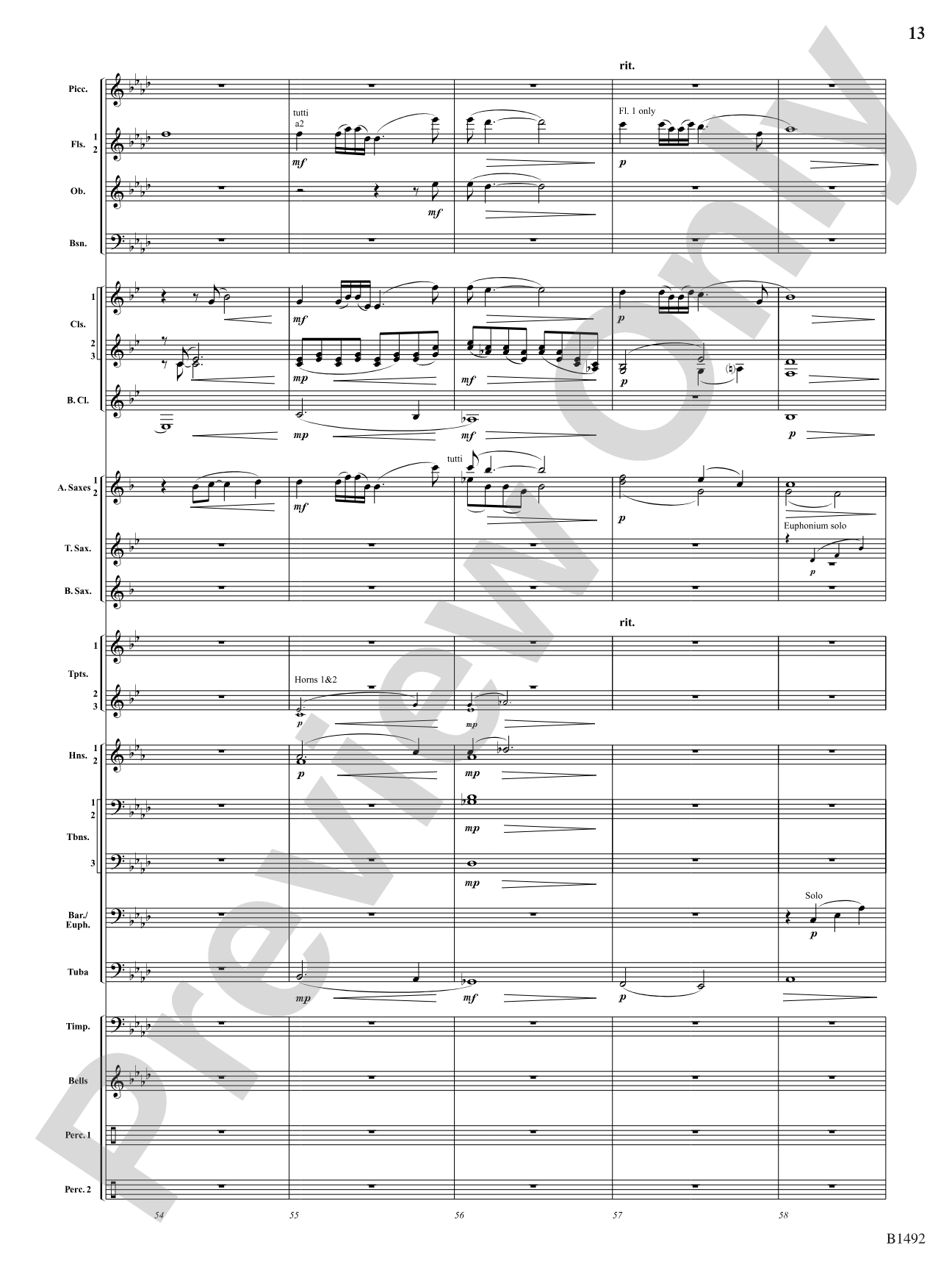
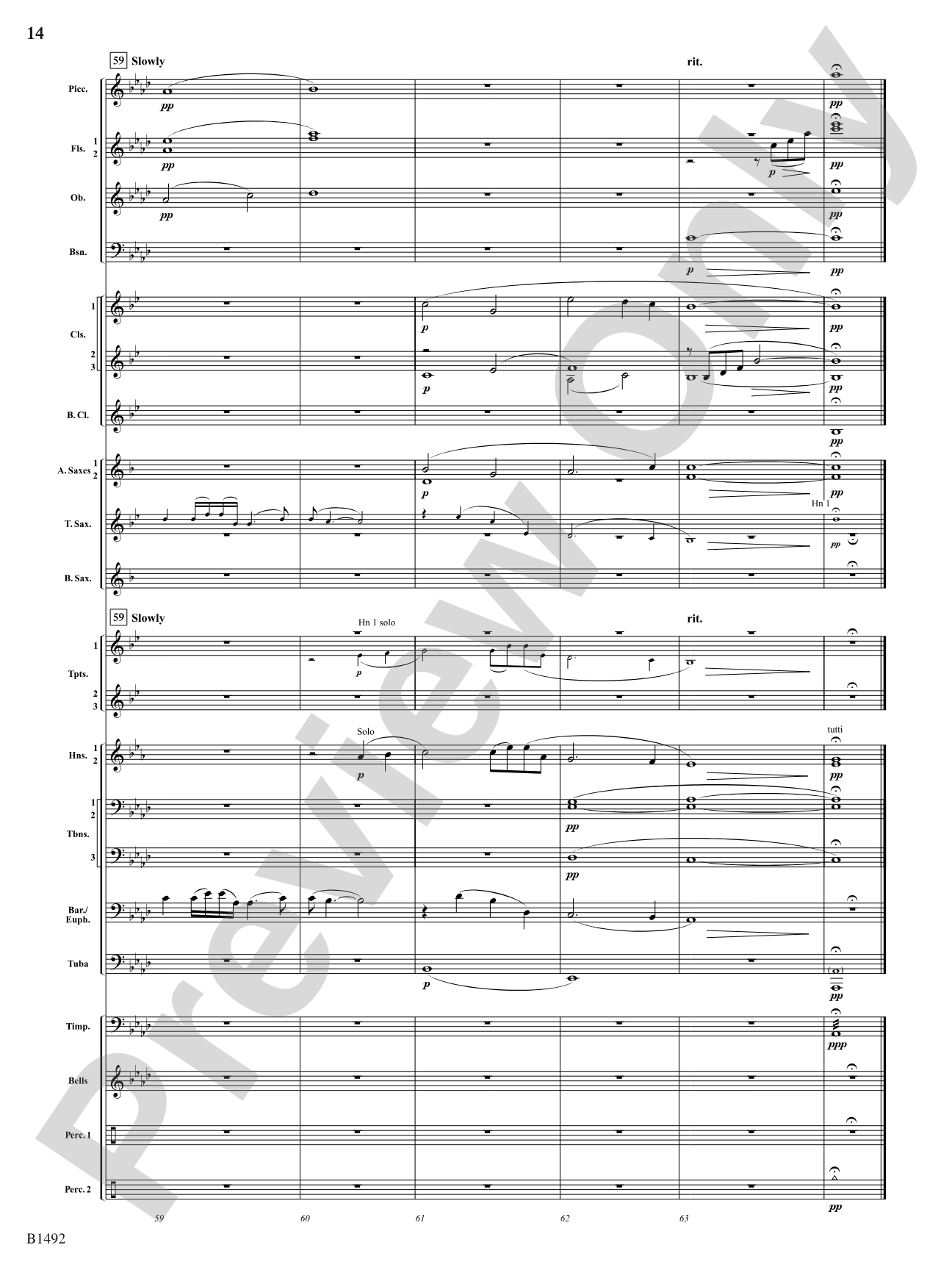

Remembering Yesterdays: Score
By James M. Stephenson
Grade: 3
Item: 98-DB1492S
$5.00
Pickup currently not available
Description
This lyrical work reminds us to take time and reflect on the wonderful moments from the past. While nostalgic and dreamy, this work also points toward the future with its dramatic and powerful lines. A wonderful opportunity to feature various soloists, especially flute. Beautiful writing with incredible expressive potential.


Remembering Yesterdays: Score isn't in MakeMusic Cloud just yet...but it could be. Let us know you'd like to see it, and you'll help shape what comes next. In the meantime, start a free trial and dive into thousands of interactive titles your students can play along with today.
Request This Title
Tell us you want it.
Start Your Free Trial
Explore everything that's ready to play right now.
Sample Audio
1
Audio File
--:--
0:00
0:00
Sample Video
No sample videos found.
Additional Details
Series:
FJH Concert Band
Publisher:
The FJH Music Company, Inc.
SKU:
98-DB1492S
More about this title
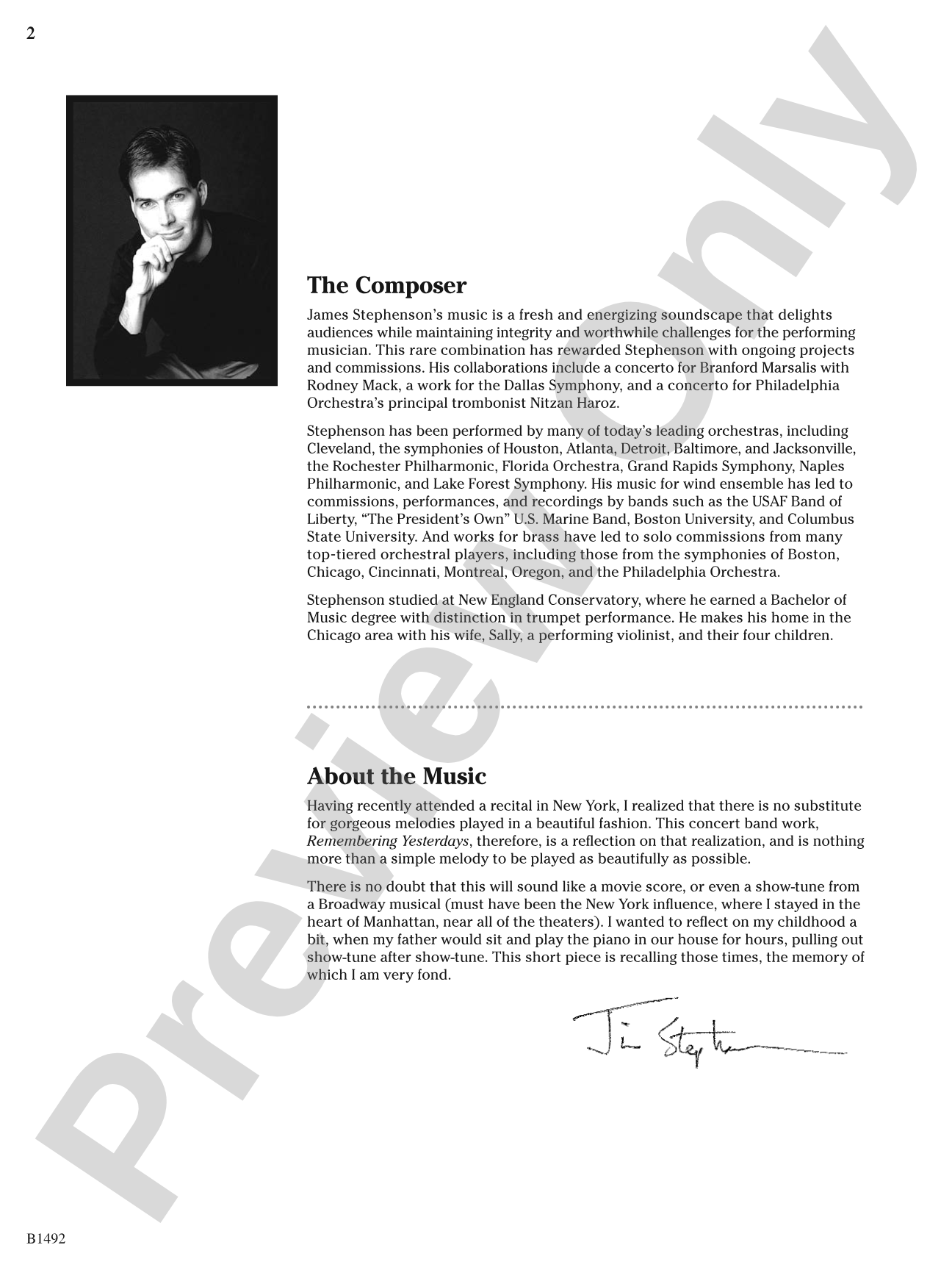
About the Composer: James M. Stephenson
James M. Stephenson is a prolific composer whose concert band works balance accessibility with musical substance, making them staples in school and community band programs. His compositions consistently demonstrate sophisticated orchestration, clear harmonic language, and genuine regard for the pedagogical needs of young musicians.
Why we love this
Stephenson has written a piece that satisfies two competing demands at once: it's emotionally resonant without requiring an advanced ensemble, and it genuinely features soloists (particularly flute) in ways that feel integral to the work rather than tacked on. The balance between nostalgia and forward momentum gives your band a chance to demonstrate both lyrical sensitivity and dramatic power in a single rehearsal arc.
What to expect
Remembering Yesterdays lives in the space between gentle introspection and sweeping nostalgia. The writing evokes soft focus and memory, with moments of clarity that remind you why those moments mattered, before building toward passages of warmth and conviction that feel like looking back with gratitude rather than regret.
Who it's for
This work suits mid-level concert bands that want to program something with genuine emotional depth without overreaching technically. It's ideal for bands with capable principal players who can carry a lyrical line with maturity and for directors seeking a piece that builds ensemble musicianship through expressive playing rather than complexity.
How to get the most out of it
- Shape the lyrical phrases with long, supported lines from the full band; resist the urge to separate phrases too distinctly, as the dreamy quality depends on forward motion.
- Give your featured flute soloist space to breathe in the solo passages; this is not a virtuosic display but an intimate conversation with the ensemble.
- Build the dramatic sections gradually and intentionally. The power in this piece comes from contrast with the quieter writing, not from aggressive tempo or dynamic pushes.
- Balance the solo voices carefully in the mix. Stephenson's orchestration expects soloists to cut through, but only if the supporting ensemble stays disciplined in dynamics.
How to use it
This piece works beautifully as a centerpiece for a concert exploring reflection or change, or as a showcase for your principal flute and other soloists within a longer program. It also serves as an effective closer for a concert that needs emotional weight without leaving the audience heavy; the forward-looking quality in its dramatic writing prevents it from dwelling.
Skills your students will build
- Sustaining long lyrical phrases with consistent tone and support
- Balancing solo and ensemble voices within the same texture
- Shaping dynamic arcs across full sections rather than measure-by-measure
- Responding to harmonic color changes in reflective writing
- Executing dramatic crescendos and transitions with intentionality