
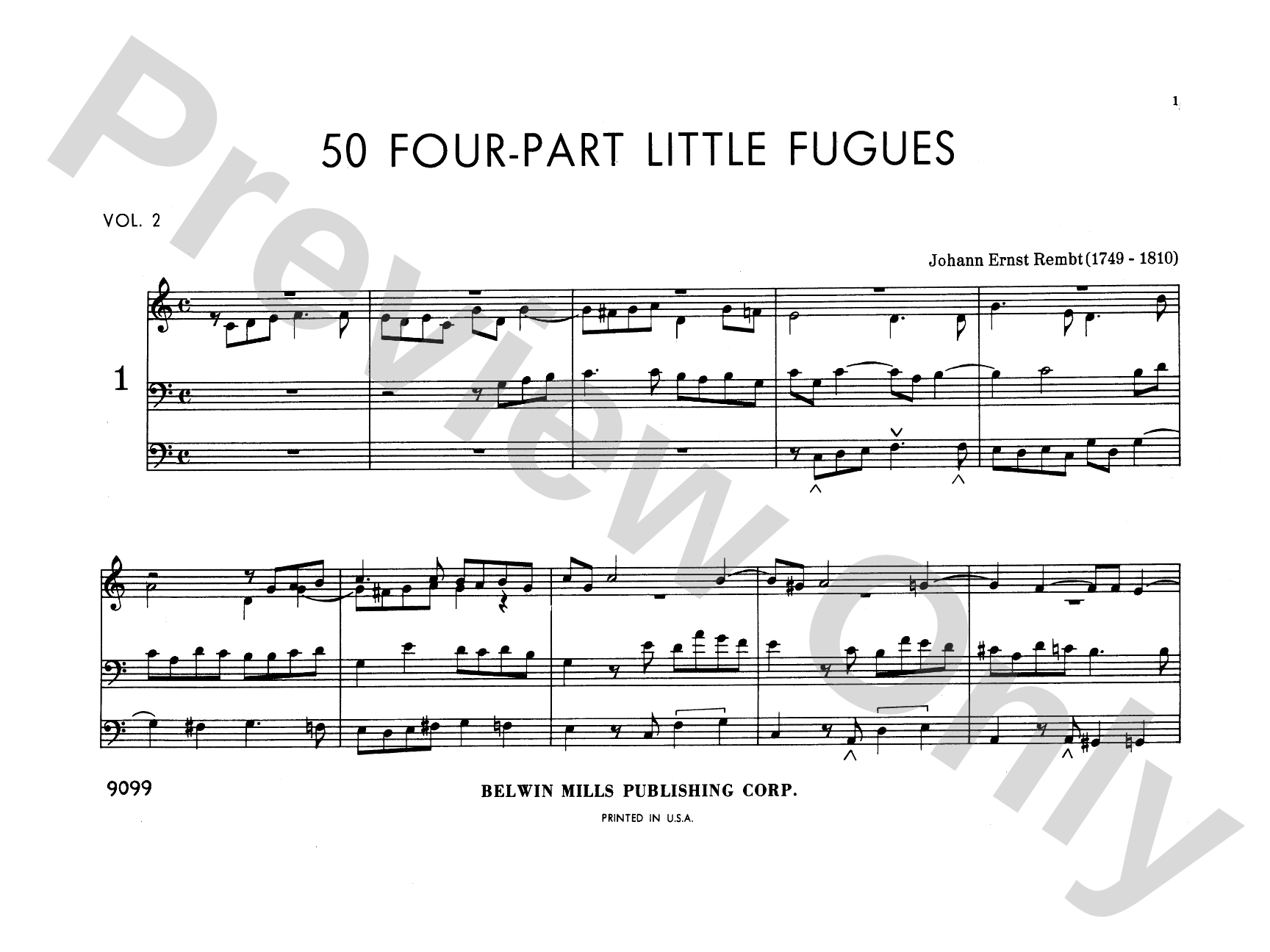
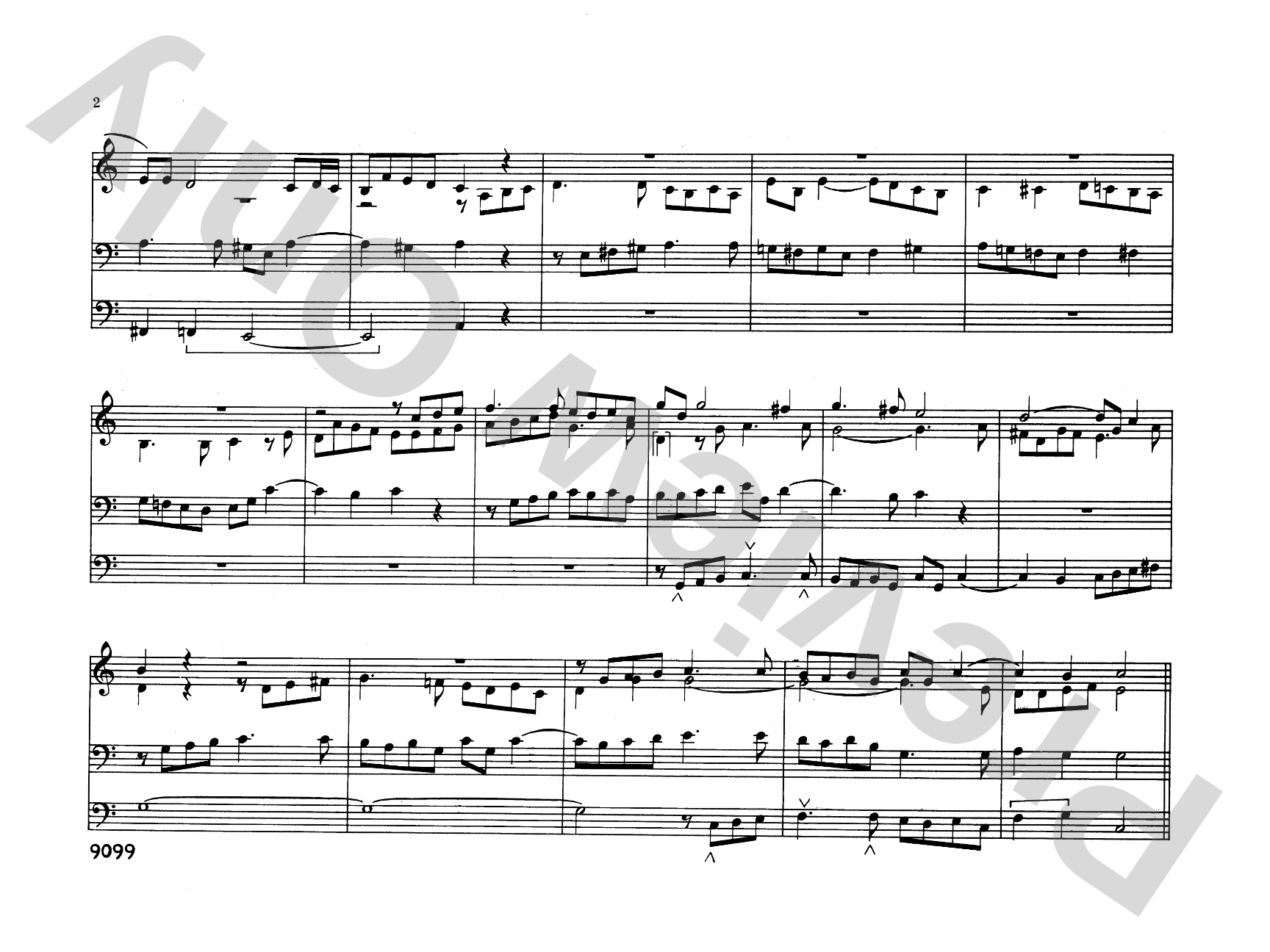

Rembt: 50 Four-Part Little Fugues, Volume II
By Johann Ernst Rembt
Item: 00-PK-0003681

$9.99
Pickup currently not available
Buy Extra Parts (Digital PDF Download)
Parts Added to Cart!
Description


Don't just read it, hear it, play along with it, and watch your students grow with it. In MakeMusic Cloud, Rembt: 50 Four-Part Little Fugues, Volume II comes alive with professional accompaniment, adjustable tempo, and built-in practice tools that turn solo practice into real progress.
Open in the Player
Jump straight in and assign it today.
Start Your Free Trial
Open this title and explore the full library in minutes.
Sample Audio
No sample audio found.
Sample Video
No sample videos found.
Additional Details
Series:
Kalmus Edition
Publisher:
Alfred Music
Page Count:
36
SKU:
00-PK-0003681
More about this title
About the Composer: Johann Ernst Rembt
Johann Ernst Rembt was an 18th-century German organist and composer whose output focused primarily on keyboard works for liturgical and pedagogical use. Little is widely documented about his life, yet his systematic approach to counterpoint and form suggests he occupied a position of some standing in the German organ tradition, likely working within church music circles during the Classical era.
Why we love this
These fugues strike a practical balance between contrapuntal rigor and genuine playability. Rather than the architectural complexity of Bach's Art of Fugue, Rembt offers direct models for understanding fugal construction at the keyboard, making them ideal for organists developing foundational counterpoint skills without getting lost in baroque density.
What to expect
Orderly and intellectually satisfying. Each fugue unfolds with clarity and economy, letting every melodic and harmonic decision breathe. There's an understated elegance here—no virtuosity for its own sake, just disciplined voices weaving in and out with purpose.
Who it's for
Organists with foundational keyboard technique seeking structured studies in fugal writing and counterpoint. This collection works well for intermediate students preparing for more ambitious Bach or for composers exploring how fugal materials develop over a short span.
How to get the most out of it
- Establish each subject clearly on its first entry, even in a modest voice, so listeners can track its return throughout the fugue.
- Practice the manual passages separately from pedal parts to lock hand independence before combining them.
- Find the natural breathing points between phrase sections to avoid running passages together; many of these fugues benefit from a light touch at cadential moments.
How to use it
Pair these with recital programs anchored in larger keyboard works, using individual fugues as compact pieces that showcase counterpoint without demanding extended performance time. They also work as teaching demonstrations within a lesson or masterclass focused on fugal form.
Skills your students will build
- Voice independence and counterpoint in four-part writing
- Following fugal subject entries and stretto passages
- Hand coordination between manual parts and pedal entry
- Sustaining harmonic coherence across harmonic progressions
- Phrasing and articulation in formal keyboard structures