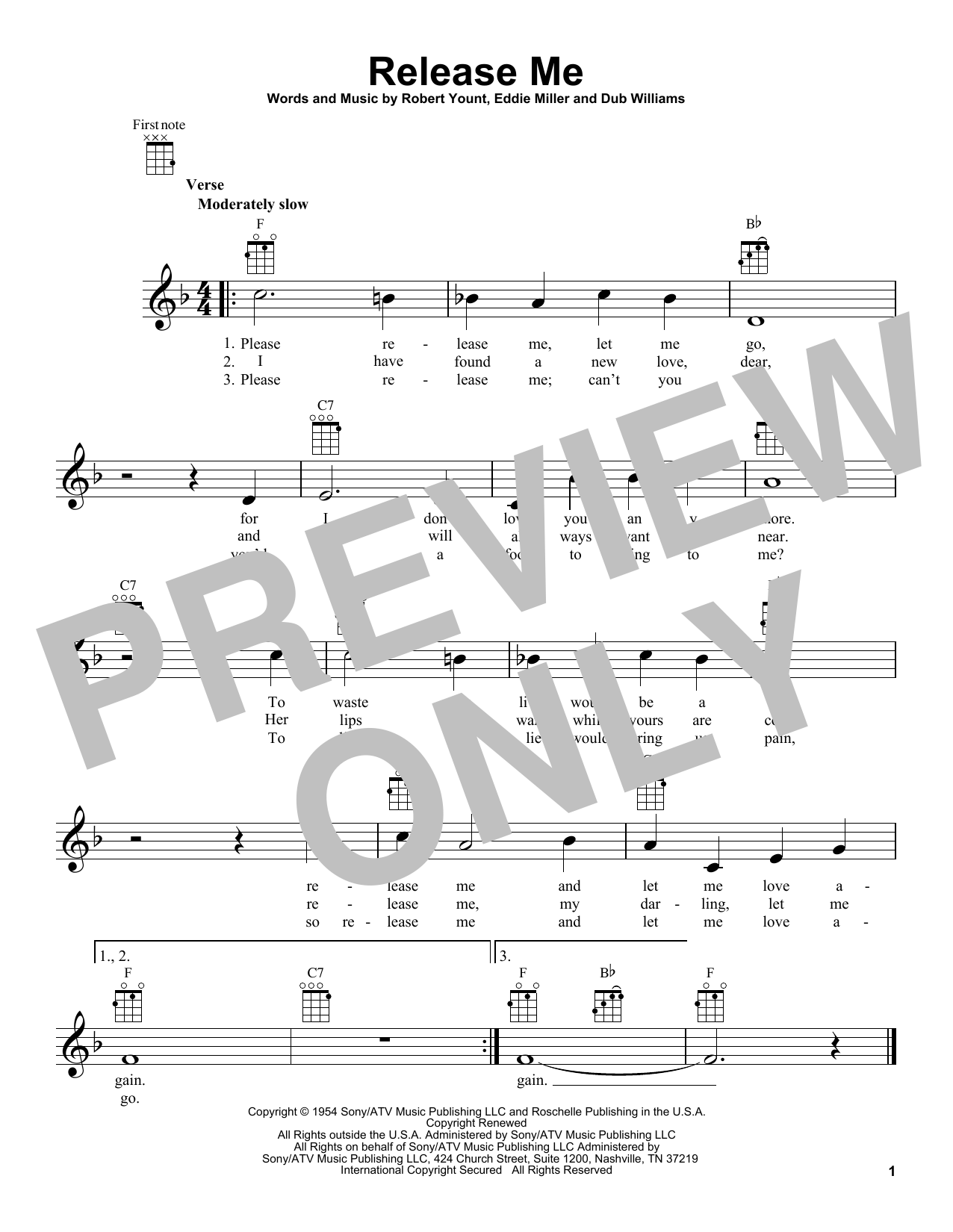
Release Me Sheet Music Preview

Release Me: Ukulele

As performed by Engelbert Humperdinck / As performed by Ray Price / As performed by Elvis Presley

Item: 35-DS00357617

Digital Download
$3.99
Description

Release Me: Ukulele isn't in MakeMusic Cloud just yet...but it could be. Let us know you'd like to see it, and you'll help shape what comes next. In the meantime, start a free trial and dive into thousands of interactive titles your students can play along with today.

Sample Audio
No sample audio found.
Sample Video
Additional Details
Publisher: Hal Leonard
Page Count: 1
SKU: 35-DS00357617

More about this title

About the Artist: Engelbert Humperdinck

Engelbert Humperdinck built his career on sophisticated pop ballads that prioritize emotional delivery over technical flash. His 1967 recording of "Release Me" became a defining hit, showcasing the kind of controlled vocal phrasing and legato storytelling that shaped popular music in the late 1960s and early 1970s.

For ukulele players and educators, Humperdinck's work offers valuable lessons in how to sustain interest through melody and dynamics rather than complexity. His songs reward players who focus on tone quality and expressive timing, skills that transfer directly to any instrument or ensemble setting.

Why we love this

This is a song that rewards thoughtful phrasing on a relatively simple harmonic structure. The ukulele arrangement captures what made the original resonate: a clear, singable melody paired with warm chord changes that feel natural under the fingers. Students gravitate toward it immediately because they recognize the song, but they stay engaged because the arrangement actually teaches them how to shape a phrase musically.

What to expect

Wistful and measured. The song moves at a deliberate pace, inviting the player to sit with each phrase rather than rush through it. There's a sense of quiet yearning underneath, which means even simple strumming patterns carry emotional weight when executed with intention.

Who it's for

Ukulele players with solid chord knowledge and basic fingerstyle comfort. This works equally well for students playing solo or accompanying a vocalist, making it flexible for recitals, coffee house performances, or informal classroom sharing.

How to get the most out of it

  • Commit to consistent tempo from the opening. The song's intimacy depends on rhythmic steadiness, especially in the verse.
  • Shape the melody dynamically rather than playing every note at the same volume. Let the climactic moments breathe slightly louder.
  • Pay attention to the chord voicings; even simple changes benefit from clean transitions between positions.
  • Sing along quietly while you play to internalize the phrasing. This song lives in the space between instrumental and vocal music.

How to use it

Slot this into a solo recital when you want to demonstrate emotional maturity and musicality beyond technical display. It also works well alongside other pop standards if you're building a concert theme around songs from the 1960s and 1970s.

Skills your students will build

  • Dynamic shaping and expressive phrasing on familiar melodies
  • Clean chord transitions at slower tempos
  • Sustaining a steady pulse without rushing
  • Coordinating fingerstyle or strumming patterns with vocal or melodic content

You May Also Like